
 YouTube
 Spotify
 Apple Podcasts
 Amazon Music
 PocketCasts
 Castbox
 PlayerFM
 Podchaser
 iHeartRadio
 How I’m Dealing With Grief 20 Years After My Father Died | Dead Dads Podcast | Grief Support for Men
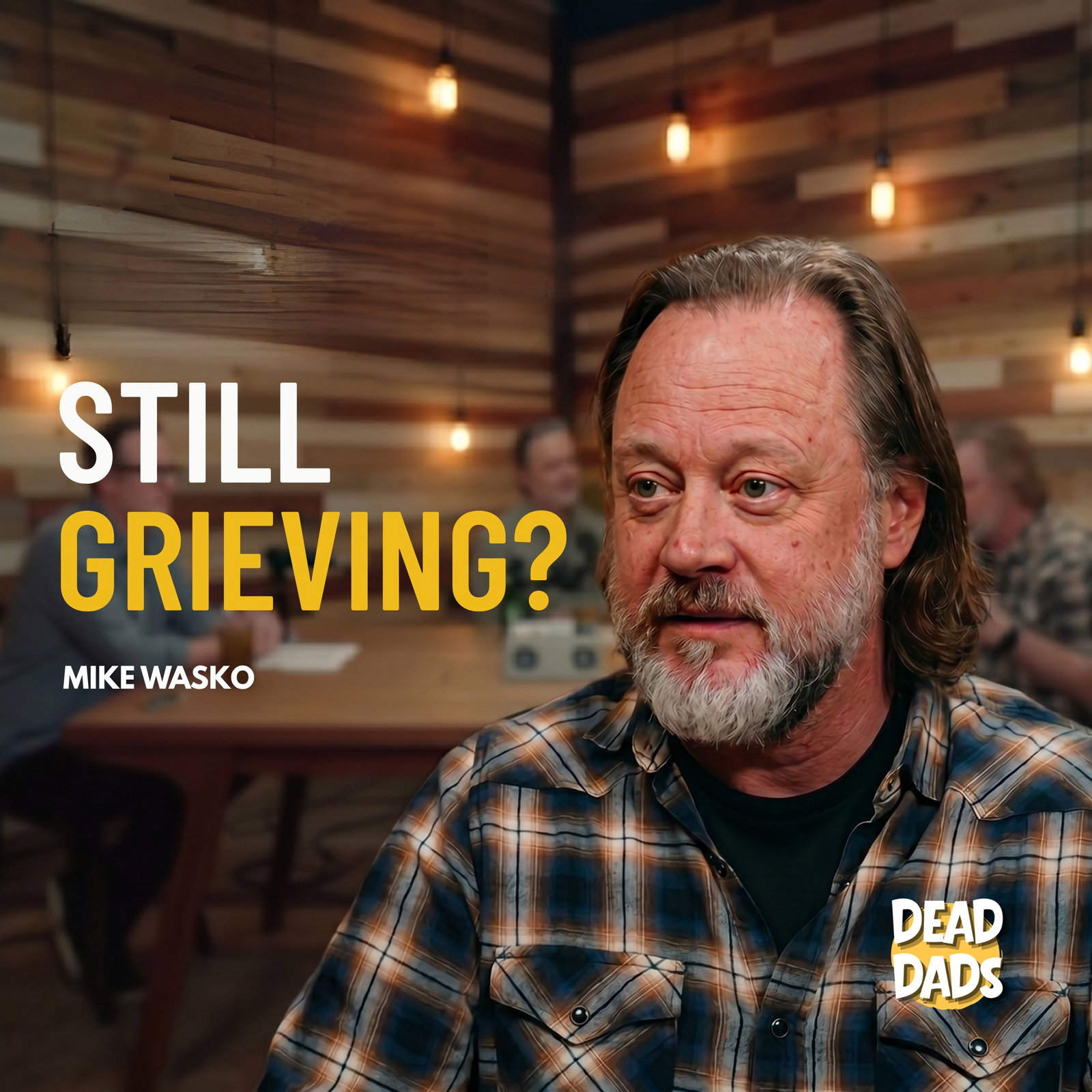
How do you deal with grief 20 years after losing your dad?
In this episode of Dead Dads Podcast, Mike Wasko talks about grief and loss, father loss, caregiving, therapy, bereavement, and what long-term grieving actually looks like.
Mike’s dad, Bob, died 20 years ago. He is still figuring out what that means.
At 29, Mike became his father’s primary caregiver after a cancer diagnosis. Then he walked out of a doctor’s appointment knowing something his dad did not, and had to decide what to do with that information.
That moment changed everything.
Mike talks about losing his dad, what grief looks like two decades later, and why the raw edges may dull, but the loss does not disappear. It shifts. It becomes part of the room.
Annoying. But accurate.
He also talks about anger, therapy, reconciliation, becoming a dad himself, and the strange way our parents show up in our kids.
This is a real conversation about how to deal with grief, coping with grief and loss, grief support, dealing with death, men’s grief, family, caregiving, and why grief is not something you get over.
It is something you learn to live around.
If you are years out from losing your dad and still feel it, this episode is for you. If you are just starting, this is what 20 years of living with father loss can look like.
It gets different. Maybe even better.
🎧 In this episode, you’ll hear about:
What long-term grief can look like 20 years after your dad dies
How losing your dad changes over time
What it feels like to become your father’s caregiver at 29
Why Mike had to carry information his dad did not know
How therapy helped him deal with grief and reframe the loss
Why grief can be understood as the cost of loving someone
What happens when you become a dad after losing yours
How your father can show up in your children
Why grief is not something you get over
Mike’s crater analogy for coping with grief and loss
👨👦 About Mike and his dad, Bob
Mike Wasko lost his dad, Bob, after a cancer diagnosis when Mike was 29.
Bob was larger than life. Intimidating. Funny. Tough. Unconventional. The kind of dad who left a mark, whether you were ready for it or not.
In this episode, Mike talks about becoming his father’s caregiver, repairing their relationship before Bob died, and carrying his dad’s influence into his own life as a husband and father.
It is a conversation about father loss, cancer, caregiving, therapy, grief support for men, parenting after loss, and the strange ways our dads stay with us.
Also, yes, there are laughs. Because grief is weird like that. Rude, honestly.
⏱️ Episode chapters
0:00 – Who Is Mike Wasko?
1:21 – Mike Joins the Pod: 20 Years of Grief
2:34 – Why He’s Talking About It Now
4:23 – Meet Bob Wasko: “Larger Than Life”
6:23 – Tough Love and Unconventional Fun
7:25 – The Diagnosis and a Secret to Keep
13:34 – Moving In With His Dying Dad
15:12 – The Falling Out and Reconciliation
18:16 – Anger, Therapy, and “The Cost of Loving Someone”
24:50 – Becoming a Dad and Finding His Father in Himself
29:10 – His Kids Ask Why Grandpa Died
31:37 – Approaching the Age His Dad Died
32:28 – The Crater That Never Fills
35:35 – Final Thoughts and Where to Follow
🖤 About Dead Dads
Dead Dads is a podcast for men figuring out life after losing their dad. Hosted by Roger Nairn and Scott Cunningham, the show features honest conversations about father loss, grief, identity, family, memory, masculinity, and all the strange stuff that happens after your dad dies. No grief brochure voice. No tidy healing arc. Just real conversations for guys who are grieving, remembering, avoiding, laughing, carrying on, or trying to understand what losing a father did to them.
You’re not alone.
☕ If Dead Dads has helped you feel a little less alone, consider buying us a coffee: https://buymeacoffee.com/deaddadspodcast
Follow Dead Dads:
Website: https://www.deaddadspodcast.com/
YouTube: https://www.youtube.com/@deaddadspodcast
Instagram: https://www.instagram.com/deaddadspodcast/
TikTok: https://www.tiktok.com/@dead.dads.podcast
Substack: https://substack.com/@deaddadspodcast
And listen to us here, or wherever you enjoy podcasts:
Spotify: https://open.spotify.com/show/4WWlXBPzgj151SFYRUZeSB?si=fe005fdf079249b8
Apple Podcasts: https://podcasts.apple.com/us/podcast/dead-dads-podcast-grief-support-for-men/id1867632438
New episodes every week.
Dead Dads Podcast is produced with the support of JAR Podcast Solutions, the branded podcast agency that helps organizations build shows people actually want to spend time with. Learn more at https://jarpodcasts.com/
Mike Wasko (0:00): Would say, like, with my old man, it's like, I've never been more intimidated by anyone than my father.
Scott Cunningham (0:07): We have another great episode of dead dads for you. Today, we're talking to Mike Wasco.
Roger Nairn (0:11): I think Mike's really unique because his dad died over twenty years ago. And as as somebody whose dad only died, you know, just less than two years ago, he really taught me a lot about how his grief has evolved over the course of of twenty years. And if you're a guy out there whose dad recently passed away, I I think this is gonna be an important episode for you to watch because you might be angry, and you might be a bit confused, and you might be trying to ask yourself, how do I get through all this? Mike really breaks it down for you and shares his experience in a way that I think you can learn a lot from.
Scott Cunningham (0:45): Well, I know he's keen to mention in the episode that he's not a guru. He does have a lot of experience and that his friends have been coming to him for almost twenty years to figure out how it is when their dads die. He talks a lot about what it's like to have a dad who does seem a bit intimidating and angry and how that's shaped him and how he's grown up without a dad, but now he is a dad. Also, he makes a really interesting analogy towards the end about what grief is, what I think really hit me right in the feels. It really made it relevant for me.
Unknown Speaker (1:11): It's weird that your feels are right here. My feels are right here.
Unknown Speaker (1:14): But together, we make a a whole.
Unknown Speaker (1:16): It's true. Let's bring on Mike Wasco.
Unknown Speaker (1:18): It's a weird, sad, path, but we're here to help you laugh. It's the dead dad's podcast.
Unknown Speaker (1:28): Losing your dad sucks, but talking about it doesn't have to.
Unknown Speaker (1:31): We are non therapists professionally. We may like to think we are, but we are not.
Roger Nairn (1:35): We give really good advice though Mhmm. Just not medically or therapeutically. Although, if you do feel better after it, that's okay. You can still you can still listen to us.
Unknown Speaker (1:45): But we will bill you for that. We're also not doctors.
Roger Nairn (1:47): That's true. We're definitely not doctors. I once was a doctor, but then was immediately removed from doctor status.
Unknown Speaker (1:54): You just had a lab coat on. Like, that's not a doctor.
Unknown Speaker (1:57): That that was the problem. Enjoy the next episode of Dead
Unknown Speaker (2:00): Dads. Alright.
Unknown Speaker (2:04): So welcome to Dead Dads. We have another guest today. Scott, you wanna introduce him?
Unknown Speaker (2:07): Ladies and gentlemen, I would like to introduce you to Mike Wasco.
Unknown Speaker (2:11): Hello. Hey, Mike. Yeah.
Scott Cunningham (2:12): I really went to Mike. There's no Michael on this, is there? There's Mike No.
Unknown Speaker (2:16): Just people who wanna put me in my place call me Michael. Michael. Yes.
Scott Cunningham (2:20): But Mike Wasco, of all of the guests we've had so far, I know your dad passed away quite a long time ago.
Mike Wasko (2:26): Long time ago. Over twenty years ago. Yeah. Yep. But before
Scott Cunningham (2:29): we get into that, I wanna learn a little bit about you. Can you tell me a little bit about why you decided to do the podcast?
Mike Wasko (2:35): I was saying we were just saying earlier on that, I mean, my dad was quite young when he passed away, and I was young younger, obviously. But I find that a lot of my friends who are my age, I mean, their their parents are now it's just becoming more common. It's endemic now. Like, our our parents are at the generation now where, woah, it's happening, you know, quite frequently, and statistically, it's usually the dads first. And, you know, I'm lucky enough to have a lot of really good buddies, good guy friends and stuff, and, like, it's it's a bit nuts how many of them are are starting to lose their their fathers now.
Unknown Speaker (3:08): And and I actually get that a lot. Well, you've been through it.
Unknown Speaker (3:10): You know? And I'm like, yeah. Yeah. A while ago for me.
Unknown Speaker (3:12): But So
Unknown Speaker (3:13): people are coming to you and
Mike Wasko (3:14): Oh, guess somebody's My best friend, his dad died two years ago, and it's I feel like I've been I've watched this story unfold quite a few times over the last few years, and and it's never fun for anyone, you know, when your parents get older and they need help, and and, you know, I hope that I mean, I'm really fascinated to to listen to your other episodes of this podcast because and I think it'll be really useful for people who are who are going through it because Hopefully. Yeah. Let's we all get our turn.
Roger Nairn (3:39): It's funny. Funny, not funny, that everybody dies, but also it feels like as, yeah, as you get older, you become more I don't know. You it just it's it's among you more. Whether it's like I'm I started noticing my parents' friends dying first. You know, obviously, they're getting And then when my dad died, it's almost like when you're, like, trying to buy a new car, and you you all of a sudden see that car on the street more.
Roger Nairn (4:02): It's just parked everywhere, driving past you. I find now that I'm, like, attuned to all my friends' parents passing away as as well. It's Yeah. Yeah. It's it's it's interesting.
Mike Wasko (4:12): And you sort of, you know, I you know, you can't help but feel a little shard of your own loss when you, you know, when you're hearing it from somebody that's that, you know, it's like, yep. I intrinsically know what you're what you're dealing with.
Unknown Speaker (4:23): Well, let's let's dig into that a little bit more. I would love could you share more about your dad?
Mike Wasko (4:27): His name was Bob Wasco. He was a larger than life figure. My brother and I worshiped him. I mean, he was really fun, way funner than I am as a dad, to be honest. He was an electrician for BC Tel when it was BC Tel before it was
Unknown Speaker (4:41): Right.
Mike Wasko (4:42): Bought out by Telus. He was one of the last line he was a lineman. He was the foreman of his crew of guys, and they were all really tight.
Unknown Speaker (4:49): Was he born here?
Mike Wasko (4:49): He was born in Winnipeg. His folks moved to Vancouver when he was about two, so he grew up in the West End Of Vancouver and and in downtown and you know, first in Chinatown, actually. They lived in Chinatown here. My grandparents had a a rooming house that they ran here in Chinatown, and then they eventually saved up some money, they bought a a hotel that was on Nelson Street called the Langham. And so my dad and his two brothers kinda grew up there working in the hotel, and then the city expropriated it in the mid sixties to build the extension for the extended care unit for Saint Paul's.
Unknown Speaker (5:21): He grows up here, basically. He's basically BC. Right? From two years old, arguably. Yeah.
Scott Cunningham (5:25): Yeah. Right in downtown and becomes over the course of time, becomes alignment. That was his sort of chosen career, if you
Mike Wasko (5:32): like, or something an orangutan when he rolled out of high school, and and it was a much different world then. And Yeah. You know, I think he had him and his buddies had the idea that they were kinda building the province. They were, you know, they were they were extending all that telecommunications infrastructure. I'll never forget when I was a kid, he came home with his first bit of fiber optic cable, and I was like, look at this.
Unknown Speaker (5:54): And he was like, yeah, he
Unknown Speaker (5:55): was like, this this is going to change the world.
Mike Wasko (5:58): And he was like and and he said, some young dumb punk is gonna have to go up north and redo everything that I did up there. And he said, but instead of a spool that fits on the back of a huge truck, it'll be a spool that hangs off his belt, you know, like and and he's like, this is crazy. You know, like and I was like, oh, okay. What are you doing? But He's trying to eat here, dad.
Unknown Speaker (6:18): Yeah. Yeah. You know? But for him, it was like a whole new whole new deal. So what was he
Scott Cunningham (6:24): like as a dad as you were growing up? Was he, like, the participatory dad?
Unknown Speaker (6:27): Did you guys do Yes. Sports and stuff?
Unknown Speaker (6:29): Or I
Mike Wasko (6:30): don't think he was participatory in the way that my mom would have liked. He was a lot of fun in some unconventional ways. He could also be a bit brutal. My dad was the king of letting us fail. Like, and he he was just like because he's like, I don't know.
Unknown Speaker (6:45): He's like, I don't know. You're gonna fuck that up if you do it like that. We're gonna fuck whatever. And, like, oh, no. It all fell apart.
Unknown Speaker (6:50): And he's like, you know, you're not gonna do it like that again, are you?
Unknown Speaker (6:52): You know, just sort of like he just over and over and over.
Unknown Speaker (6:55): And do you find yourself balancing out that feedback now where you remember that's how he taught you and that
Unknown Speaker (7:00): gave you the gist of who
Unknown Speaker (7:02): you are, but now you're like, do I do that, or do I let that happen?
Mike Wasko (7:06): It's a balance. Right? Like, if I see them gonna that they're gonna hurt themselves, you know, like, you know, or, you know, or injure themselves, I'm like, and then they sort of get in there, and then sorry, you know, we're not doing that.
Scott Cunningham (7:15): So he's he's tough love. He's he's willing to let you make mistakes, and also he's willing to let those mistakes be relatively severe if they need to be.
Unknown Speaker (7:24): How how long ago did he pass?
Mike Wasko (7:27): 2003. So a long time. Yeah.
Roger Nairn (7:29): And how old were you when that happened? 29. Wow. And can I ask how he passed? Cancer.
Roger Nairn (7:34): Cancer. Yeah. When was he diagnosed and when did he ultimately
Mike Wasko (7:38): 2002, he I was working at a theater festival, the Shaw Festival out in Ontario, having a great time out there. And I was, you know, coming to the end of the season, I was gonna go to Europe and have some fun, do all sorts of stuff. And and then my girlfriend at the time, my wife now, she was in a show at Canadian Stage in Toronto, and I was on my day off, went in to see her show and we're hanging out, my phone started ringing, and then saw it was my brother in Vancouver. I'm like, oh, this is weird. And it's, you know, like, 11:00 in Toronto, and I was like, and it was my brother, he said, yeah.
Mike Wasko (8:12): Oh my god. I'm in the hospital with dad. We went out for lunch, and he passed out in the parking lot, and we called 911, and we're here. We don't know what's going on. And side note, my parents had been split up for quite a while.
Mike Wasko (8:23): They split up when I was about 13, so, like, that was sort of independent of my my mom. But anyway, so I was like, okay. Okay. Okay. Some kind of emergency happening here.
Mike Wasko (8:33): I went to the my bosses at the Shaw Festival and said, I'm having a family emergency. They were great. They gave me a plane ticket. I packed up overnight and flew back to to Vancouver. Dad was in the hospital for about a week while they did, like, this battery of tests and stuff on him, and then sent him home.
Mike Wasko (8:47): And then I kinda moved in with him, and he seemed okay, you know, once he sort of made his initial recovery. And then our family doctor, who was his doctor, called me and asked me to come in, and he wasn't the greatest doctor ever, but he we'd had a lot of sort of ups and downs with him over the years, but he was like our family doctor. And then he sort of said, yes. You know, your dad has a large tumor in his esophagus. There's there's not much we can do about it.
Mike Wasko (9:10): He says, you know, we can reduce it with radiation to make him more comfortable. This type of tumor, there's not much we can do about it, eventually, it's gonna metastasize to other things. And, like and I was like, oh. He's I
Unknown Speaker (9:22): was like, hello. He delivered the news to you.
Unknown Speaker (9:25): And he's like, yeah. So best of luck. And he and I and I was like, you know, I walked out of the and he and I asked him, well, how long does he have? And he's like, six months tops. And I was like, okay.
Unknown Speaker (9:32): And I walked out of there going, sorry.
Unknown Speaker (9:34): Am I supposed to deliver this news? Oh, he didn't tell your dad?
Mike Wasko (9:38): No. He told me. Oh, god. And I was like, you know, and my dad was also the kind of guy that, like, he rarely took information firsthand. He verified things.
Mike Wasko (9:46): You know? And and if I and there was, you know, a lot of we we had a lot of differing opinions on on stuff. So sometimes if I said something that he didn't agree with, I'm gonna look into that. So if I just rolled in and said, actually, dad, you got six months to live. Sorry.
Mike Wasko (9:59): Says who? You know, like, you know, and
Unknown Speaker (10:01): Where'd you get your medical Where'd
Unknown Speaker (10:02): you get where'd you get your information from? So I talked to a couple friends. I said, do you think that's weird that and they're like, that's fucked, man. No. Your doctor your dad's doctor should be delivering that
Unknown Speaker (10:11): news to you. Dad's an adult.
Unknown Speaker (10:12): He's still within
Unknown Speaker (10:13): Yeah. Like, he's not out of his I
Unknown Speaker (10:14): don't even know if that's, like, legal.
Mike Wasko (10:16): No. And so, anyway so I called him and said, like, I I don't really feel comfortable delivering this information. Like, I feel like you should be doing it. Was like, okay. And the and the first time in our lives, he made a house call, he came down and said, yeah.
Mike Wasko (10:26): So sorry, Bob. This is a, b, and c. And and my dad was very much like, well, mother nature's gonna have her way no matter what.
Scott Cunningham (10:32): So do you really think he's dealing with it?
Unknown Speaker (10:34): Or There was one point that, you know, he he was saying to my brother and I, he's like, oh, it'd be good if doctor gave me something. I don't feel so shitty. You know? You know? Don't feel so shitty all
Unknown Speaker (10:42): the time. Yeah. And I was like, well, what do
Unknown Speaker (10:44): you mean? Like, what do you mean shitty? I said, like, do you feel, like, physically shitty or, like, emotionally shitty or, like, that you're literally covered in shit? Like, what are you talking about?
Unknown Speaker (10:53): What do you think he was asking?
Unknown Speaker (10:55): I think he was asking for antidepressants.
Unknown Speaker (10:56): He just felt sad.
Unknown Speaker (10:57): He just felt I think he felt a little bit sad.
Unknown Speaker (10:59): What do mean? Sad, scared, anxious.
Mike Wasko (11:01): Yeah. You know, and my dad also he'd had a bunch of other health problems earlier on in his life, and but he never let him let it slow him down. Like, he would he would talk to anybody who would listen about his, you know, health problems and stuff, but he was always like, oh, still taking trips and going places and blah
Unknown Speaker (11:16): blah blah.
Unknown Speaker (11:16): Yeah. And so this was just kind of an extension of that. He was like, oh, yeah. So I got cancer and blah blah blah. You know?
Mike Wasko (11:21): And and it I don't know. He was, like, more than willing to talk to people about it, and I think my dad was just like, no. I'm gonna keep it in third, like, as long as I can.
Scott Cunningham (11:30): I still can't believe this. So you were given both the challenge to deliver the news, which is
Unknown Speaker (11:35): Which I didn't end up doing.
Unknown Speaker (11:37): Which you didn't end up doing. But then You
Unknown Speaker (11:38): still didn't deal with it.
Unknown Speaker (11:39): You still you still get
Unknown Speaker (11:40): doctor's attention.
Unknown Speaker (11:42): Yeah. So you're gonna in the challenge to have to make the decision to not, again, address it. But then in between the period where so he's he's received the information, and this is, I guess, over the course of months. Right?
Unknown Speaker (11:54): He's just
Unknown Speaker (11:54): sort of sitting there.
Unknown Speaker (11:56): That was about a couple of weeks after I got back where we got the act after all the tests results came back. And
Unknown Speaker (12:00): so You're
Unknown Speaker (12:01): not working. You're just basically
Mike Wasko (12:02): there. Just just catching out of my dad's and taking care of
Unknown Speaker (12:05): to see how it lands with him.
Mike Wasko (12:06): Yeah. And and once he got out of the hospital, he sort of perked up considerably. Then once the diagnosis came, was like, okay. And then and then there was all these things about his diet and this and medications, and I had to take him for radiation.
Unknown Speaker (12:17): Did you become his carer
Unknown Speaker (12:19): Oh, yeah. Yeah.
Unknown Speaker (12:20): For other
Mike Wasko (12:20): My brother and I both did. It was mostly me because, like, my brother had his own place to live and stuff like that. And and I've been living out in Ontario for the most part for the past previous three years, but then I just moved in with my dad and and, yeah, took care of him till he died.
Roger Nairn (12:33): And and this is all when you're 29? Yeah. You were given this news and had to deal with it all in your in your formative years. Right? Like like, it really hit you fast and
Mike Wasko (12:43): and It was a it was a big turning point for me because the previous three years had been it was kind of like my university years because I was just working. I was living with some really good friends. I was working at the job I loved. We did everything a lot. We were, you know, working out a lot and working a lot and partying a lot, doing everything a lot.
Mike Wasko (13:02): And it was just about me, me, me, and me. You know, I was just, you know, living a bit of a rock star life and having a great, great time. And then it very quickly changed gears to like, okay, you know, family is in trouble and and people need help. And and my father, who had always been so capable, he was always had some project on the go or some reno he was doing or some property he was fixing up, and we were always just going from project to project to project. Oh, we gotta go here and pick up the sun.
Mike Wasko (13:24): We gotta get the money from here and go there and go to the hardware store and pick this thing up, and then we gotta go in there and put the ladder up and get on the roof, then I'm like, my god. And all of a sudden, here's he can't do anything. You know, like and and he's just his balance is off. He's weak. He's you know, it's sort of like
Unknown Speaker (13:36): What was it
Unknown Speaker (13:36): like to what was it like to watch that?
Mike Wasko (13:38): Really, really hard. My my dad wasn't old, but he was old before his time. He was only 57 when he when he passed away, but he'd already sort of like, he aged a great deal in a very short period of time, and and he went from being very capable to sort of, like, you know you know, and he I I mean, and that had been going on for a while because he had some other health things. He had some, like, edema in his feet, so he he sort of had a bit of an like an old man walk even though he wasn't that old. And and it's funny how your perspective on those things changes.
Mike Wasko (14:06): You know? And he always had some henchmen kind of living with him, a buddy who was on you know, sort of down on his luck helping him with some Reno or something. And I remember my dad around that time, he needed something taken to Revenue Canada. So you gotta I need you to I I don't wanna put it in the mail because I wanted to get there in time. You know?
Unknown Speaker (14:19): I need you to take this to the downtown. I'm like, yeah. That's fine. I'll take it. So, okay.
Unknown Speaker (14:22): Well, here's
Unknown Speaker (14:23): what you do. It's like, yeah. You you take the truck, take Harry. You need at least two, three you need at
Unknown Speaker (14:28): least three guys. And, like, so so one
Unknown Speaker (14:29): guy so you can, like, drive around the block.
Unknown Speaker (14:31): There's a parking so fucking 900 down there.
Unknown Speaker (14:32): So, like, one guy can drive around the block
Unknown Speaker (14:33): and you go in and then you, fight. Yeah. I'm like no.
Unknown Speaker (14:38): No. Because that's the way he would need to do it.
Unknown Speaker (14:40): Because I'm like, no. No. You know, like, I I I'm just gonna take the bus down there Yeah. And I'm not gonna park at all. Totally.
Mike Wasko (14:46): And I'm gonna walk in and but I'm gonna like, my dad couldn't walk the five blocks from the bus stop to where the office is or whatever. And, like, that just wasn't so, I mean, in his mind, this is the only way it can be accomplished. I'm like, I can carry an envelope in my inside pocket and walk there and deliver the thing, and maybe I'll even go get some lunch after or something. You know? It's like and he alright, mister Independent.
Mike Wasko (15:05): Yeah. His expectation of the way things would unfold sort of had changed in recent years.
Scott Cunningham (15:11): So I I get the sense that he dominated your early years. Right? Like, he always had something going on. You're going along with him. Bring the ladder.
Unknown Speaker (15:19): Do the things.
Unknown Speaker (15:20): Yeah.
Unknown Speaker (15:20): And then drastic work, but you escape to a certain degree because you get to go somewhere else. In a Well, that was a You're living this life Cross country. Away from him
Unknown Speaker (15:29): Yeah.
Scott Cunningham (15:29): And away from that. And all of a sudden, you're pulled back
Unknown Speaker (15:33): Yeah.
Scott Cunningham (15:34): For a very drastic period. Was that a traumatic feeling? Was there something in there? Like, do you did you have a sense of, like, I've been returned?
Mike Wasko (15:40): Or After I graduated high school, I moved in with him for a while. My my mom's place was very much sort of very structured and nice and good food and do your homework and all that kind of stuff. Then my dad's place was like New Year's Eve on Mars, three hundred sixty five days a year. You know? There was always him and his pals, like, doing whatever.
Mike Wasko (15:59): And, like, me and my buddies and my brother and his buddies could go there and and hang out too. It's like as long as we left the place clean and everybody, like, behaved like behaved themselves, everything was fine. You know? And when I was younger, like, my dad was a bit of a, you know, come on. We gotta do this.
Mike Wasko (16:12): Like, it was just like, there was no arguing about it. But then when I started to get older and going back to school and working my own jobs and doing stuff like, you know, you you do start becoming a man on your own a little bit. And then it got to the point where I was like, I can't just fucking drop everything for you. Every time you ask me, he's like and he just, like, could not compute. We ended up having a really big falling out.
Mike Wasko (16:30): And and then I just fucking launched out the door and went and stayed at a buddy of mine's place for a few weeks. And then and then my brother called me and said, like, oh, dad just told me that if you don't come and get your shit out of the house, you know, in, you know, in the next day, it's all gonna end up on the lawn. And I I spent a half an hour while my buddies stood outside, like, with all these boxes just, like, shoveling all my stuff into boxes while my dad just, like, shrieked at me the whole time. We didn't speak for about nine months after that. And then my brother and him had a falling out, and then he's like and then he phoned us both.
Mike Wasko (17:00): He's like, listen. Neither of sons are talking to me. Something is wrong. Please come and talk to me. And so we all went and had a big hash out of all this stuff.
Mike Wasko (17:06): And, basically, it was just a really painful and janky transition of like, yeah, dad. We're not employees. We're not minions. You know? Like, we and we're we're developing our own lives and our own jobs and our you know?
Mike Wasko (17:18): And and we you know, when I say, like, I gotta study, I'm not trying just trying to blow you off. I'm not trying to subvert what you're trying to do. I have my own stuff that I have to do, you know, and I'm managing my time. You know, like he's like, okay. Yeah.
Mike Wasko (17:30): I get it. A slow, janky, painful process. But on the other on the on the other side of it, we were all sort of closer than ever. So, you know, by that time, think I my brother and I felt a bit more freedom to just, you know, pursue things. And then my dad was, like, completely supportive of all those sorts of things and everything.
Mike Wasko (17:46): But, yeah, I had been largely on my own for the three years leading up to that and leading a pretty independent life on the other side of the country, like, away from And then you have to return. And then you return, and it's like, oh, man. And and, you know, and there's a lot of things, like, around the house that had been neglected and and, you know, things with finances, and I was like, oh my god. You know, so sort of just getting a grip on all of that.
Roger Nairn (18:08): In a weird sort of way, it kinda feels like you were being prepared for what inevitably happened. You know, he died at an early age. You were quite young. He was he it sounds like he was, you know, not difficult on you, but he, you know, he let you fail. He let you learn from those failures.
Roger Nairn (18:26): You know, he was kinda bossing you around a bit, but also, like, giving you giving you that independence. Like, do you think then I don't know if, like, not in a spiritual way, but sort of a metaphysical way, like, it all kind of was leading up to that moment of you Yeah. You know, seeing him at a young age?
Mike Wasko (18:41): This is an interesting thing. You know, my my wife and I, you
Unknown Speaker (18:45): know, I I I have a bit of
Unknown Speaker (18:46): push and pull about how we deal with the boys and stuff sometimes, and a lot of my guy friends have this. You know? My my wife says, you're always yelling at them. I'm like, I'm not yelling at them. You've heard me yell.
Mike Wasko (18:56): That's not yelling. I said, what I am what I'm doing is speaking clearly Mhmm. And without humor because I need them to understand that what I'm saying right now is important. You know? And I also just don't want the first stern word they ever hear to happen out in the world and for them to be like, oh my god.
Unknown Speaker (19:13): I remember you know, it's like, it's just words. It's just it's just volume. It's just that. Like, you should be able to take that in. And Right.
Mike Wasko (19:20): I always say, like, with my old man, it's like, I've never been more intimidated by anyone than my father. And I've had other people in my life, you know, like, that I've encountered in the workplace and and in relationships and things that, you know, try to sort of dominate me or or, you know, or or, you know, run run roughshod over me in some ways or intimidate me in some way. And I'm like, I appreciate your effort, but you're no Bob Wasco, I'm afraid. You know? And in a way, I'm like, I didn't enjoy it probably while it was happening.
Unknown Speaker (19:48): But when I think about it, I'm like,
Unknown Speaker (19:49): what a gift. What a gift was that? Do you have any sense from your dad? Obviously, it was a long time ago. Did he speak about his dad?
Unknown Speaker (19:57): Yeah. So his dad Did
Scott Cunningham (19:59): it feel similar? Apple falling from the tree? Or
Mike Wasko (20:02): My grandfather had been in and out of jail all through his younger years. He we knew that he did time in Manitoba, and he did time in Alberta. His first conviction was in Manitoba during the depression when he was 18, and he whacked some guy over the head down by the railroad tracks and robbed him and and got caught. And he got sentenced to eighteen months in jail and back when they would give you lashes. So, So I mean, if
Unknown Speaker (20:27): you ask my dad, he was
Mike Wasko (20:28): the greatest guy that ever lived. And if you ask my mom, she said he was the meanest son of a bitch she'd ever met. So somewhere between greatest guy in the world and meanest son of a bitch.
Roger Nairn (20:36): When after he died, who who did you go to for advice?
Scott Cunningham (20:39): Did you have a de facto father, or did you
Mike Wasko (20:42): Not really. You know, I was really at sea after after he after he passed away. I was very emotionally erratic and angry, really full of anger. And I could tell that I wasn't really, you know, in the driver's seat, you know, and drinking too much and couldn't sleep. And so I ended up going to see a shrink, wonderful guy named Paul Sabina.
Unknown Speaker (21:04): I would actually be surprised if he's still alive because he was fairly old even back then. And he was really interesting, actually. He, and he was like, so why are you here? And I was like, well, my my dad died. He had almost lung cancer and took care of him for, you know, six months and so that.
Unknown Speaker (21:19): And and he was like, were you close with your dad? And I was like, yeah. Very and he said, did you love him? Yeah. And he said, well and he how'd he die?
Mike Wasko (21:28): Like, cancer. I was like, and you took care of him? I'm like, well, he's like, that all sucks, he says. That's terrible. And he said, well he says, there's not much I can do about that.
Mike Wasko (21:36): He said he said, what's happening to you is is that you're grieving, that you're in a state of grief. And he said, if you if you weren't in a state of grief, then I would I would be worried. He said that because I think because we can talk about your dad a little bit if you want. He says, but I think that your father's death is just the biggest thing that's happened to you lately. And he said, I think that, your father's death is the proverbial straw that's kind of bowing your back a little bit.
Mike Wasko (22:02): And he said, what we're gonna do is we're gonna go and look at the laundry list of everything else that's happened to you in your life. And he goes, but as far as, like, feeling sad about your dad being passed away, there's nothing I knew about that. And he says, that's just grief, and that just takes time. And he goes, that's just a perfectly natural response, and, that's the cost of loving somebody, is that when when that love's taken away or they are taken away, then grief is the cost of loving someone. And I was like Did
Unknown Speaker (22:29): you find yourself agreeing with him?
Mike Wasko (22:30): Or Yeah. I was like, oh, okay. And it was a really interesting process. Like, at the end of it, I sort of felt like I could things that were sort of no go zones for me for a long time, all of a sudden were like, yeah, I can
Unknown Speaker (22:40): talk about that. What was an example of a no go that he pulled out?
Mike Wasko (22:43): Once I was at I arrived at a a party shortly after a really brutal fight had taken place, and and, and this kid, got curb stomped. And, and I I arrived there just sort of after it happened, and and, that was a pretty traumatic thing to see. And he die he was dead. He died, and, like, and and, so I didn't really talk about that for a really long time, and and, I like, I still hardly ever mention that, but I I, you know, I can see it as clear as day, but before this work, like, there's no way I would even have mentioned that in a in a public setting. And one thing that Paul said was, oh, don't worry.
Mike Wasko (23:22): The trauma's not over. Like, you're gonna have all kinds of new trauma. And then and eventually, I was feeling really good. I said, I think I'm done here. He's like, oh, great.
Unknown Speaker (23:29): He's like, come back in ten years after we had had a couple kids. You'll be good and fucked up then.
Scott Cunningham (23:35): So the the death was the catalyst, but ultimately, it created an avenue to deal with other things and and give you an avenue to start to pursue a bunch of other stuff that had maybe nothing to do with the death. But luckily, the death kind of let that happen. So it's it's sort of a weird way of looking at death as a gift.
Mike Wasko (23:54): You know? It's like, while we're on this detour, what else is going on? What else has been left unchecked? You know?
Roger Nairn (23:59): And Yeah. I always saw I always saw therapy as sort of like an indulgent activity. It felt like, I don't really have anything to talk about and, like, I don't wanna bother you. And but then when my dad died, it was like, I've got something to talk about. And then it, to your point, it turned into everything else except my dad.
Roger Nairn (24:14): It was everything.
Unknown Speaker (24:15): I think it's more like going to the chiropractor. It's like Yeah. Life will just bend you out of shape after a while, and it helps to have somebody to, like,
Unknown Speaker (24:22): crack crack
Mike Wasko (24:22): crack, sort of put you back in a way where you're a little bit more efficient. Like, I haven't been to therapy for a long, long time. I, you know, I generally feel you know, I get stressed, but I'm not a particularly anxious person or anything like that. I day to day things stress me out, but I I find they're fairly causal, and I'm but, you know, I have friends who are, like, in in therapy, and it's helping them immensely. And I was like, know, maybe I gotta you know, they have a little bit of more time and a little extra money, then maybe I will, but I don't feel a pressing need for it at the moment.
Mike Wasko (24:46): But I definitely did back then.
Scott Cunningham (24:48): Yeah. Well, I think what Roger asked originally, which was if there was a if you ended up having somebody that you were going as
Unknown Speaker (24:54): a dad was kind of a person.
Unknown Speaker (24:55): Became kind of like Yeah. Because he was giving advice, of
Unknown Speaker (24:58): a lot.
Scott Cunningham (24:58): Yeah. Right? Like, it it was specific, and mostly, obviously, it was coming from you. But over the course of the the year, so you progressed through therapy, you get out, I guess, or finish with that for a period in time. I'm interested.
Scott Cunningham (25:12): So you're there's a period, I guess, where you become a father. Mhmm. Okay. So I wanna ask you, as you become a father, what's what's running through your mind as you're becoming a father for the first time?
Mike Wasko (25:25): Oh, that's a really good question. I feel like when my first son was, you know, getting into those, you know, toddler years where they can try your patience and stuff, I I definitely noticed my anger flare a lot. And I and I would and I was like, woah. Like, you know, again, I'm I'm mister easy easygoing, and it's like, oh, no. Bob Wasco is alive and well.
Mike Wasko (25:47): Like, like, under there. Not far under the surface, like, you know, this kid is, like, not even three years old. I don't think this is appropriate or helpful, you know, and so it it did, you know, make me really just look at those tendencies and how you know, I think, you know, we're all influenced by the template that that we're raised with, you know, and and and I think we have the luxury to to look back and and and see which parts were useful and which parts weren't. Not everything my dad did was useful. You know, like, know, he was a pretty reactionary, reactive guy, and and, you know, and he was very much at his way or the highway sort of guy.
Unknown Speaker (26:24): Takes five people to go to the bank.
Unknown Speaker (26:26): Yeah. You know? Exactly. He needs a team of henchmen. They're like and he always had henchmen.
Unknown Speaker (26:30): You know? But now he
Unknown Speaker (26:32): learned that he learned that from his father.
Mike Wasko (26:34): Yeah. Know? And and so I don't know. It wasn't all good, but it wasn't all bad either. And so I I just I try to sort of employ the the good parts that I can, and and Did it
Unknown Speaker (26:45): come to you, though, as you're the as your broach like, going into this world of a three year old, and a four year old, and a five year old?
Unknown Speaker (26:51): Yeah. I mean Sometimes these
Scott Cunningham (26:52): things come to you, and you go, okay, this is I'm gonna choose a path. I'm gonna fork, and I'm gonna go this way.
Mike Wasko (26:56): Yeah. Definitely. When I would feel my anger spike, I would definitely it's just what I tell the boys to do when they you know, I'm just like I just step away for a sec, take a few deep breaths, and and and I've actually found I'm not I say this sounding like some kind of guru, and I am not, like, by any stretch of the imagination. But but, you know, I I feel like in those moments where, you know, I wanna, like, lose it a little bit, I try and really, like, take a few deep breaths, step away from it, and then I really try to especially with my younger one now, and he is a bit difficult. He's a bit ADHD, and and it's really and I feel like just barking at him I do bark at him sometimes, but it's not the best option.
Mike Wasko (27:36): The better option is to, like, hey, man. Like, come down, like, actually to his level and be like, you know why I'm I'm mad? I'm sorry that I snapped at you. You know you know why I snapped him? If you come down and just take the time to explain it in a way, you know, where you treat him a bit more like he's someone in distress.
Mike Wasko (27:52): But you know what I mean? Like, it's like you know, because they're just pushing boundaries and stuff all the time and seeing how far they can go with things. And with Eddie, my youngest one, it's like, if there's anyone that I've encountered since my father's death that reminds me of my father, it's my youngest son, Eddie. Like, they have that is a spooky thing. Like, I I I'm like, he was born fifteen years after my dad passed away, and I'm like, I've seen this before.
Mike Wasko (28:14): You know, like, I yeah. I I'm like, I've I had it from this direction, and now I'm having it from this direction. And this is like a cosmic joke on me, you know, like so sometimes I feel like I'm a little unfair to Eddie because I'm I my reaction is a lifetime in the making.
Scott Cunningham (28:29): She's like, dad, I'm gonna need you to drop me off at school. We're gonna need a couple of guys.
Mike Wasko (28:32): Yeah. Exactly. You know? It's like or he's just he's he's sort of a bit rigid in the way he does things in the same way that my dad did. And I think that I'm pretty convinced, you know, my son ADHD, and the more reading I've done about it, the more I'm convinced, like, the old man had ADHD, undiagnosed ADHD for you know?
Mike Wasko (28:49): And I think a lot of his his way or the highway was born out of the fact that, like, he just needed to control the situation so that he could control the situation, and so he knew what was going on. He would never enter enter into situations where he wasn't kind of a ringmaster because there was too much going on, and he didn't couldn't keep track of all of it, you know, and it was and he didn't wanna be the guy that didn't know what was going on.
Unknown Speaker (29:09): What would you what would your dad think of you as a as a father today?
Unknown Speaker (29:12): I think he'd be pretty proud. I think he'd be you know, I think he would, like, love the boys and, you know, and I've already taught them how to play poker and stuff, so he'd be happy about that. And, you know, and and But if
Unknown Speaker (29:24): you taught him to cheat in poker.
Mike Wasko (29:25): Yeah. Know. No cheating. We we didn't learn that.
Roger Nairn (29:28): Do do you talk about him with your kids?
Mike Wasko (29:31): They ask about him all the time. Yeah. You know? And and he's always been because we have a picture of him in hanging in the house where it's like, where I'm I'm probably about two years old. And when I was born, we lived in a rooming house in the West End, and and it's on the steps of that rooming house, and I'm standing between his like, he's sitting on the steps, I'm standing between his knees.
Mike Wasko (29:50): And I we look very similar, and he's got long hair and beard and all that. And and then I look a lot like my kids do. And people come in and
Unknown Speaker (29:58): are like, oh, is that is that Dash or is
Mike Wasko (29:59): that Nate? I'm like, no. That's me. The guy that's my dad. And they're like, oh my god.
Mike Wasko (30:04): They're like, that's some crazy continuity there. But, like, you know and even the boys would see that picture and go, is that me? And they're like, no. That's me. And then they're like, oh, who's that?
Mike Wasko (30:13): I'm like, that's my dad. And they're like, oh. And, like, they know they see my mom's still around, so they know about granny, and then and then my my wife's parents are still around, so they know about Granny and Elizabeth and granddad. And they're like, where's your dad? And it's happened with both of them.
Mike Wasko (30:26): I'm like, oh, well, he he died. And they were like and and for them, it it opened up a whole you know, like, your dad died in you know? Well, yeah. Was like, when? Like, oh, years and years ago, man.
Mike Wasko (30:37): And and they're like but just like the concept of, like, people's dads die. Like, they were like, does that mean you're going to die? And I was like, yeah, man. I am going to die. Like, 100%.
Mike Wasko (30:48): And for my you know? And they were both young when they came to those realizations. Like, it's not gonna happen anytime soon, buddy. Like, you're gonna be hopefully, you're gonna be pretty old too when it happens. You know?
Mike Wasko (30:58): Like and and don't worry. It's not it took a lot especially for my younger one, took a lot of talking down after that, you know, and and, you know, and I had some really amazing conversations with my older one when he was younger, and he just asked me all these questions. And we were lying in bed one night, I was reading to him, and then he would ask me, so your dad this and he and that. And he was like, said, you know what I'm gonna be when I grow up? And I was like, what are you gonna be?
Unknown Speaker (31:20): He's like, I'm gonna be a guy who invents things, like a scientist. And I was like, oh, that's cool. And I was and he's like, yeah. And I'm gonna make a robot of your dad. And I was like, that's kinda terrifying.
Mike Wasko (31:31): But like but appreciate the sentiment, you know, like, that's really sweet. Wow.
Unknown Speaker (31:37): Because I guess I don't know if this is too on the nose, but you're approaching the age that he was. Right? Is that a Yeah.
Unknown Speaker (31:43): He was 57 when he passed away, and I'm 52. So Do
Unknown Speaker (31:45): you think about that?
Mike Wasko (31:46): Yep. Sometimes. I mean, my dad already had a whole bunch of health stuff going on by the time he was my age that I don't have. You know, my dad was a functional alcoholic.
Unknown Speaker (31:56): My dad died at 79. And in the back of my mind, for some reason, I think, oh, that's I guess that's how long
Unknown Speaker (32:03): I
Unknown Speaker (32:03): have, which is ridiculous because that's not how that works. But I it's like this clock. No. It's
Unknown Speaker (32:08): a mirror. It's just your first
Scott Cunningham (32:10): You just tick over, and you're like, well, I'm getting closer to that age, and I can't get away from that thought. And so, I guess, I don't know if that occurs to you.
Unknown Speaker (32:18): Like Absolutely.
Unknown Speaker (32:18): You pass that clock, then
Unknown Speaker (32:20): you're
Unknown Speaker (32:20): like, well, I'm living on borrowed time now. Like, this is extra time.
Mike Wasko (32:22): No. Absolutely. I mean, I have to say, like, my uncles are still around, and they're in their seventies. And, like, they're actually largely in pretty good health. They have you know?
Mike Wasko (32:31): But but so I'm like, okay. Well, that doesn't mean every man in our family is condemned
Unknown Speaker (32:35): to die
Unknown Speaker (32:36): in fifty seven years. Environment. You know? And they still look pretty good and stuff like that. So I'm like, oh, let's, you know, maybe I'll end up, like, on the run.
Unknown Speaker (32:42): You know, like, there's there's a really you know,
Unknown Speaker (32:43): like, chicken need to have. Yeah.
Unknown Speaker (32:44): You know?
Unknown Speaker (32:45): You cannot shut that voice off. I know. And shut that voice off.
Unknown Speaker (32:47): You know? And I mean, it's like It's a
Unknown Speaker (32:49): trope, though, too. Right?
Unknown Speaker (32:49): Like, it's
Unknown Speaker (32:50): world is a totally different place.
Mike Wasko (32:51): Like, you know, yeah, my dad, like, smoked a pack a day and, like, you know, had burgers for lunch every day and, you know, and and would come home and have a couple of beers and then a bottle of wine with dinner and a couple more beers and a cognac before bed. That was, like, every day for a lifetime. Also, my dad, I was when I was born, he was in his twenties. So, I mean, I didn't have my first kid till I was 39. So it's like I I'm a lot older.
Mike Wasko (33:15): So the impetus to sort of take care of myself and be around for longer is, you know, is, you know, pretty strong. You know? But
Unknown Speaker (33:23): And I'm just reeling at some of the stories. I think they're such a fascinating
Unknown Speaker (33:26): You're such a great storyteller.
Unknown Speaker (33:28): Yeah.
Mike Wasko (33:28): Can I tell you one cheesy analogy I have for grief and and and losing people? Please.
Unknown Speaker (33:34): Yeah.
Mike Wasko (33:35): I always I I I bust this out for some of my friends sometimes that when they're going through this because it just seems so overpowering in the moment. I I you know, whether it's your dad or whoever you you lose, you know, when you have that sort of loss and that grief, I always think of this documentary that I watched a while back, and it was all about the battlefields of of World War I, and you can still go to them in France, you know, and and they're all, like, just farmer's fields and stuff now, but you can still see, like, the trenches and, like, where they were, like, contours in the land and where the big craters are and stuff like that. And I kinda think that, like, losing someone is like that. When the when the death initially happens, there's like this catastrophic explosion in your life that happens that where you just you can't really function and you can't really take in normal day to day things, and and, and the shock waves of that blast can be felt for a long time afterwards. And then eventually, the dust settles and you your ears stop ringing and and you can eventually start to sort of it's still traumatic, but you can start moving around a little bit.
Mike Wasko (34:39): But slowly, over time, little bits of grass and shrubs and stuff start growing back. And eventually, the landscape will look normal again, but there will always be a discernible crater there. It's not a thing that you get over. It's a thing that you just get used to.
Roger Nairn (34:58): What is it gets better sort of look like?
Mike Wasko (35:00): You know what? I would just say, you know, take it one day at a time, be good to yourself, let time do its thing. And this is hard to say to everybody because not everybody has this a great relationship with their father, but you can allow yourself to dwell on the on the good parts. I mean, in my case, you know, my dad was mostly really awesome, but it's also okay to admit the parts that weren't great. And you just have to kind of approach those as they come.
Unknown Speaker (35:34): Thanks, Mike. Thanks for being here.
Unknown Speaker (35:37): Oh, thanks for having me.
Roger Nairn (35:39): And thanks so much for watching another episode of Dead Dads. If you want to, please do us a favor. Like, subscribe, share all the things. We're now on TikTok. We're now on Instagram.
Roger Nairn (35:51): We've got a substack. Do we still have the fax machine set up?
Unknown Speaker (35:54): Yeah. Yeah? Or have you been manning it?
Unknown Speaker (35:57): Have we
Unknown Speaker (35:57): got fax?
Unknown Speaker (35:58): We should probably guess you haven't been looking into it.
Unknown Speaker (36:00): We should probably check that.
Unknown Speaker (36:01): I've never been on TikTok before.
Unknown Speaker (36:03): Oh, you're about to blow your mind. Thanks again for joining us. Hope to see you again next time.
Unknown Speaker (36:07): Thanks, everyone.