
 YouTube

 Spotify

 Apple Podcasts

 Amazon Music

 PocketCasts

 Castbox

 PlayerFM

 Podchaser

 iHeartRadio
What to Do When Your Dad Dies: The Pressure Nobody Warns You About | Dead Dads Podcast | Grief Support for Men
If your dad died and you put the grief on the shelf marked “figure this out later,” right beside home repairs and that fitness plan you keep threatening to start, this episode is for you.
Because grief has a rude habit of coming back.
You assume there is time. Time to ask questions. Time to get things in order. Time to say what needs to be said.
Then it happens.
And you realize how much was not actually handled.
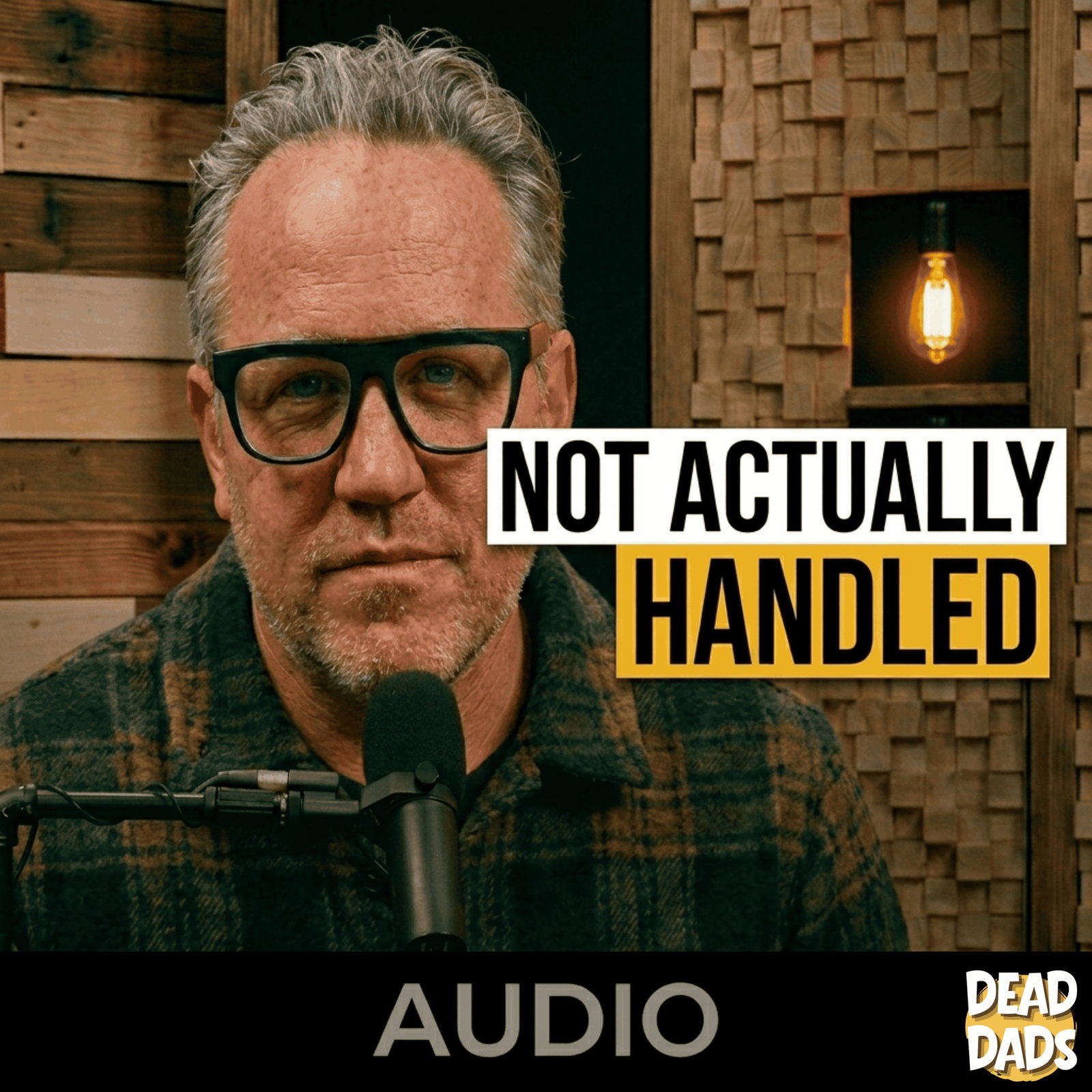
In this episode of Dead Dads, Blair French talks about losing his dad, Bob, after a sudden cancer diagnosis. The timeline was short. The questions came fast. And then, all at once, Blair was dealing with the logistics, the pressure, the family responsibility, and the strange feeling that he was now “the guy.”
The one who has to know what to do.
Even when he absolutely does not.
Blair talks about the diagnosis, the final days, the call, the paperwork, the passwords, the finances that were “organized” in the loosest possible sense, and what happens when you keep pushing through grief until your body shuts the plan down for you.
Which, as strategies go, is popular among men and not recommended by anyone.
This is a conversation about father loss, delayed grief, burnout, family responsibility, estate planning, and what happens when you try to hold it together for too long.
If your dad is gone, or you know that day is coming, this episode will help you understand what can happen next.
🎧 In this episode, you’ll hear about:
- What actually hits after your dad dies
- Why “I thought I had more time” stays with you
- What gets missed when everyone says things are handled
- What happens when finances, passwords, and paperwork are unclear
- How men become “the guy in charge” without choosing it
- Why grief can turn into work, control, or burnout
- What it feels like to hold it together until you cannot
- Why one real conversation can change everything
- How to carry your dad forward without letting grief take you down
👨👦 About Blair and his dad
Blair French lost his dad, Bob, three years ago.
Bob was an accountant. Steady. Practical. The kind of guy who did not need to be the center of attention, but quietly held things together.
After a sudden cancer diagnosis, Blair had a short window before losing him.
In this episode, Blair talks about what that experience actually looked like and how it changed how he works, parents, and lives now.
It is a conversation about father loss, cancer, grief support for men, burnout, family responsibility, parenting, and the pressure many men feel after their dad dies.
Also, yes, there are laughs. Because grief is weird like that. Rude, honestly.
⏱️ Episode chapters
0:00 – You Thought You Had Time. You Didn’t.
2:30 – Why Blair Agreed to Talk About This
6:40 – Who His Dad Was
12:10 – The Diagnosis That Changed Everything
18:20 – What His Dad Never Told Him
24:10 – The Morning He Died
30:00 – Getting the Call When You’re Not There
36:20 – When You’re Suddenly “In Charge”
🖤 About Dead Dads
Dead Dads is a podcast for men figuring out life after losing their dad. Hosted by Roger Nairn and Scott Cunningham, the show features honest conversations about father loss, grief, identity, family, memory, masculinity, and all the strange stuff that happens after your dad dies. No grief brochure voice. No tidy healing arc. Just real conversations for guys who are grieving, remembering, avoiding, laughing, carrying on, or trying to understand what losing a father did to them.
You’re not alone.
☕ If Dead Dads has helped you feel a little less alone, consider buying us a coffee: https://buymeacoffee.com/deaddadspodcast
Follow Dead Dads:
Website: https://www.deaddadspodcast.com/
YouTube: https://www.youtube.com/@deaddadspodcast
Instagram: https://www.instagram.com/deaddadspodcast/
TikTok: https://www.tiktok.com/@dead.dads.podcast
Substack: https://substack.com/@deaddadspodcast
And listen to us here, or wherever you enjoy podcasts:
Spotify: https://open.spotify.com/show/4WWlXBPzgj151SFYRUZeSB?si=fe005fdf079249b8
Apple Podcasts: https://podcasts.apple.com/us/podcast/dead-dads-podcast-grief-support-for-men/id1867632438
New episodes every week.
Dead Dads Podcast is produced with the support of JAR Podcast Solutions, the branded podcast agency that helps organizations build shows people actually want to spend time with. Learn more at https://jarpodcasts.com/
0:00 Speaker 0: Maybe that's a bit of advice is no matter if you have time or Speaker 0: not in the passing of your parent, never trust them by Speaker 0: what they're saying. Speaker 0: Dig a little bit deeper because he's like, oh, I've I've cleaned up all Speaker 0: my finances, and I've cleaned up all the passwords to all the different accounts Speaker 0: that he has. Speaker 0: And to be honest, Speaker 0: no. Speaker 1: Losing your dad sucks, but talking about it doesn't have to. Speaker 2: We are not therapists professionally. Speaker 2: We may like to think we are, but we are not. Speaker 1: We give really good advice though. Speaker 1: Mhmm. Speaker 1: Just not medically or therapeutically.
0:41 Speaker 1: Although if you do feel better after it, that's okay. Speaker 1: You can still you can still listen to us. Speaker 2: But we will bill you for that. Speaker 2: We're also not doctors. Speaker 1: That's true. Speaker 1: We're definitely not doctors. Speaker 1: I once was a doctor, but then was immediately removed from Speaker 1: doctor status. Speaker 2: You just had a lab coat on. Speaker 2: Like, that's not a doctor. Speaker 1: That that was the problem. Speaker 1: Enjoy the next episode of Dead Dads. Speaker 1: So, Scott, we have a new guest today. Speaker 1: Wonder if you can introduce him. Speaker 2: Yes. Speaker 2: I absolutely can. Speaker 2: Thank you very much, Roger. Speaker 2: This is Blair French. Speaker 1: Hey, Blair. Speaker 1: Welcome to Dead Dads. Speaker 1: Thanks for having me. Speaker 2: So I'll admit to knowing Blair in advance already. Speaker 2: I feel like it's a it's a secret sometimes, but I do Blair were Speaker 2: and I worked together. Speaker 2: I would say oh, I don't wanna age us, actually.
1:23 Speaker 2: So I would say we worked together not yesterday, Speaker 0: but a little while ago. Speaker 0: When we were a little younger. Speaker 2: We were a little younger. Speaker 2: We still look the same, but we were a little younger. Speaker 1: So, Blair, I have to start by asking, like, why would you decide to Speaker 1: come on a show like this? Speaker 0: You know what? Speaker 0: I saw Scott's post on LinkedIn, and Speaker 0: it had been about three years since my dad had passed. Speaker 0: And I felt like I had gone through some highs, some lows, some Speaker 0: good times, some bad times, and I thought it was a great opportunity to Speaker 0: share some of my experience because I think we don't talk about it. Speaker 0: And that is really as soon I think I probably messaged you within thirty Speaker 0: seconds of that post going up.
2:03 Speaker 0: I'm neurotic. Speaker 1: The infamous the infamous LinkedIn post. Speaker 0: Yeah. Speaker 0: Yeah. Speaker 0: And I was like, I'm in. Speaker 0: I'm in. Speaker 0: What do I need to do to get on this this podcast? Speaker 0: Yeah. Speaker 1: Love it. Speaker 1: Love it. Speaker 1: So, you know, one of the Speaker 2: I played it cool. Speaker 2: You did. Speaker 2: I played it cool. Speaker 2: Yeah. Speaker 2: Love it. Speaker 2: Hard to get. Speaker 2: Yeah. Speaker 1: You know, one of the core kinda quirky things we like to do to Speaker 1: start off all of our episodes to learn more about you is to ask Speaker 1: kind of a, you know, random question. Speaker 1: So the question I wanna know is, at the end of the day, you Speaker 1: know, let's say you've had a bit of a stressful day, what is your Speaker 1: go to comfort, rewatch or listen, or what's Speaker 1: the sort of consumption around media that you that you just have to Speaker 1: do? Speaker 0: My outlet is my eight year old, and I get into the play mode.
2:43 Speaker 0: Right? Speaker 0: Because I love relearning and being reintroduced to Speaker 0: so many things that I loved as a child through him. Speaker 0: And it's a complete decompression. Speaker 0: Right? Speaker 0: Sitting down and getting on the floor and playing LEGO or reading Speaker 0: a book with him, there's just every kinda pain point, every Speaker 0: stress just kinda floats out the window for me. Speaker 1: Did you go through the dinosaur phase or the, like, space phase? Speaker 1: Or Speaker 0: So it's the dragon phase right now and three d printed Speaker 0: dragons with eggs, the collection that we have. Speaker 0: And then we step on them and break them. Speaker 1: You're a three d printer family. Speaker 0: No. Speaker 0: We buy them. Speaker 0: We buy them. Speaker 0: We do not have one, or I should say grandma buys them.
3:23 Speaker 0: So Love it. Speaker 0: But that's what I it's like the media, I feel like, is a little Speaker 0: bit of a pit, right, to try to escape, whereas the the view Speaker 0: of the eight year old really does get you back to, like, those best Speaker 0: times of your memories. Speaker 0: Right? Speaker 0: It's one Speaker 2: of the best parts about having a kid is playing again. Speaker 2: I mean, I was a huge LEGO fan as a kid, and the fact Speaker 2: that we can do that again, I'm like, sure. Speaker 2: I mean, I'll buy some more LEGO. Speaker 0: Yeah. Speaker 0: Sure. Speaker 2: If if you want it. Speaker 0: Yeah. Speaker 0: Adult LEGO. Speaker 1: Yeah. Speaker 1: My son and I have gotten into model building. Speaker 1: Okay. Speaker 1: Like, remember the little plastic you know, the plastic, like, army tanks? Speaker 1: And drives my wife crazy because all of a sudden our house has army Speaker 1: tanks in them. Speaker 1: We're not really a military family, but we all of a sudden have tanks Speaker 1: in the living room, tanks on the windowsill.
4:04 Speaker 1: Yeah. Speaker 1: So that's been fun. Speaker 1: But then we started getting into these, like, Japanese kind of, like, almost like Speaker 1: transformers, but you put them together without glue, and it's, like, it's super cool. Speaker 2: It's fun. Speaker 2: Honestly, you guys have to do a Playdate because there's so many directions. Speaker 0: I was like, yeah. Speaker 0: I was like, I need to up my game. Speaker 0: Yeah. Speaker 0: No. Speaker 0: I don't want a Playdate because then Ollie will be like, well, why are Speaker 0: you slacking at the the toy department? Speaker 2: Exactly. Speaker 1: Yeah. Speaker 1: So but, you know, we wanna learn as much about your your dad Speaker 1: as possible. Speaker 1: Tell us all about him. Speaker 2: What was his yeah. Speaker 2: What was his full name? Speaker 0: Yeah. Speaker 0: Well, he goes by Bob French or Robert French. Speaker 0: He born and raised in Vancouver. Speaker 0: Actually, worked in the cannery here in Vancouver all through school, graduated Speaker 0: UBC, and he was a quintessential Speaker 0: accountant.
4:52 Speaker 0: My mom went on a blind date. Speaker 0: That's how they met. Speaker 0: And she came home from that date and was like, I can't. Speaker 0: I can't. Speaker 0: Because my mom was a hippie flower child party girl, and she's like, he's Speaker 0: so square. Speaker 0: That's what she always used to describe my dad. Speaker 0: And I'm like, that is pretty much what he was, square. Speaker 0: And an accountant, very, like, frugal and fiscally responsible, Speaker 0: but he hounded but he also understood, like, diligence and hard Speaker 0: work. Speaker 0: And he hounded my mom. Speaker 0: And finally, my mom's mom was like, just give him a chance, another chance. Speaker 0: And, Speaker 0: he won. Speaker 0: And he often did. Speaker 0: He often won by perseverance and persistence. Speaker 0: He offered her. Speaker 0: Yeah.
5:32 Speaker 0: There we go. Speaker 0: Yeah. Speaker 0: He he had a spreadsheet, everything that she Speaker 2: said. Speaker 2: What works for us? Speaker 0: Yeah. Speaker 0: Exactly. Speaker 0: So he's always been that kinda stability, I would Speaker 0: say, with regards to me growing up with him. Speaker 0: But he always had that level of hard work, and Speaker 0: I think he had a love for Vancouver and a Speaker 0: love for BC. Speaker 0: And then we he moved out to Hope for a really great job Speaker 0: and and really kinda was a part owner of a big construction firm. Speaker 0: So now I caveat with, yes, he Speaker 0: was an accountant, but what he was known for was just out of the Speaker 0: blue zingers.
6:14 Speaker 0: Right? Speaker 0: We'd all be sitting. Speaker 0: My mom's loud. Speaker 0: I'm loud. Speaker 0: My sister's loud. Speaker 0: Try to compete with the three of us. Speaker 0: But every once in a while, out of the blue, he would just crack Speaker 0: a joke that was so unexpected. Speaker 0: And I think that's what was really cool about my dad is those Speaker 2: Because of his sort of personality? Speaker 2: Like, all Speaker 1: those Like, he never saw it coming. Speaker 1: Yeah. Speaker 0: He let my mom be the show. Speaker 0: He let my sister and I be the show because he was so proud Speaker 0: of us. Speaker 0: That's what his pride like, his joy was, seeing how successful Speaker 0: or or hopefully successful we would become. Speaker 0: But every once in a while, just out of the blue, we and we'd Speaker 0: be like, oh, you are alive still. Speaker 2: What Speaker 1: what's, give us an example of a zinger.
6:55 Speaker 0: It was he just kinda sat there, listened, absorbed, Speaker 0: and only really engaged and spoke when it felt right. Speaker 0: He didn't need to be the center of attention. Speaker 1: Love that. Speaker 2: Was he a fix it himself dad? Speaker 2: Was he a call the professionals dad? Speaker 2: Was he, I mean, duct tape if it's necessary? Speaker 2: What kind of, Speaker 0: No. Speaker 0: My dad never fixed anything. Speaker 0: K. Speaker 0: Yeah. Speaker 0: My dad was, Speaker 2: Or attempted to fix anything? Speaker 0: No. Speaker 0: No. Speaker 0: He knew his limits, and he knew his his his skill set. Speaker 0: Even though he owned Speaker 1: a construction company. Speaker 0: Yeah. Speaker 0: But he was the CFO. Speaker 1: Okay. Speaker 0: Right? Speaker 0: He wasn't in there fixing the vehicles. Speaker 0: Like, he couldn't well, he could he never even taught us how to drive Speaker 0: standard.
7:36 Speaker 0: Do you know what I mean? Speaker 0: And out of the construction firm back in the day, all the trucks were Speaker 0: standard. Speaker 0: But, he was a call the professional. Speaker 0: Like, he knew his limits. Speaker 0: He wasn't gonna go, like, overstep and think he could, like, accomplish something Speaker 0: where he's like, no. Speaker 0: I don't know how to change the oil. Speaker 0: And why would I? Speaker 0: My time is better spent growing the company. Speaker 0: Right. Speaker 0: Oh, it's efficiency. Speaker 0: There we go. Speaker 2: There. Speaker 2: Okay. Speaker 0: So of money. Speaker 0: Right? Speaker 2: He would be like could teach you to drive standard, but that would mean, Speaker 2: I'd have less time. Speaker 2: Yeah. Speaker 2: Yeah. Speaker 2: No. Speaker 0: He's doing the calculations. Speaker 0: He would have been dead way before now if we he taught me how Speaker 0: to drive standard because I would have murdered him. Speaker 0: So Speaker 1: so how how how did he die?
8:19 Speaker 0: So my dad went in for a routine GP Speaker 0: check, and they did a stool. Speaker 0: I guess, Speaker 2: teeth was this? Speaker 0: This was just over three years ago. Speaker 0: So it would have been three years in November. Speaker 0: Just went in for the routine check. Speaker 0: Okay. Speaker 0: And they did and I'm an oversharer, so I will provide as Speaker 0: many details as as we can. Speaker 0: But he went in, and the doctor was like, yeah. Speaker 0: You know what? Speaker 0: We should probably do a stool check. Speaker 0: There was elevated levels of blood in the stool, and so they did Speaker 0: a colonoscopy. Speaker 0: And with that colonoscopy, they found seven polyps. Speaker 0: And Speaker 0: really kinda rare, one of the polyps had melanoma.
9:00 Speaker 0: So that was the trigger. Speaker 0: He immediately got into the cancer agency and started doing the full gambit Speaker 0: of MRIs, CT scans, etcetera. Speaker 0: And the first test came back, and it was profuse like, Speaker 0: profusely throughout the whole body. Speaker 2: What age is he at this point, sorry? Speaker 0: He is seventy Speaker 0: two. Speaker 0: K. Speaker 0: Yeah. Speaker 0: So it was already, throughout his body. Speaker 0: And so he we went into the Speaker 0: kinda attempted treatment phase of it. Speaker 0: But it was, like, only a small window between when he was diagnosed Speaker 0: with melanoma from the colonoscopy to when it was already Speaker 0: metastasized throughout the whole body.
9:43 Speaker 0: So How do you Speaker 1: think that short amount of time, that small window, Speaker 1: impacted you? Speaker 1: I mean, you must have been completely shocked, but also didn't really have a Speaker 1: ton of time to, Speaker 1: not prepare, but, like, just to to yeah. Speaker 0: Yeah. Speaker 0: You know what? Speaker 0: You actually to be honest, it was almost a blessing to Speaker 0: because you don't start to overthink it. Speaker 0: You don't start to you kinda go into protect mode, and you Speaker 0: try to go into what's best for my dad Mhmm. Speaker 0: Rather than what's best for me at that point. Speaker 0: And I think the small window Speaker 0: is what allows you to do that rather than it being that Speaker 0: diagnosis phase being drawn out.
10:26 Speaker 0: And I would almost say, like, diagnosis phase because it wasn't a stage one, Speaker 0: right, where you're like, oh, okay. Speaker 0: How is that gonna turn out? Speaker 0: It like, it it's probably very, very curable, Speaker 0: whereas it was like, Speaker 0: I don't think I ever got really the truth from my dad fully about Speaker 0: how sick he was. Speaker 0: He was Speaker 2: keeping it from you, eventually? Speaker 0: Oh, yeah. Speaker 0: Like, we we heard stories afterwards. Speaker 0: Because we grew up in a small town, and my dad outside of Vancouver Speaker 0: in Hope, BC. Speaker 0: And so everyone knew my dad because major a good portion of the town Speaker 0: would have worked for the company that he was involved in. Speaker 0: He was head of chamber, all of that. Speaker 0: And and one person came up to my mom and was like, yeah. Speaker 0: He was complaining how he couldn't see out of his one eye, which clearly Speaker 0: is a sign that most likely the tumors are now in the brain and Speaker 0: affecting the optic nerve.
11:14 Speaker 0: He never shared that. Speaker 0: I think he hid the amount of pain he was in because he was Speaker 0: trying to protect my mom, my sister, and I from really knowing the true Speaker 0: diagnosis. Speaker 1: Does that bother you that he didn't that he kept it from you? Speaker 1: If he if he kept it from you? Speaker 0: I think it it it would have bothered me more if it was curable. Speaker 0: Right? Speaker 0: I think if it because I could have maybe supported a bit more. Speaker 0: I think because in the end, we really had to come to the term Speaker 0: I don't think he ever came to the terms that he wouldn't be cured. Speaker 0: I came to the terms that he wouldn't be cured based on the test Speaker 0: results and and the responses to some of the therapies that we tried. Speaker 0: I think I would have been a bit more frustrated, right, if it was Speaker 0: like a stage one or a stage two where there is a really good Speaker 0: chance of survival.
12:02 Speaker 0: Because I would have been I would have tried to maybe help more. Speaker 0: Right? Speaker 0: I would have maybe tried to support him more, whereas because I didn't really Speaker 0: know, I just did the best best I could with the information I had. Speaker 1: And and, ultimately, how did he pass? Speaker 0: It would it's actually probably one of the best ways. Speaker 0: And this is what he'll kill me if I tell it well, he'll be Speaker 2: mad that Speaker 0: I said this. Speaker 0: But he was at home, and he he hadn't didn't wanna like, Speaker 0: it wasn't at the point where he could physic like, he was still managing. Speaker 0: Right? Speaker 0: He was still doing well. Speaker 0: He was still getting up, doing his routines, cleaning out the pool, going Speaker 0: to the mailbox. Speaker 0: And then one night, my mom actually woke up in Speaker 0: the middle of the night crying.
12:46 Speaker 0: And she's like, oh, something's not right. Speaker 0: She went back to sleep, and my dad is a routine man. Speaker 0: So he's up for breakfast having his bowl of shredded frosted shredded Speaker 0: meats, had to be frosted, every morning by Speaker 0: seven. Speaker 0: And my mom had slept in a bit, and it was eight, and he Speaker 0: wasn't up. Speaker 0: So my mom was like, uh-oh. Speaker 0: This is not good. Speaker 0: And so she went downstairs, and he had passed on the toilet Mhmm. Speaker 0: Which is not uncommon, I found out afterwards. Speaker 1: Elvis did it? Speaker 0: Yeah. Speaker 0: Well, I know. Speaker 0: Yeah. Speaker 0: That's kinda nice to equate my dad to Elvis. Speaker 2: You know, nothing about him said Elvis to you up until this point. Speaker 0: He was also a Exactly. Speaker 0: I know. Speaker 0: He Speaker 2: was also Speaker 1: an accountant.
13:26 Speaker 0: Yeah. Speaker 0: Yeah. Speaker 0: Yeah. Speaker 0: But, you know, what what I found out is, like, you sit on the Speaker 0: toilet and it's that pressure Yeah. Speaker 0: That kinda creates a little bit of a cardiac issue. Speaker 0: Oh, okay. Speaker 0: And it was my mom was like, he looked fine. Speaker 0: And, unfortunately, it was a power outage. Speaker 0: Like, nothing is ever easy for my family. Speaker 0: Let's get that out of the way. Speaker 0: Like, there's always drama. Speaker 0: There's always chaos when there's big events. Speaker 0: And at that time, the power was out, and the phones were down. Speaker 0: No. Speaker 0: So my mom's like, I can't even phone nine one one. Speaker 0: I can't even, like so she got in her car and drove around the Speaker 0: whole town to all of her friends' houses to find which ones had power.
14:07 Speaker 0: And she finally had to drive outside of the town. Speaker 1: He was still home on the toilet. Speaker 0: He was still home at the toilet because he was a bigger man. Speaker 2: He's not going anywhere. Speaker 0: Yeah. Speaker 0: He's a bigger man, and there's no way my mom would have attempted to Speaker 0: move him. Speaker 0: And, Get him in the car. Speaker 0: Yeah. Speaker 0: Well and he had clearly been there and had passed. Speaker 0: So there was no, like, reviving or anything. Speaker 0: And so Speaker 0: she found a house. Speaker 0: They called him back to the house. Speaker 0: And I have to say the like, the EMTs were fantastic. Speaker 0: They went and got a blanket. Speaker 0: They covered him. Speaker 0: They brought him to his bed. Speaker 0: They put him in the in the bed, got him looking comfortable, and Speaker 0: then then the coroner and everyone Speaker 2: So they placed him in Speaker 0: a more Appropriate way.
14:50 Speaker 0: And so I think that was nice for my mom because to have him Speaker 0: sitting there while she was waiting for the coroner and the person that would Speaker 0: take the body away, like Speaker 2: Yeah. Speaker 0: That's that's where she showers. Speaker 0: She would have to shower with them on the toilet. Speaker 2: And you said she woke up in the middle of the night crying but Speaker 2: didn't know why. Speaker 0: No. Speaker 0: So just so She just had a inkling that something wasn't right. Speaker 1: How did you find out? Speaker 0: So I knew something was wrong when, Speaker 0: I people couldn't get a hold of me. Speaker 0: And so I like, they were trying my phone, and then I got a Speaker 0: weird I got a Facebook message from one of my mom's friends Speaker 0: saying, hey. Speaker 0: Can you call your mom?
15:30 Speaker 0: And that's when I had found out. Speaker 0: So I was in Saskatoon. Speaker 0: They were in Hope. Speaker 0: So Speaker 1: And what well, like, what stands out to you in that moment that you Speaker 1: look back and kind of always remember when you first heard your dad had Speaker 1: died? Speaker 0: I think there was a sense of being numb. Speaker 0: Mhmm. Speaker 0: Right? Speaker 0: And I didn't and I I think what we have to also Speaker 0: kinda mention is it was eighteen months from diagnosis Speaker 0: to when my dad passed. Speaker 2: So you'd spent some time It was a considering these sort of scenarios. Speaker 2: Maybe not this exact one. Speaker 2: No. Speaker 2: Yeah. Speaker 2: But something like Speaker 0: this. Speaker 0: Yeah. Speaker 0: And it was a process. Speaker 0: Right? Speaker 0: Because he was doing immunotherapies. Speaker 0: Yeah. Speaker 0: And, like, there was even the points where, Speaker 0: if you know, depending on where you're listening from, the town of Speaker 0: Hope was, Speaker 0: stuck and surrounded by mudslides and landslides.
16:22 Speaker 0: All the highways in and out of the town were closed, due to Speaker 0: the weather conditions, and my dad was still still doing medical treatments Speaker 0: and immunotherapies. Speaker 0: And so Speaker 0: those were the things that I was thinking about is, like, were all these Speaker 0: factors of him not being able to get treatment or get there in time? Speaker 0: Like, could we have delayed it? Speaker 0: Could we postponed it? Speaker 0: I should have been there more. Speaker 0: I thought I had more time. Speaker 0: Those were the questions that were going through my head were like and then Speaker 0: I was like, oh my god. Speaker 0: How am I gonna I'm in Saskatoon. Speaker 0: I need to get home, and I couldn't get home for almost a week Speaker 0: just because of the the weather conditions and flights.
17:03 Speaker 0: So I kinda went more less into, like, what am I feeling? Speaker 0: What are my emotions? Speaker 0: Because I remember the one thing my dad said to me. Speaker 0: We went for a beer and hope at the a cool little local brewery, Speaker 0: just my sister, my dad, and myself. Speaker 0: And he said, the one thing I need you to do is take care Speaker 0: of your mom. Speaker 0: And I'm sitting there going, Jesus Christ. Speaker 0: I can't even get home. Speaker 0: How am I gonna take care of my mom? Speaker 0: Because my sister's in Calgary. Speaker 0: She can't even get home right now. Speaker 0: So she was actually able to get a last minute flight into Abbotsford, get Speaker 0: there within a day. Speaker 0: It took me about five, six days to get home. Speaker 1: In those five or six days, was there anybody that showed up that that Speaker 1: you just never would have expected that that supported you?
17:45 Speaker 0: I think my family rallied around me. Speaker 0: My husband was very supportive. Speaker 0: My in laws in Victoria were very supportive in Speaker 0: their family. Speaker 0: And so I my brother-in-law out of Toronto Speaker 0: by marriage also had his father pass away. Speaker 0: He was a great resource, as well. Speaker 0: So it was more the, like, the inner circle, let's call it, Speaker 0: more so than new faces or old friends. Speaker 0: But I had great messages. Speaker 0: My dad was a known person in the town. Speaker 0: Like, people knew him. Speaker 0: So, like, out of the blue, I think, you know, you get the nice Speaker 0: messages and memories and shared and and whatnot.
18:29 Speaker 0: So Speaker 2: I so I'm just putting myself in your shoes here. Speaker 2: So you're you're not able to come and take care of your mom, and Speaker 2: you're not able to actually step into this position that he had asked you Speaker 2: to. Speaker 2: But then at some point, you are. Speaker 2: So you arrive on the scene. Speaker 2: Are you are you trying to catch up? Speaker 2: What's what's the mentality of you coming into this scene hot, I guess, Speaker 2: but the you're now five days past when you'd ideally want? Speaker 2: Are you starting the planning, clipboard in hand? Speaker 2: Or who's Speaker 0: who's Blair when you have something? Speaker 0: Yeah. Speaker 0: I'm a little bit neurotic. Speaker 0: I think the first thing is we kinda celebrated. Speaker 0: We took the moment to actually allow ourselves to be in Speaker 0: shock, Speaker 0: to grieve, to remember some of the funny things.
19:11 Speaker 0: Like, I remember, like, during this process, my dad would be like, Speaker 0: oh, my iPad's cracked. Speaker 0: And my mom's like, well, just buy another fucking iPad. Speaker 0: Right? Speaker 0: And he's like, well, what's the point? Speaker 0: Because he's gonna be dead in a couple months. Speaker 0: Right? Speaker 0: Same with his bed. Speaker 0: She's like, buy a new bed. Speaker 0: He's like, well, what's the point? Speaker 0: That's the morbidness. Speaker 0: Right? Speaker 0: He's like, there's no point. Speaker 0: He's like, I can last another couple months on this bed. Speaker 0: Like, jeez. Speaker 0: And my mom was like, what so we we had moments where we, like, Speaker 0: celebrated those and remembered. Speaker 0: But then I I went into my, like, my neurotic, okay, what's Speaker 0: next steps? Speaker 0: We need to go down to the funeral home.
19:51 Speaker 0: We need to figure out, are we doing Speaker 0: are we going to, Speaker 0: appease him and not do a funeral? Speaker 0: Or Oh, that was suspicious? Speaker 0: He did not want anything. Speaker 0: Do we? Speaker 0: Do we not? Speaker 0: Is that good for him if we do it? Speaker 0: Is it better for us if we do it? Speaker 0: What do we want to do? Speaker 1: What what do you factor in when you think about is it better for Speaker 1: us? Speaker 0: Well, I factored in the fact that he was dead. Speaker 0: Yeah. Speaker 0: So so it's like So his opinion? Speaker 0: Yeah. Speaker 0: Yeah. Speaker 0: If we do it or we don't, really, does it matter? Speaker 1: What's he gonna do? Speaker 0: Matter to him. Speaker 0: What is he gonna do from, like, whatever you believe in above, he's gonna, Speaker 0: like, strike me down? Speaker 0: And when you say funeral, Speaker 1: are you talking about, like, he didn't want a religious funeral?
20:32 Speaker 1: No. Speaker 1: He just didn't want any sort Speaker 0: of He didn't want anything. Speaker 0: He just wanted to go into the abyss and and be that. Speaker 0: And And in the end, we were like, you know what? Speaker 0: We're gonna do something small. Speaker 0: We just did it at our house. Speaker 0: My husband is known for PowerPoint presentations. Speaker 0: So he did an incredible PowerPoint, which we just had on the TV. Speaker 0: My dad was a world traveler. Speaker 0: I think that's one thing we miss talking about him. Speaker 0: He loved to travel. Speaker 0: And he traveled the world because even when I found out that he didn't Speaker 0: have long to live, I said, what's your bucket list? Speaker 0: What are we gonna do? Speaker 0: And so he was like, I don't care. Speaker 0: He's like, I don't wanna do anything. Speaker 0: I've traveled the world. Speaker 0: I've been everywhere that I want to go.
21:12 Speaker 0: I want to just enjoy my oasis of my house and backyard. Speaker 0: I'm like, fair. Speaker 0: So we had an incredible PowerPoint because there was, like, trips to Egypt, Asia, Speaker 0: Australia, and we're talking, like, big trips. Speaker 0: So it was kinda nice that everyone was able to gather around Speaker 0: those photos. Speaker 0: And it was just it wasn't like a big thing where we invited Speaker 0: a million people. Speaker 0: It was really just some of his work colleagues that knew him, family Speaker 0: that knew him. Speaker 0: And I think it was good for all of us, even though he didn't Speaker 0: want it. Speaker 2: Did you ever travel with him? Speaker 0: Yes. Speaker 0: So we actually traveled quite a bit together. Speaker 0: But our biggest trip was, Speaker 0: when I was done my first degree and moving into a second.
21:56 Speaker 0: Also, my dad didn't care what I did. Speaker 0: He was like, you are my my sister will agree with this golden child. Speaker 0: And he supported me no matter how crazy I was. Speaker 0: And so I he I had done a trip with my mom to Speaker 0: London and Paris when I was traveling the world. Speaker 0: And I said to him I said, I wanna do a trip with you. Speaker 0: And one of the things, he had been to Africa but hadn't seen all Speaker 0: the big five. Speaker 0: So we actually did a trip to Kenya, Kenya Speaker 0: actually did a trip to Kenya, Kenya and Tanzania together, a big Speaker 0: safari. Speaker 0: I'm big into mountains and climbing, and he surprised me with, Speaker 0: a hike. Speaker 0: He my dad didn't do it. Speaker 0: Let's preface that, to climb Kilimanjaro.
22:37 Speaker 0: And that was just a really kinda one, I wish he would have told Speaker 0: me so I could have trained. Speaker 0: But, yeah, it was such a great trip for us to have those memories. Speaker 0: And I just remember one time, we were sitting in the lodge drinking gin Speaker 0: and tonics, because gin and tonics supposedly help with the mosquitoes. Speaker 0: Because the, we thought the gin had the quinine, Speaker 0: the the stuff for the malaria pills. Speaker 0: And it's not the gin. Speaker 0: It's the tonic. Speaker 0: And so we were drinking triple gins with a splash of tonic Speaker 0: and absolutely got plastered. Speaker 0: Yeah. Speaker 0: Right? Speaker 0: Yeah. Speaker 0: But we were like, we're saving Speaker 2: ourselves for our the mosquito.
23:17 Speaker 2: The elevation. Speaker 0: And we never got malaria. Speaker 0: So, really, it's like Speaker 1: And we forgot to climb the mountain. Speaker 0: Yeah. Speaker 0: No. Speaker 0: That was prior to the mountain, and I didn't make it. Speaker 0: And I think what was really cool is in my dad's bedroom, he had Speaker 0: a blown up picture of my cell on the top of Kilimanjaro. Speaker 0: So yeah. Speaker 0: So he was always very, yeah, a world traveler and instilled Speaker 0: that in us. Speaker 1: So Blair, how how are you how are you doing with your dad's passing Speaker 1: now? Speaker 1: It's I mean, it's been three years. Speaker 0: Yeah. Speaker 0: It took it for me, it took a long time because I think Speaker 0: the first six months to the year was really supporting my mom. Speaker 0: Funny enough, my mom, she didn't even know how to pump gas.
24:00 Speaker 0: My dad always had her car filled. Speaker 1: It's always a stereotypical question of, like Yeah. Speaker 0: My mom was a brilliant woman. Speaker 0: She ran a successful company, clothing company. Speaker 0: She was a teacher by trade, very, very successful, but my my dad Speaker 0: treated her like a a princess. Speaker 0: So she's like, I never had to pump gas. Speaker 0: She's like, it was always just full. Speaker 0: And I'm like, oh, that must be nice. Speaker 0: So I think we we had a lot to do as much as my Speaker 0: dad said he combined the and maybe that's a bit of advice is Speaker 0: no matter if you have time or not in the passing of your parent, Speaker 0: never trust them by what they're saying. Speaker 0: Dig a little bit deeper because he's like, oh, I've I've cleaned up all Speaker 0: my finances, and I've cleaned up all the passwords to all the different accounts Speaker 0: that he has.
24:46 Speaker 0: And to be honest, no. Speaker 0: And it was a and I should have sat down with him and done Speaker 0: a spreadsheet because he was an old school accountant with Speaker 0: paper and notes and password on this random piece of paper. Speaker 0: So I didn't even know we couldn't even go through his files because we Speaker 0: didn't even know what we could throw out and what we had to save Speaker 0: because god knows it probably had some important password on it. Speaker 0: So I think that's, for me, one of the thing the first year was Speaker 0: a bit of cleanup. Speaker 0: And luckily, my mom's my dad's pension transferred to my mom, Speaker 0: and we were able to like, all those things got tidied up pretty quickly. Speaker 0: But personally, it took a huge toll on my mental health and my physical Speaker 0: health, to the point where I actually I dropped drastic Speaker 0: weight, stopped eating, tried to go back to work, and Speaker 0: I was and work was my outlet.
25:39 Speaker 0: But what I realized was everything else was falling apart around me. Speaker 0: Like, I could go to work, do my job, do it well, and succeed, Speaker 0: but then I was taking it out on my family. Speaker 0: I was taking it out on my mom. Speaker 0: I was taking it out on my sister. Speaker 0: And it wasn't until I kinda had this and I was a partner at Speaker 0: the company, so I had that added pressure to make sure the my business Speaker 0: was successful. Speaker 0: And so I had this wake up call, and I said, I need to Speaker 0: leave as partner, and I need time. Speaker 0: And luckily for me, the company, LMNO, and the other partners Speaker 0: were so supportive in that. Speaker 0: So I actually sold my partnership, stayed on in my current role.
26:20 Speaker 0: And I took a month off with my family, and we just Speaker 0: lived and took care of myself and kind of figure out Speaker 0: what it looked like next. Speaker 2: Why do you think you were driving yourself so hard? Speaker 2: I don't know if that's ever like, you you sound like I don't know Speaker 2: what the expression, like, the devil was at your back. Speaker 2: Like, you're cognizant. Speaker 2: Yeah. Speaker 2: I'm pushing myself hard. Speaker 2: I'm making myself. Speaker 2: As a part of you asked, am I trying to bring him back, or Speaker 2: am I trying to am I trying to Prove something? Speaker 2: Prove something? Speaker 2: Like, is there a part of you that's questioning what what put Speaker 2: me into this state? Speaker 2: And, thankfully, a state that you're no longer in and you pulled yourself out Speaker 2: of. Speaker 0: Yeah. Speaker 2: That that instigation.
27:01 Speaker 0: Yeah. Speaker 0: I think for me, my dad was my go to. Speaker 0: I think people would find it really weird that I talked to my parents Speaker 0: almost daily or did. Speaker 0: I I still talk to my mom probably. Speaker 0: Like, if I don't call her for a couple days, she's like, where were Speaker 0: you? Speaker 0: But with my dad, I called him for everything, every advice. Speaker 0: Not necessarily always looking for advice, but looking for his Speaker 0: thoughts because he was such a a successful, supportive Speaker 0: dad. Speaker 0: I was very fortunate that way. Speaker 0: I didn't have that anymore. Speaker 0: So what I tried to do was fill it by perseverance and success Speaker 0: to say, I don't need them. Speaker 0: I can do this on my own, and I will drive myself into my Speaker 0: grave trying to achieve this success, Speaker 0: where it was totally counterintuitive to what actually was happening.
27:52 Speaker 0: And I was holding it to get and that's the other thing is, like, Speaker 0: you know, I think family saw it, but worked in it because I I Speaker 0: would never I held it together so well at work. Speaker 0: And then I think when I would get home, I would just it would Speaker 0: decompress. Speaker 1: And was there, like, a rock bottom moment, or, you know, was there a Speaker 1: big blow up of some sort? Speaker 1: Or did it Speaker 0: I think for me is when I realized I hadn't eaten anything in probably, Speaker 0: like, forty eight hours. Speaker 0: I was feeling it was a another control aspect. Speaker 0: Right? Speaker 0: I was like, oh, I don't need to eat. Speaker 0: I'm not I'm good. Speaker 0: I you know what? Speaker 0: Things I've gotta get done. Speaker 0: I Speaker 2: don't know. Speaker 0: I got things I gotta get done. Speaker 0: I gotta think about things I gotta keep moving.
28:34 Speaker 0: I just didn't look healthy, and I clearly wasn't happy. Speaker 0: And I think that was a bit of a you know, I don't think Speaker 0: everyone has that ability to have that wake up call themselves. Speaker 0: Right? Speaker 0: And I and I wouldn't necessarily say it was rock bottom, but I clearly Speaker 0: was in a you know, and at that point, I was seeing a doctor. Speaker 0: I was she's like, definitely burnout is a diagnosis we Speaker 0: have for you. Speaker 0: I think that's another thing is people just it's easier to fill the void Speaker 0: than it is to try to deal with whatever emotions that you're dealing with Speaker 0: with the pain. Speaker 0: Yeah. Speaker 0: Hundred percent. Speaker 0: So I was dealing with her. Speaker 0: I was on antidepressants, and I think that's the other thing is, like, Speaker 0: people have to be open to seeking help.
29:21 Speaker 0: But more importantly, Speaker 0: you can't seek help unless you're open to talking about it. Speaker 0: And I wasn't open to talking about it Speaker 0: right away. Speaker 0: It took me a little bit of time to get there. Speaker 0: So Speaker 1: So you said that your dad was your go to. Speaker 1: Is there anything, like, is there anything right now that you just you can't Speaker 1: go to anybody else except him that you just wish he was here to Speaker 1: help solve or you could bounce off him? Speaker 1: Or Speaker 0: Yeah. Speaker 0: Like, to be honest, everything. Speaker 0: Right? Speaker 0: Like, I miss that. Speaker 0: Right? Speaker 0: I miss that connection that I had with him. Speaker 2: Like because they have to give you advice anyway. Speaker 2: Right? Speaker 2: They do.
30:01 Speaker 2: They have to answer the phone. Speaker 2: It. Speaker 0: And I I think in a way, it was to help me to give Speaker 0: me the strength to be you know what? Speaker 0: I am on the right path. Speaker 0: Like, even with the move to Vancouver, Speaker 0: right, it's a big financial burden to move to one of the most expensive Speaker 0: cities in the world, from Saskatoon, particularly. Speaker 0: You know, I had done spreadsheets of going financially, can we make this work? Speaker 2: Oh, he must have loved that. Speaker 1: Well, he Speaker 0: wasn't alive at all. Speaker 0: Geez, Scott. Speaker 0: Rub it rub it out. Speaker 0: That. Speaker 0: Yeah. Speaker 2: He must have loved that. Speaker 2: Yeah. Speaker 2: That's what I meant. Speaker 2: I was about to go up. Speaker 2: But yes. Speaker 0: No. Speaker 0: But, like, but it was so nice because I we met with our Speaker 0: accountant because my husband and I were both incorporated.
30:44 Speaker 0: So we have an accountant, and he ran my numbers. Speaker 0: And I was off by four grand. Speaker 0: And we're not talking small numbers. Speaker 0: So I'm like, you know what? Speaker 0: Fuck yeah. Speaker 0: I was like, my dad would be proud. Speaker 0: I did it on my own, but I still wish I could have, like, Speaker 0: confirmed with him that I was. Speaker 0: Those are the things that I miss. Speaker 0: Because whenever I had to make a big life decision, I always went to Speaker 0: him. Speaker 1: Well, your parents are your life preserver in a lot of ways. Speaker 1: And you don't always need that life preserver, but you you wanna know it's Speaker 1: there. Speaker 1: It's kinda like a or a smoke detector, you know, anything that's gonna keep Speaker 1: you alive. Speaker 0: And he was so pragmatic. Speaker 0: Right? Speaker 0: Like, he was a matter of fact. Speaker 0: Right? Speaker 0: He would just lay it out. Speaker 0: There was no, like, sugarcoating. Speaker 0: There was no, like, appeasing me because he knew he I was gonna do Speaker 0: it anyways.
31:26 Speaker 0: Right? Speaker 0: But he would just say, well, here's the pros and cons, and here's what Speaker 0: you need to think about. Speaker 0: Because if I wanted crazy advice, I'd go to my mom. Speaker 0: Yeah. Speaker 0: Right? Speaker 1: So where how does grief show up for you now? Speaker 1: Like, it like, what how does it manifest? Speaker 0: I've kinda rethought grief in a way is to manifest Speaker 0: memories and moments that remind me of my dad. Speaker 1: What are some examples of of those? Speaker 0: I think one thing is so after my dad passed, Speaker 0: my mom and I were talking. Speaker 0: And she's like, god. Speaker 0: Every time I go in the backyard, there's these Blue Jays, and they're so Speaker 0: annoying. Speaker 0: They're just sitting on the roof of the gazebo, like, cawing Speaker 0: at me.
32:08 Speaker 0: Like and I'm like, well, mom, you do realize what that Speaker 0: bag of peanuts is in the garage. Speaker 0: Dad would go out and feed these Blue Jays every day. Speaker 0: I was like and my parents, like, bickered. Speaker 0: It was quite funny. Speaker 0: I was like, and this is now his way of punishing you since his Speaker 0: passing to continue the bickering between the two of you. Speaker 0: So what's really cool is that blue jay has become a symbol for Speaker 0: my dad. Speaker 0: And it was an interesting process for me because I I had at the Speaker 0: time, my son was five or just under five. Speaker 0: So he's at the stage where he understood what was going on. Speaker 0: And he an and he even brings up moments that he's sad about my Speaker 0: my dad passing.
32:53 Speaker 0: But what's really cool is this whenever we see a Bluejay, he Speaker 0: goes, oh, it's papa Bob. Speaker 0: He's here with us. Speaker 0: So it's it's changing those moments of where it's sad Speaker 0: that he's not here Yeah. Speaker 0: Into something where it's more magical that he is Speaker 0: here. Speaker 0: And I think that's a way that I'm gonna keep his legacy alive Speaker 0: with my son who doesn't have that connection with him to that level. Speaker 0: So whenever we see a Blue Jay, it's like, there's dad. Speaker 0: He's watching. Speaker 0: He's here. Speaker 2: I think that's the thing that I'm always interested in is how people keep Speaker 2: their dads around. Speaker 2: What like, do you celebrate on his birthday?
33:34 Speaker 2: Do you find a thing that he loved and try to do that with Speaker 2: your kids? Speaker 0: I don't choose specific days. Speaker 0: Even this year, his the day of his passing, I didn't Speaker 0: even I didn't even remember. Speaker 0: And not in a bad way, but I was like, I have so many Speaker 0: other positive things to remember him about. Speaker 0: I don't need a day of mourning for him. Speaker 0: I need a I need days of remembering and celebration. Speaker 2: I've set myself a particular challenge because, I've told my kids that Speaker 2: we can go to Dairy Queen because that was his favorite dessert. Speaker 2: And so they are like, hey. Speaker 2: Is it his, anniversary's death? Speaker 2: We wanna get to Dairy Queen. Speaker 2: I I feel like even if I wanna forget, I've now put myself into Speaker 2: a scenario where it's no longer possible.
34:19 Speaker 0: Can't go wrong with Dairy Queen, though. Speaker 1: How do you think losing your dad has has taught you about being a Speaker 1: parent? Speaker 0: I think it's to appreciate time. Speaker 0: Right? Speaker 0: I have even, since the move to Vancouver, reduced my work week, so I Speaker 0: only work nine to three, again, thanks to my job and Speaker 0: then being supportive. Speaker 0: So I I try to be more present and more involved Speaker 0: and more active. Speaker 0: I take him to all his activities, soccer games, and I think Speaker 0: it's to as much as Speaker 0: he frustrates me, my son, and drives me nuts, Speaker 0: I think it's just being a lot more present. Speaker 0: You you can't get time back.
35:00 Speaker 0: Right? Speaker 0: That's probably my biggest regret with his passing is during that Speaker 0: time of diagnosis to his passing, I should have made time. Speaker 0: I always found an excuse not to go back. Speaker 0: Now we were always on the phone, and we were always in contact, but Speaker 0: that's just a different experience than actually physically being there with him. Speaker 0: That is literally my only regret of my whole life with my dad, Speaker 0: is that eighteen months that I didn't make a better effort to go Speaker 0: home. Speaker 0: And I think that will be I'll carry that with me in a good Speaker 0: way to say, hey. Speaker 0: I'm gonna make the effort for my son. Speaker 0: I'm gonna make the effort for my sister, for my mom.
35:41 Speaker 0: I'm going up to visit my mom this weekend just for the night with Speaker 0: my son, because I haven't seen her enough. Speaker 0: So I'm making the effort, and that's that's what we'll continue to Speaker 2: do. Speaker 2: I wanna ask, what about the first time that Ollie presents you, with Speaker 2: a spreadsheet on why you should buy him a new, dragon three d dragon Speaker 2: toy? Speaker 2: When's that coming? Speaker 2: I'm What's that moment gonna look like? Speaker 2: When he lays those numbers out for you and there's no Speaker 1: Or will it be a PowerPoint? Speaker 2: I mean, it's it's hard to say. Speaker 1: He can Speaker 2: he can amalgamate both of your strengths. Speaker 2: You got a real winner on your hands here. Speaker 0: I wish that was the case. Speaker 0: My kid is a live in the moment Speaker 0: crazy kid. Speaker 0: I will be floored if he comes with a spreadsheet.
36:24 Speaker 0: It's coming. Speaker 0: Okay. Speaker 0: Yeah. Speaker 0: I can feel it. Speaker 0: I'll hold you to that, but I just I don't know if he's that Speaker 0: kid. Speaker 0: He's he's genius well, I think, genius in other ways. Speaker 0: But spreadsheets and accounting, we have a ways to go. Speaker 2: Blair, thanks so much for everything. Speaker 2: I just wanna ask you this one last question. Speaker 2: If you could share with somebody who's, you know, just even day one, Speaker 2: they've just lost their dad, and they're just trying to kinda put themselves together, Speaker 2: what's something that you could you could tell them maybe to make them feel Speaker 2: to reassure them or help feel a sense of what's coming? Speaker 0: I think what I would recommend is you need to find your person. Speaker 0: You need to find the person that you can talk to because that is Speaker 0: gonna be crucial to you getting through this period in your life.
37:09 Speaker 0: And you need that person to be really receptive to you just Speaker 0: venting, talking at them, and listening. Speaker 0: And I think if you can find that person that's going to allow Speaker 0: you to do that, that's gonna help you kinda Speaker 0: navigate this roller coaster of emotions and events Speaker 0: that are gonna be happening. Speaker 0: So that maybe would be the advice. Speaker 2: And good wine. Speaker 0: And good wine. Speaker 0: Always good wine and a good spreadsheet. Speaker 2: I I wanna first say thanks. Speaker 2: I wanna say thanks for you for taking us inside your life, talking to Speaker 2: us, getting to know everything about how your dad passed, Speaker 2: his life. Speaker 2: I've relearned the value of a good spreadsheet.
37:52 Speaker 2: I feel like that has been an intrinsic lesson of this. Speaker 0: He'll be proud. Speaker 2: He'll be so proud of that. Speaker 2: And I have learned I've learned so much about the ability to to challenge Speaker 2: yourself. Speaker 2: And I have, oddly, your husband in this now with PowerPoints. Speaker 2: I feel like the next sponsor for this is either Microsoft Office or something Speaker 2: like that, because I feel like Speaker 1: Feels natural. Speaker 2: That's where it's coming from. Speaker 2: So Yeah. Speaker 2: Thank you so much, Speaker 0: Blair. Speaker 0: Thank you Speaker 1: so much for coming in and sharing. Speaker 1: Awesome. Speaker 1: Thank you. Speaker 1: Thank you. Speaker 1: It's a weird, sad, funny pie, but we're here to help you laugh. Speaker 1: It's the dead dad's podcast.