
 YouTube

 Spotify

 Apple Podcasts

 Amazon Music

 PocketCasts

 Castbox

 PlayerFM

 Podchaser

 iHeartRadio
There was a DNR magnet on our fridge next to the family photos | Grief Support for Men
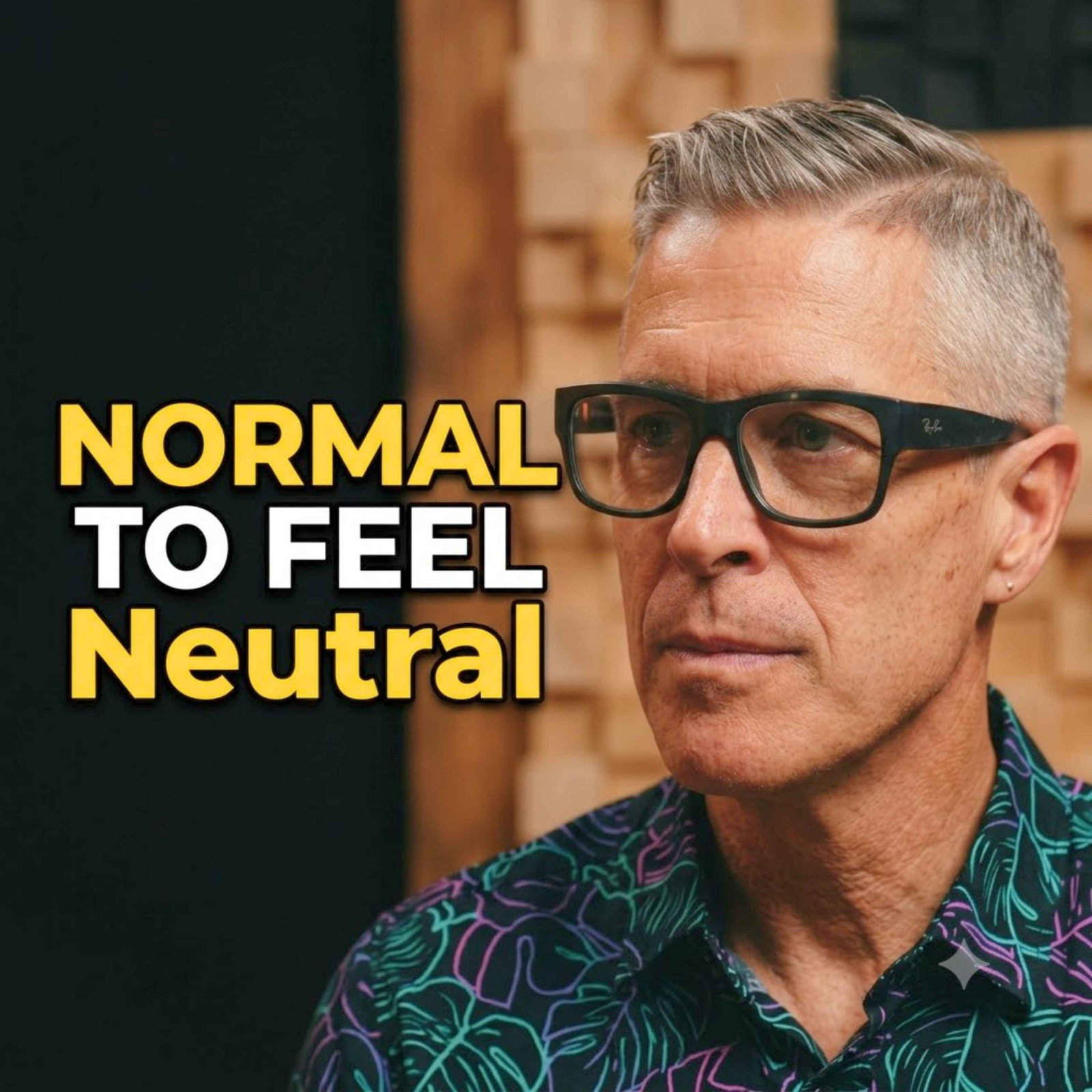
Jordan remembers his father PJ, who continued riding his e-bike while receiving cancer treatment. He discusses feeling numb after his dad died, guilt about not falling apart and the new family responsibilities that followed.
Key Takeaways
- Feeling emotionally neutral after the loss of a parent is a valid response and does not necessarily indicate that something is wrong with your grieving process.
- The 'deflated balloon' model helps explain the sensation that a significant part of your identity has disappeared while you continue to function in daily life.
- Experiencing guilt for not feeling like a 'wreck' is a common, yet unnecessary, burden that many men carry after father loss.
- Caring for a dying parent at home creates surreal, intimate moments, like keeping a DNR magnet next to family photos, which redefine your relationship with mortality.
- Engaging in difficult, honest conversations with your father while he is still alive is the best way to prevent future regret.
- Seeking effective grief support for men often means finding spaces where you can discuss the transition into the family patriarch role without judgment.
Jordan's dad rode 60km on an e-bike with a chemo bottle taped to the frame. Stage four cancer. Then one day the bike stayed in the garage.
Jordan didn't fall apart. He felt… neutral. Then guilty for feeling neutral.
This episode explores the quiet grief nobody talks about. The feeling that 30% of you disappears when your dad dies. You're still functioning, but you're running on less.
If you've lost your dad and wondered why you're not more of a wreck, this one's for you.
🎧 In this episode:
• Why feeling "neutral" doesn't mean something's wrong
• The "deflated balloon" model of grief
• Why guilt and anger show up in unexpected ways
• Becoming the family patriarch overnight
• Caring for a dying parent at home
• Honouring your dad without forcing closure
• Why the conversations you avoid today become the ones you miss tomorrow
👨👦 Meet Jordan and PJ
PJ worked the mill, retired early, and spent his best years riding e-bikes, wearing Hawaiian shirts, and building things in his workshop. When cancer reached his liver, he kept riding. Jordan grew up watching a man who lived on his own terms, which is part of why grieving him has felt so quiet.
⏱️ Chapters
0:00 Neutral... and the guilt that follows
1:50 Why Jordan wanted to tell this story
4:50 Meet PJ
7:50 Riding through chemo
12:50 The deflated balloon
16:50 The hospital bed at home
22:00 The DNR magnet on the fridge
22:50 Becoming the patriarch
25:50 When anger arrives anyway
26:50 The Hawaiian shirts
29:00 "What do you want to be when you grow up?"
32:00 Riding 120km in PJ's honour
34:50 Have the conversations now
🖤 About Dead Dads
Dead Dads is a podcast for men figuring out life after losing their dad. Hosted by Roger Nairn and Scott Cunningham, it's an honest conversation about grief, identity, family, memory, masculinity, and everything that changes after father loss.
No grief brochure voice. No tidy healing arc. Just real conversations.
You're not alone.
☕ Support the show: https://buymeacoffee.com/deaddadspodcast
Follow Dead Dads:
Website: https://www.deaddadspodcast.com/
YouTube: https://www.youtube.com/@deaddadspodcast
Instagram: https://www.instagram.com/deaddadspodcast/
Spotify & Apple Podcasts: https://www.deaddadspodcast.com/listen
New episodes every week.
Related reading: our guide to grief podcasts for men.
Related grief resources
Coping with the death of your father · Grief support resources
About the show: Roger Nairn and Scott Cunningham share lived experience of father loss. Dead Dads is not a substitute for professional care.
Episode Transcript
Source: YouTube captions. Automatically generated captions may contain errors.
[0:00] When my mom said it, she was like, "Jordy, I think he's gone." And I was like, "Oh, wow." Like, that hadn't even occurred to me that that was even possible. >> Hey guys, welcome back to another episode of the Dead Dads podcast. Today,
[0:15] we're talking to Jordan Bann. Really, really incredible conversation because Jordan has interesting relationship with grief. After his dad died, he kind of felt a bit sort of neutral about it. There's actually an incredible analogy that he shared.
[0:30] Scott, what did you think of that episode? >> It was amazing to me. I think you'll notice this as well that Jordan and Roger share a lot of similarities, not just in their grief, but just physically, the glasses, the watches, the actual outfits. I mean, you guys were twinning. Twinning is winning.
[0:46] I was there for it in terms of like seeing the two of you connecting. But again, Roger and Jordan and myself and all of you, it's so great to hear all of everybody's stories and how they're how they're processing their grief. >> I'll tell you though, health and fitness-wise, he's got me beat. Uh
[1:01] thanks for reminding me of that, Scott. Uh before we get into the episode, we would love for you to do us a huge favor and like and subscribe to the podcast, whether you're watching on YouTube, listening on Spotify or Apple or other podcatchers. Also, please help share it with somebody that you know that could
[1:17] really benefit from from Dead Dads. And finally, we've set up a link which is located in the description right now called buymeacoffee.com. In fact, the link is buymeacoffee.com/deaddadspodcast. Uh this allows you to make a donation to Dead Dads. And when you do so, that
[1:33] money goes directly into paying for the studio that we're in right now, as well as some of the marketing of the show. Again, right into the mission, getting into as many of the right ears and eyes as possible. So, let's get into the episode with Jordan. >> But we're here to help you laugh. It's the Dead Dads
[1:51] podcast. >> Hey Jordan, welcome to Dead Dads. >> Thank you, Roger. >> Thanks so much for coming. >> No problem. >> Now, why on earth would you come? Why
[2:06] would you come on a podcast about Dead Dads? >> That was the thing I was thinking about yesterday and then again this morning when I was um chatting with my mom on Facebook messenger because isn't that how you >> That is how you >> chat with your mom, who is alive, by the way. >> Here you go. >> The reason why, and to be clear, I
[2:23] reached out to you cuz I saw that I think this is an excellent show. I I totally get it immediately. Um and I wanted to be on and it's because I want to get more comfortable talking about this stuff. I think um it might help if leading by
[2:38] example my family and other people get more comfortable talking about this stuff. And I like the idea that I'm putting another little piece of my dad's legacy out into the world, too, for posterity and
[2:54] for all of those reasons, it was absolutely worth coming down today. >> Love that. >> To say nothing of getting to speak to you two lovely gentlemen. >> Can I ask you this is our Why is it important? You mentioned it's important to think about Like you wanted to get more comfortable. What is your
[3:09] reasoning? Is it to to give the truth to the legacy or is it just so that the the world benefits? >> I It's an It's It's all of the above, but there was this um and and we've already
[3:25] talked about this a little bit, so I'm reviewing for but the the weird thing about when your dad passes, or at least in my specific case, when my dad passed, there wasn't this like cataclysmic
[3:41] moment where I completely fell apart and it it feels a little bit like the amount of attention paid to his passing doesn't meet the uh
[3:56] the sheer size and magnitude of the event. And so, I need to do more. This This is a perfect exercise in in getting me to talk about it a little bit more and actually adding some weight to those proceedings because
[4:13] um cuz he deserves it. And yeah, and definitely the the the other thing, too, where um if other people get more comfortable talking about this stuff as a result, then great. Um I think obviously that's the mission
[4:29] of the show, and uh and I see it, and my family will watch this, and uh and and it's my hope that it helps for them, too. Uh and so, even though it's a little awkward, it's you know, it's
[4:46] this is tough subject matter, and it's not easy having a camera and a microphone in your face, either. Well, at least for some people it's not. Uh >> makes you feel any better, they're not turned on. >> Yeah, that's right. Yeah, this is all just for us. >> just for us. >> We're not trying to sell out on the
[5:01] internet. >> Yeah, yeah. There's a There's a ton to unpack there. Uh the first thing I want to say is thank you for ex- you know, for for laying that all out because uh that's a that's a great way to to start the conversation. Can we first start with with your dad? Can you tell us just a a little bit
[5:16] about him? Who was Who was he? >> Sure. Um P.J. Bean was a a family man, first and foremost, a mill worker for I might get this wrong, but something like 27 years he worked in the mill in Powell River. Was, I think in many ways,
[5:33] a typical dad of the generation. Definitely a good dad. Definitely a well-liked individual. Retired at 57 and traveled the world with my mom. It's kind of unfortunate the finish came a little earlier than most of us were expecting.
[5:48] >> Yeah, but when you started to list the things that he achieved and the things that he did and the places he had gone and it wasn't just that he went places, but he would like get right into it. He was running on the Olympic track. He was like really immersing himself in these
[6:05] things that made for these excellent stories. And it's not until you sit back and think about it and kind of review all of that stuff that it's like holy [ __ ] >> Dad, you you nailed it, right? Like he did a really good job. >> And and lived a very healthy life as
[6:22] well. So, yeah, I think he was taken from us a little bit early and a little unfairly. Uh you know, the big C um and it um it was initially it was a diagnosis that
[6:37] was um obviously, you nobody likes to hear they have cancer. But it wasn't clear the severity of it right away. And it was only through a series of tests over years that they realized that um
[6:54] that it had spread a little bit and so at that point then treatment happened and um but there was um you know, there was I think a couple of small surgical interventions and things that they figured were preventative and you know, at on several occasions we
[7:10] thought we had it beat or at least you know, kind of in remission. And um and that was not the case. It turns out that it had spread to his liver and and then the the the countdown clock started. But yeah, healthy guy, healthy lifestyle and >> a guy who, you know, lived his whole
[7:25] life, worked really hard and then you know, went off and like had this sort of almost storybook ending to a certain degree. But when when did that cancer come around? So, he did a lot of those trips and then cancer came. Did it start to interject in between those? How did it How did it first arrive?
[7:41] >> bit Because what Like once you realize, I guess, that you have stage four cancer and um he used to joke that like he'd be going into the oncology department, and he'd be like, "Why are all these sick people around?" Cuz he was still this
[7:58] healthy guy. He was doing 60 km bike rides on his e-bike. Like he he lost a step, so he was on an e-bike. Um but, you know, riding with his same buddies 3 days a week, and doing these 60 km return rides
[8:14] with a chemo bottle attached to him. >> Wow. >> What? >> Yeah. >> Wow. >> To give you an idea, I think that's a wonderful metaphor for the kind of guy we're talking about. >> Wow. >> And then, you know, like um unbeknownst to anyone else, wandering around, shaking hands, having reunions with
[8:31] family at like I've had a family reunion with a chemo bottle under his shirt. Like >> Mhm. >> Was it important for him to hide it? Like did he not want people to know about it? >> Maybe. Well, I don't think he was like 100% of the people riding with him knew everything. And that's probably where
[8:49] a lot of that kind of stuff was shared. You know, these are like um Boomer generation type dudes who don't like share emotions super freely. But I'm sure he wasn't holding back by saying, "Yeah, I mean, you know, I got the chemo bottle on
[9:04] today, and I wasn't going to miss." They would meet at 7:00 a.m. at uh McDonald's every morning, and they were all I think they give the coffee away at McDonald's to people that age. >> too. >> Yeah, yeah, yeah. So, they're drinking free coffees at And they wouldn't even
[9:21] roll out until about 8:00 a.m. So, it's like an hour of [ __ ] before, and then most days there was an hour of breakfast and [ __ ] after, and that was, you know, that was just his life, right? >> Scott Scott and I do the exact same thing, except we skip the bikes. >> part about the 60 km ride. So, the chemo
[9:37] bottle didn't get in the way of that. But, I there wasn't as much international travel when once treatment started. Thing that I heard you say off the top was the you know, the family's going to be watching. And I want you I want you to kind of expand a little bit more on sort of how they've been
[9:53] since the death. And how has the family dynamic been? >> Yeah, we probably don't talk about it enough. And we've had a few firsts since then as well, right? There's the first Christmas and the first family wedding.
[10:08] And all of this stuff has And it's there's this undercurrent of grief that occasionally gets addressed. Sometimes with words and sometimes with actions,
[10:23] right? A cousin comes over and puts their arm around you and you're like, I know what this is about. >> We're going to do this. We're going to do this. >> Yeah, yeah, yeah. But, I guess I'm it's I'm back to talking about what I said earlier about the fact that like there isn't enough of that to fill the hole or
[10:38] to to truly represent how terrible of a loss it is. >> Mhm. >> So, he gets cancer. >> Yeah. >> Stage four all of a sudden, right? And so, he's in treatment, but he's still pursuing that life as best he can, that sort of full-scale um he tells you
[10:55] about this treatment. What's your thought process? How does that go for when he tells you? Is he don't worry, it's fine, I got this or >> All of that information came from my mom. He never seemed fazed by it. So, that
[11:12] earlier you asked like, was was it important that he hid the chemo bottle? No. But, it kind of was I guess important that he hid any sign of being inconvenienced by it, you know?
[11:29] >> Was that quite normal for him? >> Yeah. He was I mean, I come by this honestly myself. He dealt with difficult things with joviality and jokes and humor and including
[11:45] uh you know, his his diagnosis and impending death. Yeah. >> So, he told you about it. He let you But then he said it's all fine. We joke about it. >> A little bit, yeah. Um >> But there wasn't denial. >> His No. Um some anger, I think, but
[12:03] again, you didn't really see that. And there was like a a point where he let his guard down a little bit. He took on this kind of like DGAF attitude to use an acronym. >> Mhm. >> Uh and um
[12:19] and he started swearing more and just kind of being a little bit more, you know, firing from the hip. >> The filter was off. >> Yeah. Like I the stakes were lower or something. I don't know, but like there was definitely a a shift in his in the
[12:37] way that he he dealt with things towards the end. And it maybe yeah, maybe he just took his foot off the gas a little bit and And I think the the filter was off is a great way of of putting that. >> You also mentioned off the top of the conversation that um you
[12:54] didn't have too much of the reaction you were expecting afterwards and and you know, where do you think that that came from or were you expecting that? Did you Did you feel like you got a lot of the grief out of the way before his actual death? >> No. >> Like what you know, how how does that
[13:09] look? >> The best way to describe my grieving process is to like I use the analogy of like a a slightly deflated balloon. >> I think you said to me you feel like
[13:26] your your battery's depleted about 30 30%. >> Yeah, like you get you get the 70% of Jordan because that 30% has just been shaved off the top and and it's not like I'm just sitting here dwelling on it, but there isn't that same
[13:42] joie de vivre and um the kind of there's just less of you to go around, so you got to be a little bit more economical with how you show up in the world, but but what there wasn't was
[13:57] there was no pop of the balloon. There was no like, you know, I'm breaking down in, you know, like in sobs and I'm inconsolable. It was just like >> Uh, were you hoping sort of that that would happen? Like there is a sort of
[14:14] performative grief conversation that we've had. >> I certainly anticipated that that would be the case, and it's not like I was afraid of that happening. I've never been afraid to to be emotional or express emotion or even cry, but I didn't like
[14:29] at no point was I a a soppy mess that and and I'm surprised by that. It's kind of like you're expecting it to overwhelm you at any point, and it never really does. So, we've done two Father's Days now, and
[14:45] this will be the third. Um and uh yeah, it just you lose a step. You lose a little bit of the battery. >> I I can't tell you how excited I am that we're talking about this, which makes me sound like an which makes me sound like an absolute
[15:01] [ __ ] psycho. >> Okay. >> But you you have you have been the first person who's been able to articulate how I'm feeling yeah, because I feel like I lost that step as well. I feel like my light got dimmed 30%. I feel like and I didn't you know, we've talked a lot about this. I didn't have the big sort
[15:17] of you know, movie cry, you know, the big movie grief. >> around on you, Roger. >> There you go. >> Is your light back on? >> No. >> Wow. Okay. >> No. No, no. And I've I've said this to you a few times, Scott. >> Has the luminosity increased since the
[15:32] since the event? Are you >> It hasn't, actually. >> Wow. >> Um and I think it's going to I think it's going to take a while. And I feel really guilty about that. And I'm curious, do you have any guilt? Is that Is that a Is Jordan a guilt guy? >> Uh Jordan's definitely a guilt guy.
[15:48] >> Yeah. >> The grief is still there, particularly when I think of it. Um but the the that deflation feeling or that lack of energy, um I've topped it up. That's the way he would want it to be, too, right? Like
[16:04] don't don't um not so much don't shed a tear for me, but certainly don't use me as an excuse for not carrying on and and so um I am working my way back to normal.
[16:20] >> I feel from you this sense of like he was so he would had such a important part of my life. I see I need to see the requisite emotion in myself. I can cry. I can feel. Why am I not? Why am I not performatively doing what I know I can >> you asked about. I still do have or I
[16:37] definitely had that in the beginning, right? Where it's like, why am I not inconsolable? >> to. >> Yeah, because I definitely understand what's happened here. Um so that guilt I still carry to some extent. And And now maybe that guilt has
[16:52] shifted towards or or is is like am I am I still grieving enough? Am I doing enough to honor his legacy, which is both like stuff like this, where it's like I'm this is an example of trying to do something to honor his legacy, but also
[17:09] like am I living up to the expectations that um he never necessarily expressed, but I certainly had for myself in his eyes, if that makes sense. >> So, after he passed, interested in the moment as he passes and then sort of
[17:24] even just the short time afterwards, what was what was your what was your life like? Were you able to be present when he passed? Were you able to take time away? >> Do you know what's crazy is I never saw my dad in a hospital and he died in bed in the living room of
[17:43] their house. So, they had a two-story house. One day he's still trudging up the stairs to his bedroom to go to bed every night. The next day um friends brought over
[17:59] one of those hospital beds to put in the living room to save him the trip up the stairs. The day after that he goes. >> Wow. >> And even that night, so and I was there. This is the the other crazy thing was
[18:15] that I was actually there. My partner, my brother and you have to wonder if maybe that's why it was then that it was like he's like, all right, there's the the hospital bed, the
[18:30] family's here, like I'm I'm tapping out. So, he walked to the bathroom on his own steam and then walked back to bed and sometime in the middle of the night seized up and and we were there and he passed
[18:46] quite I I I would say quickly. Like we think he kind of like had a heart attack. Like it was just like all right, the the strength is gone and it it kind of took him fairly quickly and and then there was that like was my mom said it. She was like, "Jordy, I think he's gone."
[19:03] And I was like "Oh, wow." Like that hadn't even occurred to me that that was even possible. And "Holy [ __ ] I think you're right. Like, he's not moving. It's this is real.
[19:18] And then it was like all right, what do we do next? And we're phoning the funeral home and in the middle of the night and you know, and they're carting his body off and it was like going through the motions and
[19:35] again, there was no like cataclysm or >> Yeah. >> You know, it was like um we're literally running through the checklist of what what what do we do in this situation? Like who comes to verify that this is actually the case? I know how to check a pulse. Like this guy was dead.
[19:52] >> You immediately get procedural. >> Ticking all the boxes of of what comes next and my mom, bless her heart, she um has some experience with this having lost family members before. She knew how to handle it and she's just did it again a couple of months back with her own mother and um
[20:09] >> Mhm. >> And we just we yeah, we did things necessary to to get it all sorted. >> So he was he was home and he was obviously not well. >> Yeah. >> But there was no real expectation that he was going to like go any minute now sort of thing. He >> That was the thing is that he was such a
[20:26] strong guy and you kind of like in part that was my expectation that it was like you know, like when I was talking about him going to oncology and and and being the healthiest guy in the room. It was sort of felt like he was going to defy
[20:42] the odds for a long time even beyond what I would have liked, you know? Like my grandma who just passed, she had dementia and I was worried that my dad would get to that point where it's like I'm going to be seeing him in this
[20:57] context or in these scenarios where I don't recognize the man. And that never really happened. Yeah, he was in a hospital bed that for that last trip we were there, but he was still good company. You know, like almost as though he was
[21:15] exerting that much effort to continue to be himself right up until the point where it was like he ran out of gas and it was like, all right, I'm going to you know, I'm sprinting to the finish line, so to speak. >> So, your mom took over as executor, it sounds like of
[21:31] the basically all the processing, right? >> Yeah. >> How was your mom? >> Yeah. I know she's probably watching and listening this. So, I'm trying to be highly complimentary, Mom. But, yeah, unfortunately for her, she just has a little bit too much experience with losing family members and um with going through things like
[21:47] this. And so, the procedural stuff was >> It's a gift for sure. >> It's the procedural stuff. >> Yeah, a lot of people say this like like knowing to call the funeral home or or starting the process of like figuring out what's next. >> Yeah, like you you see you use the word
[22:02] checklist, but like did you actually have a checklist? Cuz There was more or less um you know, like the um this was one of the things that made it absolutely real, in fact, was you come home and the fridge has got magnets from all the places visited in the world and pictures
[22:17] of all the young cousins and the DNR magneted to the fridge. Do not resuscitate for anybody who's watching that doesn't know what a DNR is. It's real. >> form, there's no turning back. >> magneted next to your picture of your young cousins on the fridge, it's official. >> Cuz I think what I was going to ask you
[22:34] is there you talking about like this feeling of like performative like not feeling like you've lived up. Is there a part where you're like, I want some of that? I want to take some of the the heat? I want to do some of this stuff? >> Yeah, and and I do. I think it's okay for me to say this even with my um siblings listening is
[22:51] that I take on the role of being my mom's confidant to a certain extent where she'll let her guard down with me maybe a little bit more cuz I ask the questions and I save space for that stuff.
[23:06] Um but there was a moment too where um it dawns on you in part because you know people pointed out um but it's like I'm the patriarch of the family now. We were joking earlier about how often I have to use the bathroom because I'm a
[23:21] gentleman of a certain age but I'm not a gentleman of an age where it feels like I'm ready to be the patriarch of my family. >> You're also in in incredible shape. >> Thank you Roger. I don't know how you worked that in but >> Well I know I mean but >> I mean I know I put it in the show notes but >> You're a cycle you're a cycling coach. I
[23:37] mean let's let's be honest. I and and you know cycling coaches don't typically you know fail in health. >> Neither do people like my dad and this is the part that's so terribly unfair is that he ate his veggies and he quit smoking when we were born so there was
[23:52] really only a few years there where he was a smoker at all. >> You're also expressing something which um is not uncommon actually in this world which is >> We're to assign blame? >> There's two things actually you're right. There's there's rationalization which is I watched my dad do the things that I
[24:07] think he should be doing. >> Right. >> So that gives me a sense of >> Working out and riding his bike three days a week. >> I I'm relinquishing my responsibility of watching them for a little while. There's a feeling of like that I can live my life because my parents are being responsible with their own lives. That's comforting as as a child as you
[24:23] as you get older cuz you're like okay now I'm going to go off and not focus on you but I can see you're eating veggies and you're exercising so that's comforting. >> love them for that. And >> And you start thinking like part of you goes okay they're not going to die. Like they're going to be fine. Like I don't have to watch them and that's nice. The other piece though is
[24:40] deciding with the blame which is like you just said there is a part of you that wants to know hey I was I was pretty sure you were going to be fine and now you're not and I'm thinking about why that's the case. I think there's a part of everyone that goes through this that wants to feel like
[24:55] it's not their fault. It's not their fault that their dad died. It's not your fault that your dad died. >> Yeah. >> Even though he had right, even though he had cancer, even though it's not your fault. >> that it doesn't feel like it was his fault. >> Yeah. >> You know, I know. >> It's no one's fault. There was a moment which actually was the start of this
[25:11] podcast in a way was that I realized I was quite angry. I was putting blame. I wanted to be angry. I was putting blame on others. I was putting blame on people that had nothing to do with that. But I wanted blame cuz I didn't know what to do with this feeling of frustration. >> Yeah. >> Of my father's dead and and [ __ ] are
[25:28] alive in the world and a guy that I was fond of >> was not around. Do you know what I mean? A father that had faults but was not around. So part of that journey for me, part of that sort of the energy drain was because I was angry. So I was I was spending my
[25:44] energy, spending that battery, that that heat was coming for me just holding contempt all the time partly for people that had nothing to do with it. >> Right. >> And just and just for the record, it's okay to be angry. >> Absolutely. And and actually it's important, I think, to be angry. I think
[26:00] if I've learned anything that anger is not something to be avoided, it's important. Just the idea of and >> How you choose to express that. >> to be angry. I don't believe in anger management actually. >> Well, I have. >> I have, yeah. >> It took me into therapy, which is a topic that we've talked about here and a lot of that has helped with, you know,
[26:17] moving this grief on. But I want to ask you. So obviously your dad has passed, your mom takes the steps, a lot of those steps, some of them with your support. Um there is a point where your dad, I believe, is cremated, right? >> Yes. >> And so >> Right. >> you have officially in a lot of ways laid him to rest. To physically in any
[26:35] case. So can you help me and >> Yeah. >> the steps you take after that, I think, are important. So you've had a couple years. So now that he's physically gone and a lot of the steps of like, you know, we've we've canceled his Netflix subscription and what are the steps that you took? How How you figure that out?
[26:52] What what was somebody giving you advice? Were you guided by like were you searching on the internet? How did you decide I've done all the physical stuff, this is what I'm going to try and do now to put some of this to pain? >> My lifestyle I think lends itself to
[27:07] keeping my energy up. You pointed out like some of the healthy habits that I have, diet, exercise, things like that. Um but also the putting the work into um just the awareness that it doesn't serve
[27:24] me to dwell on it, which is not at all the same as saying that I'm pushing it away or I'm ignoring it. It doesn't serve me to to play the victim here. I've got to carry on. And so you do and then you and then
[27:42] it works to a certain extent. To be fair to my dad's memory, I'm not sitting here thinking about him all day long every day. When I do, it's with some amount of grief and some amount of fondness. I'm wearing a Hawaiian shirt in my dad's memory because he was the
[27:59] Hawaiian shirt guy. When we went and cleaned out his closet, there were dozens of them. >> Amazing. >> I'm not even exaggerating. Dozens. And the coolest thing of all is that a whole batch of them went to my aunt who had her friend make these pillows from them
[28:15] without washing them. And so they have you know, like his essence. >> There's something I was going to mention to you which was So I asked you about what you did and you said I don't know. Kind of like And I actually think that's really important because I don't think anybody
[28:31] knows. >> I spent several minutes a moment ago talking about I I guess how I cope, right? Like the or trying to talk about how my brain works, which is a little tricky. Um but I don't want to pretend like that's the same as
[28:48] saying I feel like I had it all figured out then or now. If there was like one prevailing message, it's that there's no guidebook for this stuff. Your grief is your own and and you know, you navigate it with whatever tools you have or choices you choose to make.
[29:04] >> You also said that you know, you're you're sort of trying to figure this out and you haven't really kind of and this is one of the steps that you wanted to take. What are some of the other steps? >> I'll tell a story um that I debated whether to tell this story, but in the same way that I kind
[29:19] of felt like I spent my whole life waiting for my dad to say he was proud of me and I never heard it and I've kind of resented him for it. Um we were even and I'll tell you why. Uh when I was younger, I can't remember if it was because I had a school project or just a curiosity, but
[29:37] I asked him what he wanted to be when he grew up and he said, "A dad." And I was such a shitty son that I had the gall to be disappointed by that response because I wanted to hear that he had these grand ambitions of playing
[29:54] professional baseball or something or yeah, or you know, like you know, to be a high-powered CEO and and then like family life made him choose the safe route or something and or you know, like because he was a mill worker and a dad
[30:09] and as I like I said, it's only when you sit down and write the eulogy that you realize, well, he was obviously a lot more than that. But that young kid that heard that answer was a complete dick about it and was disappointed and just thought like seriously, that was your ambition? To be a dad? And can you imagine the the
[30:29] the guilt that I feel as a man my age looking back and having heard that response and not realize the value of it at the time? That's tough. Awesome response. Like 10 out of 10 response and I was like that's it, old man.
[30:44] >> If you could >> Nice one. >> what would If he said it to you today, what would you say? >> We're still men and um we still had our certain style and rapport, so I probably would have said, "Nice one. I guess you got that one
[31:01] figured out, didn't you?" Because that's the response he deserved. Was something somewhat flippant, but also recognizing holy [ __ ] you you kind of did. >> There has been the one thing that I've been dying to ask you this entire time,
[31:17] and that is do you have a good joke about death that you want to share with everyone? >> I do. I do. What is the only thing heavier than my dad's casket? The weight of his unmet expectations. Um
[31:32] >> Oh. >> But of course my dad was cremated and it is just a joke. I will remind my mom and my family. Uh >> She's looking up she's Wait a second. Should I tell him that I'm proud of him more often? >> Yes, Mom. >> Yes. >> It's an incredible process. So I just
[31:48] from the from the outset and even actually we had a couple of minutes before the the podcast started where we talked a little bit about this feeling of like there is always this pressure to to live up to the expectation like of what I should be like when my dad dies, the grief that I should feel, the hole that
[32:04] he left and I should be honoring that. And then ultimately was I a good son? Did I live up to that expectation beforehand? Did I tell him what I should have told him? Did I talk to him? I hear some of those themes and and they're not uncommon themes in this whole
[32:19] conversation, but I think you know, being on a podcast, you know, going to the coffee groups, talking to people about him, like these are the ways that you get a chance to keep him alive. But I I would love to know, do you have ways to keep him alive with your other with
[32:34] your family members? Do you do you find ways that you know so that there's a sense of assurance and it's a comfort that he will continue to be around? >> His riding group and one guy in particular hosts an annual fondo. I don't know if you're familiar with the term, but they do a very unofficial
[32:51] thing, but they go it's in Power River, so it goes from Westview to Lund and then back out to Saltery Bay and back to Westview again. It's a 120 km ride in my dad's memory and they all wear Hawaiian shirts. And um it was this thing that started a few
[33:09] years in advance of his passing. And then was scheduled to happen a few days post his passing 2 years ago. The guy was nice enough to say that it was in memory of my dad and he said wear
[33:24] your Hawaiian shirts and so um last year I attended with my girlfriend, a friend from Vancouver, my sister and my brother did part of it. My brother was on my dad's e-bike and they did the first half of it out to Lund and back. And and we're going back this year again.
[33:41] And potentially bringing friends with us. And Ian Jackson, if you're watching this, thank you. >> Pretty awesome. >> It's a wonderful way to honor his
[33:57] memory. And you guys finally got me. I got myself. >> But the fact that those guys do that and I can go back there and do it like it just means so much to me.
[34:12] >> I think that they're they're doing an amazing thing. >> It's actually called the Cath Ette Fondo um because there's um plenty of discussion in that area about renaming the town. >> Mhm. >> Um so we call it Cath Ette Fondo and uh and it's you know sort of there in the
[34:28] description in memory of PJ Bean and And he still says, you know, wear your uh um Hawaiian shirts. And even if he didn't, there's there's a core group of guys that absolutely would, right? >> I want to ask you a favor. There's a guy that's watching this that his dad is about to die or could be dying
[34:45] relatively soon, and he's not sure what to do. Is there anything that you would say to him to kind of get him through the next hour, the next day, the next week, anything that you think would be valuable? >> Yeah, well, I think in the case of the guy whose dad has yet to die,
[35:00] it's like break through that discomfort and have those conversations while you have the chance to. Um some of us and some of our fathers are not necessarily in their comfort zone around conversations like that. To the
[35:17] people who have just recently lost somebody, first of all, I'm sorry for your loss. It sucks. Um and that's about the message is that it sucks. We are the members of the worst possible club and no one wants to join. Um but it is
[35:35] still a club. If there's a single takeaway, it's don't feel that guilt for the fact that you may not have it all figured out because none of us do. We're this entire exercise might seem like people pretending like they've got it
[35:50] all they've got the answers, but it's exactly the opposite of that. It's an exercise in talking about it to cope. Let yourself off the hook for feeling whatever you feel in whatever form you choose to. >> Jordan, thank you so much for being on Dead Dads. I we really enjoyed that
[36:07] conversation, and I think the guys out there are going to take a ton away from it. Uh we yeah, we couldn't couldn't thank you enough for for coming out here. >> having me, fellas. This is a great idea for a show, and it's I'm sure it's helping a lot of people. >> We are getting a ton of feedback, actually, from guys out there that it is
[36:22] helping a lot of people. Uh we we hear from them almost daily now, which is great. I mean, it's one of those things to say great because it's involving dads that are dead, but uh >> But you're doing a good thing. It's like a It's like a public service. >> Our mission is to get the show into as many of uh you know, these guys' eyes
[36:39] and ears as possible. So, if you're a guy out there who hasn't subscribed to the show yet, please click that button or, you know, do the follow thing. Also, tell other people because we really want the show to be uh not only a resource, but sort of a a lens into other guys and their grief because like Jordan just said, every
[36:55] guy's grief is different and yours is going to be different as well, too. Um finally, we have recently set up a a link, which is available in the description of this show, uh to buy us a coffee. Are we actually going to buy a coffee with it? No. We're going to help pay for our studio and some of the
[37:10] marketing of the show to make sure again the lights stay on, the door stays open, and we get the show into as many of uh the the right eyes and ears as possible. Scott, do you have anything to say before we >> You're going to buy me coffee, though, right? >> We are definitely going to buy you coffee. >> Okay. >> We're not going to take it out of the coffee >> going to hold you to that. I just wanted
[37:26] to say >> Take it out of the >> Right. >> a coffee fund. >> Thanks, Roger. >> Thanks, Jordan. >> Thank you so much. >> And again, >> It was lovely to meet you, by the way. >> You as well. You as well. I think um to the guys that are watching this or to the people that are watching this, I think Jordan's story, Roger's story, all
[37:41] of our stories, they're all different, but they're all the same, which is that we're all trying We're all trying to get through a grief. We're all trying to figure out the right steps. We're all trying to get past this and hold on to it at the same time. Give yourself, as Jordan says, give yourself Give yourself a break. Give yourself the time. Thanks, everyone.
[37:58] >> It's a weird sad funny podcast, but we're here to help you laugh. It's the Dead Dads Podcast.
Frequently Asked Questions
Why do I feel neutral after my dad died?
Feeling neutral is a common grief response where your brain may be processing the loss slowly or protecting you from overwhelming shock, and it does not invalidate the depth of your relationship.
What is the best grief support for men?
The best grief support for men involves honest, unfiltered conversations that move away from traditional 'therapy-speak' and focus on the practical realities of identity and loss.
How do I cope with becoming the family patriarch after losing my dad?
Acknowledge that this is a major life transition; take it one day at a time, honor his legacy in ways that feel authentic to you, and don't be afraid to voice the frustration or pressure that comes with the new role.
Is it normal to feel guilty for not being sad enough after a death?
Yes, many people experience 'grief guilt' because they expect their reaction to match societal tropes of total collapse, but every individual's grief journey is unique and non-linear.
Dead Dads guest
Jordan shares his experience of numbness and family responsibilities after losing his father PJ.