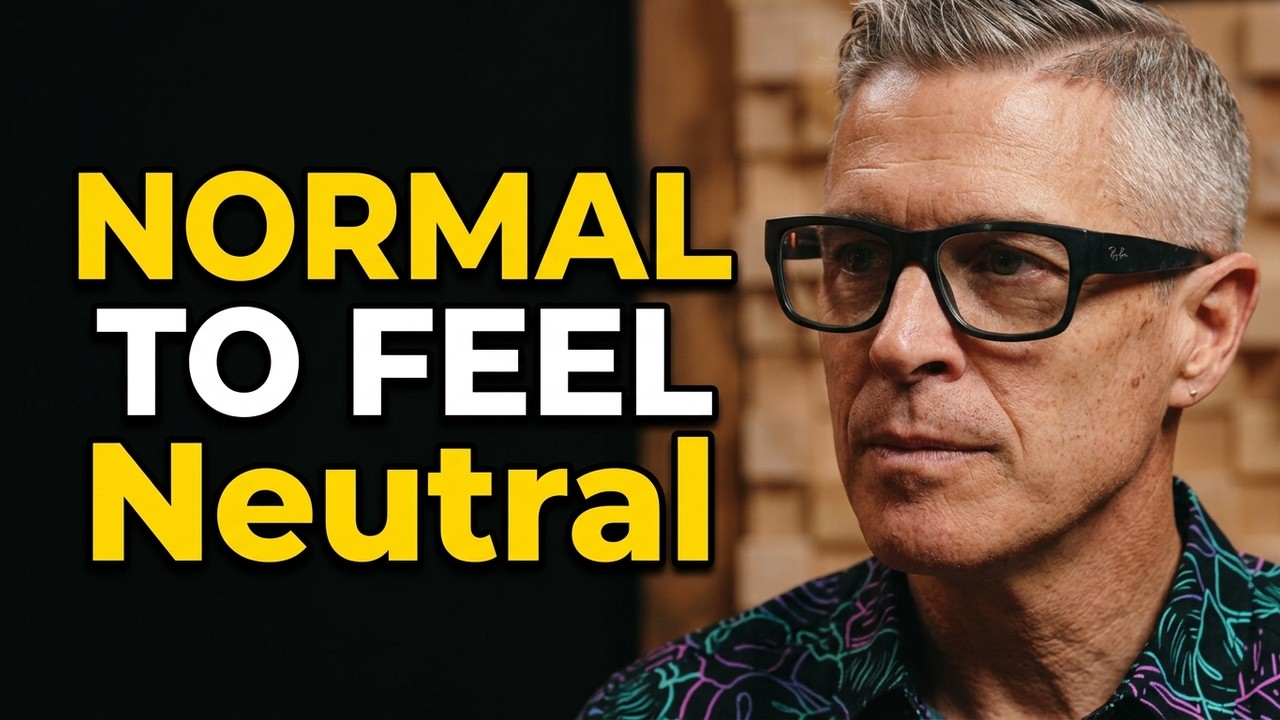
Feeling Nothing After Your Dad Dies: Why Numbness Is a Normal Grief Response
When a parent dies, society expects a visible, visceral display of mourning. However, many men report a surprising reaction: feeling completely neutral or hollow rather than overcome by tears. This phenomenon, often mistaken for coldness or lack of love, is actually a common psychological protective mechanism. Understanding this numbness is essential for processing loss without the added burden of self-imposed guilt.
Key Takeaways
- Feeling numb or neutral after the loss of a parent is a common psychological response, not a sign of emotional deficiency.
- The "deflated balloon" model of grief explains how losing a parent leaves you functioning but operating at a lower capacity.
- Self-imposed guilt often stems from comparing your internal experience to societal expectations of how "proper" grief should look.
- Numbness often acts as an emotional circuit breaker, preventing an initial overload of trauma during the chaotic days following a death.
- Recognizing that you are not a "wreck" allows you to focus on the reality of your changing roles and family responsibilities.
The Myth of the Grief Wreck
We are culturally conditioned to believe that losing a father should shatter us instantly. We expect the weeping, the inability to work, and the total collapse of our daily routines. When you walk into your kitchen, see the equipment of your father’s end-of-life care—like a DNR magnet on the fridge—and feel a strange, detached calm, it is easy to assume something is fundamentally broken within you. You might ask yourself: "Did I not love him enough? Why am I just going through the motions?"
This is the trap of the "grief wreck" narrative. Grief is not a uniform experience. For many men, the initial period after a death is characterized by an almost automatic pilot mode. You are dealing with logistics, medical equipment, and legal transitions. Your brain, sensing that you have a job to do, puts emotions on ice to ensure you can function. This is not a lack of depth; it is an incredible feat of resilience.
Understanding the Deflated Balloon Model
In our experience, we often describe the aftermath of losing a parent as the "deflated balloon" model. Imagine you are a balloon that has been inflated to full capacity. You are operating with 100% of your energy, identity, and internal resources. When your dad dies, a portion of that air leaves the room. You are still a balloon, and you still have a shape, but you are undeniably less than you were before.
This manifests as a sense of neutrality. You aren't necessarily "sad" in the cinematic sense; you are just diminished. You might feel 70% of your former self. You can still hold a conversation, drive your car, and attend a meeting, but the background hum of your life has changed. This isn't about being a robot; it is about adjusting to a permanent decrease in your internal pressure. Acknowledging this reduction is a healthier approach than pretending the balloon is still fully inflated.
The Guilt of Feeling Okay
Perhaps the most insidious part of neutral grief is the guilt that follows. We feel guilty for not being incapacitated by sorrow. We compare our lack of tears to the weeping of others and feel like we are failing at being a son. This guilt is essentially a secondary trauma. By demanding that we feel "more," we ignore the reality of our current state.
It is important to understand that the anger or sadness you expect to feel often arrives later, sometimes in the quiet moments when the logistics are finally handled. When the DNR magnet is removed and the hospital bed is folded up, the vacuum of silence is often when the reality sets in. Do not rush to manufacture a crisis of emotion just because you feel steady today.
Navigating the New Normal
When you find yourself in this state of quiet, neutral grief, the goal is not to force an emotional explosion. Instead, lean into the reality of what has changed. If you have become the new patriarch of your family, your "neutral" state might actually be the focus required to help others navigate the transition. Your stability is not a defect; it is a resource.
You can honor the person you lost without needing to be a wreck. Sometimes the best way to honor your dad is to simply keep living, keep moving, and keep building, even if you are doing it with less air in the balloon than you used to have. You don't need to perform your grief for anyone else.
For a deeper dive into the reality of navigating these quiet, complex feelings after losing a father, Listen to the full episode. Hearing how others have navigated this landscape can validate your experience and help you shed the unnecessary guilt of not grieving exactly how you thought you would.
Frequently Asked Questions
Is it normal to feel numb after a death?
Yes, it is entirely normal. Numbness is a psychological defense mechanism that allows your brain to cope with the shock of loss while managing the practical and logistical tasks that follow a death.
How do I deal with guilt over not crying?
Recognize that grief is not measured by tears. Guilt only adds a layer of unnecessary suffering. Accept that your emotional reaction is a product of your unique relationship and current mental state, and focus on moving through your day-to-day life rather than policing your internal reactions.
What does it mean to feel diminished after loss?
Feeling diminished refers to the "deflated balloon" experience where you still function, but you feel like you are operating at a lower capacity. It acknowledges that a part of your world—and your identity tied to that person—is missing, which is a natural adjustment period.

The Modern Man’s Guide to Grief Podcasts: Why The Dead Dads Podcast Offers a Different Path