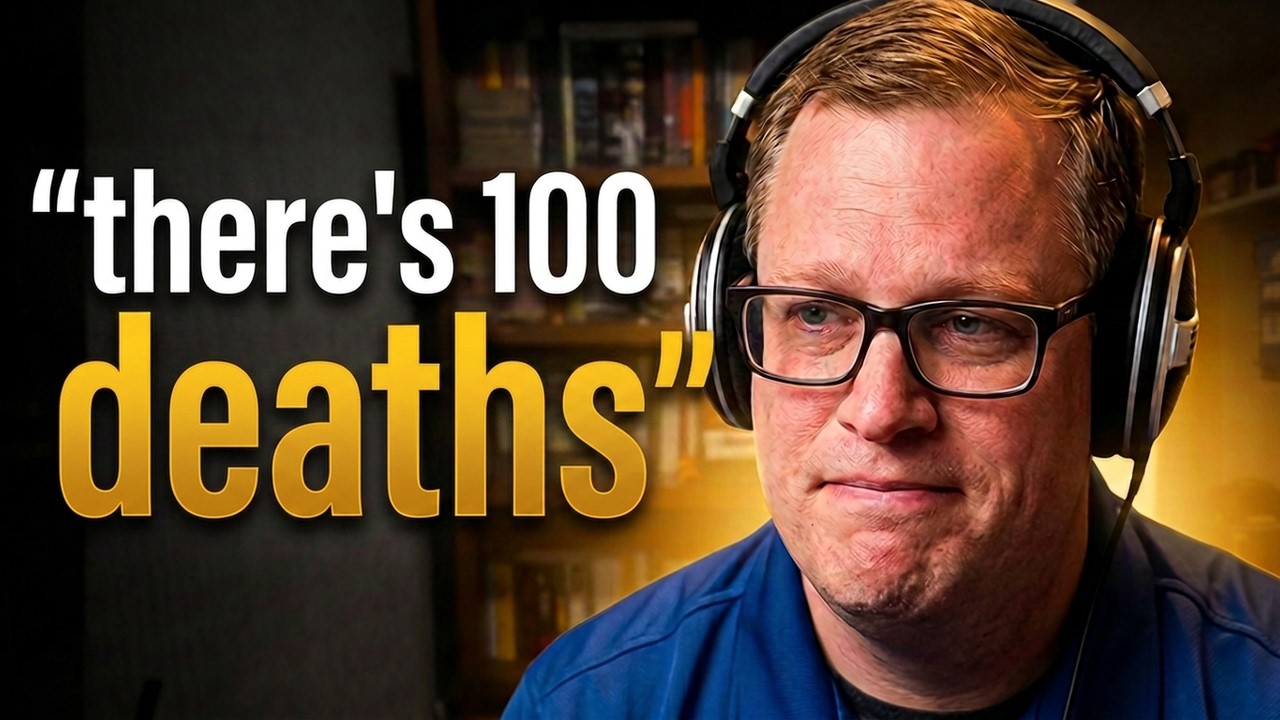
Why Deciding Not to Take the Alzheimer's Genetic Test Doesn't Make You Weak
Deciding to skip the Alzheimer's genetic test after watching a parent suffer through early-onset dementia is a deeply personal choice burdened by guilt. Many sons feel a heavy pressure to know their risk, mistaking avoidance for cowardice. In reality, choosing not to know is often an act of self-preservation that allows you to live fully in the present rather than waiting for a looming inevitability.
Key Takeaways
- Skipping the Alzheimer's genetic test is a valid choice, not a sign of weakness or cowardice.
- Early-onset dementia creates a unique psychological burden for sons watching their fathers fade over a decade or more.
- Carrying genetic fear can taint your daily life and relationships long before any symptoms potentially appear.
- Focusing on your mental health today matters more than preparing for a future you cannot control.
- Allowing yourself to live without a diagnosis blueprint is a legitimate form of grief management and emotional survival.
The Weight of Genetic Fear in Sons of Dementia Patients
When you watch a father endure a fourteen-year decline, the boundary between his reality and your future blurs. Early-onset Alzheimer's doesn't just steal the man who raised you; it plants a quiet, persistent terror in the back of your mind. Every time you forget a word, misplace your keys, or stumble over a thought, your brain flashes to the worst-case scenario. It is a haunting psychological inheritance.
Society often pushes a narrative of proactive health: know your numbers, get screened, and face your fate head-on. But cognitive decline operates differently. Unlike conditions where early detection unlocks a straightforward roadmap or a guaranteed cure, an Alzheimer's genetic predisposition often offers a life sentence of anticipation with very few actionable interventions. For many sons, the fear of the test itself outweighs the theoretical utility of the results.
The Myth of the 'Courageous' Patient
There is a pervasive cultural expectation that true strength means staring down every possible medical outcome. If you refuse the test, well-meaning people might view it as denial. But men from places like the Texas Panhandle, where stoicism is baked into survival, often recognize a different kind of strength: knowing what your psyche can actually bear.
Refusing to take the genetic test isn't about sticking your head in the sand. It is an intentional boundary. It is an acknowledgment that knowing you carry a high-risk marker won't bring your dad back, won't slow down the progression of the disease if it comes for you, and might actively ruin the years you have left before you reach the age your father was when it started.
Choosing Presence Over Anticipatory Grief
Anticipatory grief is a heavy anchor. When your father spends a decade forgetting who you are, watching his world shrink to the walls of a care facility, your bandwidth for pain is already operating at maximum capacity. Adding the existential dread of your own potential diagnosis can break your capacity to function in the present.
If you take the test and get a positive result, how does that change your Tuesday? Does it make you a better father to your kids? Does it make you a more patient partner? Often, it simply accelerates the timeline of your suffering, making you live through the disease twice—once in your own head decades early, and potentially again in reality later.
The Right to Remain Uncertain
Uncertainty is uncomfortable, but it is also where hope lives. When you choose not to get tested, you preserve a baseline of normalcy. You give yourself permission to wake up and assume your mind is your own, rather than constantly scanning your internal state for signs of failure.
This decision requires immense internal fortitude. It means standing up to the medicalized pressure to quantify every biological risk factor and deciding instead to protect your mental health. Your grief over your father is already complex enough; you do not owe the medical establishment your peace of mind.
Finding Your Own Path Forward
Grief after losing a father to early-onset Alzheimer's doesn't follow a clean script. Whether you decide to face the genetic data or turn away from it entirely, your path is your own. For a deeper conversation on the long goodbye, the facility decisions, and navigating the echoes of a father's slow disappearance, Listen to the full episode featuring Blake Collier. You don't have to carry the weight of expectations that don't fit your life.
Frequently Asked Questions
Is it normal to refuse the Alzheimer's genetic test after a parent's diagnosis?
Yes, absolutely. Many children of parents with early-onset Alzheimer's choose not to get tested because the psychological burden of knowing outweighs any practical benefit from the results.
Does refusing genetic testing mean I am in denial about my father's illness?
Not at all. Refusing a test is often a conscious, protective boundary to prevent anticipatory grief from consuming your daily life and current relationships.
How do I deal with the fear that I might develop early-onset Alzheimer's too?
Acknowledge the fear without letting it dictate your life. Many men find relief by focusing on physical health, mental presence, and outlets like writing or talking through their grief rather than seeking predictive medical answers.
Should I feel guilty for not wanting to know my genetic risk?
You shouldn't feel guilty. Your primary responsibility is maintaining your mental health and emotional stability so you can show up for your family today.

The Modern Man’s Guide to Grief Podcasts: Why The Dead Dads Podcast Offers a Different Path