

 YouTube

 Spotify

 Apple Podcasts

 Amazon Music

 PocketCasts

 Castbox

 PlayerFM

 Podchaser

 iHeartRadio
This one's about the long goodbye.
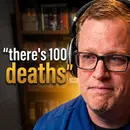
Blake Collier recalls his father Rodney's 14 years with early-onset Alzheimer's, including difficult care decisions and moments when his dad no longer recognized him. He discusses anticipatory grief, family memory and writing through loss.
Key Takeaways
- Guest Blake Collier shares his personal experience navigating his father Rodney's 14-year battle with early-onset Alzheimer's.
- The episode addresses the heavy emotional weight of the 'long goodbye' and watching a loved one slowly disappear.
- Blake discusses the difficult reality of making the facility call and saying your piece before your father forgets who you are.
- The conversation offers validation for sons who choose to skip genetic testing out of fear, proving that your grief does not need to look like anyone else's to count.
- Writing things down serves as a powerful alternative tool when talking fails and grief sits heavy on your chest.
This episode is for any guy whose dad disappeared in slow motion. If you've watched someone you love forget who they are — or you're the son who made the facility call — start here.
Blake Collier's dad Rodney had early-onset Alzheimer's for 14 years. Rancher. Property manager. Voracious reader. Devoted Christian. A man who used to punch holes in walls — and later became a teddy bear.
Blake parked the truck and watched his dad work in circles for 45 minutes. He sat through the mumbled Thursday prayers. He walked into a daycare where his dad didn't know who he was. And after the diagnosis, Rodney told him he'd fight it — and Blake made it about ten minutes down the road before he lost it.
This one's about the long goodbye. The genetic fear you won't get tested for. The day you say your piece knowing he might not hold it. And the line Blake wrote for the eulogy that still hits: there's 100 deaths. Which one do you want me to talk about?
In this episode, you'll get:
• Language for the slow disappearance — when “forgetting things” doesn’t cover what you’re watching
• Permission to skip the genetic test (and stop feeling weak for not wanting the answer)
• A real map of the facility decision — so you’re not inventing it alone the week it hits
• A way to say goodbye while he’s still here, without needing the perfect speech
• A frame for why it keeps hurting in waves: “there’s 100 deaths”
• A tool when talking fails — writing it down so it doesn’t sit on your chest
• Proof your grief doesn’t have to look like anyone else’s to count
About Blake
Blake Collier is a writer and a son from the Texas Panhandle — the kind of place where emotions don't help with survival, until they have to. His dad Rodney was a renaissance ranch guy. Then came early-onset Alzheimer's. Fourteen years of decline. Blake rode the whole arc and processed a lot of it the only way that worked: writing it down. Not a therapist. Not a grief expert. Just a guy who took the long version of losing his dad.
Chapters
0:00 — Dad didn't know who I was
1:50 — Welcome Blake Collier
3:00 — Texas Panhandle. Emotions don't help with survival
4:20 — Rodney: ranch, property, renaissance man
5:40 — The anger that punched holes in walls
9:00 — College advice and the history switch
10:00 — Mom saw it first
10:40 — I parked the truck and watched him for 45 minutes
12:15 — "I will do my best to fight it"
12:50 — I lost it on the drive home
15:00 — The mumbled Thursday prayers
17:30 — When hope started dwindling
18:00 — The day of the facility
21:30 — The visit where I said my piece
25:00 — "There's 100 deaths"
27:00 — The genetic fear I won't get tested for
28:40 — "Ride along with me"
29:30 — Writing it down instead of saying it out loud
31:00 — Grief looks different for everybody
About Dead Dads
Dead Dads is a podcast for men figuring out life after losing their dad. Hosted by Roger Nairn and Scott Cunningham. Honest conversations about father loss, grief, identity, family, memory, masculinity, and all the strange stuff that happens after. No grief brochure voice. No tidy healing arc.
You're not alone.
Website: https://www.deaddadspodcast.com/
Instagram: https://www.instagram.com/deaddadspodcast/
Buy us a coffee: https://buymeacoffee.com/deaddadspodcast
Linktree: https://linktr.ee/deaddads
Produced with support from JAR Podcast Solutions — https://jarpodcasts.com/
Related episode: anticipatory grief and difficult goodbyes.
Related grief resources
Coping with the death of your father · Grief support resources
About the show: Roger Nairn and Scott Cunningham share lived experience of father loss. Dead Dads is not a substitute for professional care.
Episode Transcript
Source: YouTube captions. Automatically generated captions may contain errors.
[0:00] This one specific day, we got to the daycare center and we got into the lobby and something in his mind clicked and it uh he didn't want to be there and he was increasingly willing to fight me to not
[0:16] go there. Um and it became violent. Um not in that he hit me or anything, but for the first time in my life I noticed that my dad didn't know who I was. Welcome again to the Dead Dads podcast. Today we're talking to Blake Collier.
[0:32] Blake's dad died officially of Alzheimer's, but it happened as in the case of Alzheimer's often over the course of many years. And he talks about this in the episode about dying a hundred deaths. It's a fantastic episode. You're going to want to stick through to the end and hear exactly how
[0:47] he processes that grief in a more unique way. >> But before we get into today's episode, we've got a big favor to ask you. Um, aside from leaving us a review and sharing the podcast with all the guys in your life, um, we're wondering if you can make a very small donation to the Dead Dads podcast, uh, we've got a link
[1:04] and it's called buy us a coffee.com. >> Buy me a coffee. >> I can never get it right, but it's buy me a coffee.comdads. Did I nail it? >> Nope. [laughter] >> Nope.
[1:19] >> Buy me a coffee. Imeacop.com/deaddadspodcast. >> Gotcha. Yeah. Also, Blake came to us via Substack, which is uh, you know, great time to mention that we also have a Substack. So, check out Deadad's podcast on Substack. Uh, we also have Buy Me a
[1:37] Coffee and and the ability to make a small donation to the podcast. It helps us keep the lights on and keep the podcast running. Um, it goes towards marketing some of the show and getting into as many eyes and ears as possible. So, if you can go to buymeacop.com/deadsodcast,
[1:54] um, if it's possible and you make a small donation, we really appreciate it. And, uh, let's bring on Blake. [singing] [music] >> It's the Dad. [music]
[2:12] Hey everybody, welcome again to another episode of Dead Dads. I would like to introduce somebody that I have been looking forward to talking to for a while now. This is Blake Collier. Blake, thank you so much for joining us on Dead Dads. >> Yeah, definitely. Uh it was it was so
[2:29] such a strange thing whenever I saw y'all uh pasted on the front of Apple Podcasts when y'all first started. Uh and I was like, "What in the world is this podcast?" [laughter] And uh and I and I dug into it and I was like, "I got to reach out to these guys." So, >> but what made you, I guess, decide to
[2:46] So, I'd love to explore this and we'll try to talk about this in a way that isn't so inside baseball. You reached out to us uh not through the medium of email or anything. You went through Substack. So, you pursued a method. I'd love to know why you decided to reach out to us and what about being on this
[3:04] podcast speaks to you? I guess >> my dad died uh October 10th of last year. So, it would be 2025 when he died. Um, so it's it's still fairly fresh. Um, and so the idea of a podcast that was
[3:19] strictly about men dealing with the death of their dad seemed like it would be not only I, this is weird to say, fun, but also helpful in a lot of ways. Um, >> it's okay to say
[3:34] >> I come from a a long [laughter] >> um I come from a long line of repressed emotion. Uh, and so, uh, I come from the Texas panhandle, so the bottom of the Grand the Great Plains. Um, and so we're we're hard people. Uh, we we had to, uh,
[3:53] over years since we first started settling there, it was, uh, it was not the easiest land to live on. So, we emotions don't don't help with survival. Let's just put it that way. Uh, and so that's kind of carried on through the years. And so, for me, uh, emotions
[4:09] don't come easy. Uh my wife is a therapist and she's constantly worried that I'm not like processing well. So um yeah, I I think in some ways I either consciously or subconsciously find myself seeking out spaces where I force
[4:25] myself to feel things and this felt like a way to do that. >> Well, thanks uh yeah, thanks so much for reaching out and we're like Scott said, we're super excited to to talk about uh your experience and but first we'd like to learn more about your dad, Rodney. Um, can you share a little bit about him and sort of what was your relationship
[4:42] like with Rodney? >> As as I'm sure you all know with your own dad's uh it shifts over time around the time that he was dealing with his his Alzheimer's uh some of the political and other things that I was moving through. I said that he would roll in his uh future grave uh if he knew about
[4:58] it. My parents ran a property management business for most of my life. Uh he did ranching and cattle before that. you know, there's this very practical part of him. Um, and yet he was a voracious reader. Um, he was a devoted um,
[5:17] Christian. Uh, I grew up in a very devoted Christian house. It was interesting to see that kind of almost bifurcation, for lack of a better word, because you don't often see those two things combined. And so he could he could, you know, go off on politics just
[5:33] as easy as he could tell you how to, you know, uh, build a wall or something like that. And so, uh, he was he was kind of a a renaissance man in a lot of ways. I grew up doing a lot of the the property work as well as eventually becoming a voracious reader myself and a writer.
[5:51] And so there's there's so much of him in me that it's uh the worst parts of my dad. Uh it's it's a constant struggle for me to to tell if I'm falling into those realms as well. Um he had a he had
[6:06] a torrential anger when I was young. Um not in a um he didn't, you know, physically abuse us or anything like that, but he would punch a hole in the wall. something happened and I have yet to find out what happened. Around the time I think I was in middle school,
[6:22] high school, he really became a teddy bear. Like his anger like dropped. It was almost miraculously. I mean, that's not to say he didn't feel angry at times, but it was noticeably less than than it was when I, you know,
[6:38] memories I have when he was young. And he became this kind of lovable big man cuz he was huge. Was that something you explored with your mom? Have you ever like dug into more of the details around what changed him? I mean, what age was he when that happened?
[6:54] >> I, you know, I I haven't. And and and it's not until you you mentioned it that the the thought even came to my mind to uh to search to dig into that a little bit more >> because that's a fundamental difference from a guy who punches holes in walls because of his anger to
[7:09] >> a teddy bear. again if you're being guided by a pressure of external visibility in your church as you mentioned or if there's a change in your life. But yeah, fascinating to to see. So in your in your upbringing, you have a sort of market demar like a demarcation between this is my dad. He's
[7:27] the Texas panhandle. He's growing up in there and he's very handy, but he's also very angry. And then he changes and he becomes a teddy bear and your relationship with him, I guess, changes with it. you become more trusting of him, more open to him. >> It It's weird to say. I was never really
[7:44] afraid of my dad even in his most angry. Like, yes, I was anx I was riddled with anxiety around those spaces, but it's more just because >> I knew or at least I had known up until that point that he had never touched us and I didn't expect him to ever touch us
[8:00] as far as a violent rage. your prioritization of thinking well I'm not physically afraid of him but I'm sure there was as a kid there's an elemental aspect of that there was fear so did you notice and it's retrospective but was there a lessening of that fear as you as
[8:16] you got older and he changed do you maybe you remember that feeling >> yeah I think part of the reason why I brought up the anger is it comes back later on in the story um right >> and so >> part of it is I I do remember it being a lot more chill pill in the house uh
[8:34] especially around middle school and high school um because of those things but also you know there's the aspect of me be becoming a teenager and thinking I have you know the smartest ideas in the room and and of course whenever it's I I
[8:49] I think I got lucky and that he was taming his own anger response when I was becoming more uh willing to push his buttons >> as you grew and this is sort of I guess this period of you mentioned middle school, high school. So as you age into
[9:05] yourself and this change occurs in him, your relationship with him. How does it how does it change as you graduate school? I think you went you mentioned you went to to college or to a university. Like how does your relationship with him evolve as you grow? >> I mean, he was always he was always the
[9:20] uh the person I would go to for advice. I mean, I I I went to college originally for architecture and about a year and a half in, I was like, "This isn't for me." Uh but you know what is for me? it's history. Uh because that's every parent's worst nightmare is for their kids to go into humanities and not get a
[9:37] job. But my dad was like, I I get it. I love history and I think you should do it. And so he was someone I could go to for advice. Um even in college, even when we disagreed on certain things, uh we always had a pretty open um space for
[9:53] discussion. And uh seldom did it ever reach any kind of like argument. uh it would you know we could get hot headed sometimes but uh it was never to the same level that I remember as a as a
[10:09] little kid. His his big thing and it this carried on from the beginning of my life to his diagnosis. >> Blake, tell us uh tell us about the first time you learned that Rodney had Alzheimer's. What got you thinking that something's wrong?
[10:24] >> It's interesting. My mom noticed it probably a year or two before the rest of us did. um but she has to live with them every day. So he couldn't track he'd be working on you know putting a window in or something like that and there would be moments where he couldn't remember what the next step was and so
[10:41] was it was becoming noticeable not just personally but also in the fact that it would take him longer to get the job done on a regular basis. a good friend of ours, a family friend, the guy who ultimately took him to lunch and gave
[10:57] him the news, told us to um keep an eye on him uh from a distance and and just see what he does in the morning. And so I parked my truck uh a couple blocks away where I could see my my parents driveway. And I watched him for a good
[11:15] 30, 45 minutes going back and forth between his truck and the house because he kept forgetting things or he had put something in a toolbox and he would go back to it and take it back out. >> He just looked he looked confused and and lost.
[11:30] >> Yeah. >> What What did that feel like sitting in in your vehicle watching him sort of secretly >> and you were by yourself, I'm assuming? Um, as your as as a son, what did that feel like watching your dad struggle like that? >> Fear of not only what's to come, but
[11:48] fear of it passing down to me as well, because his was specifically early onset, which is in many cases uh, genetic. I recall just I didn't cry, but I was really anxious that whole being
[12:03] during that whole period of time just watching this take place. And when did when did he start acknowledging it? >> I think he fought it. The first time I I that I remember him acknowledging it to me was on the the day of our family
[12:20] friend taking him out and giving him the diagnosis and I was working on a rent house with him. He came back to the rent house uh to continue the day. We were working on something and I remember he came in to me directly to me. I was in a
[12:35] closet painting or something and he said, you know, like I don't I don't know what's happening, but I will do my best to fight it every bit I can. And I think from that that's the first time that drive home was the first time I
[12:51] lost it. Uh because now he was aware of it. uh or at least he was coming to confront it in a way that he hadn't I guess done before. >> And it couldn't be hidden anymore
[13:06] either. It couldn't be un like pushed to the side. So now both of you are aware of it. >> Yeah, we're both aware of it. And there were times throughout the next year or two when he was still able to work some on those properties and I would help I would work alongside him that we would
[13:23] have those moments where we're just like at the end of the day we would just look at each other and and there we wouldn't say anything but there was just an acknowledgement that that this was a shitty situation and we would ultimately hug and I would just sob on the way home. >> So that's that's kind of that's how it
[13:40] went for the first couple of years. That was those those are probably the hardest years of the whole thing. >> You and your mom noticed there was a problem. Um he must have noticed that there was a problem cuz you you know you you probably saw a specialist and did a bunch of tests and then the specialist told you this is this is Alzheimer's.
[13:57] Um so he then acknowledged that he has Alzheimer's or he then acknowledged that he has a problem. >> I don't think he fully comprehended the extent of the problem. I think he knew that something was going on and I think
[14:12] I I get the sense he knew for a long time even before he allowed himself to to admit to it. He he would throughout the time uh before we put him in the facility he would push back against it say I'm fine I can do these things and all this stuff but it would come and go.
[14:28] Uh there would be times when he would be very cognizant and aware of of his limitations and there would be other times where he was understandably angry at the inability to do what he used to do. I mean, he spent a good two or three years of his life uh after stopping
[14:46] working and going into the facility just sitting in a in a chair all day trying to read or watching TV or and you can only do so much as a human being doing that. Um, and so a lot of his meaning was taken away.
[15:01] >> What was that like for you watching him sit in front of a TV doing nothing, trying to read, I'm assuming getting frustrated or angry? >> It was definitely hard. It was definitely hard. My grandmother, his mom, uh would cook and we'd get together and have family dinner every Thursday
[15:17] night. Um and that carried over into the time with his diagnosis. And uh he would continue to pray and they would be mumbled. Uh they would be kind of scattered and whatnot. And so even in those spaces like you couldn't get away
[15:32] from it. um you couldn't have a moment of peace and and a sense of like things are are going to be okay on some level that he was just like in some level just giving up. >> And I want to ask you a little bit about this because I've listened to your timeline here too and I think it's
[15:49] >> Yeah. >> So you acknowledge your mom acknowledges that he's not well. You get to the point where you get a diagnosis from him that he's not well. He is marketkedly declining as that's going and this is growing over the course of years. And I think there's a
[16:04] point where you just mentioned this, which is that you were hoping that he could get through things like he would get he could get through meals. You were hoping that you'd see these these moments of, I guess, brightness or you'd see moments of clarity. And >> can you tell me, were you hoping for
[16:21] those moments of clarity because you were hoping you'd have more time? Are you secretly hoping that he's going to recover? Like what is that emotion for you when you're saying what you're hoping that he can get through this? What is that for you? >> Uh, you know, I think it's I think it's all the above. I I think, you know,
[16:38] whenever you have a family member, especially a dad or a mom that's going through a disease like this, you you always hope that there's some way to like reverse it. But really, like at that point, you're just looking for some kind of normaly like just having sitting
[16:56] sitting down having your dad back for just an hour, you know. um being able to, you know, have family discussions where we weren't constantly like looking past each other and and you
[17:11] know, kind of giving each other side eye about, you know, just how marketkedly he's in incapable of tracking a conversation. Part of is the loss of what was um and knowing that that's not ever going to be the case again. Um, and
[17:29] so there's a kind of a nostalgic element to it. >> Was there a period then that that hope like did it extinguish ever or did it just sort of dwayne or dwindle? Sorry. Did there cuz you're talking about like wishing that things would go back. But
[17:45] over the course of this journey when or was there a point that you stopped thinking that and started accepting it and being more like no this is I see the inevitable end? I think it dwindled over a period of time. Um, but I think it was
[18:00] noticeable about midway through because he had the disease for 14 years. Um, around the time that we're looking at putting him in a facility, it it becomes noticeable. You're looking forward at that point. He's no longer the man that you knew.
[18:17] Uh, and that you've entered a new phase at that [snorts] point. So >> tell us about the day you put him in that facility. Um was it uh how were you feeling? Was it fear? Was it anguish? Was it relief? Blend of both? Blend of
[18:34] all? >> It was torture. Um, so the reason why we had to put him in a facility and the reason why I brought up the anger before was that uh we were we were taking him probably about a few months before we ended up putting him in
[18:49] the facility and we were taking him to a daycare center just to give my mom respite um you know a couple days a week and I was working in Amarillo which is about 15 minutes from where my parents lived and so I had to I would get them
[19:05] and drive him to Amarell where the daycare center was and we would listen to music or whatever on the way there and um I would play stuff that he would you know love from his his time uh and we would enjoy those drives. But this
[19:21] one specific day, we got to the daycare center and we got into the lobby and something in his mind clicked and it uh he didn't want to be there and he was increasingly willing to fight me to not
[19:37] go there. Um and it became violent. Um not in that he hit me or anything, but for the first time in my life I noticed that my dad didn't know who I was. um and that I was just some random person
[19:53] who was trying to bring him to a place he didn't want to go to. And so I ended up taking him back home. And at that point, I called my sister. I said, "We've got to do something. Mom can't be around this." At that point, we had to look into what our options were and get a nurse from a nearby city to come and
[20:10] basically do an appraisal. Once he was okayed to be put in a facility, he had to be taken to a a hospital in a in a small town nearby to get his medication basically adjusted so that he would not become enraged at the care facility. And
[20:25] then after that, we moved him to a full-time care facility. Um, and the decimation of his mind and body went fairly [snorts] quickly after that. >> Blake, I'm so sorry. I'm so sorry to hear that. Um, I can't even imagine what
[20:42] it would be like having your father sort of turn on you. When you first got Alzheimer's, did you like did you sit down and educate yourself on it? Because I remember when my dad first got cancer, I read like every book and I I tried all the different angles and websites and, you know, I'm just curious. Did you do something similar or was this this um
[20:59] violence something that just kind of came out of left field? I think there's a book called The 36-hour Day that is like kind of the premier book on this this disease for caregivers. And I knew it was a possibility. Um, and I knew that, you know, just anecdotally,
[21:16] uh, a lot of times what happens with patients with Alzheimer's is they they almost revert uh throughout their life. And so there was part of me that that wondered uh I think maybe uh subconsciously whether or not the anger was going to return again and what that
[21:31] would look like in that space cuz of course like you not being able to trust your own mind uh would be maddening. >> Was there a moment that you can remember where you essentially said goodbye to him in the sense that this is no longer
[21:48] really him? this is just his body and this his mind is can you can you share that moment with us? >> So I married my wife in 2018 we had put him in the facility February of that year we got married in March and later that year we got there and I had never been really one of those people that you
[22:03] know felt the presence of God in any kind of way. Um, but that day, for whatever reason, um, I was able to say my peace, say I loved him, that he was a good dad. Um, and,
[22:22] uh, felt peace about it, like he knew on some level. It's it's it's weird in those moments cuz, you know, I mean, times before that and times after I'd visited him, uh, I didn't get that sense. Um, but for whatever reason that day it was it was different. And I think
[22:39] for the last seven or eight years I would go visit him, but I didn't feel like I had I was going to feel guilty or anything if I missed sub some substantial change in his uh situation. I [clears throat] wasn't there for his his death. I talked to him over
[22:55] FaceTime, but I didn't feel bad because I knew I had that time that that one that one time when I could kind of look back on and say I you know, we both knew we loved each other and and that was the main thing. So, >> when you have Alzheimer's, how how do
[23:11] you how do you pass? >> Your brain becomes so dysfunctional that it can no longer run the body. Okay. >> And uh the body just shuts down. Was this a choice you made that you didn't want to be there when it happened or >> No, I was in Tulsa, uh, Oklahoma, which
[23:26] is about 6 and a half hours or 6 hours away, and my sister called me and I went into, uh, these little silence pods in my office uh, and said my goodbyes uh, over the over the phone. Uh, I had visited him the week before when we knew
[23:44] that was it was imminent. And so I took my oldest son and drove to Amarillo and saw him and said my goodbyes. Then you know I had I've got two small kids and a full-time job and and I had to get back
[23:59] to that. And so I had to like, you know, I made my peace with that. Said said my goodbyes and said, you know, I've I feel I feel good about where where I left him. I want to uh acknowledge because you've told quite a an an amazing story here, but there's a piece. There's a
[24:14] bravery about you. There's something that you did that I think is really valid in this scenario. What you did was you you you marked a moment and you protected your mom. This is my dad, but this is my mom is still alive and I have a protection to have for her and I need to make sure she's safe. I think that
[24:31] was incredibly brave of you both emotionally and physically. That was an incredibly brave thing that you did to take protection of her and unfortunately that meant his situation had to change. You had to watch his decline because you were putting her in this space. So,
[24:46] thank you for bringing that forward because I think that's important about this story and also again I think your your confidence to speak to him and talk to him, connect with him as much as you can and then make peace with it. like we
[25:01] just talked about a minute ago, like death can come and you just have to decide this is the period. It sounds like you took that opportunity. I think that was really important. So, after he's passed and you've done this sort of, if you like this conversation, what did you do next?
[25:17] >> This is the hard part about having someone die for 14 years. Um, it feels like just another day. It's like what I what I wrote about in my eulogy for my dad is that you know it's there's a hundred deaths. Um which one do you want
[25:33] me to talk about? And so um yeah, just knowing how to go on knowing that this vessel that I hadn't known for the last seven or eight years of my life is now gone and I'm
[25:49] supposed to feel some way about it. Um, and and I understand why it's concerning uh to people like my wife and and and uh you know people that are looking on the outside, but I cried so many times and it just felt like a release um like
[26:07] an end to a to a chapter and because I'd had that moment with him, you know, 7 years earlier, it just felt like a normal day. So you have had such a long time to process the death of your dad. So there is this weird sense of the next
[26:23] day of course it's normal because it's the same as it's been for ultimately for a years before then just one small thing is different one tiny thing. Did you have any sense of guilt about that? So there's not the grief, but did you have
[26:39] guilt that became an emotion that you had to deal with because you didn't have what other people maybe thought you should feel like, oh, aren't you sad and you have a guilt for that? >> I think maybe there was on some level because it was such a long story and
[26:55] such a long process. Um, I think everyone on some level understood and just the ability to speak my peace and speak that grief into the world in whatever way is healthy and beneficial. >> Let's talk about Blake today because
[27:12] it's, you know, it's been just just over a year. How are you doing today with your grief? How are you doing with this all now? Because there's a chance that it's passed on to you. uh there is a specific gene that they can locate that if you have it, you will have
[27:28] Alzheimer's. Um there is no evidence that they can find that you will not get it with any certainty. Um and so is this idea of whether or not I wanted to live life knowing >> that literally scares the out of me. [laughter]
[27:44] >> Yeah, it's terrifying. Well, and I at the time I hadn't met my wife and so I had floated the idea to some of my close friends and they were like, you know, I mean, they weren't going to tell me what to do. Um, but they said, if you decide to do it, we'll go with you. I didn't
[28:01] decide to do that. I think I'm going to take my chances um and live life not knowing. And and that's that's fine in me. before he died. There was a time when I was thinking to myself like he got diagnosed when he was 58. Um when
[28:16] I'm 58, my sons will be in high school and about to graduate. >> And just contemplating like what does that look like if I find myself following the same path at the same age? Um because it's one thing when I was 28
[28:34] going through this uh starting the process of my dad's disease. Um it's another thing when you're 18. >> If you were to speak to your sons at that point, you mentioned you should have maybe and people don't often take advantage of the opportunity
[28:51] to take more time. So, if you're giving an advice to your sons in the future that they could watch, what would you say to them about how to treat you if that scenario occurs? >> Well, first off, I'd tell them I love them. [laughter] Um, second off, I'd tell them ride along
[29:06] with me. That the best thing you can do for people with Alzheimer's is to not butt up against their delusions, uh, but to live in that world with them. if they see monkeys and trees outside, then point out the fact that that one that one monkey looks a little crazy. And so,
[29:25] you know, basically, you have to play your part in the delusion. And that won't always be the case. Um, there will be moments of clarity. um you'll get your dad back. But um when those spaces where he is uh
[29:44] succumbed, then he be with him in that in that delusion. >> Blake, it sounds like you process a lot of your grief uh through your writing. Uh your writing is incredible. uh you you write not only for a Christian publication called the mockingb bird but
[30:00] also you have a substack and it's uh it's really um been a treat to see the way you've processed your grief through that. I wonder if you can explain just how important it's been to uh to write out how you're feeling. >> Well, I think because I'm I'm so
[30:16] illquipped to emote, I felt more comfortable. Being able to write them out was always easier and more helpful for me than bearing my soul to another. Much to the sugarin of my wife. >> Blake, can you share the name of your substack?
[30:32] >> Uh, yeah. It's the webworm. If you know anything about uh insects that that infiltrate trees, they they create these massive webs and they're really unsightly. People don't like them, but I've read studies that they're not actually terribly harmful. Yeah.
[30:47] >> So, this is how you see yourself. >> So, so, so I say so my my tagline is unsightly but mostly harmless. [laughter] >> Nice. Nice. Nice. >> I encourage you if you're someone who's out there and your dad is is dealing with the same disease that Blake did, his the eulogy you shared and some of
[31:04] your writing, it's very helpful and I think it would be a great resource for any guy that's that's dealing with that sort of thing. Hey Blake, if you were to uh be speaking to a man out there right now who's just lost their dad or perhaps has a father or family member with Alzheimer's, what would you say to them right now? What would be your best piece
[31:19] of advice? >> I mean, I think you all have said it over and over again, but your grief looks different for everybody. Um my therapist tells me that he's like, "You're okay. Uh your grief is different than everyone else's." If your dad or your or one of your or your mom or whoever is going through Alzheimer's, um
[31:36] I would tell you to hug them and tell them you love them every chance you can get. >> Blake, thank you so much for uh your your uh being so open and sharing Rodney's story. Uh you know, we really really appreciate you bringing that to
[31:52] the dead dad's community. Um thank you again and thank you to everyone who's watching today. We really appreciate you and everything you've been doing. Quite difficult uh talking about grief every single day, but also um you know creating a community like this. So we really really appreciate it. Please keep that up. Also, please like and subscribe
[32:09] the podcast wherever you like to uh check us out. And finally, if you have an opportunity out there to make a small donation, buy us a coffee. The link is going to be in the YouTube uh YouTube description as well as on Apple Podcast as well as on Spotify. Um, buying us a
[32:24] coffee goes a long way towards making sure that these legs stay nice and shiny. [laughter] I'm just joking. Um, thank you so much, Blake. We really appreciate it. And thanks again to everyone out there. [singing]
Frequently Asked Questions
Who is the guest on this episode of Dead Dads?
Writer Blake Collier joins hosts Roger Nairn and Scott Cunningham to discuss losing his father to early-onset Alzheimer's.
What is early-onset Alzheimer's like for family members?
As discussed by Blake Collier, it involves a slow 14-year decline where family members must navigate the painful transition of watching a strong father forget who they are.
How do you cope with the grief of a slow goodbye?
Blake Collier processed his grief by writing things down instead of keeping it all inside, and by acknowledging that there are '100 deaths' along the way.
Dead Dads guest
Blake Collier discusses caregiving and anticipatory grief during his father's experience with early-onset Alzheimer's.