
 YouTube
 Spotify
 Apple Podcasts
 Amazon Music
 PocketCasts
 Castbox
 PlayerFM
 Podchaser
 iHeartRadio
 Losing His Dad to Cancer on His 21st Birthday | Dead Dads Podcast | Grief Support for Men
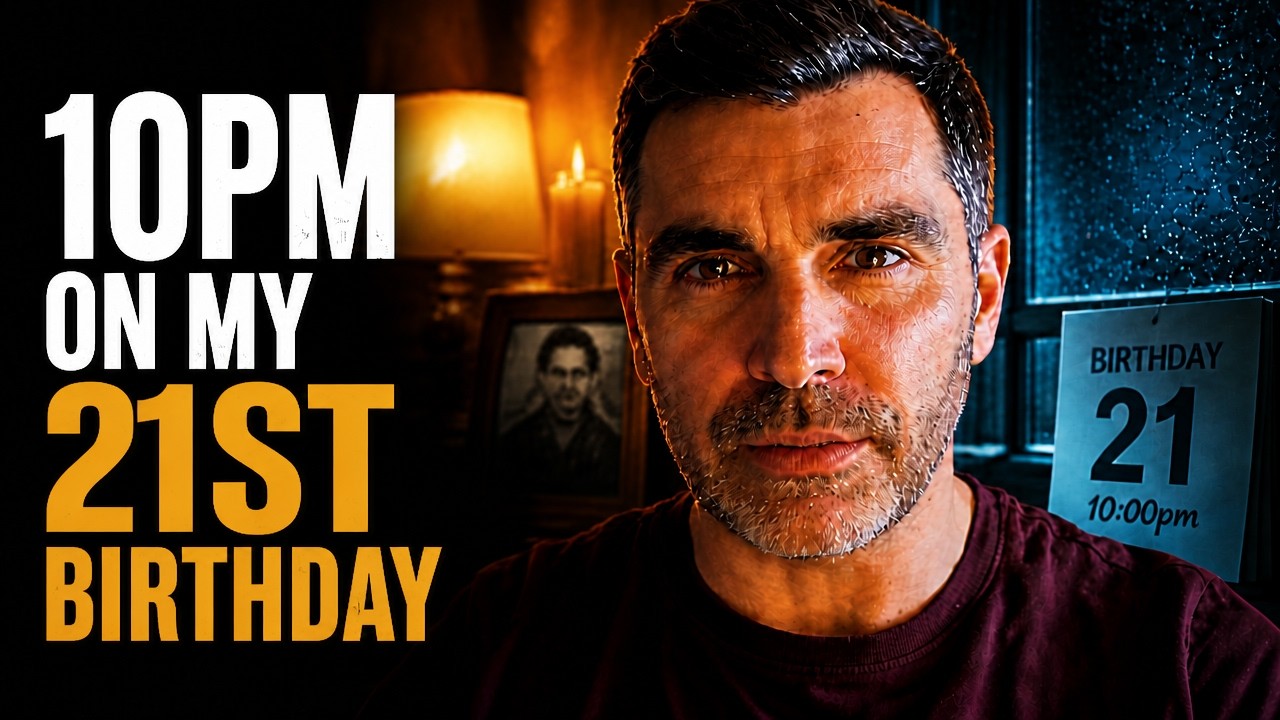
James turned 21. He spent the day on the golf course with his mates. That night he was downstairs drinking champagne while, upstairs, his dad Willie was dying.
At 10pm, on his birthday, it was over.
That was the day James became a man who'd lost his father. The same date he's been asked to celebrate every year since.
James joins Roger and Scott to talk about bowel cancer, the diagnosis, the final days, and what 25 years of grief actually looks like when the loss is tied to a date you can never avoid.
This one's for the guy whose grief still shows up on a certain day every year. The guy who lost his dad before he'd figured out who he was. The guy whose birthday quietly became an anniversary.
In this episode:
• Losing his dad Willie at 10pm on his 21st birthday
• What grief looks like 25 years later
• The day the bowel cancer diagnosis arrived
• Fighting, coping, and the final days
• "Death math" and the arithmetic of anniversaries
• Health checks, colonoscopies, and becoming a father yourself
• Building an adult life without a dad's advice
• Keeping grandpa alive for children who never met him
• The hug he gives his kids now, the one Willie gave him
• What he'd say if he got one more conversation
About James and Willie
James Wood Robertson lost his dad Willie to bowel cancer 25 years ago, at 10pm on his own 21st birthday. Since then, he's learned how to carry a loss that never leaves the calendar, how to become a father without a blueprint, and how to keep a grandfather alive through stories.
It's a conversation about father loss, cancer, memory, fatherhood, and the small inheritances that outlast the people who gave them.
And yes, there are laughs. Because grief is weird like that.
⏱️ Episode chapters
00:00 Why James Is Here
01:05 Support The Podcast
02:31 Meet James Wood Robertson
04:23 Grief 25 Years Later
07:31 Who Willie Was
08:26 The Cancer Diagnosis Day
11:37 Fighting And Coping
12:46 His Final Days And Passing
15:37 Anniversaries And Death Math
16:56 Health Checks And Fatherhood
19:23 Life Without A Dad's Advice
23:01 Keeping Grandpa Alive
26:23 Hugs And Lasting Love
27:10 If He Could Talk Again
29:24 Final Advice And Goodbye
About Dead Dads
Dead Dads is a podcast for men figuring out life after losing their dad. Hosted by Roger Nairn and Scott Cunningham, the show features honest conversations about grief, identity, family, memory, masculinity, and all the strange things that happen after your father dies.
No grief brochure voice. No tidy healing arc. Just real conversations.
You're not alone.
☕ If The Dead Dads Podcast has helped you feel a little less alone, consider buying us a coffee: https://buymeacoffee.com/deaddadspodcast
Follow The Dead Dads Podcast:
Website: https://www.deaddadspodcast.com/
YouTube: https://www.youtube.com/@deaddadspodcast
Instagram: https://www.instagram.com/deaddadspodcast/
TikTok: https://www.tiktok.com/@dead.dads.podcast
Substack: https://substack.com/@deaddadspodcast
And listen to us here, or wherever you enjoy podcasts:
New episodes every week.
Dead Dads Podcast is produced with the support of JAR Podcast Solutions, the branded podcast agency that helps organizations build shows people actually want to spend time with. Learn more at https://jarpodcasts.com/
Unknown Speaker (0:00): Twenty six years on, honestly. This is probably the first time I talked about this for a long time. A long, long time, and it's hit me like a train.
Scott (0:07): Hey, everybody. Welcome again to the dead dad's podcast. Today, we're talking to actually a close friend of mine from a long time ago, James Wood Robertson. James is actually someone that I met when I was traveling in Australia in I I don't wanna say this out loud, but actually over twenty five years ago. And James was the first person that I met who had lost their dad.
Scott (0:28): He was a person my age, and he had recently at the time lost his dad. And he sort of set a template for me about living without a dad before I even was even cognizant that that was a thing.
James Wood Robertson (0:40): Yeah. This is a really unique conversation because he did lose his dad so early. In fact, James has lived more of his life without his dad than he has with. And I think there's gotta be some guys out there, you might be one of them watching right now or listening, who's in a similar spot. You lost your dad quite early, in your early twenties.
James Wood Robertson (0:57): Really want you to watch and and watch all the way to the end because this episode is full of all sorts of great advice and stories about James' experience. Hey, guys. What we want you to do though before we get into the episode is please subscribe to the podcast. Whether you're watching on YouTube or you're listening in Apple or Spotify. It helps us grow the show and get the podcast into as many of the right eyes and ears as possible, and and those are the other men out there who are going through the grieving process and need a resource like this.
Scott (1:24): We have set up a new program called buymeacoffee.com. The website is buymeacoffee.com/deaddadspodcast. Essentially, you can make a singular donation. You can make a monthly donation. This is a way for us to try to invest that money back into getting the podcast.
Scott (1:39): We pay for some of our studio time, which keeps we pay for Roger's hair and makeup. All of these things help make the podcast look better and gives us an opportunity to invest it back so that we can grow our audience. So any donation is really welcome, and thank you so much for not just liking, subscribing, donating, but passing this along, just speaking about it, rating it, reviewing it. These are all things that really matter. It's I'm I'm learning what YouTube influencers have said for so long.
Scott (2:07): That will smash the like button.
Unknown Speaker (2:09): Smash it, guys.
Scott (2:09): Yeah. It's true. You gotta smash it. I mean, we're not paying for any broken keyboards, but we will support anybody that smashes.
Unknown Speaker (2:16): It's not gonna bring your dad back. However It will. But we're here to help you laugh. It's the
Scott (2:29): Welcome to the Dead Dads Podcast. I have the very great honor of introducing, actually, a a close friend of mine who I have not seen physically or even virtually in in many years. This is James Wood Robertson. James, thank you so much for joining us on Dead Dads Podcast.
Unknown Speaker (2:46): Oh, thanks for having me. Glad to join you.
James Wood Robertson (2:48): James, why on earth would you do a grief podcast, especially knowing that my understanding is your your dad passed away over twenty years ago.
Unknown Speaker (2:58): Yeah. It's been a while. It's been a long, long time. It was coming up to twenty six years ago, so it has been a long time. But I saw that Scott posted something on Facebook, said he was setting up a podcast.
Unknown Speaker (3:12): I had a great time with Scott when we were travelling. We got so, so well. It's one of those friendships that was so close for such a period of time in my life. And then I saw the Dead Dads podcast and I was like, yeah, go. What a great idea.
Unknown Speaker (3:25): Go you. And a rather throwaway comment of, hey, I'll do it if you're interested. And it's been a while, but James. I'll
Scott (3:33): do it. Do it. I think I'm right in saying this. I'm because I remember at the time you were the first person that I knew who had lost their dad because we were still quite young when we met. And so when we met and yeah.
Scott (3:47): You were younger than me by the slightest amount, but we were still quite young. And you when you said you lost your dad, I remember thinking, that was one of the first times I thought, okay. This is a thing. Like, it actually, you know, in retrospect was the first time I considered that that was a possibility, which didn't happen again for for years for me. But you're when we started doing this podcast and when you reached out to me and I thought, okay.
Scott (4:10): This is gonna be interesting. I thought, actually, it'll give me an opportunity to say that you gave me my first instruction on what it was like and the challenges of it. So I really appreciate that as I did our our friendship. What is what is grief look like twenty five years later, James?
Unknown Speaker (4:27): It's very different. It's very different to how it was. My dad died of cancer. He was ill for quite some time. He was ill for eighteen months.
Unknown Speaker (4:35): So you have a bit of time to prepare. But then when it happened, it's very raw and it's very upsetting and you go through a lot of a lot of difficult times. And then just as time passes, it just changes all the time. It goes from the minute memories and the constant upset to it calming down a bit, to the sudden surprises. And now I've got to a point in my life, so the sudden surprises were the ones that you know, I'd at times in my life I've even not that long ago, maybe only five years ago or something like that, would wake up, I'd have a really vivid dream and I was with my dad and we were doing together and then I'd wake up and I'd have that moment of realisation that he wasn't there and he wasn't in my life anymore.
Unknown Speaker (5:18): And that would just yeah, I remember being next to my wife in bed and just crying and just waking up in tears. That doesn't happen anymore. When grief is raw and it's there, you're thinking about them a lot and when the grief's not there as much you can get a bit of sort of grief guilt, can get a bit of, you know, I should be feeling should be more live. Have I when's the last time I thought about my dad? Am I am I thinking about that person that meant so much to me enough?
Scott (5:44): Grief, I think, is the the nature of you when you get into it, you can't wait to get out of it because it is can be so wrenching. And then after a certain amount of time, you begin to wonder why you don't have it. And this idea of I think Roger has said this several times is grieving like, you feel like you're grieving wrong. You feel like your your grief is not correct. I shouldn't feel good.
Scott (6:07): My dad died.
James Wood Robertson (6:07): How on earth can you feel any relief that he's gone even though he was clearly in pain, whether it was cancer or not? Or and all of a sudden, he's gone and you feel this sort of levity. And and then it becomes like, oh, how dare you think that way?
Scott (6:21): Do you remember the first time when levity came back? When your dad was dead, do you remember the first time that or or a time when you thought, actually, I'm I'm okay now to think about this in a different way than just being sad?
Unknown Speaker (6:37): Parts of being young is you're bloody selfish. You know? You you think about yourself a lot. You think about having fun a lot. My dad was my dad was always determined that despite him being ill and all the rest of it, I would still have the parties, have the go out a lot and have fun and not let it be too much of a distraction so when he died, as well as it having an element of relief that he wasn't ill anymore, but that huge hole that it left in my life and in those, you know, in everyone in the family.
Unknown Speaker (7:13): I think there was just, I just tried to grab moments when I could grab them and I was, it was an exciting time for me actually. I'd just graduated. He died a month after I graduated. I'd just graduated. I was working out what on earth I wanted to do with my life.
Unknown Speaker (7:29): I was 21. I was single, know, going on girlfriends, you know, just
Unknown Speaker (7:35): Well, can you tell me a bit about your dad? Yeah.
Unknown Speaker (7:36): Yeah. I feel like we've we've launched into it, but what was his name? And I would I I would like to know, like, do you have a quintessential memory that you always go back to that you'd be willing to share with us?
Unknown Speaker (7:46): The piece I can always remember, he used to come into the kitchen and often I'd be sitting in an island unit in the kitchen and he'd be coming through the door behind me and he'd always, didn't matter what he was doing, he'd always come in and he'd just fling one arm over my shoulder like a seat belt, give me a hug and then walk to do something else. And it would always just be that little thing and I do it now.
Unknown Speaker (8:04): What was his name?
Unknown Speaker (8:05): Willie. Willie Wood Robertson. Scotsman, not a groundskeeper, didn't have red hair, had very dark hair like me, brought up in a mining town, mining village in in in Scotland. Strange upbringing, quite difficult upbringing at times. Played to play football, professional soccer player.
James Wood Robertson (8:26): You mentioned that he had cancer for for eighteen months. Can you remember back to the moment you found out about that cancer?
Unknown Speaker (8:34): That is a life line. That is an absolute moment in my life. I can remember every single bit about that day. I was over in university, I was over at Manchester. He'd not been feeling well, he'd just been feeling really like laid low and just not feeling great.
Unknown Speaker (8:52): His stomach had been giving him some jip, he'd not been going to the toilet properly and he was just bothered about it. And he'd been not in a way that because my dad was never one of those people that wouldn't go and get things checked out, he wasn't like that and he definitely wasn't precious about people poking around with him, but he just didn't go. Life was busy and he put it off and then when he eventually went, they were like, yeah, that's not right, need to go and get some checks, you need to go and have a colonoscopy, you know, get some checks. And he came back from the colonoscopy and there was just something about him. I just knew he didn't, he thought something had gone wrong.
Unknown Speaker (9:24): He was in quicker, He was in a lot quicker than he was expecting to be. He was in and out a lot quicker than he was expecting to be. And he rang me and said, are you around in Manchester? You're around. Was about an hour's drive.
Unknown Speaker (9:37): He said, you around? And I said, yeah, I am. He said, I'll pop over. And I knew what had happened. And I knew it was bad news.
Unknown Speaker (9:42): Immediately knew it was bad news. I could just tell in his voice. And he was really he was really not he could he was a very good poker player. But he he and you know I could tell immediately and I said no I'll come to you because I knew he was going tell me bad news and I didn't want to be in a student house in Manchester. I wanted to be at home.
Unknown Speaker (9:59): So I drove back and I just remember I can well I can't really remember the drive but I can just remember how I felt and it was just a feeling of absolute dread. And we I got into the house and within seconds of seeing him, he was in tears. I was in tears. God, makes me feel really churchy, see if I'm thinking about it. But then he just told me he was terminal bowel cancer.
Unknown Speaker (10:26): Given six months to live, pushed out to 18. It was pretty hard. I'm an only child. My parents separated when I was 14 and I stayed living with him. We were incredibly close.
Unknown Speaker (10:41): He was like my hero. So yeah, it was tough on both of us. Felt more, in many ways more upset for him. I could just see how much it was hurting him because we were so close and he would have done anything for me. The fact that he sort of knew he wasn't gonna be around for me for for, you know, for formative formative years or see me get get, you know, see me get much older.
Unknown Speaker (11:05): This is probably the first time I talked about this for a long time. A long, long time and it's hit me like a train.
Scott (11:12): So you're midway through uni. He's just given you this piece of information, which is essentially, at the time, a very short span of time. What did you do next? Did you go back to uni? Did you stay home?
Scott (11:25): Like, I think the interesting thing, especially for everybody, is the day after life continues even though you can see the end for him. How do you keep going?
Unknown Speaker (11:37): We were just it was it was it went from the news to, but come on, you know, we have it after we had a good cry and, you know, it was tough. And then it was like, right. But you know what? I'm not I'm not going to, I'm not just going to, I'm not just going to let this take me. I'm not just going to lie back and do nothing.
Unknown Speaker (11:58): You know, I'm going to, I'm going to fight it. I'm going to do all I can, you know, I'm fit, I'm strong. I'm going to try and get over it. I know it's a terminal diagnosis, but I'm going to make sure I'm, I'm fighting and doing everything I can possibly do. So then got quite, you know, what do guys like more than anything?
Unknown Speaker (12:13): It's like practical solutions to big problems. Let's find a fix. Let's just do some research and try some things. And that helped.
Unknown Speaker (12:24): That what you're doing? Were you involved in this? This is what he was doing. What did you do in that process?
Unknown Speaker (12:29): Yeah, was doing lots of research, checking out things that he could take, supplements he could take that might help, shark fin something, not soup, but cartilage tablets. There was all sorts of stuff because this was, like, like, long time ago as well.
Scott (12:49): But how did he pass? So I know he was sick. Was there was he in hospice? Was he at home?
Unknown Speaker (12:54): He was doing very well. Then he wasn't doing very well. Then he had two thirds of his bowel removed because he's had a sudden, like, oh my god, rushed into hospital, needs to get sorted. And this was early doors. This was even before six months.
Unknown Speaker (13:04): So we were thinking, oh my god, this is happening so quickly. Got very poorly, bowel got blocked up, had two thirds of his bowel removed, all stitched back together, had a massive zip up the middle, know, big huge scar up the middle of him. And then he was great. I mean, we went to Portugal on holiday. We played golf.
Unknown Speaker (13:20): He dived in the swimming pool like no time after the operation. We had a great time. And then of course cancer, because it was in his bowels, it spread to his liver.
Unknown Speaker (13:30): Gets you eventually.
Unknown Speaker (13:31): Was gone. So it was catching up with him and then he was losing a lot of weight and he was getting obviously very, very poorly. In the last month or so, my graduation, he was in a wheelchair at the start of July and he was getting worse and worse and worse and worse, and then bed bound for the last couple of weeks. And then on a morphine driver for three days, because he was just because it was just, it wasn't, it wasn't suddenly gonna get better and he was in pain. So he was on a morphine driver, so unconscious for a few days and then he died at about 10:00 at night on my 20 birthday.
Unknown Speaker (14:06): So that was the yeah, on my 20 birthday and I've been out playing golf with my mates during the day because what do you do on your 20 birthday? You can play golf and I was having a beer and a glass of we were having drinks, we're having like champagne, drinking glass of champagne for my 20 birthday down, downstairs, having a few drinks, family, my uncle Alec was down from my dad's brother was down from Scotland. My girlfriend at the time was was over. Sharon's dad and family were there and because we knew it was close. And also, it was my birthday, so we were having a a quite a handful.
Unknown Speaker (14:40): And you have a right and but I'm interested in this in a minute is that you have a right to celebrate life as well. Right? You're still living.
Unknown Speaker (14:46): What was I gonna do? Yeah. What was I gonna what what were we all going to do? We'd spent a lot of time at his bedside. We spent a lot of time with him.
Unknown Speaker (14:57): Hopefully, as it happened, Sharon's my dad's partner's dad went upstairs to check everything was okay and then, you know, came down and went. And we were all like downstairs. So there was a lot of guilt, not as much for me, but Sharon felt incredibly guilty at the time and there's guilt for not being there at that particular moment. But, you know, where do you, where do you, are you there? Are you not there?
Unknown Speaker (15:21): You
Unknown Speaker (15:22): How would you
Unknown Speaker (15:22): How For would me, at the point he was conscious and he knew, we were there.
Unknown Speaker (15:27): Right.
Unknown Speaker (15:27): And we were there all the time around him. And at that point, he wasn't conscious and he didn't know. You can rationalize these things however you want to rationalize them.
Unknown Speaker (15:37): I'm I'm curious. You've now lived more without him than you have with him as far as the lifespan of your life so far. I'm curious. What do you think that that does to the to the memory of him?
Unknown Speaker (15:50): I suppose the one nice thing of it being on my birthday is that every year, I've got a very obvious sort of anniversary and I can think about it, but not also because it's my birthday, I'm normally doing something quite nice as well. So it's sort of, I can think about him and I can think about that. It's an odd feeling when you go through that threshold of, and it doesn't happen. And it only happens generally happens to people whose dad's died.
Unknown Speaker (16:14): Have a question for you.
Unknown Speaker (16:15): Way to yeah.
Scott (16:16): I don't know if this we've talked about this a couple of times in in other versions of this this, I'm gonna use a bad term like death math. Maybe it's this this idea like the the date that your dad passes is is for some reason your date or the age that he makes it is the age that you're allowed to make it. And and so has the has that ever occurred to you? Have you thought about that? Have you have you ever been conscious of the idea of like, okay.
Scott (16:43): My dad died this way at this time. So that's possibly how I was gonna die. How did how did that land with you? And, you know, obviously, since you've spent such time thinking about it, how do you how do you manage that feeling?
Unknown Speaker (16:57): I, I make sure I look after myself. I mean, you know, because my dad was 52 and died of bowel cancer. So you're immediately thinking, right, it's a problem. It's a challenge. It's a real issue.
Unknown Speaker (17:08): Apparently now though, I went and said, well, you, you know, I should be getting, you know, I should be getting regular checkups. Now they say, well, 52 is not actually, it's only younger than that now for bowel cancer to get checks. I mean, UK is maybe somewhat different and somewhat somewhat slower, but I had my, I had my first colonoscopy before my dad had died. I had a first colonoscopy when I was 20 to get checked. And I go all the time.
Unknown Speaker (17:29): It's scary, but I don't let it I I don't let it I don't let it bother me.
Scott (17:37): It does sound interesting to me now, how that has been a driver for your life because you've you you saw what you saw your dad's example. And then that sort of is a motivation to keep health up. We all know that it's necessary, but I wonder, and I've heard this from a few, a lot of guys start becoming healthier as their dads die, as they start to see the realities of death, they suddenly go, oh, actually, wait a second. Like, I do need to do all these things. You started that earlier.
Scott (18:04): So the very, tentative word benefit of your dad passing away is it kickstarts you earlier than some of us into taking care of yourself, the ability to recognize that death is possible. And I need to I need to drive my own reality, my own life as much as possible.
Unknown Speaker (18:24): Yeah. Yeah. Yeah, absolutely. And and definitely the focus on getting yourself checked out, making sure that you you don't you don't go, it's probably fine.
James Wood Robertson (18:34): And I can I can also imagine that a lot of your decision making around your health sure is is obviously for your own self preservation, but you have you have kids and you're starting to probably think to yourself, I I I don't want them to ever go through what I had to go through at such a young age?
Unknown Speaker (18:50): Completely. In fact, I said that to one of my my kids because he didn't wanna go and get something checked out to the doctors. And I said, look, this is what we do. This is what we do as a family. If you're not feeling great, this is what our cover's for and this what we do.
Unknown Speaker (19:06): And I said, I always get myself checked out because sure as hell, that well, I'm gonna do everything I can possibly do to make sure that you don't have to go through what I went through when when when I was young.
Scott (19:16): A lot of the a lot of our fathers provide this for you, and it sounds like similar, which is the advice, the idea of, like, sort of a guide and stuff. And so after he passes, you know, and you've gone through the process, is there somebody that you that you go to for advice after that? It sounds like there were other people that joined your life. But do you remember a period of transitioning to, like, who who am I going to for advice now? Who is my who is that guy?
Scott (19:41): Because, again, you were so close with your dad. How did you how did you navigate that?
Unknown Speaker (19:47): To to be honest, there wasn't anyone. I mean, my my mom, obviously, my you know, so my parents are separated and but, you know, they separated. They managed to separate and never get divorced. They maintained a decent sensible relationship given everything that happened and I'm incredibly close with my mum when we speak most days. I'm beyond the time, I need support, emotional support, help, you know, help and guidance as you get older I think becomes more, you just need a sounding board, you need some emotional support, you need someone to say, yeah, I get where you're coming from and I'm with you and if there's anything I can do to help you know where I am and if you do want to talk it through.
Unknown Speaker (20:24): Practical advice, I used to lean on my dad a lot and I've thought about this a lot even way before the sort of idea of the podcast, I've thought about this a lot as to what happened when my dad died. And it's a strange, it's a really, really strange thing for me to say and to admit. But in some ways, looking after a little period of time because I was so close with my dad and everything I want, everything everything that happened, everything big that happened in my life or any, like, oh my god, what do I do here? And how do the banks just sent me a letter about this and what do I do? I'd ring my dad straight away.
Unknown Speaker (20:56): It was actually quite liberating and it's an awful word to use. But when it forced me to just work it out, just take it on myself, be a bit more independent, step up to the plate, make decisions for myself, think them through properly, make a decision, do it. And and I didn't have that person to lean on. Well, what do you think? My dad was also, you know, wonderful, wonderful, wonderful guy.
Unknown Speaker (21:25): Hell, he opinionated. You know, he had views on stuff. He wasn't like, you know, you do what you think. You know, do you do what you you think, son? You know, he'd be like, I think you should do that.
Unknown Speaker (21:33): And I'd go, oh, I probably agree with you. So actually, you know, there's certain things that certain choices I made in my life that I thought, I'm making this choice and dad probably wouldn't like this choice, but I like this choice. And I didn't have the, I knew I'd not had, not an argument, but not had to have that sort of conversation with my dad where he's like, I don't think that's the right choice. I'm not saying I don't care. We didn't have those sorts of conversations.
Unknown Speaker (21:57): So it's a weird thing to admit to that in many ways it kind of him dying at that age when I was just starting off in sort of going off to law school, starting a career, met my now wife and started a family. I had all of that without the benefit of a very strong person and a very strong personality and character in my life. But without the constraint that you can sometimes have from quite a strong personality and opinion and the character in your life, It was my own thing to make.
Unknown Speaker (22:34): I thought I set you up really nicely because we met shortly after your dad passed away and you were supposed to say, Scott, you were my role model actually because you gave me that was the way I saw that. It was right there. I saw that change my mind. Where you were like, you know, I really looked up to you. And it there would been an age joke because we're I'm older than you.
Unknown Speaker (22:53): I
Unknown Speaker (22:53): mean Sorry. You older than him?
Unknown Speaker (22:56): I am older than James.
Unknown Speaker (22:57): You do look a lot older.
Unknown Speaker (22:58): Yeah. I'm a lot older than James.
Unknown Speaker (22:59): He does go to the gym every day.
Scott (23:00): He's healthy. I have a question. You go for it. Yeah. I have a question for you.
Scott (23:05): And this is something again that we've spoken about before. So your dad passed twenty six years ago. Your dad is a firm memory for you, but is obviously nothing for your children. Right? Because they never got a chance to meet him.
Scott (23:17): How do you navigate that? Is there a point where like, do you tell them stories of him? Do you show them pictures? Is there a date in the year you like, obviously, your birthday is a passing date. Do you have a process to keep him alive?
Scott (23:32): Is that something that matters to you in your kids' lives? How do you navigate that now that you're such a such a far ways past it? Are you trying to come back around again and take your kids through it so they can feel closer to him as close as you were?
Unknown Speaker (23:46): Yeah. I talk about him all the time. I talk about different things and the way he was and, you know, especially if there's anything to do with sport. His influence on them is far more than they think, far more than they realise. But in terms of knowing him, in terms of seeing photographs of him, I don't have that many because of course he died so long ago, you don't have so many.
Unknown Speaker (24:09): I've got one video recording of him and it's a really awful one, which is like someone it's like a works Christmas party in a really I mean, was like in a really awful, like really clunky in an office, not in a nice office, in like a sort of really grubby, like, little office in Leeds and they're all everyone's a bit awkward. And of course, in the days when like the cam corder was massive so everyone's getting in their faces with no one knows how to deal with it and no hardly anyone's talking apart from my dad.
Scott (24:36): I only ask because I think, you know, there are definitely guys out there who are losing their dads now. That's definitely the topic that we get the most. And I wonder how many of them are thinking like the fear of losing connection to your dad. This idea like, you know, yes, the pain is immediate and intense right now. But then there will be a period in time when I'll forget.
Scott (25:01): And that's a fear as well. The idea that you forget your dad or you forget these feelings that you have. And so knowing that you're in that space, I guess a question that I ask that maybe you could give as a response to everyone, which is, does that happen? And is is that a concern for you? Do you do you feel like you're in danger of ever forgetting him?
Scott (25:25): Or if you are feeling like you ever forget him, is there a way that you kind of bring him back?
Unknown Speaker (25:31): I never feel like I'm in danger of forgetting him or or forgetting the feeling of being around him and being in his in his in his company and the laughs we used to have. We used to spend so much time together and we used to have so many, we've got so many, we had so many great times. No, never think about that for a second. And I am not great at looking back. I'm not a particularly retrospective person.
Unknown Speaker (25:59): Everything I do in my life, it's sort of like, right, what are we doing next? I find even, I remember when we had twins and then we had another kid. I remember having another kid was like, we've done this already. Why are we doing this again? It's like, it felt like a retrospective step.
Unknown Speaker (26:13): So we started, why am I putting nappies on again? Done this.
Unknown Speaker (26:15): I'm sure your wife loved hearing that. Yes,
Unknown Speaker (26:18): did. I didn't, don't know. I've also been married for nearly twenty years. So I know to internalize things that I do, if I want to feel him a bit more, just picture the way we smile, the hug I've talked about. If I want to feel closer to my dad, if I want to feel closer in a family way and the way he felt to me, it's the hug.
Unknown Speaker (26:40): I can't hug him anymore unfortunately. If you hug your kids like he hugged me, it's, you know, my son's the same size as me now. It's about the same sort of dynamic as I was when my dad died. We were the same. We're two men the same size hugging one another.
Unknown Speaker (26:55): I know it sounds really silly, but just give him a hug. It's the same it's a role reversal, but it's this it brings the same sort of feeling of love and and and, yeah, love and care and that that pure kind of father son love.
Unknown Speaker (27:10): If you could speak to him again, what do you think that conversation would be like?
Unknown Speaker (27:14): It would be a download, and then it would just be a huge what I would really want to do is just have a moment of time like we had when I was 20 or even better when I was 19 and we didn't know he had cancer and he was living a life and we thought we were going to be living, you know, growing relatively old together. So, if I could go back to that and just have a normal time, that would be great. But to be honest, I, after this passage of time, I don't really ever yearn for that. I don't want that, because to be honest, it's been so long now, and I'm not saying I'm jamming it down, down there, but I don't want that freshness anymore because if I had that moment, that moment's never gonna it's never gonna be long enough. So, you know, it would just be so painful afterwards and so raw again that I'm kind of fine where I am.
Unknown Speaker (28:09): I've got all the memories. I've got so many of the wonderful benefits that he gave me that he get the foundation, the main foundation stone. I've talked to my kids about this a lot. The main foundation stone that he gave me was an an a knowing. I I never doubted for a second that he didn't love me more than everything in the world.
Unknown Speaker (28:28): And he wouldn't and there wasn't a single thing he wouldn't do for me if, you know, And he was a harsh dad. He he wasn't I wasn't I wasn't a spoiled kid. He was firm. He was very firm. But I just knew what that when it was important, if something was important, he'd be there.
Scott (28:43): Well, thank you so much. Thank you personally as a friend for doing this. I appreciate you stepping back into these memories and going back and and letting us learn a little bit more about him. I didn't know him at the time. I I remember you talking about him even then when it was probably fresher, but it's such an interesting thing.
Scott (29:03): So I wanna I wanna thank you. Thanks for thanks for coming along on this.
Unknown Speaker (29:08): No. Thanks for his I've really enjoyed this. I've really enjoyed it.
Unknown Speaker (29:11): We we have as well. In a I'm on
Unknown Speaker (29:12): emotional in a hard emotional way, to be honest. I've I've sort of thought about speaking to you about this, and it was it it was a lot more emotional, a lot a lot more fresh than I was expecting it to be, but I really enjoyed it.
Unknown Speaker (29:24): Well, there's probably somebody who's watching this right now that is in the middle of of of the death of of their dad or is is right in the middle of the grief. I'm wondering if you could just give them one one thing piece of advice before we go.
Unknown Speaker (29:37): Don't forget to focus on your life and the people around you. And, you know, enjoy those distractions while they're there.
Unknown Speaker (29:46): Beautiful. Thanks so much, James.
Scott (29:49): And thank you. Thanks everybody for being on another episode of the Dead Dads podcast. Please make sure to like, subscribe. What else? Throw?
Unknown Speaker (30:01): Yes. That that's kick? Yeah. You giving just parenting advice? Throws.
James Wood Robertson (30:06): Yeah. Just it'd be great if you could give your support to the podcast, share it with somebody who you think might need it as well because it is really meant for the community of guys out there that are either in the middle of their grief or or need that, you know, need that extra layer of support. Once again, thanks so much for being part of the Dead Dads community, and we'll see you in the next episode. It's the Dead Dads Podcast.