
 YouTube
 Spotify
 Apple Podcasts
 Amazon Music
 PocketCasts
 Castbox
 PlayerFM
 Podchaser
 iHeartRadio
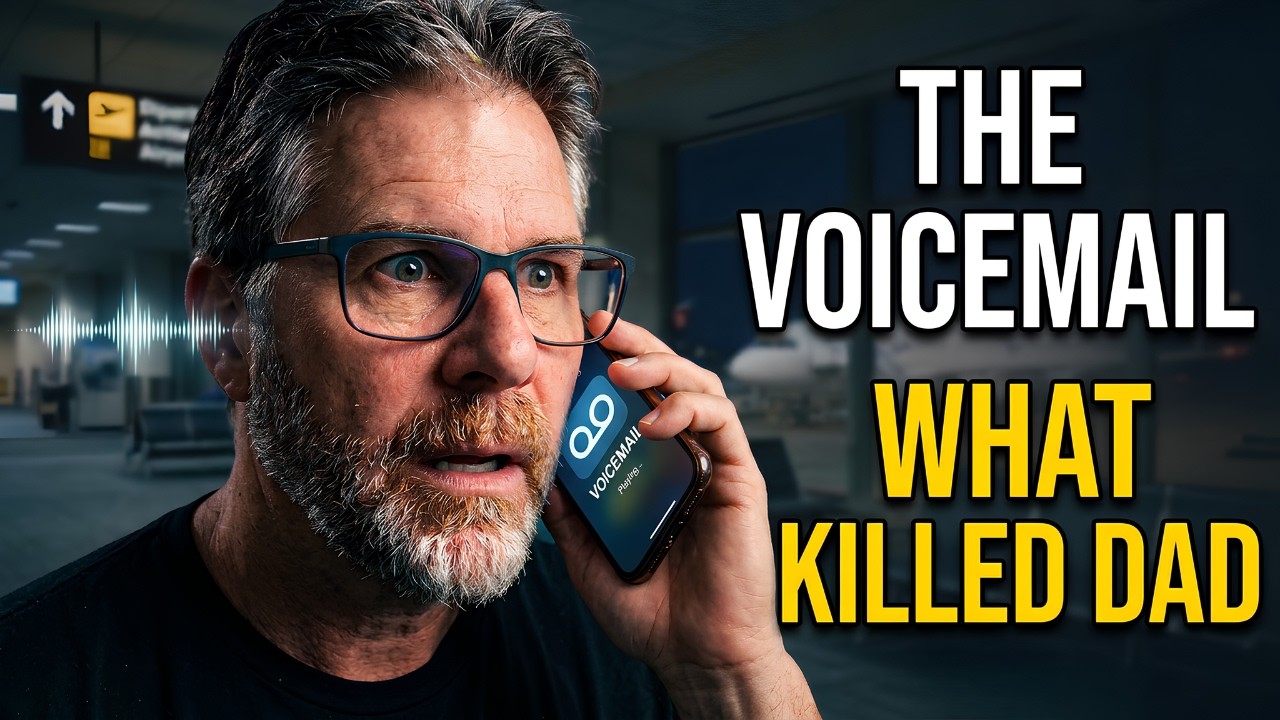
 That voicemail at the airport told me what killed my dad
Grief support for men who've lost their dads. This week: Dave Siff on the sudden, no-warning death of his father — and the mystery that came with it.
Dave texted his 85-year-old dad and got one garbled reply back. Days later he was in the same ICU where his mom died, deciding when to pull the tube. Then the breathing tube came out — and his dad's eye shot open and locked onto him. "This is it. I can't look away right now."
What he didn't know yet: something no one could explain had killed his father.
This one's for the guys whose dad's death came with a mystery they're still carrying — a sudden loss and a cause that didn't make sense until it was over. Not for you if you want a tidy, comforting take on dying.
In this episode:
- Why a sudden, no-warning death can wreck you harder than a long goodbye — and why that's not overreacting
- What it's like to make the call to stop treatment, and the second-guessing that follows
- The strange relief of finally getting an answer — and the new weird that shows up once you have it
- Why the last ordinary thing you did with your dad ends up outweighing the funeral
- How losing your dad quietly reorders what you'll put up with in your own life
- Permission to find some of this darkly funny without feeling like a bad son
⏱️ Episode chapters:
00:00 Garbled Text Warning
00:11 Welcome And Guest Tease
00:46 Support The Podcast
01:54 Meet Dave Siff
02:04 Why Dead Dads
02:29 Introducing Paul Siff
04:17 A Healthy 85
05:53 Procedure Goes Wrong
08:55 ICU And Uncertainty
12:02 Palliative Care Decision
13:23 Final Moments And Shock
14:16 Cause Of Death Revealed
15:33 When He Stopped Being Him
17:09 Anniversary And New Priorities
21:32 Keeping Dad Alive
22:54 Guilt And Self Kindness
24:25 What Grief Teaches
25:05 Thanks And Subscribe
25:47 Closing Tagline
About Dave and his dad, Paul:
Dave Siff lost his dad, Paul — suddenly, at 85, with no warning. Paul was a college professor of 42 years, a cyclist, a scotch drinker, and the guy who taught Dave to add "two, three, four drops of water" to a bourbon. A conversation about what a father passes down, and what gets quietly reordered when he's gone.
Another guy in the club → Matty Woods on his dad's funeral with two rules: https://youtu.be/Ocm8NTnDLX4
About Dead Dads:
Dead Dads is the podcast for men figuring out life after losing their dad. Hosted by Roger Nairn and Scott Cunningham, it's honest conversation about father loss, grief, identity, family, memory, and masculinity — and all the strange stuff that happens after your dad dies. No grief-brochure voice. No tidy healing arc. Losing your dad sucks. But talking about it doesn't have to. You're not alone.
If this episode helped you feel a little less alone, follow the show and leave a rating and review on Apple Podcasts — it's the single biggest thing that helps another guy in the club find us.
☕ Buy us a coffee: https://buymeacoffee.com/deaddadspodcast
Follow Dead Dads:
Website: https://www.deaddadspodcast.com/
Instagram: https://www.instagram.com/deaddadspodcast/
TikTok: https://www.tiktok.com/@dead.dads.podcast
Substack: https://substack.com/@deaddadspodcast
Spotify: https://open.spotify.com/show/4WWlXBPzgj151SFYRUZeSBNew episodes every week.
Produced with support from JAR Podcast Solutions, the branded podcast agency that helps organizations build shows people actually want to spend time with: https://jarpodcasts.com/
Roger (0:00): I sent him a text, think, like, hey. Everything okay? And I got this kinda garbled reply, which was very strange. And I was like, oh.
Scott (0:11): Hey, guys. Welcome to another episode of the Dead Dads Podcast. Today, we're talking to Dave Siff. Dave didn't really understand what made his dad sick. In fact, it was a bit of a mystery entirely, and he he shares that with us on the episode.
Scott (0:25): What do think, Scott?
Dave Siff (0:26): Yeah. That's the part that really hit me. This this idea of just one day he's here almost, and then the next day he's not. And you don't have a reason for it. And you don't have anybody to blame in that aspect.
Dave Siff (0:38): And Dave, his struggles with that and his ability to, I guess, process his father's death is is a core part of this episode.
Scott (0:46): If you've really enjoyed and found value in these episodes, we'd we'd love it if you could, make a donation to the show via
Unknown Speaker (0:53): buymeacoffee.com forward slash dead dads podcast.
Scott (0:57): That money actually goes towards keeping the lights on because it does cost money to, you know, rent our studio and make sure that Scott's got new pair of socks every once in a while. We've discussed the legs, which are now on on appearance now, and we need to think about whether we need to get hire personal trainers. I'm just kidding. We're not gonna hire personal trainers. But what we are gonna do is make sure that the community keeps rocking, and we get this podcast out into as many of the right eyes and ears as possible, and that is you guys and the other men out there who who need dead dads.
Unknown Speaker (1:29): Well, thanks again for joining another episode of the dead dads podcast. Let's bring on Dave Siff.
Unknown Speaker (1:33): I've got legs, and I know how to use them.
Unknown Speaker (1:35): It's a weird, We have guests today, and we're really excited to introduce them all to you. So Dave Siff, please welcome to the show.
Roger (2:00): Thank you, guys. Thanks for having me. I'm really excited to to talk about this with you guys.
Unknown Speaker (2:05): So, Dave, why on earth would you do a podcast about dead dads?
Roger (2:08): I just sent Roger a message just to say, hey, man. That's really awesome. Like, what a great title. It sounds like a cool thing. And by the way, my dad is also still dead and realizing in offering to do it that I had never really talked about it in-depth with anyone.
Roger (2:24): Like, it's it's quite a story, and there's a lot of parts and pieces to it. So that's what made me want to do it.
Unknown Speaker (2:29): We'd love it if you could introduce us to your your dead dad.
Roger (2:33): My dad's name was Paul Siff. He was born in 1938 in Brooklyn, New York. He went on to become a college professor for forty plus years. That was his business, a real student of history. He lectured for a living.
Roger (2:48): You know, he he did lectures to students almost every day.
Unknown Speaker (2:52): Is that where you learned storytelling?
Roger (2:54): Certainly, his love for history drove me to read a lot. I minored in history in college. So I sort of got some of that
Dave Siff (3:03): from him. You mentioned that's him in the background. Obviously not the cat. But is that right around where is that in the in the history of things?
Roger (3:11): This is my parents engagement picture. Summer of nineteen sixty one, my mom was 20, and my dad was 22 or 23 there.
Unknown Speaker (3:21): If you told me that they were a folk group and they were touring, like, that that is the look that I'm getting. Yeah. There's a there's a musical. Yeah.
Roger (3:29): So I keep that up there. And then mister Bill from Saturday Night Live, this was on my dad's desk in his office for years. He was a huge fan of mister Bill. He would do the voice, Oh, no, mister Bill. So little mementos of my dad all over my office, you know?
Unknown Speaker (3:45): Love it. So he was a professor for his whole entire life?
Roger (3:49): Yes. He started out in his first job was at Westminster College in Fulton, Missouri. I was almost born there, but they wanted to get back to New York because that's where they're both from. So he was teaching in Missouri. They drove back to New York so I could be born there and then decided to stay.
Roger (4:10): And eventually, he wound up at Sacred Heart University in Bridgeport, Connecticut, where he taught for forty two years. Wow.
Unknown Speaker (4:17): Dave, I'm wondering if you can share with us how Paul passed.
Roger (4:21): My dad was in really good shape for his age. He was 85 years old in the summer of twenty twenty four. And he had a little cardiac issue with like AFib, you know, but it was being managed. And we would joke about the blood thinners that he was on, you know, pharma commercials where everybody's going to a craft fair or square dancing while taking these drugs. He was like, you know, I can't wait to do all this stuff now that I'm on this blood thinner.
Roger (4:54): In June 2024, on Father's Day, he was actually here in Atlanta, 900 miles from home. He drove all the way down with a friend of his, and they did like a civil rights tour of like different landmarks through the South and wound up here on Father's Day. We went to the Martin Luther King Center. We had our last what would be our last Father's Day together. That was in June 2024.
Roger (5:18): And so the next month, he had a an appointment to go in for what's called a cardioversion, which if you're not familiar, when you have AFib, occasionally they have to do this procedure where they just shock your heart back into regular rhythm.
Unknown Speaker (5:31): Oh,
Roger (5:32): really? Like, yeah. Because, you know, your heart can get up there, like way too high or, you know, whatever. So they just kinda hit you.
Unknown Speaker (5:41): It's like nudge your It's like nudge in the refrigerator. Yeah.
Unknown Speaker (5:43): Putting putting the rhythm back into the heart? Yeah. Is that it?
Unknown Speaker (5:46): Yeah. It's kinda like the doctor That's doctor
Unknown Speaker (5:48): at work, you We're gonna put the rhythm back in their heart. Yeah. Yeah.
Roger (5:52): Turn it off, turn it back on, you know. So he had an appointment to go in for that. And it was gonna be on a Monday, and I think we talked the prior Thursday, and he told me his plan. He's like, I'm gonna Uber to the hospital. My friend Wally, his best friend is gonna pick him up, take him home.
Roger (6:08): And I said, great, just, you know, if we don't talk between now and then just text me when you're out, because it's a real quick thing. So I remember that Monday then because we did we wind up not talking over the weekend. I'm working from home on that Monday, and I'm waiting because one in the afternoon this appointment was. I'm waiting. 01:30, two, 02:30, nothing.
Roger (6:28): I'm like,
Dave Siff (6:29): Are you starting to get nervous at that point? Like, you feeling this is routine? Are you talking to yourself in your head, telling yourself it's okay?
Roger (6:36): I'm starting to talk to myself like, wonder what's going on because my dad is like really one thing I inherited from him is, you know, promptness, on timeness. You know, he was a college professor, classes at this time. I worked in news for thirty five years. If you're if you're on time, you're late. So I was starting to get a little bit concerned that I hadn't heard from him.
Roger (6:59): I sent him a text, think, like, hey, everything okay? And I got this kinda garbled reply, which was very strange. And I was like, oh. So I called him. He answered and he kinda wasn't making sense.
Roger (7:16): I said, can you put the doctor on or the nurse? And so he put the nurse on and the nurse said that something else was wrong. And they weren't sure what.
Unknown Speaker (7:27): So he was in the room with the doctor and the nurse still.
Roger (7:30): Yeah. He had gone into the hospital for one thing, but they immediately recognized that something else is going on. Only later did I find out that over the weekend, he fell in the house and bloodied himself pretty significantly and didn't call anybody to help just like my dad, didn't call anybody to help him, tried to bandage himself up. He had become disoriented and fell.
Dave Siff (8:02): I think sometimes just as a question. Sometimes I feel like older people get embarrassed that they become older and they start to have these issues. I I have this same issue. My my dad and my mom had both They'd fallen, and then you later find they'd fallen. They're like, oh, it's nothing.
Dave Siff (8:18): But they don't wanna either burden you, but I think it's an embarrassment issue. So maybe not to presuppose, but I wonder, was your dad that kind of guy? He didn't wanna burden you, but also he might have just been embarrassed about this sort of thing.
Roger (8:28): Just thinking about this now, my dad was the one who cleaned the house. My mom did the cooking. My dad cleaned the house, and he was a neatnik. And in this case, he made a mess. And I think, like, the cleanly guy in him was embarrassed by that possibly.
Roger (8:43): He didn't want anybody to have to deal with his mess.
Unknown Speaker (8:46): Well, sorry, I interrupted you. So he's in the hospital.
Roger (8:48): No, I'm glad you did because that's a good point to kind of bring up. I think he probably didn't he didn't want to bother anybody with it. So he's in the hospital. They said, We're gonna hold him overnight. I said, okay.
Roger (8:58): The next morning, had to go in the office. And almost as soon as I sat down at my desk, I got a call from the doctor. And they're like, yeah, this is not going in a good direction, and we're really not sure what's happening here. And I so I walked right back out and told my boss, hey, I gotta go. Got to the house first to drop my stuff, found this bloody scene.
Roger (9:20): And it was just I was just like, I didn't know what to make of that. Was like, oh my god. So I got to the hospital, and this is the same ICU where my mom died. So Oh, when you
Dave Siff (9:32): walk so there you're already in a state of Yes. You're going through this mentally from a previous time.
Roger (9:38): And when my mom died, she was dead, and they kept her alive till I got there. I mean, it was brutal. So this time, I'm walking in, and I'm not sure what I'm gonna find, but I'm walking into this place, and it's, you know, you immediately, the finality of it kind of washes over you immediately. You're like, people generally don't come out of here. And so I walked in and there's my dad and he's laying there.
Roger (10:03): His eyes are open. He was still talking. They couldn't figure out what was going on. He spiked a fever really bad. Some kind of virus, they were telling me, but they don't know what.
Roger (10:15): And so after talking to just getting debriefed, they left me in the room with him. And so I'm just sitting there and we're sort of at that at this point, we could still have a little conversation. He was still able to chat a little bit, but he was obviously scared.
Unknown Speaker (10:30): What role do you assume at that point? Do you are you the are you trying to reassure him? Obviously, you have no information. I'm just trying to think, who are you or what are you trying to do at that stage?
Roger (10:43): At that point, I'm just there. I'm like, I'm dead, I'm here. But immediately upon the doctor leaving the room, I was like, he's gonna die. Because they don't nobody knows it's he's getting worse and no one knows why. And so this carried on for the rest of the week, through the weekend.
Roger (11:03): The last day that his eyes were really open was the day that Joe Biden decided to not run for reelection. I said, dad, Joe Biden dropped out, and his eyes got really big. Like, so he understood me. I was like, okay. That's cool.
Scott (11:19): That's a good sign. But, Dave, at this point, were you like, are you, like, getting frustrated with the doctors for not knowing what's going on, or were you pretty chill with that?
Roger (11:28): No. I I had already sort of almost started the grieving process. I I had come to terms kind of very early on, had come to terms with the fact that this is not going to end well. I am a very trusting person in science and medicine, and I know that these people know their stuff. And if the Yale doctors can't figure it out, so what are you gonna do?
Roger (11:50): So he just got worse and worse. His heart rate would go up to, like, one fifty. Just it was, you know, the thing the the machines would go off. He just declined and declined. So on Tuesday of the following week, we were prompted to have the discussion with the palliative care people.
Roger (12:09): This kind of comically Seinfeld ish, older guy with a long white hair barely long enough to pull back into a ponytail with a gut. And just like he and the nurse had this kind of adversarial relationship, which they then allowed to play out in front of my sister and I and my soon to be dead dad. And I was like, I cannot believe you guys are fighting in front of this. Like, she didn't like They're having
Dave Siff (12:37): a fight about the next steps for your dad in front of you and your dad?
Roger (12:42): She didn't she didn't like his manner, and he didn't like hers.
Unknown Speaker (12:46): Gotcha.
Roger (12:47): And apparently, this had this went back a few weeks. And I I took them outside. Interesting. I took them outside, and I said, listen, you guys, we're about to kill my dad. So if you guys could settle your issue some other time, that'd be great.
Roger (13:05): We decided that, yeah, he's not gonna get any better, and we gotta, you know, we're gonna pull the plug. I don't know if you guys have witnessed this. I hope you haven't witnessed someone have their breathing tube pulled out. But this was two for two for me, and I was sitting in a chair by the bed, and they extubated him. And after a couple of seconds, he took this gigantic gasping breath, and one of his eyes shot open, looking straight at me, like, what are you doing?
Roger (13:42): And I was just like, holy shit. I, like, I had to look away. But then I looked right back at him because I was like, I can't look away right now. Like, this is it. And I made myself just lock eyes with him.
Roger (13:55): And eventually, his eye closed again. It took about ten minutes. My sister and I walked out of the room after a few. We still didn't know what happened. Anyway, I'm at the airport a day and a half later to fly home after eight days away, and I see that I missed a call, and I have a voicemail.
Roger (14:17): He had died of something called Powassan virus, which is which is a cousin of Lyme disease. It comes from a tick bite. It's but it's very, very rare. There's no vaccine. There's no cure.
Unknown Speaker (14:31): They don't. I mean, once it's done, it's done.
Unknown Speaker (14:34): And how long does it take between like being bitten? Do they say in actually like the final death?
Roger (14:40): So that's the thing. We're we of course, we've been backtracking trying to figure out when this could have happened. And I think he got bit by a tick, like, in some you know, some tick in some tall grass on this trail that they used to walk, back in the woods, jumped out and bit him, and he wouldn't have probably even felt it.
Scott (14:57): I I can't even imagine not having any clue until after he's passed, but then learning that it's something so rare that you have 40 people I've ever I've ever had.
Dave Siff (15:08): I think the challenge of going into the room and into the hospital where your mom passed. I'm not surprised when you're thinking, like, he's not coming out of here. Your experience of 100% of the people that go into there don't come out. And Yeah. It seems totally that would be what Mai would be thinking as well.
Unknown Speaker (15:23): I wanted to ask you a question. I don't think I've ever asked anybody this. I didn't ask you this either. So Oh, here we go. Roger.
Unknown Speaker (15:29): Oh. It's not there's no math. It's no it's not skill testing.
Unknown Speaker (15:33): How do you spell Powassan?
Dave Siff (15:34): Yeah. That's right. You watched your dad. I watched my dad die as well. And the both of our dads died in in effect the same way, which is MAID, which is medical assistance and dying, which is a program that's available here in Canada where that's
Unknown Speaker (15:47): Oh, wow.
Dave Siff (15:48): When you you reach a decision. So we can we can we've done that, but there was a point where they they they killed my dad. Just like just like your story, they killed my dad. I'm wondering if you if you have any memory or sense of when the physical body that was the soul or the presence of your dad, when it stopped being him.
Roger (16:09): Wow. I think, like I mentioned, you know, his his one eye opened after they pulled the tube out, and he took that big gasp. And then when his eye closed again, I think that was probably I think it then
Dave Siff (16:27): Just felt like it was then. I found, actually, all of us carry a certain tenseness in our in our lives. Like, by being alive, there is a physicality to us that we don't realize. Even if someone says relax, you never really relax because your body, of course, is keeping things moving. And there was a part where For he just forty four years.
Dave Siff (16:46): Suddenly relaxed Yeah. More. Like, you could see that what whatever energy and effort, the whole thing just sort of collapsed like that. And then you thought, okay. That's that's the moment you could tell that that happened.
Scott (16:59): So so, Dave, how are you doing with all of this now? I mean, it's been, you know, over a year. Quite a shocking end to it and a and a and a mystery tied to it all. What where are you at in your in your in your grief process right now?
Roger (17:17): I think the first anniversary of his death, which was last July, that was a tough one. I took the day off work. I lit a candle and put it in the window, because that's all I could think to do. I mean, what do you do? But I took my dad took my gosh, I took my son out for a Cuban sandwich, because my dad loved a Cuban sandwich.
Roger (17:42): And there's a place in here in Atlanta, hole in the wall, that makes the best Cuban sandwich in the city. Awesome. And I took my son out for a Cuban sandwich, and we ate and cried and talked about grandpa. And, yeah, that was a tough day. My life has changed significantly since he died because I just my dad's death kind of brought into focus for me that I was wasting a lot of time and burning myself out too hard at this age, and I didn't want to do it anymore.
Dave Siff (18:18): I think that's an interesting point. And the death of a parent is a catalyst for people, I think, to take stock of what it is they've been doing. There can be a stupor that you fall into between, you know, you reach a certain point where you've accomplished milestones. You're maybe you're married or you have kids or you have, you know, a house, you started to think and I think you fall into a bit of a slumber almost where you're moving through life and you're doing this and all of a sudden, the rug pulls out from underneath you, these people die and you go, well, now I have to consider this. Like, this is coming for me.
Dave Siff (18:50): And I think I I don't think you're alone. Not that you're worried about it, but I don't think you're alone and going, shit. I gotta do I gotta change I gotta change my path because I'm not accomplishing things.
Scott (19:01): And I think I think also the way your dad passed, which was so sudden and so mysterious. Like, you have this you must have thought to yourself, like, literally, you know, I could get hit by a bus at, you know, that whole that whole, trope. Totally. It could anything could happen at any point.
Roger (19:19): A 100%. I mean, it it is. I was just gonna you know, it's so funny. I was gonna say almost exactly what you said. I was gonna say, you know, there's that old joke.
Unknown Speaker (19:26): I get get up by a bus.
Unknown Speaker (19:26): It's always a bus. Why is it a bus?
Unknown Speaker (19:28): I know.
Unknown Speaker (19:29): Way more likely to get hit by a car.
Unknown Speaker (19:31): Feels like the lobbyist got involved at some point and were like, oh, yeah. We gotta we gotta change it to bus. We gotta change it to bus.
Roger (19:37): I feel like a lime suitor would kill me.
Dave Siff (19:39): Can I ask a question? This might be derailed. So you were talking about inheritance. This is a this is a sideways, like the hook takes him out of life. Like, there's no way to defend yourself against the thing that took him.
Dave Siff (19:52): Right? Like, so whatever, you know, your body and yes, you're obviously, you've got genetics to consider. But how you reconcile the fact that and I think other people in this, when when something that isn't conceivable, cancer is conceivable, right? Like, like maybe even getting hit by a bus is conceivable, but you're in a very unique scenario, in my opinion, because it's a total out of the blue, nothing to prepare for. Boom.
Dave Siff (20:17): And it's quick. And and, again, all considerations for the process that you're going through, I feel like no surprising. You have to kind of do something drastic and radical because you're every day considering, hey, there's no preparation. Like, could eat almonds, I could exercise, but this has come out of the blue. There's really no way to prevent death from happening, as ridiculous as that sounds.
Roger (20:39): You it's funny because you can go one of two ways with that. You could say anything could happen any day, so I I better start going to the gym hard and, like, really, like, pursuing, like, everything I wanna do. Or you could be like, I wanna party. And I I I will admit, between, you know, sporadic work and dealing with things like my dad's death, I've, had a few more social outings, per week than typical. I have a And this is
Unknown Speaker (21:09): a very permissive podcast, just in case you're wondering. This is a
Unknown Speaker (21:12): We are we are party positive.
Dave Siff (21:14): We are we are dealing with death positives. So whatever you need to do, as Roger has said several times, you're processing your grief your way.
Unknown Speaker (21:21): Your way.
Dave Siff (21:22): I think about this often about how you can sunset your father by looking at moments to keep him alive. I guess, like, do you think, like, hey, maybe it's Cuban sandwiches every year, or maybe it's maybe it's me and my son spending time. But I think as we process grief and move forward into the rest of our lives, sometimes it's about figuring out a way to to to not let him die.
Roger (21:44): Yeah. Absolutely. I mean, just yesterday, my my brewery owning friend summoned us for a bourbon tasting that he he said, I've he said, I've got this bourbon. We've been it's so we've been using one type of bourbon in our cocktails, but I feel like this might be good enough to serve straight up, and I want your guys' opinion. And he brought us all a glass of bourbon, and someone had fetched a cup of water.
Roger (22:14): And I said, and we my dad and I did this. You know, two, three, four drops of water opens the whole thing up.
Unknown Speaker (22:22): Totally does.
Roger (22:22): And so I thought of my dad right then. I think you have to do those things. Like we drank scotch together, like drink the scotch, eat the Cuban sandwich. He was a big cyclist bicyclist. You know, go for a bike ride.
Roger (22:38): But also, yeah, you need to be intentional with with other things too, like going to places that you went with him.
Scott (22:44): Hey, Dave. I have a I have a black belt and guilt, and I'm curious. You mentioned that you did a lot of your grieving sort of in advance of your dad actually passing. Do you ever feel any guilt about not having as much grief now? Yeah.
Unknown Speaker (23:02): And how do you how do you process that? Because I'm always looking for tips.
Roger (23:05): I mean, I think about my dad and I, you know, I wish he was still here. I miss our phone conversations. I I miss asking him for advice. I I wish he knew where my son was gonna go to college and had been around for that because he was an academic. This is not advice because you can't follow it, but don't feel guilty.
Roger (23:23): You can't do that to yourself.
Unknown Speaker (23:26): What would your dad say to you about that right now?
Roger (23:29): He would say the same thing. It's good to be your own best critic or worst critic, like, in a lot of ways. But it can be destructive. Yeah. You know, it's good it's good to keep yourself in check.
Roger (23:43): You should be accountable to yourself. But gosh, be kind to yourself. That's what I would tell every man and woman.
Unknown Speaker (23:52): So, Dave, if you had an opportunity to spend another, you know, afternoon or day with your dad, what what would you do with him? What would you guys talk about? What would you say?
Roger (24:03): If he was here, we'd go we'd go brewery hopping in the neighborhood, I'm sure. I mean, we'd go drink a scotch or two or three. I mean, I wish I wish he was still here, you know?
Dave Siff (24:15): What would young men or ideally anybody need to know about grief based on your experience?
Roger (24:21): I would just say, you want to have a good support system around you, just, you know, your family, obviously, but other like this, other men you can talk to, people who have gone through it. And don't push anything away. Don't be afraid to feel. Like, feel everything you're gonna feel. It's easy to try to block things or try to say this isn't happening to me.
Roger (24:45): This can't be happening. Know, it's like you have to, I don't want to, it's weird to say embrace it. Just lean into what you're feeling.
Unknown Speaker (24:55): Thank you for introducing us to Paul.
Roger (24:58): Thanks for having me on. This is a really awesome outlet that you guys have created. A cool space for a good conversation. And, you know, I feel good. I mean, I, you know, memories of my dad have come up, and I know I'm gonna drink at least one or two later, and we'll toast him.
Unknown Speaker (25:15): And so thank you, guys.
Scott (25:18): Thanks a lot, Dave. And thanks again to our to our audience out there for joining us on another episode of Dead Dads. Do us a big favor. Please subscribe to the podcast right now, whether you're watching us on YouTube, listening to us on Apple Apple or Spotify, and, of course, leave us review. Thanks again, Dave, and thank you to all of you.
Unknown Speaker (25:35): Good luck at the brewery today.