

 YouTube

 Spotify

 Apple Podcasts

 Amazon Music

 PocketCasts

 Castbox

 PlayerFM

 Podchaser

 iHeartRadio
Losing Your Dad at 14: The Long-Term Impact of Grief
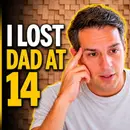
Robert DelFave lost his dad at 14. Now a father himself, he reflects on childhood grief, using humour to hide pain, therapy, and the fear of reaching the age his father died.
Key Takeaways
- Robert lost his father at 14 and began exploring the impact of that loss more deeply in therapy as an adult.
- Robert describes using humour to avoid uncomfortable emotions and conversations.
- Approaching the age his father was when he died brings up fears about his own mortality.
- Becoming a father has changed how Robert thinks about his dad and the legacy he wants to leave.
Robert DelFave was 14 when his dad died. His father was 40.
Now 36, with children of his own, Robert finds himself approaching an age that's been hanging over him for years.
We talk to Robert about growing up without a dad, using humour to hide his grief, the emotional masks men wear and the complicated experience of becoming a father after losing your own.
More than 20 years after his dad's death, Robert is still learning about his grief. He's also helping others understand theirs through his work as an author, grief coach, host of the Unparented podcast, and author of The Other Side of This: The Messy Truth About Grief for Teens.
There's a lot in this conversation for anyone who lost a parent young, particularly men who have spent years keeping their feelings to themselves.
What we discuss: losing a father as a teenager
- Losing your dad as a teenager
- Growing up without a father
- The long-term impact of childhood grief
- Using humour and sarcasm as a defence mechanism
- Why men struggle to express their emotions
- Going to therapy years after losing a parent
- Becoming a dad without your own dad around
- The fear of dying at the same age as your father
- Finding friendship and support after loss
- Building a legacy for your children
Episode chapters
00:00 Why do we fear dying at the same age as our parents?
01:30 How can talking about grief help us heal?
03:00 Remembering your dad after he dies
06:00 How do we carry our father's legacy forward?
09:00 What is it like to lose your dad at 14?
12:00 How does losing a parent affect your childhood?
14:00 Finding a father figure after losing your dad
15:30 Why do grieving men hide behind humour?
17:00 How does childhood grief affect adult identity?
19:30 Why do men struggle to express grief?
22:00 Can therapy help years after losing a parent?
24:00 What are the long-term effects of childhood grief?
25:00 How can teenagers cope with losing a parent?
26:00 What does a grief coach do?
27:00 How does losing your dad affect your own fatherhood?
28:30 How do you cope with the fear of dying at your father's age?
29:00 How can fathers build a lasting legacy for their children?
30:00 How can men find friendship and support after loss?
About Robert DelFave
Robert is a grief coach, host of the Unparented podcast and author of The Other Side of This: The Messy Truth About Grief for Teens. Having lost his father at 14 and his mother at 26, Robert draws on his own experiences to help others navigate parental loss.
About Dead Dads
Dead Dads is a podcast about grief, fatherhood and life after losing your dad. Hosted by Scott Cunningham and Roger Nairn, we have honest, sometimes uncomfortable and often funny conversations about what happens when your dad dies.
We're not therapists. We're just two guys with dead dads trying to figure it out.
Visit us at https://www.deaddadspodcast.com for more episodes, stories and grief resources.
Produced by JAR Podcast Solutions.
Related grief resources
Grief resources for men · Robert DelFave’s guest profile
Episode Transcript
Source: YouTube captions. Automatically generated captions may contain errors. The available captions omit dialogue between approximately 14:14 and 16:15. Statements about grief and emotional health reflect personal experiences and opinions, not verified clinical guidance.
[0:02] I'm 36 now, so I'm like I only got four more years left until I'm I'm going to be his age. And it's like this fear of like, like am I going to die at 40? >> Hey everybody. Another great episode. Today we're talking to Robert DelFave. Uh I really liked this episode, which is not surprising. We're always talking to
[0:17] fantastic people, but what I really enjoyed, Robert is a professional, if you like. He does do this uh not necessarily for pay, but he does do this. He has a book, he has a podcast, and so he's a bit more practiced, but he's still discovering things about his grief. He's still investigating how he
[0:33] can grow and change, and we got a chance to even see I think that happening in the podcast. He was considering, you know, what new things he's he's going to try to explore. What did you think about it Roger? >> Yeah, Robert lost his dad when he was 14 years old, which you know, put yourself in the shoes of a 14 year old who just
[0:50] lost uh not only their dad, but you know, best friend and and somebody that he really looked up to, and you can imagine how much of an impact that has on your life. Um but he's really taken a lot of that sadness and anger and confusion and turned it into some really really
[1:06] incredible tips that uh you're um you're definitely going to want to stick around and and and and watch and listen to because there's a lot that you can apply to your life right now. [music] So let's get right into it with Robert DelFave. >> side, funny [singing] path, but we're here to help you laugh. It's
[1:22] the Dead Dad's [singing] Podcast. Hey guys, welcome back to another [music] episode of the Dead Dad's Podcast. Really excited to be welcoming to the show Robert DelFave. [music] Uh Robert, welcome to Dead Dad's. >> Hey guys. I really appreciate you having
[1:38] me on. >> [music] >> Now we do always have to ask, why on earth would you decide to come on a podcast to talk about your dead dad? >> Well, I think that's a really great question. Um because I I host my own podcast, right? The show is called Unparented. So it's actually really
[1:53] interesting. Um but last summer my wife is a huge like huge proponent. She's always like, you need to start podcast. And um I remember I went upstairs one night and um and and I was like, you maybe I'll maybe I'll start a podcast about like my dead parents um and I'll just talk about my dead parents. And I I
[2:09] ran downstairs and I was like, I'm going to do a podcast. It's about my dead parents. And she's like, that's great, honey. Like, this is probably going to be so healing for you. And and I said, yeah, it's going to be great. I'm going to invite people on who talk about their dead parents. And she's like, oh, I love it. That's a great idea. So the idea to
[2:25] come onto a podcast where we talk about our dead parents um it's just like very native for me. And I'm sure you guys are aware of this. Like, the more you talk about it, the more healing it is. Um so you're healing yourself and then when people hear the stories that you're sharing, they're also being healed and they're it's freeing them up to have a
[2:42] conversation around their dead parent. >> It's really interesting that you say that because I I've noticed we we obviously talk about it a lot through this. And sometimes I think I get to it too quickly in conversation. Like, I'm too quick to bring up the dead parent and I'm like, whoa whoa, hold on. Like, not everybody is ready for me [laughter]
[2:58] to launch into a conversation. Hey, how nice to meet you. Are your parents alive? >> Yeah, have I told you about my dead dad? And it's like, sir, you're here to get your [laughter] muffler changed. Bit inappropriate. Um so so before we get into, you know, what exactly happened, I'm wondering if you can tell us tell us about your dad. What kind of
[3:14] a what kind of a guy was he? >> It's worth mentioning too, which we haven't yet, which is that your dad passed away a long time ago, right? You were a younger man. >> years, yeah. Yeah, I was 14 when he passed away. Um so so I mean, I only had so much time with my dad. My dad ended up becoming my best friend. Um but it
[3:30] but it was a weird it's weird how we got there. Um growing up, I was a mama's boy. Uh it was like my dad was always like this I always looked at him as like this hard exterior man. Like, you know, he wore flannel flannel shirts and did like you guys. Um but he was like a
[3:45] carpenter. He was like a hard guy. And um not like [laughter] That's where we we diverted just there. >> But but he was a he was a hard guy. And I always felt like maybe it was so hard to please him. Um and I and I'm his only son and um I'm the youngest of his three kids and I always just felt like it was
[4:01] really hard to please him. When my parents separated, I was probably like eight or nine. Um, my dad went and fought for custody for me and my sister. So I mean if that if that alone describes like who this man is, like that should be enough of like he loves his kids so much that he would go and fight in
[4:18] court for his kids. But it was after that moment I think that when my dad had to become mom, dad, provider, uh, literally everything under the sun, um, that's probably where it kind of clicked for me where I was like, okay, like he yeah, he's my dad, but also he's also
[4:35] got like a soft side that I've never seen before because now he has to has to have that. So at that point we literally my best friend like I always wanted to do everything with him, um, which is such a weird contrast growing up I was always so afraid of him for whatever reason, right? Um, he was like the '90s
[4:51] disciplinary dad, you know. Um, but after that point until until he passed away that guy was my best friend. >> Your your parents are together, you live with them and then as of nine there's a custody conversation and then just you go and live with your dad? Is that you and your sister go to live with your dad? So to permanently or like back and
[5:08] forth? >> It's actually then where like it splits off, right? My uh, my parents separated. Uh, my dad went fought for custody for me and my sisters. My mom was an alcoholic when that went you know at that time, um, and my she just wasn't a trustworthy person. So my dad went asked for full custody, they gave you know
[5:24] visitation rights and uh, my mom just never came around anymore. Um, and we didn't even have a relationship until I was probably 18 um, 18 19. So it was a really long time. Um, but yeah, so she wasn't even in in the picture. He was just our sole provider. >> And he has to occupy you said both roles
[5:41] if you like. He's sort of trying to be dad but trying to be what he thinks of as maybe a mom figure as well. So that's a really interesting relationship with your dad to have as the singular individual. >> What's one memory that you you have of him that you that you wanted to share? >> The one that I I always go to and I talk
[5:57] about with people is when I was in high school my dad uh, we lived in this house um, in Rochester and um, I remember I came home from work from school one day, and um my dad would sit out in the garage reading his newspaper. And I would sit down with him and talk with him before I went on with my day. And he
[6:14] would say, Uh, like how's your how's your day? What are you doing? And I would just I would be like, you know, I'm fine, everything's good. Um, showing my report card and and he was obviously disappointed because my grades weren't that great. I'll never forget
[6:30] this because it has shaped my life after that, but he literally told me, um, I never want you to do what I have to do to make a living. I never want you to have to use your hands to make a living. I want you to use your brain. Um, and that I think is the one thing that it
[6:47] has always stuck with me and it has like just changed the trajectory of my life. >> Was he unhappy with being a carpenter or was he just um did he have a vision of sort of what you were going to be? >> My my dad, my grandfather, they always they always wanted me to be an architect. They wanted me to be the
[7:03] architect for like the family business. So we my family ran a a construction company, and they wanted me to be to be an architect ever since I was a kid. And I was like, yeah, that sounds like so much fun. Like what kid doesn't like, cool, I get to draw and like build buildings. Like that's a lot of fun, right? Um, and I think that's probably maybe what it what it probably was was
[7:19] he wanted me to do that. The children end up living the lives that the parents didn't get to live. Um, and that's just something that we live with as the children. Like our parents have this unlived life. Maybe if they told us what they wish they would have done in their lives, be an architect or be a police
[7:35] officer or whatever it is, right? Uh, we get to have that side of it, but then when they die, we also kind of get that side of it of like they really wanted to live this life, and now they'll never get to live that life or they'll never even get to even think about living that life because they're no longer here.
[7:50] >> It's a really interesting thing that you're saying. It's almost a grasp of of immortality. Is you passing on a legacy to your kids to live something that you weren't able to live. And I I think Roger and I split maybe in this and that my my father never really wanted me to do what he did. Similar to yours, he was
[8:06] a mechanic, and he was really keen for me not to be a mechanic. And I always thought, you know, other guys parents, their dads were like, oh, we really want you to follow in the family business. And it was sort of this really confusing archetype where you're like, am I not supposed to do what you do because I love you and I see what you're doing? So
[8:23] it's interesting. I I've had that same experience as you where I was sort of like told like, hey, you know, you got to get good grades, you got to get maybe you'll be a doctor. I don't know. That's always the one they grasp off the shelf like you should be a doctor. But I mean the idea it was never I never wanted to be a doctor. I also never was a very
[8:39] good at being a mechanic either. So he was luckily great at inspiring me not to do it because I probably would have been terrible at it. So um he dies when you're quite young. So he's your sole caregiver for you and your sister. So he's taking over for you, but there's only a few years really before
[8:56] to get sick and and how does that work? What happens? >> I was probably maybe a 10 11 12 maybe. And my dad had a lung cancer. And so he went into the hospital. He was there for I don't even know how long doesn't even matter, but he ended up recovering, full recovery. They took an entire lung out
[9:13] of his body. The man lived with one lung. And the doctors were like, you're never going to play golf again. You're never going to work again. That man played golf, smoked cigarettes still afterwards like was just like I mean completely reckless, right, at that point. And so, you know, he goes on lives a
[9:28] normal completely normal life. The last night that I saw him, we were living in his house up in Rochester and we didn't have that I don't know if you guys had this relationship with your fathers, but I never had one where we were like, dad, I love you so much, man. Like you're just the best dad ever. Never never had that relationship with him. And
[9:43] something told me as I was walking from the kitchen to my bedroom that night he was sitting on the couch and I remember just looking at him and like, good night, dad. I love you, which is something I would never say. And he was like, I love you too. And I went to bed. The next morning I wake up and I go to school, totally normal, didn't even
[10:00] think anything. Come back home that afternoon. I'm the only one in the house. Don't know where my sisters are. My grandfather, my dad's dad comes and uh he sits me down in my room and he's like, I to tell you that, you know, your dad your dad's in the hospital again and it doesn't look that good. What most likely had happened, right, is
[10:16] the cancer probably came back and I think it was all over his body. I think it was in his brain, on his body, in his other lung, everywhere. So I I think that's probably how he ended up dying. >> So he never really shared that information with you? So the cancer came back and he kept it from you? >> No. And and that's the thing is is I'll
[10:31] never know that. Um but I can make an inference of like maybe he just didn't want to do chemotherapy or maybe he just was like, I just don't want to do this again. I'm just not going to tell anybody. Um but that was the last time I had talked to him because after when I when I did go into
[10:46] the hospital uh later that night, he was already in a coma. >> When you were young and and he, you know, he he went to the hospital and then got better again, had you thought like had you just sort of pushed it all out of your out of your mind? Do you remember back then like >> I do. Yeah. I do.
[11:02] >> around your dad and his health? >> It's weird because again like you get like these blips of like memories. I remember uh very clearly not not having any anxiety of like what's going to happen to my dad. Um I don't even remember that, but I remember specifically um my dad had come home
[11:18] from the hospital and he had like a a an in-home nurse and they would come and they would like repack his uh so like he had like obviously this huge surgery on the side on his side where they had to take out a lung um and they would have to repack that every every day. So I I
[11:34] remember sitting there and like seeing like a home nurse come in and have to repack and redress his, you know, like his surgery scars and everything. I I remember those things for sure. But the anxiety, I just I don't I don't think a nine-year-old, 10, 12, 13-year-old, they probably don't really think like that.
[11:50] The other thing is as well as, you know, kids that age, they don't like they don't know that death is finite. Um and that doesn't happen until later in life. So it's totally possible that like, you know, younger version of me is just like doesn't even think about it because why would I ever think about that?
[12:05] >> What happened afterwards? Like did did mom come? Was there other community around you and family that was helping to support you? Like >> My aunt went back >> in January told me a lot of things that I don't remember. She kind of like helped me fill in those blanks, but I do remember my grandparents, my dad's
[12:22] parents, they were like we they were like my second home. I was always over there. My grandfather was like, you know, an amazing amazing man. My grandparents were like, it's a no-brainer that he comes and lives with us. Like we become his his guardians. My mom never came back into the picture.
[12:39] I just I don't want to She she passed away when I was 26 so I I I never had that conversation of like, why didn't why didn't I come live with you? Or like, did you not want me? That all that feeds into like abandonment issues. It feeds into like feeling like you're a burden in
[12:54] someone's life. But those two took me in and they finished raising me and and I stayed with them. I lived in their house. It still felt like a guest cuz it's not your own house. You're in someone Like I remember if I wanted to go in the fridge, I would be like, hey grandma, can I go in the fridge and get something? And she's like, yes, of
[13:10] course you can, right? Like but I don't know, it's just it's like weird. It's just a weird it's a weird place to be in especially at you know, 14 15 Everyone's grieving something. I'm grieving the loss of a dad. I'm grieving the loss of the life I'll probably never get to have. My grandparents lost their middle child
[13:27] son. So they're grieving that. My aunt and uncle are grieving the loss of a brother and a brother-in-law. My sisters are grieving the loss of a of a father. So everyone's grieving something in their own way. >> Can I ask you? So [clears throat] you're 14, you pass your dad passes away, you move in with your grandparents.
[13:43] There's a lot of growing still for you to do. There's a lot of life that you still have to get. Does your grandfather in a way become a dad to you? Does he step into that role? Or you mentioned obviously feeling like a bit of a stranger, but in retrospect with the
[13:58] time that you've had now, is that a second father figure? Does he occupy that role? Or are you always like, he's always been my grandpa. >> I think it's a good question and I think maybe it's a mix. I don't think I ever really looked to him as like, okay, now this man is my dad. He's
[14:14] always probably just been like, you're my grandfather. But I will say I do believe that that man
[14:38] >> [laughter]
[16:15] >> bearing them as deep as I probably could. And what came out of that was a very sarcastic Rob. Um, somebody who was like, I'm going to be sarcastic. Um, and and it's going to get laughs and people are going to laugh at it and then I'm going to feel loved and wanted and and and cared for and all these things
[16:32] because I can make somebody laugh. And that was probably the biggest thing for me and that and and that continued all the way up until I would maybe even say a couple years ago, right? When you have and you experience these things, you have so many masks that you're putting on. Even just a couple years ago where I
[16:48] realized I'm still wearing the mask of like, how can I just be funny in a conversation so that people can like me? Um, so that I I can feel wanted and needed, right? Um, it wasn't until I realized that that I was like, can I even take this mask off? Um, are
[17:03] people even going to like who I am? >> So you build this very reasonable from a young person wall of defense which is this humor and sarcasm and sense of like, hey, I'll generate what I need from that and that takes you through a portion of time and it sounds like
[17:19] recently or maybe not that recently you you discovered that this sarcasm is maybe creating a barrier between you and your emotions. Is that how how did that work? So take me through that time. What was that like of maybe that realization that you've you're this defense that had
[17:35] carried you through this period was also stopping you from from having real feelings about things. >> I really think it was probably when I was writing the book um, because and again, the hardest thing about writing that book was these memories are 20 years old. Uh, so how do you pull out
[17:51] these memories, but not only that, but how do you make them so that they're relatable to a 14-year-old now? Uh, it's totally different than what it was, you know, 20 years 20 plus years ago now. Um, but when I was writing that book and going through the memories, I think that was when I
[18:07] real and I was I talk about the masks that we'll wear and I think that was really what it was for me of like realizing how many masks have I been have I been wearing? What what was like what is my defense mechanism? Oh, my defense mechanism is just to make people laugh. Um, if where there's an
[18:22] uncomfortable pause, uh, like I can't have an uncomfortable pause. I need to make somebody laugh. So like how can what stupid thing can I do or say to make somebody laugh, right? Um, and I think that I do think that writing that book is probably what really what it was for me to realize these are the different masks that I have worn and
[18:38] this is what I'm probably wearing now. >> You've been wearing a mask for most of your life. Is that is the mask you? Like I would think that would be a great conversation. Are you the mask or is the mask still covering up a a version of you that is not come out? >> So I actually had he's a um he's a
[18:55] psychotherapist. His name is Liam. I think it's Wakefield, but um he's this British psychotherapist and we actually had this entire conversation around the masks that we're wearing um and it was actually probably one of the most profound conversations I've ever had um or someone was explaining this to me. So
[19:10] having like living it and then having someone explain it to me, I was like, well this makes so much sense now because I've been living it and now you're just explaining it to me back of like you've been living like this. And yeah, one of them is like do you become the mask that you've been wearing um or
[19:27] can you actually take the mask off? >> And I'm curious what made you put the mask on in the first place. Now I mean I you know let's be honest, society makes men sort of cram their feelings down, but also did you was anybody in your household or or friends around you
[19:44] sort of given you signals that you need to keep your emotions inside? >> No. No. Nobody was saying like you should probably get these out or you should hold them in. I think uh I I I think a lot of that was like I grew up with like manly men like my my father
[20:00] and my uncle like they're construction workers. They're like falling off roofs and so like for me to think at 14 to can I cry? Is that okay to cry about my emotions? Like can I actually do that? Like who's going to judge me if if I do that? What are people going to think if I do that? >> Isn't that fascinating though that so much of that is just our in our in our
[20:17] imaginations? It's like >> I mean it's just I think it's society does it. And I don't think and again I've I've explored this with other people of like, are we doing a good enough job to like get our kids ready to go into the real world where like emotions are real and
[20:34] and my wife is really big like feel your feelings like feel them and like then move on. And I've had a conversation with somebody on the show as well where like she she was also she's a therapist in Nashville and she was telling me and it was I don't know if you guys have ever heard
[20:49] this of like when you have an emotion, that emotion will only really last for like 90 seconds. So like if you feel sad, if you could just let yourself feel sad for 90 seconds, it'll it'll wash away. Or the same thing of like you're pissed off and you're angry, let let yourself feel that for at least give
[21:05] yourself 90 seconds and it'll it'll go away. I just don't think we do a a well enough job of getting young people ready for when these things happen and then especially boys and men and we tell them push it down man like you're fine like suck it up and then they grow up and then
[21:21] they don't have any sort of emotional intelligence. >> I really relate to that. I mean I think I felt like if I ever was depressed, I worried that I would stay depressed. Like the idea of being depressed was permanent depression. And so if I never let myself feel that, then I wouldn't never have to worry about it being
[21:38] something that I stuck with. And you know you say these things out loud and it feels insane, but it was a feeling for probably a long time. So I'm interested do you I mean obviously you're doing an incredible amount of work on yourself. I guess I'm trying to track a chronology. So you have kids, they're not that old. So
[21:54] is there a period where you're pulling the masks down? Does that coincide with you meeting your wife? Is there chronological elements? Is it Is it as you finish school? Like how does this track with your growth as an adult? Are there milestones where you're like, hey I'm getting I'm done school, I got
[22:10] to go back or hey I am getting married? How did How did that work in your day to day? >> Like to to work on my grief specifically? >> do you feel like Is there a point where you feel like, hey I got to start thinking about my grief and and these masks and things? >> My grandparents tried putting me in talk therapy at 14
[22:26] and at 14 I was like pissed off that I had to go and I was like, who is this guy? I don't even know how I feel. I don't know what language I have. How can I even put language into this guy? And so it wasn't even until 2020 21 I reached out and I was like, hey, I would love to just do some talk
[22:42] therapy. Got connected with another therapist. And and talk therapy is really great because it will dig up the things in the past, but it doesn't necessarily prepare you for the future. So like everything that you're doing in talk therapy is like, well, what happened last week? It's not like, okay,
[22:58] well, what about what's going to happen when I leave this place and I start breaking down in the car? But it's it's so funny cuz I would have these conversations with her and I would just be like break I'm an ugly crier, so I would always really try not to cry. And she'd like, no, you can you can cry. And I would tell her these stories and she would
[23:14] start tearing up. I don't think I never looked at it as like my life is so sad that the therapist is crying, but I think really what it was for me was she was connect like I was obviously doing a well enough job that I was explaining to her like, this is how I'm really broken. Like I'm a I'm really broken here and
[23:29] I've had a lot of hurt. I really want to talk about it. And then I think she probably recognized it and was like, this is like yeah, like what you have gone through is very sad. On top of that, it it is also realizing that you're not the only one out there that's experienced this.
[23:45] When you're going through it, like when I was 14 I was like, nobody else is experiencing what I'm experiencing. And then it wasn't even until I wrote my book where I realized there's a whole statistic of kids that under the age of 18 that will lose a parent by the time that they turn 18. >> And when you talk to or or when you
[24:01] know, you've got feedback on the book you know, other kids out there are sharing their experience as teenagers losing their dads how does that how does that feel to to help those teenagers? >> My wife was like, you're going to I I I know you're going to reach so many kids
[24:17] and I'm like, I if I could reach just one kid, one kid that got this book and was able to read it and be like, that's me. I'm that kid in that book, Um then then like job well done. >> But as you do all this work, are you
[24:34] learning more about your grief and and and you know what you went through? Yeah. >> Oh yeah, yeah. Uh again like what I was saying is you have to dig out 20 20 plus years of memories um and and not only that but again you tell yourself a memory and you're like this is actually what what happened um but then you find
[24:51] out maybe you find out from like a family member like nah maybe that's not that it's close but it's not exactly that. So trying to find those memories and dig deep that that alone is pretty hard work. Um and then having to write about it is even harder. >> What's the best piece of advice you give to a teenager who's just lost their dad?
[25:07] >> It's okay to not know what you're feeling um because especially now like when you're in this new side of grief like people are going to think that you need to have it figured out like oh I'm sad today or oh I'm pissed off today. That's not going to happen every single day. So the advice really is like feel whatever
[25:24] it is that you want to feel. There's no wrong way to feel and you're not doing anything wrong. >> Do you think your being a grief coach is that a mask? Is that something that you've asked yourself? Like is that a mask you're wearing over another scenario or does that feel like the real you?
[25:39] >> I will say definitively no. The grief coaching that again that was built out of the podcast. So the podcast was like I want to talk about my dead parents and I want to bring people on who talk about their dead their dead parents and people would come on and when we were done rolling they would say thank you so much
[25:54] because I haven't talked about my parent in years or no one has asked me about my parent in years. Um so I was like wow this is this is healing these people. Like I thought they were just going to come on I was going to ask them about their parents and move on with my life right? Um but it became so much more to that. It was it was probably around
[26:10] November. I remember being like I really want to do more than just like this is great right? Like um it's filling my tank. I'm I'm I feel like I'm helping people. People are talking about their parents. I'm getting you know help from this as well. Um but I want to do more more what can I do that's more? So I
[26:26] looked into it and I found David Kessler and he had a a grief coaching cohort that came up in the spring and and I just was like I'm going to do that. Because again, it wasn't like how can I create a business out of it? It was like when I come across people in the real world who are experiencing these things,
[26:43] I can like equip myself better instead of just saying, man, I'm so sorry about your loss. At least I can actually like have an intelligent conversation, an emotionally intelligent conversation with somebody. I don't think it I don't think at all it was about wearing another mask. I think it was just I think that was probably just
[26:59] like the true me being like how can I help other people? >> I'm curious also given that you were somewhat forced to grow up quite quickly, you know, losing your dad, but then also not having your
[27:14] mom and I'm curious with, you know, with you having your daughters now, do you find yourself making up for some of the lost time being a kid? >> Yes. I'm just trying to think how I want to explain this. This is such a good question. Are like are we live trying to live vicariously through our kids,
[27:30] right? Which like yeah, probably. There's I think I feel like maybe all adults, all parents probably do that in some way, right? Like the childhood that we didn't get to have. I was I talk about this with my wife all the time. I think I just mentioned this morning of like my kids are going to be 80 someday
[27:46] and I'm not going to be there to take them to the doctors. And it made me very emotional. I think I cried about it like I cried about that that morning at breakfast and then I thought would think about it throughout the day and I would start tearing up and I'm like who's going to take care of these girls at 80? Like I it's not going
[28:02] to be me. And that like breaks my heart. Maybe I think it's more like I just want to give them the best childhood that they could possibly have because I missed out on mine. So I don't think it's like me wanting to live like a kid. It's more like I have adult money. How can I make my
[28:18] kids' life better? >> Something that you would know more than most, there's a real chance that I'm not going to be around for for pivotal parts of your life and that is sad. And I think that's a specific thing for people that are in your scenario. >> And do you also overextend yourself in the health department so that are there
[28:35] for them as long as possible. >> There's like this shadow that has that always kind of like hovers over me and and the shadow is is the age 40 which is the year that my dad passed away. So like the shadow is like I only have 36 now so I'm like I only got four more years left until I'm I'm going to be his
[28:51] age and it's like this fear of like like am I going to die at 40? And so when I had this realization back when I was 28 I've changed how I how I see my my my body and my health and and a lot of that is just like I want to outlive my dad. I want to outlive that age.
[29:07] But what I will say though is when we talk about like legacy building I I think for myself I've kind of put myself in this like mentality of like I need to start building a legacy for my kids and I I don't really know what that looks like yet but I think the start of that is the book, the podcast,
[29:25] the writing and the conversations that I'm doing about this. When I'm not here anymore however old my kids end up being I'm on the internet, I'm on YouTube talking, I'm on Apple Podcast or whatever you whatever it is then. Like you can my kids can go
[29:42] and listen to me. What how many kids how many kids now have that who've lost a parent? They they they'll never have that. I think people that have lost a parent are are more in the future, right? Like when you when you have your parents and you have your life is great whatever you're like I want to be
[29:57] present with my kids. I want to do whatever I can with them and now I'm thinking well I didn't get to have this. Now I want to think I'm thinking about like what does the future look like for them. >> If you can picture a guy out there who has just lost his dad you know what's one piece of advice you
[30:12] would you would give him to get through through this difficult moment? >> Maybe even particularly somebody who's losing their dad young because I think that's a very real lived experience for you. So somebody who is not yet done growing. >> I want people to understand that like you're not alone. There are like there
[30:28] are so many men that are out there that are in the same situation. I think the biggest thing I think the biggest thing for me would be like um, find yourself a group of men that are actually out doing stuff, right? Um, and that's something that I actually would love to to do here in Charlotte is
[30:43] um, men will talk to each other side by side, but we have a hard time talking about something like that in front of each other, right? So my my thing is like get in a group where you can go do something hard. Uh, go join a running club, go rock climbing, go play golf, go
[31:00] for like a hike, whatever it is. Get into a group of men that are in the same the same situation or the same world um, and just enjoy the company and eventually you'll be able to have those conversations with them. >> I love that so much. The
[31:16] just the the visual of just side by side versus face to face and and it's so true. Yeah, we we we do talk way better when we're side by side and there's absolutely nothing wrong with that. Well, Robert, we really really appreciate uh, you sharing your story with us and I you know, we can see and hear just how much
[31:32] value you provide to the to the to the young guys out there that that have just lost their dads. Um, so your book is called The Other Side of This, The Messy Truth About About Grief for Teens, and your podcast is called Unparented. Uh, if you're a guy out there who has either
[31:49] just lost his dad and is quite young or is about to lose your dad, you know, those are two really great uh, resources that you should check out. And uh, Robert, thanks so much again for being on the Dead Dads Podcast. >> Thank you for putting yourself out there and being a great example. >> Yeah, well I appreciate you, Scott
[32:05] Roger. Thank thanks First of all, thanks for doing this. Um, there's not a lot of stuff out there that's like this, right? Um, so thanks for doing that. And And thanks for having me on. I appreciate it. >> Maybe some plaid next time, just a suggestion. >> 100% >> Okay.
[32:20] >> [music] [singing]
Frequently Asked Questions
Who is Robert DelFave?
Robert DelFave is a grief educator, coach, father and author of The Other Side of This: The Messy Truth About Grief for Teens. He lost his father at 14.
What is it like to lose your dad as a teenager?
Robert describes how losing his father at 14 shaped his identity, relationships and emotional habits into adulthood. His story illustrates how grief can change as life changes.
Can grief resurface years after losing a parent?
Yes. In this episode, Robert describes recognizing the impact of his childhood loss years later in therapy and through becoming a father himself.
Why might reaching the age your dad died bring up fear?
For Robert, approaching his father's age at death brings his own mortality into focus, particularly now that he has children.
How can humour become a way of hiding grief?
Robert explains how he uses jokes to fill uncomfortable silences and avoid difficult feelings, and how recognizing that habit helped him reflect on his grief.
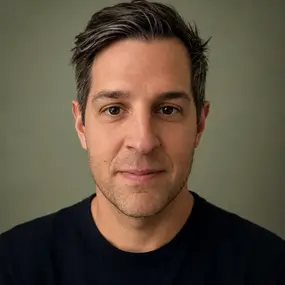
Grief educator, author, coach, and dad
I lost my dad when I was 14 and my mom in my twenties. For years, I thought I was handling it because I kept building a life, career, and family. It wasn’t until therapy at 30 that I began to see how much I was still carrying.
Today I’m a David Kessler Certified Grief Educator, grief coach, father of two, and author of The Other Side of This: The Messy Truth About Grief For Teens. I also host Carried Forward, a podcast about life after loss. I’d love to talk with Roger and Scott about losing a dad before you’ve had the chance to know him as an adult, and how that absence changes as you become a father yourself.