
 YouTube
 Spotify
 Apple Podcasts
 Amazon Music
 PocketCasts
 Castbox
 PlayerFM
 Podchaser
 iHeartRadio
 My Dad Watched a Guy Get Shot at Dinner | Dead Dads Podcast | Grief Support for Men
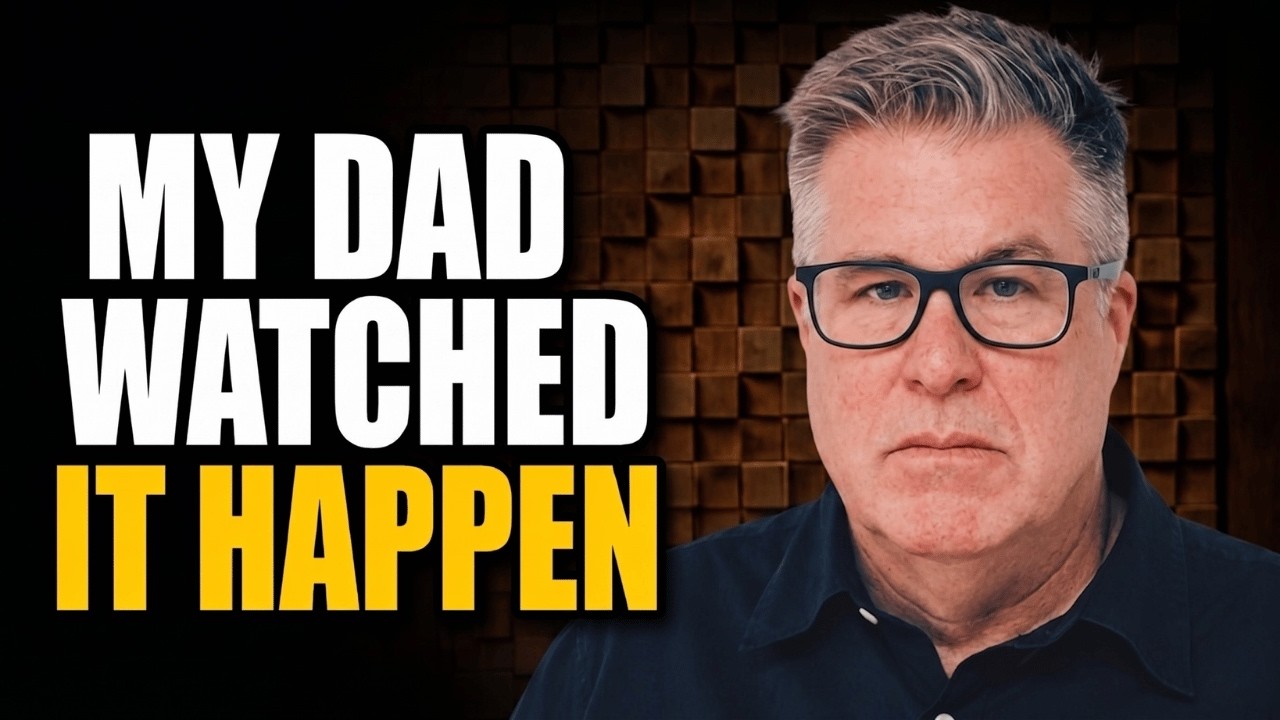
Peter Reek's dad Bill was a Nestle commodities trader. One night, on a purchasing trip to Columbia in the mid 80's, he watched the guy having dinner at the next table over get shot.
Everyone knew what to do, and Bill calmly followed. They got under the table, finished the meal somewhere else, and Bill flew home the next week.
That was Bill Reek. Mr. Safety. The guy who built a 40-year career on stability — and the guy who negotiated with people who carried guns to dinner.
Peter sits with Scott (Roger was unable to join the interview) to talk about a dad who was solid in every way the world could measure, and the small, strange details that only come out after he's gone.
This episode is for the guy whose dad was “the stable one.” The guy whose dad worked a job he never fully understood. The guy still finding out who his dad really was after he died.
Probably not for the guy looking for a tidy redemption arc. Bill Reek did not do tidy.
🎧 In this episode, you’ll hear about:
Growing up with a dad who worked for Nestlé for 40 years
What “stable” actually looks like up close
The night in Colombia when the guy at the next table got shot
Negotiating cocoa prices with people who carried guns to dinner
Being Mr. Safety in a dangerous job
The commodities expert who never invested his own money
The cancer diagnosis and the years that followed
Not being in the room when his dad died
The stories that only surface after someone is gone
What Peter wishes he had asked Bill
Why you should be an active participant in your dad’s life now
👨👦 About Peter and his dad, Bill
Peter Reek lost his dad, Bill, after a long battle with cancer.
Bill was a 40-year Nestlé commodities trader. Stable, steady, generous, quietly funny, and the kind of dad who reminded you to check the tire pressure right before flying to Colombia to negotiate cocoa prices with people carrying guns to dinner.
It is a conversation about father loss, cancer, the kind of dad you think you know, the stories that only surface at the end, and the regret of not being in the room when it happened.
Also, yes, there are laughs. Because grief is weird like that. Rude, honestly.
⏱️ Episode chapters
0:00 – Colombia Shock Opener
0:12 – Meet Peter and Bill
1:27 – Support the Podcast
2:47 – Why Peter Joined
3:12 – Bill Reek Career Story
7:57 – Stability Versus Risk
8:48 – Restaurant Shooting Tale
10:21 – Entrepreneur Son Dynamic
12:20 – Illness and Final Days
17:51 – Guilt and Goodbye
22:47 – Taking Over the Playbook
26:07 – Keeping Dad Alive
28:34 – Advice and Farewell
Next in the club: Matty Woods on his dad’s funeral with two rules: https://youtu.be/Ocm8NTnDLX4
🖤 About Dead Dads
Dead Dads is a podcast for men figuring out life after losing their dad. Hosted by Roger Nairn and Scott Cunningham, the show features honest conversations about father loss, grief, identity, family, memory, masculinity, and all the strange stuff that happens after your dad dies.
You’re not alone.
☕ Support the show: https://buymeacoffee.com/deaddadspodcast
Follow Dead Dads:
Website: https://www.deaddadspodcast.com/
YouTube: https://www.youtube.com/@deaddadspodcast
Instagram: https://www.instagram.com/deaddadspodcast/
TikTok: https://www.tiktok.com/@dead.dads.podcast
Substack: https://substack.com/@deaddadspodcast
New episodes every week.
Dead Dads Podcast is produced with the support of JAR Podcast Solutions, the branded podcast agency that helps organizations build shows people actually want to spend time with. Learn more at https://jarpodcasts.com/
Peter Reek (0:00): He was out for dinner with the buying parties and, doing their negotiations. And at the table next to him, someone, you know, walked into the restaurant and shot the person dead.
Scott (0:12): Welcome again to the Dead Dads podcast. Today, we're going to be talking to Peter Reek. He's going to tell us a little bit about his dad, Bill Reek. Bill was a commodities trader basically his whole life. He worked for Nestle, and he was a stable guy.
Scott (0:26): He was the anchor of his family. His whole personality for Peter was about consistency. But I think you're going to enjoy a little anecdote that Peter tells about Bill's kind of wild trip down to Columbia and some pretty unorthodox tactics that go on down there. It's a reminder that even the most stable predictable dads have sometimes hidden or wild stories that we didn't expect. Might also be noticing I'm wearing a little bit of dead dad's merch.
Scott (0:54): Is it for sale? Not yet. But if you're interested, leave a note in the comments. Also, you're probably gonna notice that Roger isn't here today. He's not in the studio with us, and so he was away on a business trip, and it was a kind of a curious question.
Scott (1:09): Roger, what do you think of this episode?
Roger (1:11): Please accept my apologies for not making it into this episode. I was out of town on business in Colombia. I'm not allowed to really talk about it, but enjoy this really great interview with Peter Weed. I think you're gonna find it of of like just tons of value. The second ask is we've added a link to buy us a coffee in our descriptions across all the different podcast platforms, which is so ironic because I don't have coffee with me right now.
Roger(1:40): That's because we haven't asked you yet. You know, it costs a little bit of money to make this podcast, our studio space plus some of the design work and promotion. We wanna make it as high quality as possible. And and we're wondering if if you have found this podcast to be of value to you and and you have it in you to make a little donation, we would truly appreciate it. It helps us keep the doors open to this podcast and get it into as many of the right ears and eyes as possible, and that is all the men out there who have lost their dad or about to lose their dad.
Roger(2:10): So, if you could make that donation, that would be absolutely unbelievable. Anyways, thanks so much, guys. Let's, bring on Peter
Scott (2:33): Peter. Scott. Welcome to the Dead Dads podcast. So good. So good.
Peter (2:37): Thank you so much
Scott (2:38): for coming. I know it has been we have Peter and I have had a little bit of a back and forth. We were trying to get this organized, but I appreciate you coming today. I appreciate you talking to us. I wanna start off by asking you, why did you decide why did you decide to come on this podcast?
Scottv(2:53): Why did you decide to do it today? Why did you decide that it was the right time?
Peter Reek (2:57): This type of dialogue around someone who played such a formative place in my life, someone else who's interested in talking about dads, it just felt like, yeah, I'll take that challenge up. Let me let me get to know him a little bit. What was his name? My dad's name was William Charles Reek, and he would he was affectionately Bill. Bill.
Peter Reek (3:18): You gave me some fascinating data on him. Can you tell me a little bit about who he was? He he was a commodities trader? Yeah. He traded commodities.
Peter Reek (3:27): He bought commodities, bought and in some cases sold commodities for Nestle, so one of the largest consumer goods company in the world. So he was buying sugar, cocoa from all coffee, from all over honey. I remember going on trips with him to Alberta to explore honey farms. He was responsible for making sure that they had the commodities that they needed to to manufacture their products in Canada. So and this was all he was born and raised in Ontario?
Peter Reek (3:55): Guelph, Ontario. Yeah. He was born and raised in Guelph, moved our family well, I wasn't born yet, but moved the family to Etobicoke, like, right by the airport.
Scott (4:04): Okay. So he was born and raised in Ontario in Etobicoke for a long portion of time. Started out he went to school there. How did he how did he get into, like, trading for Nestle, which is a fairly well known entity? Did he just stumble on a lucky break?
Scott (4:18): Was that sort of his intention?
Peter Reek (4:19): He had to grow up quickly. He he and my mom got married quite young, so he had to grow up quite quickly and make and he had such an intense, you know, focus on being a good provider that he just immediately went to work. So I think he started with a company called Standard Brands for about which was I think Purina was part of their their offering in Guelph. And then he applied for a position with Nestle in Toronto, and that was the beginning of the move to Etobicoke. So you said he got he got married early,
Scott (4:50): and so this was maybe the the genesis he gotta he's gotta get to work because he's
Scott (4:54): Alright.
Scott(4:54): Starting out on his journey of life.
Peter Reek (4:57): We're gonna make it, hon. We're gonna make it. I'm gonna go get a job and we're gonna we're gonna make it because the whole history of them coming together is quite a story, but the the reality was there was a child coming shortly after they were married and my dad being the steady provider that he was, like, this was his sole focus. Yeah. I'm sure there's a
Scott (5:20): lot of people that would have that story, especially in that era of time of Yeah. You're sort of in a path. Right? You get married. When's the kid coming?
Scott (5:27): The house and stuff like that. So they were fast on that path. They were quick on that path. But that child wasn't you?
Peter Reek (5:33): No. That was my sister.
Scott (5:34): It was your sister. Okay.
Peter Reek (5:35): Yeah. Yeah.
Unknown Speaker (5:35): So She
Peter Reek (5:36): since passed, and, you know, that's a we could have a podcast about her as well. But but yeah. So my yeah. It was my sister.
Scott (5:43): Okay. So older sisters since passed, and I'm sorry to hear. And then they're established. He's growing his business and growing in responsibility?
Peter Reek (5:52): Growing in responsibility. I think, you know, his dedication, his work ethic. He was so good with facts and figures and retention, and he just grew quickly. So I think I I think I remember when he became a director because I think we had some a family celebration around that, and then he was elevated to VP. Wow.
Peter Reek (6:12): Big step for him. And so you But that's with no education. Like, post secondary education. So he
Scott (6:18): So just grit, just hard work, determination, those things that Yeah. Right? Yeah. And you're witnessing all of this and sort of like, oh, this is the road map that's sort of laid out for me to a certain degree. This is how he succeeded.
Peter Reek (6:32): Yeah. And we like, we're we're we have a lot of similarities and a lot of differences. But, yeah, that was you know, that I had had a chance to watch somebody who takes providing for their family pretty seriously. So he's a growing
Scott (6:45): I guess he's a executive. Right? Growing in an executive, and you're obviously
Peter Reek (6:50): I have this epic picture of him, black and white. Looks like it's straight out of, like, interview for a magazine, all the Nestle products behind him on a white shelf, horn rimmed glasses, you know, narrow tie. It's an epic shot, and I, like, I love I love that shot. So as he's growing, is he sometimes the life of an executive,
Scott (7:09): is he away a lot? Like, in your childhood, how connected is he with some of your other memories of growing up?
Peter Reek (7:16): Yeah. No. Not away too much, like, enough and and usually well planned. So I didn't feel like he was, like, absent on the road kind of dad. But he like, sometimes his trips were extended.
Peter Reek (7:32): So he would, you know, have to spend a month in England quite regular like, annually and, you know, make periodic trips down to places like Colombia.
Scott (7:41): I would love for you to tell a little bit about some of the more wild maybe aspects of his life. Like, I know there's definitely some more unstable places that he went to, and I also believe stability is sort of part of his brand.
Peter Reek (7:57): For me, my dad was the cornerstone of stability. My mom is is still with us, and she's moved from Ontario here and I'm caregiving for her. And stability, he continues to provide for her. So everything about my dad was anchored in stability for me, which, you know, at times was comforting and other times, like, frustrating.
Scott (8:20): Yeah. Because there's sometimes the flip side is lack of spontaneity or a lack of open to fresh ideas. Stability is consistency in a lot of ways.
Peter Reek (8:29): I've spent my life building entrepreneurial things, and we we would collide sometimes in our our values on stability versus risk.
Scott (8:38): Can you tell me maybe a quintessential story that he loved to tell? One of his best stories about what about his work or just about who he was as a person.
Peter Reek (8:48): So he's on a trip in Colombia buying whatever it is he's buying. I'm sure it was some level of of coffee to be eventually become Nescafe or something along those lines. And he was out for dinner with the buying parties and doing their negotiations. And at the table next to him, someone, you know, walked into the restaurant and shot the person dead.
Scott (9:15): What era? Like, the seventies, eighties?
Peter Reek(9:17): So I think this is gonna be, like, late seventies, early eighties.
Scott (9:22): Yeah. So he's at a table.
Peter Reek (9:24): He's at a table. Well, actually, they ended up under the table because everybody knew what to do apparently because it was Colombia. But yeah. No. So this was like the realities of mister safety going negotiating, get the best deal for the company and, you know, essentially having someone get shot who was probably trading another type of substance is my guess.
Scott (9:47): I would be like, how did you get through that? And how are you okay? And I'm sort of picturing him telling the story in a stable way, like, so I ordered the appetizer and, like and then midway through the appetizer, you're like, just skip to the part where the coca like, the dealer how did he tell it? I guess that maybe is it in his voice, in his brand? Did he tell it in a stable way?
Peter Reek (10:08): There was a certain level of, like, telling it with assurances. Everybody knew what to do. Like, this this was just kind of par for the course there, Peter. But the but I was but I was still fascinated. Yeah.
Peter Reek (10:18): So he did have a level of calm about sharing it.
Scott (10:21): So you mentioned this originally or just just shortly, which is that there was a lot of things that you shared that were similar, but you maybe evolved more of an entrepreneurial Right. As you as you got older. And so were there areas where the two of you had don't know about disagreements, but where you you fractured? Because that's part of growing up as a as a kid as well as you, you know, idolize your parents, and then you start to realize there's a separation. So how did that work with him when you started to see sort of, like, a different path for yourself?
Scott (10:53): Was he, I guess, overall probably supportive or was he initially hesitant? How was that?
Peter Reek (10:58): A lot of it was cultural. He he worked for the same company, you know, outside of that one year at Standard Brands. He worked for Nestle for his entire career. So he, you know, that was the thinking that he would bring to the mix. On one hand he was quite steady but he was also a little bit encouraging on the entrepreneurial front.
Peter Reek (11:14): Later as I process, as I walk through this, I I feel like much of the reason why I could feel free to entrepreneur was because of the steadiness.
Scott (11:27): Well, he's probably thinking if he can survive an execution, he can handle your upbringing.
Peter Reek (11:33): I think there's part of him that was like, maybe I can live a little vicariously through your entrepreneuring because he he was a business person. He wasn't none of that was lost on him. You know, one of the things that was always baffling to me, like I just couldn't understand it at all, was he would he knew the commodity market, like, so well, and he wouldn't put a dime of his own money into it. So and partially because he knew it so well and he could you know, he knew the perils of that. But I think of the possibilities that might have existed for him if he had allowed himself to have a little account.
Scott (12:06): So he well, that's excellent. So, again, the entrepreneurship has sort of come organically, but definitely supported by him. He sounds like an incredible guy.
Peter Reek (12:14): Supported cautiously. Let's just put it that way.
Scott (12:16): Or stably. Yes. Stably. Yeah. Yeah.
Scott (12:17): The watchword. Yeah. Do you mind if I ask how he passed? So you sort of talked a little bit about this, but how did he pass away? Was it over a portion of time?
Scott (12:28): Was there a mark where you noticed that he was degrading? What was the what was the timeline like, and how was it for you?
Peter Reek (12:34): He died at a a time when it wasn't possible to have a public gathering. Midwinter, terrible time in Toronto.
Scott (12:41): And you were here. Right?
Peter Reek (12:43): Truthfully, I we were in in Cannon Beach, Oregon. And I got the the call from my sister to say, I think you we because we would go to it was between Christmas and New Year's. So I got the call to come down and for my sister to say, hey. Listen. Dad's not good and it doesn't look good and I think you should consider coming this way.
Peter Reek (13:02): So I went and slept on the floor in the Portland Airport to get the first flight out. And unfortunately, my dad passed when I was changing planes in in, I think it was Denver. I don't even remember where I was. I just remember what I felt, the disappointment I felt standing in that airport knowing that I wasn't gonna get to say goodbye. So he had a couple of rounds of battling cancer.
Peter Reek (13:26): So, ultimately, it colon cancer was the the one the, you know, the most prevalent piece that he had to deal with. Ended He up how he did have to deal with testicular cancer a little bit early in his earlier well, actually, I the the year that I came to university, testicular testicular cancer showed up. And then colon cancer raised its head and he had a couple of surgeries, laid it past the point when it would probably make sense to have the surgeries. But he managed to successfully get through that, but he had developed COPD and Which is? Cardio something pulmonary disorder.
Scott (14:02): So Oh, okay.
Peter Reek (14:03): Yeah. So essentially, like, it it breaks down to you're able to bring oxygen in, but you're not able to get carbon dioxide out. It was kind of tumultuous. They were it was Christmas. They they were celebrating Christmas with my sister and her husband the day after Christmas, and the basement was flooding.
Peter Reek (14:20): So this is like and my dad would was in his, spot resting and very frustrated that he couldn't do anything about because he would have been right up to getting that getting to the source of the leak. And that, I think, put him into a period of stress. And later that night, he went to the hospital in an ambulance and passed away in the ambulance. Anybody who lives into their seventies, eighties, like the majority of your life, you
Scott (14:49): have been able. And to suddenly not be capable is, I would think, an incredible frustration. So just to ask you, so you mentioned he had first testicular cancer.
Peter Reek (14:59): Yes.
Scott (15:00): Right? When you were quite young.
Peter Reek (15:01): Well, I was I was in university, so I would have somewhere between 18 and 20. Was that your first
Scott (15:07): sort of blush with mortality? How how scary was that? Because there's a moment where your parents are not capable of death, I guess, and then something happens. Was it that moment for you? Was that passed by quite quickly?
Peter Reek (15:21): So I lived in a dorm, and there was one payphone serving the dorm. So I'm having this conversation with my dad over a payphone in a dorm and thinking, what does this mean? I I yeah. So immediately into the, you know, the panic state that you you do, and I was young enough that I was reassured, you know, my parents could reassure me that this was a type of cancer that they had a high success rate in being able to come up with a treatment plan. So you hung up that payphone?
Peter Reek (15:51): I hung up the payphone.
Scott (15:52): Walked away from there and went, this is sorted. I I got a good shot at this. Like, how did that it's a long time ago, but how do you do you remember how it sat with you?
Peter Reek (16:02): And my immediate response on the phone was, hey. Well, I'm gonna come home. And the immediate response on there and is, oh, no. You're you're you're you'll finish out this year because we've got this handled.
Scott (16:12): So then you he's obviously successfully passes through that. And then it's how much is the gap for the colon cancer that was later on, obviously?
Peter Reek(16:19): Yeah. I would say twenty years. Yeah. Yeah. Yeah.
Peter Reek (16:22): Because my dad retired also was while I was at university.
Scott 16:25): So that colon cancer was the start, I guess, if you like, of the of his eventual decline?
Peter Reek (16:30): Yeah. Yeah. Yeah. Yeah.
Scott (16:32): So I might ask, so you've obviously survived the first time and then years have passed. And so you're older now. When that arrive when that announcement arrives, what's your first response? What do you think? Like, I remember the last time this happened, like, he's a strong guy, or do you start to think, oh, okay.
Scott (16:51): But he's older now. What's your how do you receive that information?
Peter Reek (16:55): I wasn't panicked, and and neither were they. I was kind of at the stage of life where, you I could be an active participant. I, you know, was back here for all the surgeries. It was more of a let's get solution focused about this and let's make safe decisions around treatment. We were make we were making the decisions together.
Peter Reek (17:14): My sister was also came from the nursing profession, so she she had contributions to make it as well. So you were participatory, but ultimately His decision on what he was gonna do. And in my parents' relationship, my dad was all thinking and my mom was all feeling. So I I know you mentioned this, but so, obviously, his he gets progressively sicker, and
Scott (17:37): you start to be aware, like, there's a there's an end point that could come. Is that right? So you're you're cautious about everything you're doing because you're thinking, I have to be ready just in case I need to get to him?
Peter Reek (17:50): You you called it out. Like, I I moved away from home when I was 18, and I never went back. And there's always a sense of a little bit of shirking responsibilities when it comes to parental care on that front. So, you know, that would show up where I'd go back for a week and just try to do so much for my parents in a week and get them set up like this this week is is designed for me to help, you know, put the railings up, get the things down that that my parents need in order to because they were quite adamant in not moving out of their home, which I had worked for years to try to get them to move west. So there's that that whole guilt of I'm not delivering like a son should.
Peter Reek (18:30): That's became a theme.
Scott(18:32): Your guilt about the feeling of what you should have done.
Peter Reek (18:35): Of how do you how do you set parents up for, you know, aging success when you you don't live in the same city as them.
Scott (18:43): I know from talking to people here and just from my own process, it's an interesting narrative about who's what is your life for? Like, is your life for you to live, or are you paying back the the fact that you were given life Yeah. By your parents. Right? And there's a balance.
Scott (19:01): Should I consistently be taking care of them? But, also, I have a life to live, and I have things that I want to be able to do and which which weighs out more. I think that that guilt especially comes to fruition and comes to the to a finer point when they pass because you only have so many more opportunities and then they pass. So you mentioned he passed. You were not present No.
Scott (19:22): When he passed. No. So did that turn that knob of guilt up a little bit more because you weren't present when he passed? Or
Peter Reek (19:30): Like feverish pitch turned it up. But, well, you know, there's the regret of just not having that opportunity to say goodbye. So we were there in November, and we had spoken on Christmas Eve, but but, like, not being able to, you know, have that that moment of closure. I didn't actually get to see him until, it was coffin time. If you could have seen him
Scott(19:56): Yeah. What would you have said?
UPeter Reek (20:00): I would have, expressed appreciation. Yeah. I we haven't chatted about this, but my dad rescued my mom from a really crappy home life and, you know, took her into took him into his family's home and then eventually took them into they created their own. And this is why they got married so early. Yeah.
Peter Reek (20:30): This is yeah. So I think that was who he was, you know, eliminating harm from someone's life. And, you know, my mom became super dependent on my dad. We I had finally hit the age where we could talk about some of that, their early days, and I had never really had a chance to debrief that with my dad and say, hey. Listen.
Peter Reek (20:57): I like, I know a lot of your life has been about sacrifice and looking out for others.
Scott (21:03): It's an it's a topic that I feel like actually has been explored too, which is you if if some of the people that we've spoken to would love to go back and and actually get to know as an adult, get to know their dads a little bit better and say, hey. Tell me the real story, not the cleansed version when I was a kid. Tell me about what it was like rescuing somebody. Like, how did you deal with that? How did you how did you take on all this extra responsibility?
Scott (21:27): Because it sounds like he's quite early in his life still, and he's taking this on. I think given the extra time I don't know. It sounds like not to put words, but maybe that was that's the question. How did you do this?
Peter Reek (21:38): Two confessions from a story perspective. I mentioned they had built an apartment in my our house, and and that ultimately ended up in kind of an altercation between my mom and myself. And my mom actually made a decision to fly home. So and and my dad, in my estimation, would have just said, yeah, we're going we're gonna go. I'm gonna go support your mother.
Peter Reek(22:02): But my dad stayed. And so my mom flew home, and my dad stayed. And and I and we had pub nights and, like, great so I kind of did have a little bit of that experience that you're
Scott (22:15): So your mom and you had a discussion that resulted in an altercation. Yeah. And she
Peter Reek (22:20): want my mom to listen to this, and now I'm thinking maybe I won't share it with her. But
Scott (22:25): It's your choice.
Peter Reek(22:26): But we I got to spend some good one on one time with my dad that I hadn't expected that I would have.
Scott (22:30): I just wanna check-in with you. I think there obviously, the opportunity to to, you know, talk to your dad wasn't something that you're able to have at those last minutes, but you eventually you said you were able to see him again at coffin time.
Peter Reek (22:46): Yes. At coffin time.
Scott (22:47): Yeah. He was how did he was buried. Was he cremated? Did you was that your I responsibility? Or
Peter Reek (22:54): am the activator in in the in the family. And so I I we made you would not believe the number of decisions that we made in the space of twenty twenty four hours, which included hiring a restoration company with respect to the flooding that I was telling you about and getting burial plots and finding cemeteries and getting making all the arrangements.
Scott (23:15): So you had to settle into that position?
Peter Reek (23:17): That was the role that I I played to come in and here's the list of decisions that need to be made, and let's let's make them.
Scott (23:24): Do you think being able to settle into the position of having active work and to be able to, like, own that, does that manage in your mind some of the guilt that you said you were feeling about not necessarily being present all the time? Is there a balance in your life where like, okay. I'm gonna really put my energy into this?
Peter Reek (23:42): I think it it it up the intensity of those visits. Like, I couldn't just wake up and enjoy coffee when I was in the, you know, subsequent visits that I made to go see my mom, including that time. It was much about what putting things in place so that my mom could continue to be.
Scott (24:03): Okay. So it's about resting your father and the decisions of but also
Unknown Speaker (24:08): Yeah.
Scott (24:09): Stepping into the role that he'd occupied for such a long time Yes. And setting her up so that she continued to feel safe?
Peter Reek (24:16): Yeah. And he had like, everything was not only tied up with a bow, it had extra ribbon on it and everything. Like, it was not it wasn't that part wasn't hard.
Scott (24:26): A lot of people struggle with this. But when your father was in his decline, did you start having conversations where he said, hey, dad. What would you like? Like, how do I take care of mom the way you did? Did you ask him those questions?
Scott (24:43): And did you broach the subjects of, like, you know, what does that look like for you? What would you like? Did you did you have the ability to do that with him?
Peter Reek (24:51): I didn't have to ask a lot of questions because it was pretty much figured out. Where that processing happens for me is am I that person? It's a real challenge for my dad to me to say, hey. Make sure that you set your kids up in the same Style that I set you up? Yeah.
Peter Reek (25:11): Yeah. Or in similar or at least somewhat remotely similar. Yeah. Yeah.
Scott (25:16): Yeah. What what's the template that you're in order to fulfill his wishes, what template do you have to live inside?
Peter Reek (25:21): Even though he wasn't a big commodities person, he was
Scott (25:24): a great insurance person. So he passed, and he had a very established playbook that was luckily set for you. And so you followed that playbook basically in order to both rest him in a place that felt good and also set your mom up, which you knew was an important thing to do. Yeah. So that playbook, I'm sure, didn't go on forever.
Scott (25:49): So at the end of that process, which I assume probably wasn't that long ago, when you now I've I I think I've done everything that he's done. What happens to your grief? Like, where do you sit at the end of there's realistic he's not giving me any more instruction.
Peter Reek (26:07): I like, I hear his voice a lot. Like and it's and it's usually in more of a guidance format, and it sometimes takes the form of what would my dad do in this scenario. You know, some moments hit hard when you when you just really wish that that you could just run a scenario by him to get his opinion. I miss not being able to have the conversations, and I feel like we had enough relationship that I would could probably figure out what he where he would lean on certain topics as well. I firmly feel the same way, which
Scott (26:42): is my father and I were not the same. And I had often and but the ways that we were not the same were comforting. Yeah. And so when I would solicit his advice Yeah. I was soliciting what I knew would be the opposite almost, and that would reaffirm my own Yeah.
Scott (26:59): So it was like getting mirror advice. Do you know what I mean? I was looking for him to say what I knew that I thought he was gonna say. And when he was absent from that, I suddenly now I started thinking, is that who I am? So I I I I think I understand the feeling of looking for something reassuring.
Scott (27:19): That voice is still with you, I guess. So in a way, like, he still resides with you? Like, he
Peter Reek (27:25): he was he he would always take quiet moments to share a piece of advice with people, and I actually overheard him doing that with some of my daughter's husbands and whatnot. I also you know, you miss you really miss we just had our fourth grandson fourth grandchild, and I miss I would love to celebrate that with him.
Unknown Speaker (27:50): Did he did he see any of your grandchildren?
Peter Reek (27:52): My oldest grandchild is is 12, so he so he he had a a chance to interact with him quite a bit.
Scott (28:00): Is there a way, or do you find a way to to keep him alive with your grandchildren? How does that work for you?
Peter Reek (28:07): Well, we we still have my mom. Right? So and my mom is actively involved with our so she's she does a good job at at regularly refer referring to him. The the grandkids are young enough now that I think in a few years, the storytelling of who he was will make more sense to him. But my oldest grandson and I, who I love, and he's we we we regularly talk about my dad.
Peter Reek (28:34): Peter, knowing that you've had a a while to contemplate this, you had
Scott (28:38): a dad who gave you a playbook and really helped you on the journey. Is there something that you could say to reassure a guy out there that is uncertain? He's approaching the death of his father. Is there some guidance or thought that you could give to that person? And what advice would you offer that person who's maybe contemplating the death of their father or has just recently, you know, experienced the death of
Peter Reek (29:06): their father? Be an active participant. Engage in conversation in a way that you'll have things to draw from when when he has passed. Thank you, Peter. Yeah.
Scott (29:16): Thank you for being a guest on the Dead Dads podcast.
Peter Reek(29:19): Dead Dads podcast. Thank you for having me.
Scott (29:21): I'm so glad that you were here.
Peter Reek (29:23): I saw I when I saw you post it that you were doing it, thought, hey. That sounds interesting. That sounds like a good challenge. Love that.
Scott (29:30): And thank you. Thank you for another episode of the Dead Dads podcast. Please do us a favor. Please like and subscribe. Share this with people that you know are interested.
Scott (29:42): Every every comment, every review, even if you're able to just pass it on, we really appreciate it. It's it's a huge help, and every single person I think that's been on here, myself and Roger, appreciate your efforts. So thank you so much.