
 YouTube
 Spotify
 Apple Podcasts
 Amazon Music
 PocketCasts
 Castbox
 PlayerFM
 Podchaser
 iHeartRadio
 The Raw Reality of Watching My Father Choose MAID | Dead Dads Podcast | Grief Support for Men
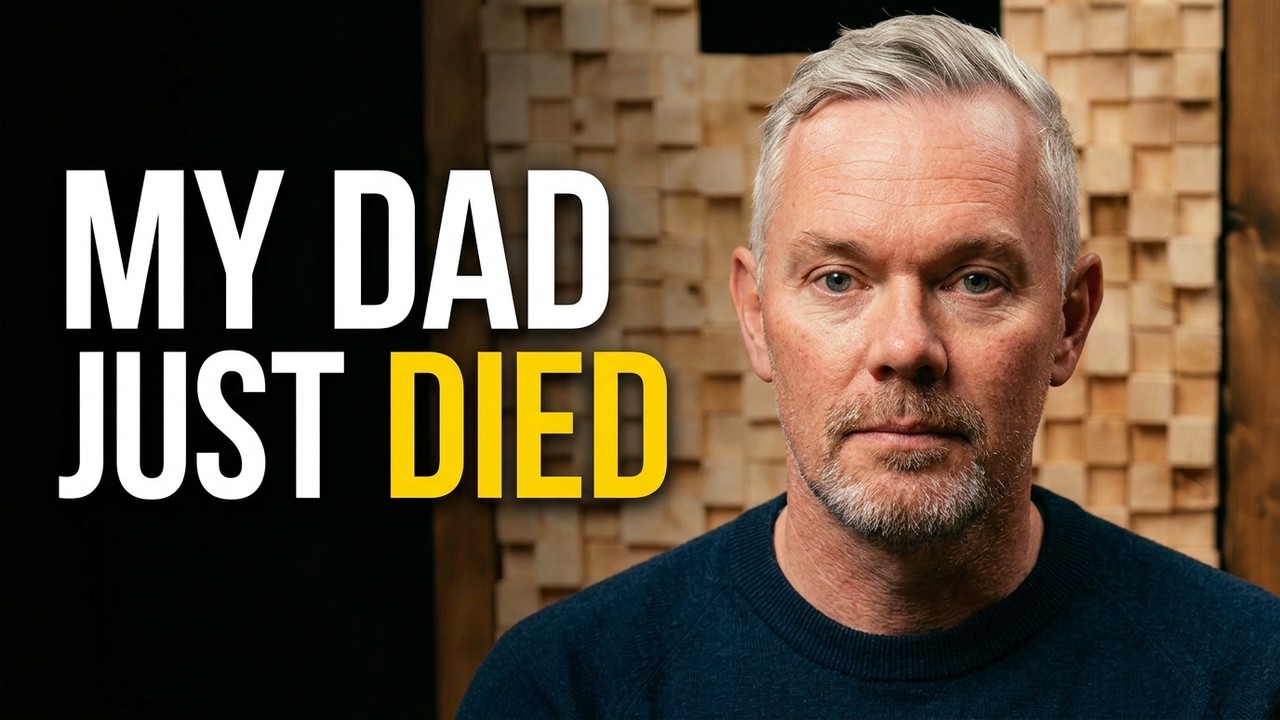
In this episode of Dead Dads, Matty Woods talks about losing his dad to prostate cancer, medical assistance in dying, anticipatory grief, and the celebration of life that followed.
Hi Dad, Nigel had just died when Matty came to the Dead Dads studio.
This is one of the most powerful real life stories we’ve had on Dead Dads. Matty is still in the rawest part of grief: fresh, early, and still finding the words.
For men who are losing your dad, dealing with loss, watching a parent die from cancer, or trying to understand grief that does not follow any rulebook, this episode is for you.
Nigel Woods spent nine years living with prostate cancer, which he renamed “MDS,” because apparently even cancer needed a nickname. He wrote letters to his grandkids. He recorded videos for his friends. And when he chose MAID, medical assistance in dying, he gave his family one final impossible gift: a goodbye on his terms.
In Canada, MAID can be a loaded, emotional, deeply personal choice. For Nigel and his family, medical aid in dying meant a deliberate goodbye. Dying with dignity. A final day shaped by family, humor, love, and one very respectable glass of scotch.
A real goodbye. The kind most of us do not get.
Matty came into the studio fresh from emceeing a 1,200-person celebration of life for his dad. He talks about Nigel’s two rules for the event: no sadness, and a shot of scotch before you walk in. He talks about anticipatory grief, the long goodbye, and the strange feeling of being “lucky it hurts this much.”
This is a conversation about losing a parent to cancer, medical assistance in dying, MAID Canada, grief and loss, grief support for men, father loss, mental health, family legacy, and the father son relationship that keeps shaping you after your dad dies.
If your dad died recently, years ago, or you are walking through this with him right now, you are not alone.
Welcome to the club no one wants to join.
🎧 In this episode, you’ll hear about:
Why losing your dad can feel painful and strangely lucky
What anticipatory grief feels like after years of illness
How one family handled MAID and medical assistance in dying
What dying with dignity looked like for Nigel’s family
Why Matty’s dad wanted scotch, not sadness, at his celebration of life
How grief shows up when the goodbye is planned but still impossible
What losing a parent to cancer teaches you about love, legacy, and mental health
How the father son relationship shapes you after your dad dies
Why “What would Nig do?” became a way to keep his dad close
👨👦 About Matty and his dad, Nigel
Matty Woods lost his dad, Nigel, after a nine-year experience with prostate cancer.
Nigel was funny, proud, stubborn, generous, and deeply loved. He wanted his final days to reflect how he lived: with family, humor, dignity, and a decent glass of scotch.
In this episode, Matty talks about what it was like to say goodbye, host a huge celebration of life, and start figuring out who he is without his dad physically here.
It is a conversation about father loss, cancer, MAID, grief, pride, family, and the weird little moments that show up after someone dies.
Also, yes, there are laughs. Because grief is weird like that. Rude, honestly.
⏱️ Episode chapters
0:00 – “1,200 People, One Shot of Scotch”
3:00 – Nigel’s Rules for His Celebration of Life
6:30 – “I’m Lucky It Hurts This Much”
7:30 – Prostate Cancer and Dark Humor
12:00 – Anticipatory Grief and the Long Goodbye
13:00 – Choosing MAID on His Own Terms
15:00 – The Bluebird Day, the Bridge, and the Scotch
17:30 – Being With His Dad at the End
18:45 – The Plane, the Comet, and “There He Is”
23:30 – Emceeing in Front of 1,200 People
30:00 – “What Would Nig Do?”
32:30 – Why Matty Feels Infinitely Proud
🖤 About Dead Dads
Dead Dads is a podcast for men figuring out life after losing their dad. Hosted by Roger Nairn and Scott Cunningham, the show features honest conversations about father loss, grief, identity, family, memory, masculinity, and all the strange stuff that happens after your dad dies. No grief brochure voice. No tidy healing arc. Just real conversations for guys who are grieving, remembering, avoiding, laughing, carrying on, or trying to understand what losing a father did to them.
You’re not alone.
☕ If Dead Dads has helped you feel a little less alone, consider buying us a coffee: https://buymeacoffee.com/deaddadspodcast
Follow Dead Dads:
Website: https://www.deaddadspodcast.com/
YouTube: https://www.youtube.com/@deaddadspodcast
Instagram: https://www.instagram.com/deaddadspodcast/
TikTok: https://www.tiktok.com/@dead.dads.podcast
Substack: https://substack.com/@deaddadspodcast
And listen to us here, or wherever you enjoy podcasts:
Spotify: https://open.spotify.com/show/4WWlXBPzgj151SFYRUZeSB?si=fe005fdf079249b8
Apple Podcasts: https://podcasts.apple.com/us/podcast/dead-dads-podcast-grief-support-for-men/id1867632438
New episodes every week.
Dead Dads Podcast is produced with the support of JAR Podcast Solutions, the branded podcast agency that helps organizations build shows people actually want to spend time with. Learn more at https://jarpodcasts.com/
Scott (0:00): Hey, everybody. It's a bit of an odd place to welcome you to the Dead Dads podcast, but I was thinking a little bit about our guest this week, Matt Woods. And he spent his life in construction. And I was walking down here, I saw this building, and I thought a little bit about him. And I thought a little bit about what we learned from him in our episode today.
Scott (0:17): What really hit me talking to him was how he was so open with his grief. He talks about running right at it, inviting it in. And that's a real important thing, I think, because we talk a lot in this podcast about not hiding from your grief, maybe not being in the silence, being in the shadows. And Matt really embraces that. And for me, that was a a huge part of talking to him.
Scott (0:42): Roger, what did you think about the episode?
Scott (0:45): I thought Matt was incredibly brave for coming on the show so quickly and sharing his story with you guys, especially if you're a guy who's watching this right now and have just lost their dad or perhaps you're about to lose your dad. I think you can learn a lot from this. I think any guy can learn a lot from this conversation because Matt really goes deep into what the experience was like. And I think there's a lot for all of us to learn in there. So here's Matt Woods.
Matt Woods (1:14): He said, Maddie, just, you know, when when you see the body lying there, it's just a body. His soul's gone. His energy's gone. Just try and soak it in.
Scott (1:34): Ladies and gentlemen, welcome again to the Dead Dads Podcast. Today, I would like to introduce you to our guest
Scott (1:40): Matti Woods.
Scott (1:41): Matti Matti?
Scott (1:42): Matt, my friends call me Matti.
Scott (1:43): Okay. Let's can we go with Matti?
Scott (1:45): Absolutely.
Scott (1:45): Thank you, Matti. Thank you so much for joining. I wanna ask you, why did you decide to do the Dead Dads podcast? And I I know that it's a special sort of announcement. It's relatively fresh for you.
Scott (1:56): Your dad, Nigel, passed away relatively recently.
Scott (1:59): Passed away January 24.
Scott (2:00): What made you decide to do this podcast?
Matt Woods (2:02): I've always found whenever I've lost someone or spoken at a funeral service or celebration of life, whether it's losing someone to cancer, which my dad passed away from, or suicide. I've had a few friends that have taken their own lives speaking at their celebrations has been really helpful for me to process whatever's going on inside of me. So I felt like this was a great opportunity to, you know, same thread, keep talking about it. And I really found since learning about your guys podcast through my buddy Kevin, who was a guest of yours last fall, one of your first episodes. I just really, really wanted to do it.
Matt Woods (2:42): And I felt like listening to all the episodes, took a lot away from each and every one. A lot of, you know, all the stories are different, but at the end of the day, we're all going through the same thing, losing our debts.
Scott (2:54): Thanks, Matty. That's Kevin Barras. That is Kim Barras. Which was a great guest. And you said something which we always struggle with, which is you wanted to do it.
Scott (3:01): We have a hard time figuring out how to say, like, we're excited about talking to you or we're looking forward to this, but
Matt Woods (3:06): We had my my dad's celebration of life last Saturday. So it's only, you know, been six days. And I was really excited about that event. I was I was also full of existential dread of being up there as well. So very different feelings, but it was a big celebration of his life.
Matt Woods (3:24): And we tried to make it fun. And before he died, he said, you know, when we do this, I have two rules. You're not allowed to be sad, and you have to do a shot of Scotch before you're allowed in the room. So we had a bit of a bar tab last Saturday, but it's what he wanted, and it was it was incredible.
Scott (3:39): Tell us about your dad.
Matt Woods (3:41): His name was Nigel Sidney Woods. He died at 74 years old, suffered from prostate cancer for nine years, pretty much spot on. It was a long journey for him. I was a farm boy. So learned what hard work was from a young age, breaking horses, fixing fence posts, shoveling shit.
Matt Woods (4:00): And after he graduated from UVic, he went to Whistler for a ski weekend and classic Whistler story, fell in love with the place and never left. And he's been a staple and a pioneer of Whistler for over fifty years.
Scott (4:10): Yeah. This is not the Whistler that some may know. This glamorous ski resort for international fame. This is a
Matt Woods (4:16): Early seventies, you know, as he said, you had to do your laundry in Squamish, and and the village was a garbage dump. There was there was nothing nothing there. So he started our our family business, Coastal Mountain Excavations, is Whistler's oldest operating company. Business turns 50 next year. And to have 1,200 people show up to his celebration of life last weekend was, you know, everybody in Whistler was saying it was a state funeral of Western.
Matt Woods (4:41): I'm like, woah, it's not a funeral. We're having a celebration here, guys.
Scott (4:43): So so that that's a big milestone is having that celebration of life.
Scott (4:47): And I wanted to wait to have that over before I came and talked to you guys, and I'm I'm very happy I I did that because that was a a super powerful experience for me.
Scott (4:56): If you could describe what your grief looks like today, right now.
Matt Woods (5:01): It was different last week for sure, Roger. It felt like I was carrying this thing around that I had put so much time and effort into into planning. I wanted it to really go well, which it did, but Sunday, Monday felt pretty heavy. So, yeah, this week's been
Scott (5:19): more challenging, I think, now that that is over,
Matt Woods (5:26): because there's nothing to look forward to now. And I think Instagram's figured out that the algorithms pointed at the word grief for me right now, so the amount of data hitting me in the face every day and I mean, your guys feed comes up on on mine multiple times a day, and I and I love seeing it because everything I'm listening to is is grief is just the other side of love. And I get to a place of gratitude pretty quick. You know, I see a therapist, I have been for for years, so just keep going maybe a little more often now. And you know, she challenged me to sit with that sadness for a little bit longer and let it run through you.
Matt Woods (6:09): And I've sort of been trying to do that, but I'm finding it difficult to stay really sad for very long. Because I had such a great ride with my dad.
Roger (6:20): As I said in my, my speech on Saturday, he was my dad. He was my best friend. He was my my mentor, my business partner, and my hero. And, I'm just lucky that it hurts this much.
Scott (6:33): I think there's a couple of things in there that you touched on that are instrumental things, which was you are now focused on you were focused on that, on the celebration of life. And then there is a darkness on the other side of that, which is now I don't have anything to focus on. I've to focus on something different.
Scott (6:51): I think I knew it was going to be there, Scott, for sure. I said, when I woke up that morning and this is heavier, feeling it a lot more.
Scott (7:01): Nine years he had prostate cancer, which is a decent amount of time
Matt Woods (7:07): to And if he wasn't such a tough son of a bitch, we would have had that celebration of life many years ago. He was a grinder. He was a fighter and you never would have known how much pain he was in, the suffering he went through. All the, you know, shit that comes from taking out your prostate and losing your sexual functions and ability to pee and you know, wore diapers and they cut his ureter in half and he had stents put in and out. He called it MDS, mangled dick syndrome.
Matt Woods (7:33): He never lost his sense of humor. And even in my my cousin's speech, my cousin Pete, and my dad was like a dad to him. In many ways, we were on a boys golf trip. It was really special time we had with my dad, and it was Nige sponsored, which was great. And Pete went to take a leak on a tree while we were playing, and Nige looked over at him.
Scott (7:54): He's like, Pete, enjoy the heck out of that piss. Pete shared with everybody in the room that now every time that he goes to take a leak, he thinks of Nigel Woods. That got a lot of laughs.
Scott (8:05): Nine years ago when you discovered this, do you mind if we go back there a little bit? So how did that happen? So was it sort of routine check?
Matt Woods (8:13): Yeah. And it was PSA levels, know, got, you know, he was, so he would have been 65 a year after that he, you know, semi retired that he got sick, had a procedure called HIFU. It's like high frequency ultrasound. So they zapped the part of his prostate that was affected and they took out the lymphectomy, had all lymph nodes around it taken out, just trying to avoid the, you know, wanna be able to pee, still wanna, you know, do things with my mom that I don't wanna talk about on here. But I tried to avoid it, but PSA levels kept coming back.
Matt Woods (8:47): About a year ago, it was Father's Day last year that he, you know, it was a few weeks before he reached out. My sister lives in Williams Lake, my brother's in North Van and I'm in Whistler. Said I'd I'd like you guys home for for Father's Day. We need to have a a family meeting. And maybe a couple weeks before that, he still had an office in in our office.
Matt Woods (9:08): And I looked on his desk one day when I was looking for a set of plans or something, and I saw a bunch of letters written to his grandkids. And I was like, oh, fuck. Oh, Jesus. I know what's coming. Right?
Matt Woods (9:21): So we actually every Father's Day in Whistler, there's an event for the Whistler Healthcare Foundation called the Hike for Health. So it's a hike up Blackhoe Mountain from the bottom of the mountain to the top, on the Ascent Trail. And we did that in the morning and he got there I think two hours before it started. He was, you know, really sick. He was small, you know, he was never a huge man.
Matt Woods (9:44): I always said small man, giant shoes to fill. But he started ahead of us and he hiked all the way up Blackwell Mountain for for this foundation. And then we went back to his house that afternoon. My brother, sister, my mom and dad and I and he told us that, you know, time is coming to the end. And then he got really sick early August last year.
Matt Woods (10:06): He couldn't pee anymore. His bladder was basically a dumpster fire. Meanwhile, my mom had esophagus cancer at the same time. She was she was diagnosed in January 2025. They were two buildings down.
Matt Woods (10:18): She was getting her cleanup chemo. He was at VGH. Didn't think he was getting out of there. But somehow he rallied, but he was really sick. I got to drive him home on my birthday last September 6 on on Labor Day.
Matt Woods (10:30): So best fucking birthday present I've ever had. So we got a bonus five or six months with him. He got another Thanksgiving with everybody. He got another birthday in November. We had Christmas together, one more Christmas dinner, but he had another thing called thoracic outlet syndrome.
Matt Woods (10:45): So a bunch of tumors in his neck, cut off his lymph supply, his right arm wasn't draining. From August on, he was on palliative methadone for the pain and fentanyl every night just to sleep a little bit, but never one word of complaining. He was just so happy to be alive.
Scott (11:04): So thank you. Because there's there's a lot in there. Again, your mom's diagnosis as well, which I'm very sorry to hear.
Matt Woods (11:11): But the day he went back into the hospital in January, she had her endoscopy all clear.
Scott (11:16): You took away to there for sure. I wondered about from a, from a, there's a process where you start believing first you hear it, then you think it's going to happen. And then you think it's not maybe going to happen and then you don't know when it's going to happen.
Matt Woods (11:29): And that was, that was a weird time in life because you're just waiting.
Scott (11:33): You handle that. How did you handle that where you, you first thought it was like, my God, he's got cancer. And then actually, it seems like he's gonna beat it.
Matt Woods (11:42): I think it was difficult to comprehend because he was always so positive. And he never really looked sick until last year, a year ago. And he was always just so upbeat, you know, he'd still ski, golf, ride his bike, rock the dog.
Scott (11:58): So you allow yourself almost to be like, well, this isn't this isn't happening?
Matt Woods (12:02): Yeah. To to a degree, for sure, Scott. But my my therapist put a a term to it and it's called anticipatory grief. You're you're just waiting for this thing to happen. You don't know when it's gonna happen.
Matt Woods (12:15): You can't really relax in any way. I mean, you can try, but it's always, you know, right in the front of your brain going, okay, he he looks really sick. And last August, you know, it was almost a month he was in in BGH, and I was staying at my buddy Greg's place in East Van and going back and forth to BGH every day, and so many people showed up to say goodbye, you know, because we thought it was it was there. All of his friends were flying in from everywhere that wanted to come see him, and we thought he was gone. So we really in the last five months, six months, whatever it was, just really tried to soak in every minute we got with him.
Matt Woods (12:56): But he did made at home. So he he put that in a box on a shelf years ago, got it approved. That really gave him a lot of peace of mind. He said, you know, I'm gonna be able to go out of my own terms. That was really, really important.
Scott (13:08): Which is medical assistance and dying and something we've spoken about here a couple times.
Scott (13:12): My dad did it as well. That's fine.
Matt Woods (13:14): So, you know, some people have a attitude about it or or whatever. It was a real gift for for our family.
Scott (13:21): Can you explain why it was a gift?
Matt Woods (13:22): He got to go out exactly how he wanted, where he wanted, with who he wanted. So we were in Lions Gate, and he made up his mind that, you know, blood pressure medication was keeping him alive because with his sepsis, again, his blood pressure was dropping, he could have stroked out. If we were an hour late getting there, it would have been a very different experience. So he was just hopped up on blood pressure meds to keep him alive. And you know, we didn't exactly want to do it at home, my mom, brother and sister and I.
Matt Woods (13:54): And we didn't try and talk him out of it. There was just no way it wasn't happening at home. So they gave him enough drugs to get him in the transport vehicle. It's not like he can take an ambulance in reverse. It's basically a a wagon.
Matt Woods (14:06): There's no medical assistance in the back. So my my brother rode in the back with him.
Scott (14:09): What was that drive like?
Matt Woods (14:11): That drive, it was a beautiful bluebird January day, sun was shining. I called my buddy Tony, who lost his dad tragically eight or nine years ago. He should probably come on this podcast too. He knew what was happening. My dad actually made a point of calling him the night before from the hospital bed, said to say goodbye, which he called a few of my best friends, which was another big story of his his life was that he had so many friends with so many age groups, like my best friends called him dad, like he was a father figure to so many people.
Matt Woods (14:46): That was really the theme of his his celebration. But I asked Tony, I said, know, what what should I expect? What do what do I do? What do I focus on? He said, Maddie, just, you know, when when you see the body lying there, it's just a body.
Scott (14:59): His soul's gone. His energy's gone. Just try and soak it in. So when we got him home, like he was really stoic that last week in the hospital. He didn't cry once.
Matt Woods (15:10): And he's a crier, like our family wears our heart on our sleeves big time, you know, almost painstakingly so. And he didn't cry until we got him to he lives on this island in in West Slur that he bought. So open up the back doors to the paddy wagon and he saw his brand new bridge that he just finished building that summer rebuilding, I should say, and tears just started screaming down his face. He knew he was home. He knew he could go.
Matt Woods (15:35): So in a wheelchair, we stopped in the middle of the bridge, looked north and south down the lake up to the mountains and got one last look at his favorite view. My brother-in-law and I had moved his hospital bed that he'd spent the last five or six months in on the on the Main Floor into the living room, lit a fire, sun was shining through the through the windows right on his face and made doctors were there pretty quick and we didn't take long. He said, I just want to go out with a taste of scotch in my mouth. So we opened up a really nice bottle of Dalmore and all had a glass with them and you know, we got to say all the things we needed to say again because we did them in in August.
Scott (16:20): That's a gift from Tony. And I'd love to talk to him too because I think I was gonna ask you this, again, similar to what Tony said, which was when made happen for my father, there's the the minute after, you know, and the and the weirdness of the minute and maybe the day after. So your story similar to my my father died in a hospital bed and so we had to go home. And just the activity, the idea of filling an activity or doing anything the day after felt insane. It felt like what what should we play a board game?
Scott (16:55): Like, what are we supposed
Matt Woods (16:56): to do? Luckily, had something to to go and do, Scott. So my wife and I had a trip planned to Hawaii for, I don't know, six, nine months beforehand, and we were supposed to fly out Saturday, the day he passed. So as the end of the week kind of came around, we knew it was gonna happen on Saturday. So I wasn't gonna make that flight.
Matt Woods (17:15): I said to court, go Get on that flight. I won't be there. I'll be there in a day. So that Friday night, as we knew Saturday was gonna happen, I went on to Air Canada. Sunday morning flight at 08:00.
Scott (17:30): There was one seat left on it. One f. Fuck it. Of course, I'm going first class. Booked it.
Matt Woods (17:36): I'm like, that's what Nudge would want me So to he passes on on Saturday about noon, and I breathed in all of his energy, and I left my parents' house feeling full of life. I felt full of his energy, and I I really soaked it in. And I held his hand as he as he went. And it was so funny because he had a he had a smile on his face, and his eyes stayed open. We tried to close them, they'd pop back open again.
Matt Woods (18:05): Sorry.
Scott (18:06): Don't mean to laugh.
Matt Woods (18:07): No, but it was that good. I'm so fortunate to have that experience. Even the maid doctor or the the nurse, she was like, wow, he's really going into this with his eyes wide open. Like he just wouldn't go. And then the night before he passed, he said to my sister, because he was so fucking fed up with the pain and suffering, he's like, I just can't wait to get out of this body and run.
Matt Woods (18:27): So I get on the plane on Sunday morning, 8AM flight out of Vancouver, check-in, have a drink in the lounge, sit down beside this beautiful older woman, and we start chatting, and get to know that she's a family member of one of the found the founding family that built Whistler Mountain, the young family. So Jane and I had the most incredible conversation all the way to Hawaii. I was so just happy, you know, she knew who my dad was.
Scott (18:54): She's called
Scott (18:54): Nigel with his beautiful blue eyes. Yeah. And I drank two bottles of wine. She passed out for a little bit, and then I'm looking out the window, I'm like, okay, Nigel, just give me a sign. And I'm looking for a fucking cloud that looks like his face or something stupid like that.
Matt Woods (19:07): And I give my head a shake, I'm like, was one seat left on this plane. Dad died, he sat me next to Jane. She got me to Hawaii. And I got off the plane feeling light and happy. So get to the beach, you know, we spend the afternoon playing in the waves, had a couple of my tais, and then there was a a welcome dinner that night, and no one knew that he had passed yet.
Matt Woods (19:26): It's not like we put it on Instagram or anything like that. So I'm telling him what had happened the day before. Everybody's crying and I I told the story about him him saying to my sister, just wanna get out of this body and run. And the last thing I said was, know, Nudge said to me, if you ever looking for me, just look over your right shoulder and I'll be right there. And as soon as those words came out of my mouth, I looked over my shoulder and I thought a fireworks show was happening, like they're having, you know, part of the party, but it was a common.
Matt Woods (19:52): It was this neon green blue streak. The most significant thing I've ever seen in the night sky, so it and exploded over our heads. I looked up like, there he is. He's running. And then I had a meltdown and had to walk away, but you know, he's he's shown me in a not so insignificant ways that he's he's very much still here.
Scott (20:15): In the in the in the first few months, and I guess we're in month three now, what where have you gone for support? Kevin's been great.
Matt Woods (20:21): His timing and knowing when to reach out has been spot on, and he knows, you you don't know until you know going through this and what people are experiencing. So he's been really great, and my other buddies that have lost their have also been a great source of support for me. My wife's been a rock. She's been incredible. And then I see a therapist regularly and doing this, talking about it is super helpful.
Matt Woods (20:49): You can't lock it in. You gotta talk about it and let it out because there's there's no way around grief. You gotta go straight through the fucking middle of it and invite it to sit down at the table with you.
Scott (21:00): I think that's a really interesting point is the inviting it to sit down at a table with you.
Matt Woods (21:04): Like, you're not going away, so I'm gonna get to know you.
Scott (21:07): That's a transition between our parents' ages and ours, I think, where there was an idea that it was embarrassing or something that was private. And the the flip side, I think, is becoming more palatable, which is grief is a a guest at your table, and in fact, a welcome guest because it shows emotion. It shows love and caring.
Matt Woods (21:26): I mean, you know, therapy is good for everybody. And no matter what you're struggling with, everybody needs a little help getting through and we've had our ups and downs. And I had to do a lot of work on myself to show up better for my family and my employees, and I've did that. So, you know, with dad getting sick, it was just a natural thing to do. It's not easy, but man, feels so much better after you do it.
Matt Woods (21:47): It's just like exercising, you know, you if you're lazy and just don't feel like going to the gym and then you go, you have more energy all of a sudden, you feel better. And talking about it and, you know, going through the shit, you feel better at the end of the day. And It's great that you're a
Scott (22:03): proponent of it because I think we've talked about it before and there are a lot of, like, there's stigma against it. And there's also sort of this like, it's a challenge to even get to the point where therapy is working. You might not like the therapist that you meet the first time. You might not not feel the benefit.
Matt Woods (22:17): Greg's the guy I see now and I've just started seeing someone else just a couple of times and it's been, you know, wanted to get a female side of the equation, which has been different, but equally as as rewarding.
Scott (22:30): And and not all therapists are specialists in certain areas as well. So I think it's really important to question them, interview them, ask them, like, have you dealt with this? Have you dealt with this? Because other than your spouse, it is gonna be and your you know, some of your good friends, it's gonna be the most vulnerable you'll be, and and you want that. You want that.
Matt Woods (22:48): Yeah. And I I think I've really focused the last few years of my life with being being comfortable with being uncomfortable. So I encourage anybody that's scared of trying therapy, you know, if you're uncomfortable, just fucking do it. You won't regret it.
Scott (23:04): So you mentioned a few times you have had friends that have died from suicide. So you've gone through that before your dad's passing. I'm curious, did that prepare you in any way for any of the grief?
Matt Woods (23:16): I think so. Differently, I think I got the most preparation for my dad for I was I emceed my dad's celebration of life and I knew there was gonna be a lot of people that showed up. I didn't think 1,200 people would show up but I knew that given what I've done at you know celebrations of life for people I've lost to suicide. It just really helped talking about it and being brave, getting out there, and being a person to kinda hold space for the room. The amount of feedback I've got from that event has been unbelievable.
Matt Woods (23:51): That's a it's a gift I get to carry with me forever.
Scott (23:56): There's a question that I wanna ask and it's gonna it's a it's a question that I get asked that I think others have asked, but again, recently. So your dad was a huge part of your life, and you mentioned, you know, role model and friend and everything. Gave gave you so much. Right? And your kids are how old now?
Matt Woods (24:14): My daughter just turned 13 on Tuesday, and my son's 10.
Scott (24:17): So they have memories of him, of their own separate special memories, but they're gonna age. Have you
Matt Woods (24:25): Well, he actually so wind back the clock to last August before he got really sick. He had the foresight to have some videos made. Oh, really? So he made one for my brother, sister and I, one for his brother and sister and one for his grandkids. So we've been able to watch those now.
Matt Woods (24:41): And then he made when he went into VGH last year, last August, he hadn't made one for his friends yet. So he had the same guy, Sammy, come down to VGH. He had me reach out to him. Said, Sam, I need to make one for my buddies. So I got to play that video at the service.
Matt Woods (24:57): And that was so fucking cool. Like, who better to speak at a celebration of life than the guy whose life you're celebrating? And he told funny stories, and it was meaningful. He was there wasn't a dry eye in the room. He looked really sick, and he started out a little bit emotional, and then he was just delivering punchlines like he like he always did.
Matt Woods (25:18): And it was incredible. So back to my point, we have those memories that he gave to us.
Scott (25:24): There's this fear like, I'm gonna forget him or I'm gonna forget these feelings or I'm gonna lose track of the the figure and maybe subsequently also my kids. How do my kids do it? And so it sounds like that's your and your gift that he gave you was these videos.
Scott (25:39): Yeah.
Scott (25:39): You have that as a sort of touchstone that you can rally around on specific moments over the course of the next are you looking at life that way? I am for sure.
Matt Woods (25:49): But after as I was saying, all this feedback I've got from the from the celebration on Saturday, the overwhelming theme everybody's been telling me is your dad's in you. You are your dad. You are you're him.
Scott (26:02): So he's right here. It'll never go away. And being the the steward of his legacy is the biggest privilege and honor of my life. And getting to do what I did on Saturday is I will never forget that.
Matt Woods (26:21): It was so it was an insane experience. I didn't know how I was gonna get through Hello, let alone be up there for for two hours and just knowing how I showed up for my
Scott (26:33): dad that day and how well it went, I will forever be so proud of that. And I've had everybody tell me how proud of me they are and how proud dad would be of how well I did. And that is the ultimate gift.
Scott (26:51): I will tell you, I don't know you that well. I'm proud. I didn't my dad died in COVID. There was no service. And the ability to do what Gotta be do.
Scott (27:02): It it was hard, and it was but it was private and was quiet. And I also feel a sense of loss that I didn't get to tell other people about him. A little bit of why we do this podcast is because I get to talk about him. And so what you did, that's incredible.
Scott (27:16): How have your how have your kids been with everything? And and and how have you been able to be there for them?
Matt Woods (27:22): I would say, Roger, I'm I'm surprised at how emotional they've been. I didn't think they knew my dad as well as I feel they did now. Like the night before he passed, he called them and you know, they were really upset on the phone and I was obviously in the hospital, my wife was home with them. And she said they were you know, really, really sad. And we didn't play the video of him for them until the week of the service.
Matt Woods (27:49): I don't know why I didn't play it sooner. But immediately, they were very emotional. And they cried during the service. And my son's definitely been a little off this week. I think he's carrying it more than, we've realized.
Matt Woods (28:03): But I think they're they're doing okay. I think part of me is relieved or happy that they are emotional about it because, you know, maybe they had a better relationship with them than I than I thought. But what I've been thinking about and talking to court about is, you know, them seeing their dad up there on the stage on Saturday. And maybe them thinking that, oh, I've gotta do this for my dad. Maybe the pressure it's putting on them for whatever reason.
Matt Woods (28:32): It's just me thinking out loud. Maybe that's freaking them out a little bit now.
Scott (28:37): This is the nature of a couple of conversations, which is the there is a process of grief. The funeral is as much for you as it is for the person. It's it's what matters to you. And again, I think one of our other guests said this because they're dead. So you're doing it for yourself and for them.
Scott (28:53): And so I think for, you know, your kids.
Scott (28:55): Yeah. Death is a community event.
Scott (28:57): Yeah. Big time.
Scott (28:58): But I think there's there's something that really resonates or that hits me with we're trying to teach our kids how to be the best versions of themselves that they can be. We're trying to be the best parents. And so part of that is giving them instructions in grief, showing them what it means to be sad in front of them. And that's a change for a lot of, you know, our generation too, which was maybe sadness was quiet and private and then stoic in front were being more public.
Matt Woods (29:22): My wife's super, super thoughtful. She checks in with them much more than than I do. But when I do check, like, it's okay to be sad, guys. Like, I'm really sad. My dad's gone, and I don't get to talk to him anymore.
Matt Woods (29:34): And any questions you have for me, like, I'm here I'm here for you. What do you guys need? And they don't ask a lot. There's are you sad? Yeah.
Matt Woods (29:43): But that's about it.
Scott (29:44): I'm curious. When people ask you how you're doing right now, what do you what do you say?
Matt Woods (29:51): I say I'm I'm pretty good. You know, like, I'm I'm definitely a lot better than I thought I would be, and I'm taking a lot of comfort in in how last weekend went.
Scott (30:04): And you said it was a big milestone to look forward to. And and now that it's over, you don't have another one of those. How how are you gonna navigate that? Not having that thing to sort of
Matt Woods (30:14): You know, I I find my dad in the mountains, walking my dogs that he would walk, you know, multiple times a week. Okay. I asked Bodhi, give his head a little shake and like, any Nige in there, bud? So everywhere I go, I ask myself, what would Nige do? Because I find I almost find his influence in my decision making more profound today than I did when he was alive.
Scott (30:40): Can you explain that more?
Matt Woods (30:41): Every time I'm making a decision now, I'm like, interesting. I I'm thinking of doing this. And then I go, what would dad's view of the world be on this? Instead of grinding against it, I'm just noticing it more now that his his ways of thinking are there in me. And and I'm actually thinking of getting a tattoo on my wrist that says, what would Nigel do?
Matt Woods (31:05): Because I'm asking myself that all the time. And it's, you know, there's been days that I wanted to quit, sit on the couch, open a nice bottle of wine, and be miserable. But I don't. I go, what would dad do? He'd go do the hard thing.
Matt Woods (31:17): He'd get his ass up. He did it when he was nearly fucking dead. He'd still go to the gym three days a week, a week before he died. He'd just get up and go. I'm really locking into to that now, and it's it's making positive improvements in my life.
Scott (31:33): And if there's a a guy watching this right now who's literally in the same, you know, same same sort of phase that you're in right now, I'm curious, what would you what would you tell them?
Matt Woods (31:43): I think it's it's just finding that trying to find that other side of grief and knowing that just I feel so lucky that I loved my dad so much. I honestly feel blessed that it hurts this much because I knew I had it so fucking good. And it's it's a gift and just trying to be okay with that. And it's okay to be sad. It's okay to have a bad day.
Matt Woods (32:09): It's okay if you gotta walk out of a room because you're just not doing that great, but not being afraid of it or ashamed of it and showing people that it's okay to be grieving, to be sad, to not have a great day. I think if I can show more people that and you're a lot stronger than you than you think you are because getting through that thing on on Saturday, I didn't think I had a hope in hell of getting past hello. And it was the the hardest fucking thing I've ever done in my life. And I will have that experience for the rest of my life knowing in my heart that I made my dad infinitely proud because that's all I've ever wanted to do.
Scott (32:52): I wanna thank you for that. And I actually, I also wanna reassure those people out there that guys whose dads have died don't all wear the same clothes, even though we have all simultaneously chosen similar outfits today.
Scott (33:05): Though maybe
Scott (33:06): We have. Yeah. We're in we're in a
Scott (33:07): Navy is the color of grief.
Scott (33:09): Navy is the color of grief. So I think, yeah, there's there's
Scott (33:11): That's my dad's color. It's it's been mine too. Blue for
Scott (33:14): his beautiful eyes.
Scott (33:15): Right? Exactly. Those steely blue eyes.
Scott (33:16): Those steely blue eyes. Yeah. So, yeah, if you if your dad is out there and if you are wearing blue or feeling blue, I wanna say that we appreciate you watching this podcast. Thank you so much. Thank you so much, Maddie, for coming in here.
Scott (33:30): Thank you for having me.
Scott (33:31): So close to your dad's death, so close to the celebration of life that you so obviously kicked its ass. But thank you.
Scott (33:37): Can I just ask that if if you're listening to this podcast right now or watching this podcast, I I know you probably know somebody out there who could also benefit from from listening to Matt's story and everyone else's story that that's being part of the show? So can you please share it with them? Because it really goes a long way, not just for the success of our show, but actually, we've heard we've heard a lot of feedback from guys who someone has shared the show with them, and that's how, that's how That's why
Scott (34:05): Matt's here today.
Scott (34:06): That's how Matt's here today, and that's also how a lot of people have found those resources and support to to get through the grief.
Scott (34:11): Thank you. Thank you so much.
Scott (34:12): Thanks, guys. So appreciate being here.