

I Got the Call… and Had to Tell My Family My Dad Died Suddenly | Dead Dads Podcast | Grief Support for Men
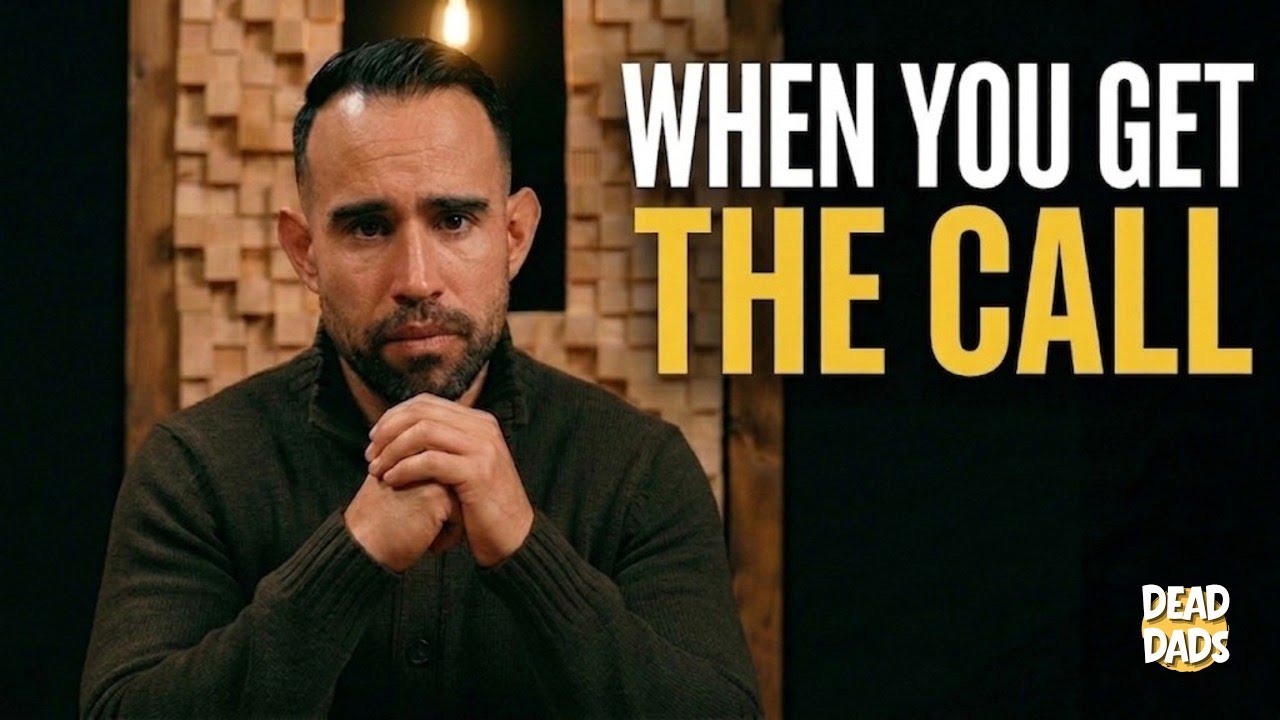


John Abreu’s dad died suddenly.
There was no will. No clear plan. No neat folder marked “open this when I’m gone,” which would have been nice. Instead, John had to tell his family, make decisions, deal with logistics, and process the fact that his dad was dead at the same time.
In this episode of Dead Dads, John shares what it is like to lose a father when nothing is prepared.
We talk about the call, the shock, the first few days, and what happens when funeral planning, paperwork, estate questions, and family responsibility show up before your brain has caught up.
John also talks about the pressure to be “the strong one.” The guy who stays calm. The guy who tells everyone else. The guy who handles it.
That role can land fast.
And it can get heavy.
This is also a practical conversation about father loss, estate planning mistakes, what happens when there is no will, and why the unfinished conversations with your dad can stay with you longer than you expect.
If you are dealing with the loss of a father, supporting someone who is, or trying to prepare your own family so they are not left guessing one day, this episode is for you.
🎧 In this episode, you’ll hear about:
- What it is like to get the call that your dad died
- How to tell your family someone has died
- What the first few days after losing your dad can actually look like
- What happens when there is no will or estate plan
- How to make decisions when nothing feels clear
- Why men often feel pressure to be “the strong one” after loss
- How unfinished conversations with your dad can stay with you
- Why grief can show up later in parenting
- What you can do now so your family is not left guessing
- How to think about grief, responsibility, and legacy after your dad dies
👨👦 About John and his dad
John Abreu grew up between Venezuela and Canada.
His father, John Abreu Sr., was a mathematician who believed in discipline, hard work, and being there for his family. He pushed John to think more deeply and expect more from himself, even when John did not fully understand it at the time.
In 2022, John’s dad died suddenly with no plan and no will. John had to tell his family and handle what came next.
Now he is focused on carrying forward what mattered, while being more open and proactive so the people around him are not left guessing.
It is a conversation about father loss, sudden death, grief support for men, estate planning, family responsibility, parenting, and the pressure many men feel to hold everything together after their dad dies.
Also, yes, there are laughs. Because grief is weird like that. Rude, honestly.
⏱️ Episode chapters
0:00 – Why Small Moments Hit Hardest
0:23 – What This Podcast Is
1:02 – Why Talking About Losing Your Dad Matters
2:42 – What You Carry From Your Dad
6:01 – The One Sentence That Sticks
7:24 – What You Might Do Differently
8:53 – What It’s Like to Get the Call
12:09 – How to Tell Your Family Someone Died
13:47 – When Responsibility Lands on You
16:27 – What the First Few Days Look Like
17:38 – What Happens Without a Will
19:17 – How to Make Decisions Without Clear Answers
20:14 – What “Doing It Right” Means
21:58 – How to Honor Someone So It Lasts
23:59 – How Grief Changes Over Time
25:45 – How Losing Your Dad Shows Up in Parenting
28:24 – The Questions You’ll Wish You Asked
31:50 – What You Can Do Now to Prepare
33:21 – What Grief Sounds Like Years Later
🖤 About Dead Dads
Dead Dads is a podcast for men figuring out life after losing their dad. Hosted by Roger Nairn and Scott Cunningham, the show features honest conversations about father loss, grief, identity, family, memory, masculinity, and all the strange stuff that happens after your dad dies. No grief brochure voice. No tidy healing arc. Just real conversations for guys who are grieving, remembering, avoiding, laughing, carrying on, or trying to understand what losing a father did to them.
You’re not alone.
☕ If Dead Dads has helped you feel a little less alone, consider buying us a coffee: https://buymeacoffee.com/deaddadspodcast
Follow Dead Dads:
Website: https://www.deaddadspodcast.com/
YouTube: https://www.youtube.com/@deaddadspodcast
Instagram: https://www.instagram.com/deaddadspodcast/
TikTok: https://www.tiktok.com/@dead.dads.podcast
Substack: https://substack.com/@deaddadspodcast
And listen to us here, or wherever you enjoy podcasts:
Spotify: https://open.spotify.com/show/4WWlXBPzgj151SFYRUZeSB?si=fe005fdf079249b8
Apple Podcasts: https://podcasts.apple.com/us/podcast/dead-dads-podcast-grief-support-for-men/id1867632438
New episodes every week.
Dead Dads Podcast is produced with the support of JAR Podcast Solutions, the branded podcast agency that helps organizations build shows people actually want to spend time with. Learn more at https://jarpodcasts.com/
Full Transcript: Why Small Moments Hit Hardest
Show: Dead Dads Podcast
Guests: John Abrao
John: The sentence that probably brings about the most emotion is when I have a really good moment or an experience that I want to try to share with him, and to really think, "I miss you and I wish you were here."
Roger: Losing your dad sucks, but talking about it doesn't have to. We are not therapists professionally. We may like to think we are, but we are not. We give really good advice, though—just not medically or therapeutically. Although, if you do feel better after it, that's okay. You can still listen to us, but we will bill you for that.
We're also not doctors. That's true. We're definitely not doctors. I once was a doctor but then was immediately removed from doctor status. You just had a lab coat on; that’s not a doctor. That was the problem. Enjoy the next episode of Deads.
So, Scott, we have a new guest today and we're really excited to be speaking to him. Do you want to introduce him?
Host (Scott): Yes, I do. John—actually, John, I would like you to say your last name because I practiced it several times and I think it's... Abrao?
John: Yeah, you got it right. Good.
Roger: Okay! I thought it was pretty straightforward, but I was like, "It's going to trip me up." So I’m glad I nailed it right away, right off the top. John Abrao. John and I know each other a little bit from before, but not so much. We met each other in town and such. John was also somebody that was keen to step forward. I want to ask you about that—I put out a post on LinkedIn, and you mentioned you didn't really have many hesitations. Why did you choose to do this podcast?
John: For me, coming onto this podcast is twofold. How can I continue to celebrate and honor the life of somebody who I have eternal adoration for? And then, what can I share to help other people potentially in their moment of grief, or as they prepare for a moment of grief? The loss of one's parent is something that a lot of us know is coming, but it's so easy to not face it head-on as an impending reality. But I think in acknowledging that it is coming, we can find and engage in really positive and uplifting things.
Scott: That's admirable. You're doing this for yourself and you're doing this for others. I really want to say thank you right off. So, John, I would love to learn about your dad. What's his full name, including middle name? I'm always fascinated to know.
John: Yeah. So my dad was also John Abrao. Arthur—which is just the Spanish name for Arthur. He still gave me Arthur as my middle name, not the Spanish version. And then Abrao. As you guys know, in Hispanic or Latino countries, we have two last names. So his second last name would have been Oribo.
Scott: And what kind of guy was he?
John: Very giving, extremely intelligent. He is one that just became friends with everybody. Extremely hardworking and selfless—to a detriment sometimes. Very academically driven. He graduated high school early, went to the Pedagogy Institute in Venezuela to become a teacher, and then randomly meets a Hungarian professor who invites him to do his PhD in Hungary. At the time, he only knew Spanish. He graduated top of his class in Hungary.
Roger: In Hungary? A doctor in math in Hungary?
John: Yeah. And he didn’t speak a lick of Hungarian when he got there. He wrote his thesis in English and then gets invited to do a postdoc in Moscow, Russia. I think that was enough cold for him; he didn't end up following through with that postdoc. He came back to Venezuela and I just recall him getting really excited about math. Being a math professor made growing up a little bit contentious at the time, but now I look back at it and I’m like, "You actually set me up with some of these things you were trying to do."
Scott: That is the benefit of hindsight, I'm sure. At the time you're like, "Geez, this guy's on about the math all the time."
John: Yeah! None of my other friends had to solve problem sets to get toys, but I did. Now I’m like, "Ah, certain things I can pull a little bit quicker because of that."
Scott: I'm sort of building this mental image—he's a professor, an academic, gifted in math. Was he a "fix it myself" kind of guy? Was he around the house? Outside of his professional life, what kind of guy was he?
John: There's probably a cost-benefit analysis he had done to decide, "Hey, do I fix this myself or do I find a professional?" He was very into sports. He used to box growing up. The story he told was that he retired undefeated. He had three fights, but in the third fight he got his nose broken and he was like, "This hurts too much. I'm out."
We bonded a lot over sports as well. Baseball, obviously, is part of the culture and religion in Venezuela. His favorite players were probably Bo Diaz—who was a catcher—Dave Concepción from the Big Red Machine Cincinnati Reds of the 80s, and Andrés Galarraga, "The Big Cat."
Roger: What's the quintessential story about your dad that you can't wait to tell your new child?
John: We were on the bus—we had moved to Canada at that point. We had had a great day, and I can't recall exactly what we did, but I turned to my dad and I said, "When I become a dad, I hope that I'm as good of a dad as you are." He turned to me and said, "No, you're going to be better because you're going to learn from my mistakes."
Those were very impactful words. I remember that moment vividly. It started to replay in my head once he passed, and now I’m like, "Okay, well, I’ve got really big shoes to fill."
Roger: Are there any mistakes that you've definitely learned from him?
John: Definitely. And again, this might be part of the impetus for coming on here: he was very closed about certain emotions. He wanted to embody stability and strength. Sometimes that meant bottling things up or putting other people first to his own detriment. I want to make sure that's not something that happens to me that could potentially impact my wife or my child. With the benefit of hindsight, we get a chance to look back and say, "Okay, this is something I could have done better." I wouldn't change anything about my experience, but I can take it and refine it.
Roger: Is there one line that you can still hear your dad say in his exact voice?
John: Yes. When I played baseball in Canada, he would always cheer me on in Spanish. I should have looked this up before coming on here, but he had a nickname for me that does not translate well into English. There was a player whose nickname was Matagato, which translates directly into "Cat Killer."
Roger: Right.
John: Like I said, it does not translate well at all! Anyway, he's yelling that at Little League games when I'm young. He’s yelling "Killer" in Spanish and nobody knows what it means, but he was cheering me on. I had to reconcile my own feelings because nobody else's parents were cheering them on in Spanish.
Scott: Did you feel embarrassed at the time?
John: Yeah, a little bit. You always want to fit in and your parents don't do that. But now I'm like, "Heck yeah." My dad was unabashedly himself. What a great cultural connection to have. I'm really happy he did that.
Roger: His death—can we talk about that moment and how exactly he passed?
John: June 22nd, 2022. I was actually out for dinner with my now-wife and I got a call from an unknown number. Usually I don't pick them up, but for whatever reason I thought, "I should pick this up." I answered and they asked, "Is this a relative of John Abrao?"
I said yes. He asked, "Where are you right now? We need to come find you." I said, "No, you need to tell me what this is about because you're talking about my elderly father and you're not giving me any details." Then he told me, "Well, unfortunately your father has deceased."
Scott: How old was he at this point?
John: He would have been 75. It was a police officer giving me the news on the phone. We went back to our place, the cops came over, and they told us he had a cardiovascular event. It happened in public at a SkyTrain station. The coroner determined it was a heart attack or something of the sort.
My dad's health had been in decline. He was active and health-conscious, but he didn’t really pursue fitness until he was close to 60. Then he devoted himself to running. But he ended up moving back to Venezuela at one point, and the culture of running outside isn't as prevalent there. Then he got hit by a car and fractured his hip, which cut down on the running. Then he was diagnosed with prostate cancer. He beat that—cancer was in remission. But I don't think the lockdowns did him well. He preferred public transit to driving; he liked being out and about. I think that accelerated things. Now I'm just coming up with crazy theories, but that's what you do, right? Trying to find causality.
Roger: Do you think knowing exactly what happened would be helpful?
John: No. We had the choice to contemplate things that maybe others don't. There was security footage, and I said, "That doesn't help me at all. It doesn't add clarity. It can only make things worse."
Scott: It's 2022, you get this call. Do you have brothers and sisters?
John: I have one brother.
Host: Was it your job to inform them?
John: I can't commend the police officers enough. They were assigned the responsibility of breaking the news to the family and they were extremely patient. They came to my place first, and then we went to my mom's house. My brother was there as well. I broke the news initially.
Scott: Oh, so you had to tell both of them?
John: Yeah. Then the cops came in to corroborate everything and tell us the next steps.
Roger: How did you muster the courage to sit in front of your mom and brother and break that news?
John: It needed to happen. My brother is six years younger than I am. From the start, my dad assigned responsibility over him to me. He’d say, "You're a brother, but you're also playing a bit of a dad role because of the age gap." I think I just channeled what my dad would have done and faced it head-on.
Roger: You're the one that bears the brunt of it to protect others. You're suddenly your dad. When guys lose their dads, they immediately have to take on some sort of responsibility. What was the first piece of responsibility where you felt like, "I'm not cut out for this"?
John: It wasn't something I’d say was comfortable, but I knew it had to happen. In my head, because the police contacted me first, that responsibility had been placed upon me already. It just happened. Do I keep my mom and brother in the dark until the police arrive, even though I'm visibly distressed? You have no options.
Scott: That’s a tremendous challenge—having to tell others about the passing is a unique weight. Do you now feel like all the responsibility is on you? Not just the news, but everything else?
John: Initially, when we moved to Canada, my brother came with my mom while I stayed back with my dad. Because of that, my brother grew closer to my mom and I grew closer to my dad. That remained into adulthood. Organically, we split the responsibility: my brother and mom relied on each other for emotional support, while I took on the logistical and operational support of everything that comes after.
Roger: What were the first few days like?
John: That’s part of why I wanted to share this story—to help set others up for success. I realized how much I lost. He was the final stop for emotional support for me; he was always my confidant. It was one of those first moments where you realize: this is not coming back.
Host: Finality.
John: Exactly. That thought kept recurring. Then there were fleeting thoughts like, "Do I need to go organize his bedroom?" Silly little things. Also, he didn't have a will. He never communicated his wishes because death is not a fun topic. So then I’m starting to dig: "How can I best celebrate him and give him a lasting legacy?" There were a million thoughts, and in between, I was trying to find space to feel normal.
Scott: You jump into these achievable tasks so quickly. "I'll organize his room" or "I'll mow the grass." It’s a way to reassure yourself that you can do some of this stuff while putting off the big questions like, "How do I bury him?"
How do Venezuelans celebrate death?
John: I moved here when I was 10. As much as I am Venezuelan, I am Canadian. There was no playbook for me to follow in terms of being culturally sensitive. I just did my best. I realized I didn't do him any disservice, so I feel good about that now. But that's part of the loss—not just the confidant, but the biggest cultural connection.
Roger: So what did you end up doing?
John: We looked at everything—casket burial, green burials. A green burial was interesting because it's environmentally sound and you're buried in a wrap to decompose back into the earth, usually under a tree or flowers. But I realized I wanted a place to come and know that an essence of him was there. So we did end up having him cremated. We went to the North Vancouver Cemetery; it's a natural setting and it seemed to make sense.
My family and I also put together a scholarship in his name at SFU: The Dr. John Abrao Memorial Scholarship. It goes to a student in the math department who is interested in teaching and involved in the community. It’s been running for three years now.
Roger: What a great way to honor him.
John: It’s a process. I realized going through it how much of it was based on me wanting that validation from him of "you did good." I’m in a good spot now, but it was weird.
Scott: It's a fascinating thing—who is the death for? Is it for him or for you? One of our guests said, "He's not there. I'm the one who's there." I applaud the decisiveness and the scholarship. So how are you doing with it all now? It's been three years. You’ve got a six-week-old baby.
John: I’m trying to be as stoic as I can. Probably still copying my dad’s habits.
Roger: Why do you have to be stoic?
John: For everybody else. You’ve got to be strong for everyone else, right? But I have a very supportive partner who allowed me the space to grieve. I’ve had the opportunity to think not just of the loss, but of the privilege of having had him. There are times I miss him—every birthday, Father’s Day, when I found out I was going to be a dad, getting married. Even now with my kid. He would have been a great grandpa.
Roger: As you’re going through the motions with your son—the feeding, the rocking—have there been moments where you're like, "Oh, I'm acting like my dad right now"?
John: Definitely. Part of it is the nicknames. Venezuelan nicknames don't translate well. Ronald Acuña Jr., the baseball player, his nickname is El Abusador—The Abuser. It sounds terrible in English! But I started calling my son Pañales Abusador—the diaper abuser. Just playing around with him.
I definitely find myself emulating my dad. One of the things that made it clear I wanted to be a dad was looking back at my amazing experiences and wanting to see it from the flip side. Now I’m starting to understand it more. You don’t fully grasp it until you’re going through it. Every day he hits a landmark—he started to smile now—and I think, "What would that have been like for my dad?"
Scott: Have there been moments where you've been pulled sideways unexpectedly? Like, I've started groaning more when I get out of a chair, and that was my dad's move. I’ve developed his laugh, which freaks me out. Anything like that? Dad-isms?
john: Dad-isms! That’s way better. The dad jokes are real. My dad loved wordplay and numbers. I turned 41 and told my wife, "It's a prime number birthday!"
Roger: He's a mathematician!
John: Yeah, she was just like, "Oh, yeah. Neat."
Roger: If you could spend one more day with your dad, what would it look like?
John: There would be a couple of beers, some Venezuelan arepas, and a setup similar to this. I would want him to just tell me his story. When you're growing up, fathers only exist in the context of your existence. I want to know more. I found his graduation ring from the Pedagogy Institute and I’m wearing it today. I want to know, "What was that like? You graduated early, you obviously put in a lot of effort. Why did you enjoy teaching?" I want to peel back the layers of that onion and understand his origin story.
Host: You want to get to know him. It brings us back to what you said at the beginning—trying to be slightly different, less stoic, more open. Our generation is trying to be more interested in our kids' lives than perhaps the more taciturn generations before us. Do you see yourself being a different father going forward?
John: I think so. It makes me more proactive in creating an environment where he has access to his background, whether he chooses to use it or not. I wish I could have done this with my dad. Can I do this in preparation for my child? My wife and I are getting our wills done now so he isn't trying to figure it out on the fly while grieving.
Roger: Does it change your relationship with your mom?
John: Not really. I’m a bit more appreciative. My mom was actually more proactive about these things to make sure we had the space to grieve without having to figure it all out.
Roger: What's the hardest sentence to say out loud about him even now?
John: The sentence that probably brings about the most emotion is when I have a really good moment or an experience that I want to try to share with him, and to really think, "I miss you and I wish you were here."
Roger: Well, John "Cat Killer," thank you for being on Deads. We really appreciate your honesty. It’s not easy having this conversation, and we think it's going to be a lot of value for the men out there. It’s okay to be sad. It’s okay to be vulnerable.
John: Thanks for having me, guys. It’s not "fun" to talk about death, but there are silver linings where we can celebrate life.
Host: It’s a weird, sad, funny path, but we’re here to help you laugh. It’s the Dead Dads Podcast.
