
 YouTube

 Spotify

 Apple Podcasts

 Amazon Music

 PocketCasts

 Castbox

 PlayerFM

 Podchaser

 iHeartRadio
I Got the Call… and Had to Tell My Family My Dad Died Suddenly | Dead Dads Podcast | Grief Support for Men
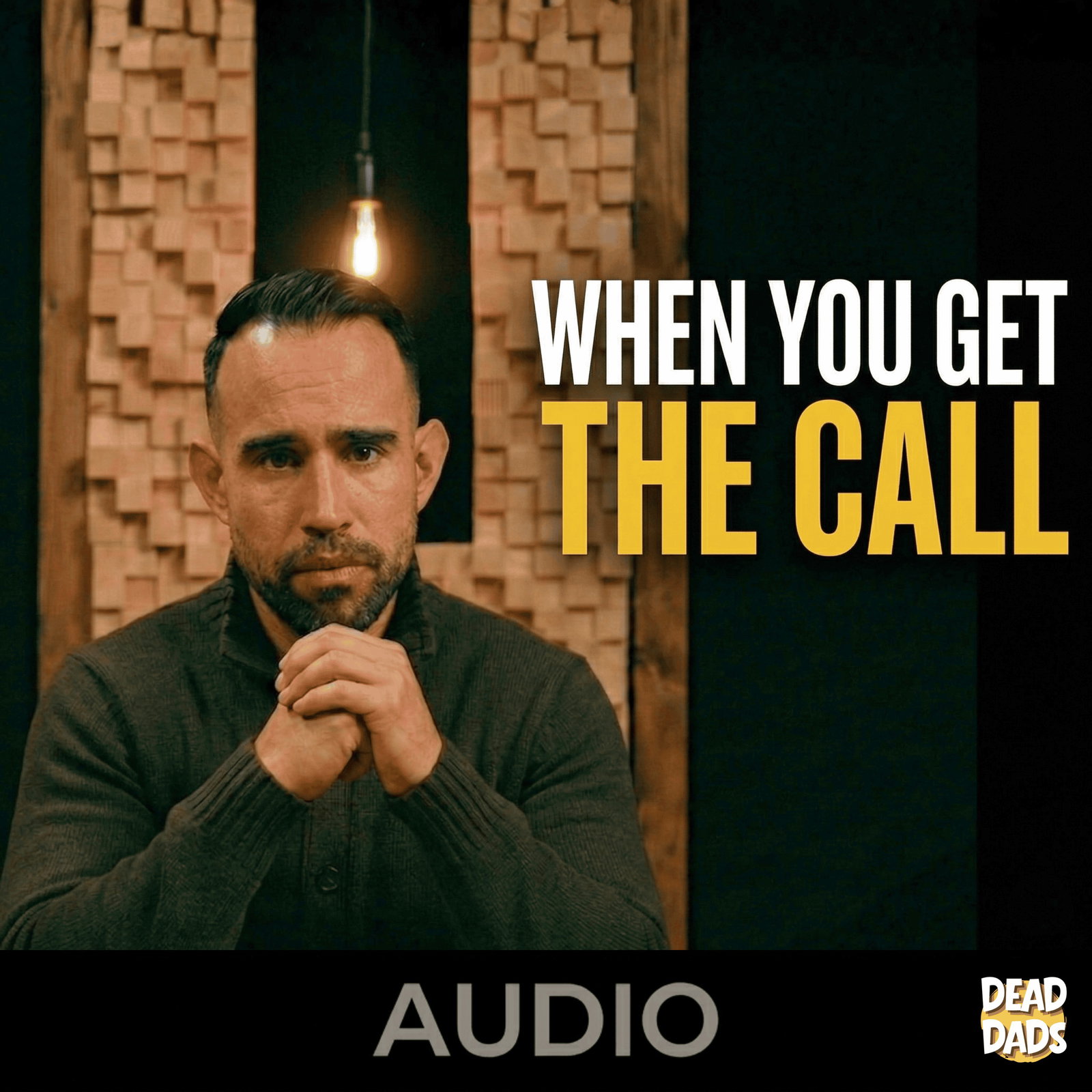
John Abreu describes receiving the news that his father died suddenly and having to tell his family. He talks about funeral arrangements, missing estate documents and the pressure to handle everything while grieving.
John Abreu’s dad died suddenly.
There was no will. No clear plan. No neat folder marked “open this when I’m gone,” which would have been nice. Instead, John had to tell his family, make decisions, deal with logistics, and process the fact that his dad was dead at the same time.
In this episode of Dead Dads, John shares what it is like to lose a father when nothing is prepared.
We talk about the call, the shock, the first few days, and what happens when funeral planning, paperwork, estate questions, and family responsibility show up before your brain has caught up.
John also talks about the pressure to be “the strong one.” The guy who stays calm. The guy who tells everyone else. The guy who handles it.
That role can land fast.
And it can get heavy.
This is also a practical conversation about father loss, estate planning mistakes, what happens when there is no will, and why the unfinished conversations with your dad can stay with you longer than you expect.
If you are dealing with the loss of a father, supporting someone who is, or trying to prepare your own family so they are not left guessing one day, this episode is for you.
🎧 In this episode, you’ll hear about:
- What it is like to get the call that your dad died
- How to tell your family someone has died
- What the first few days after losing your dad can actually look like
- What happens when there is no will or estate plan
- How to make decisions when nothing feels clear
- Why men often feel pressure to be “the strong one” after loss
- How unfinished conversations with your dad can stay with you
- Why grief can show up later in parenting
- What you can do now so your family is not left guessing
- How to think about grief, responsibility, and legacy after your dad dies
👨👦 About John and his dad
John Abreu grew up between Venezuela and Canada.
His father, John Abreu Sr., was a mathematician who believed in discipline, hard work, and being there for his family. He pushed John to think more deeply and expect more from himself, even when John did not fully understand it at the time.
In 2022, John’s dad died suddenly with no plan and no will. John had to tell his family and handle what came next.
Now he is focused on carrying forward what mattered, while being more open and proactive so the people around him are not left guessing.
It is a conversation about father loss, sudden death, grief support for men, estate planning, family responsibility, parenting, and the pressure many men feel to hold everything together after their dad dies.
Also, yes, there are laughs. Because grief is weird like that. Rude, honestly.
⏱️ Episode chapters
0:00 – Why Small Moments Hit Hardest
0:23 – What This Podcast Is
1:02 – Why Talking About Losing Your Dad Matters
2:42 – What You Carry From Your Dad
6:01 – The One Sentence That Sticks
7:24 – What You Might Do Differently
8:53 – What It’s Like to Get the Call
12:09 – How to Tell Your Family Someone Died
13:47 – When Responsibility Lands on You
16:27 – What the First Few Days Look Like
17:38 – What Happens Without a Will
19:17 – How to Make Decisions Without Clear Answers
20:14 – What “Doing It Right” Means
21:58 – How to Honor Someone So It Lasts
23:59 – How Grief Changes Over Time
25:45 – How Losing Your Dad Shows Up in Parenting
28:24 – The Questions You’ll Wish You Asked
31:50 – What You Can Do Now to Prepare
33:21 – What Grief Sounds Like Years Later
🖤 About Dead Dads
Dead Dads is a podcast for men figuring out life after losing their dad. Hosted by Roger Nairn and Scott Cunningham, the show features honest conversations about father loss, grief, identity, family, memory, masculinity, and all the strange stuff that happens after your dad dies. No grief brochure voice. No tidy healing arc. Just real conversations for guys who are grieving, remembering, avoiding, laughing, carrying on, or trying to understand what losing a father did to them.
You’re not alone.
☕ If Dead Dads has helped you feel a little less alone, consider buying us a coffee: https://buymeacoffee.com/deaddadspodcast
Follow Dead Dads:
Website: https://www.deaddadspodcast.com/
YouTube: https://www.youtube.com/@deaddadspodcast
Instagram: https://www.instagram.com/deaddadspodcast/
TikTok: https://www.tiktok.com/@dead.dads.podcast
Substack: https://substack.com/@deaddadspodcast
And listen to us here, or wherever you enjoy podcasts:
Spotify: https://open.spotify.com/show/4WWlXBPzgj151SFYRUZeSB?si=fe005fdf079249b8
Apple Podcasts: https://podcasts.apple.com/us/podcast/dead-dads-podcast-grief-support-for-men/id1867632438
New episodes every week.
Dead Dads Podcast is produced with the support of JAR Podcast Solutions, the branded podcast agency that helps organizations build shows people actually want to spend time with. Learn more at https://jarpodcasts.com/
Related reading: how to talk to your parents about wills and final wishes.
Related grief resources
What to do when your father dies · Grief support resources
About the show: Roger Nairn and Scott Cunningham share lived experience of father loss. Dead Dads is not a substitute for professional care.
Episode Transcript
Source: YouTube captions. Automatically generated captions may contain errors.
[0:00] The sentence that probably brings about the most emotion is when I have have like a really good moment or an experience that I want to try to share with him and to really think like I miss you and I wish you were here.
[0:24] >> Losing your dad sucks, but talking about it doesn't have to. >> We are not therapists professionally. We may like to think we are, but we are not. >> We give really good advice though, >> just not medically or therapeutically. Although, if you do feel better after it, that's okay. You can still you can
[0:40] still listen to us, >> but we will bill you for that. We're also not doctors. >> That's true. We're definitely not doctors. I once was a doctor but then was immediately removed from doctor status. >> You just had a lab coat on. Like, that's not a doctor. >> That That was the problem. >> Enjoy the next episode of Deads.
[0:58] So, Scott, we have a a new guest today and we're really excited to be speaking to him. Do you want to introduce him? >> Yes, I do. >> John, actually, John, I would like you to say your last name because I am practiced it several times and I think it's a brau. >> Yeah, you got it right. >> Good. Okay.
[1:14] >> I thought it was I thought it was pretty straightforward. >> Did you? Yeah. >> I was like, it's going to trip me up. And so, I'm glad that I I'm glad that I nailed it right away. Right off the top. John Abra and John and I know each other a little bit before, but not not so much. we met each other in town and such, but um John was also somebody that
[1:30] was keen to step forward. And actually, I want to ask you a little bit about I put out a post on LinkedIn. It's been spoken about before, but you mentioned you didn't really have many hesitations. So, why why did you choose to do this podcast? >> For me, coming on to this podcast is is
[1:46] twofold. Like, how how can I continue to celebrate and honor the life of somebody who I have like eternal adoration for? And then what can I share to help other people potentially in their moment of grief or as they prepare for a moment of
[2:01] grief, right? Like and like the the loss of one's parent is is something that a lot of us know is coming, but it's so easy to not, you know, face it head on or face it as a as an impending reality. But there
[2:17] are, I think, other pieces in there where in acknowledging that that is something that is coming, we can find and engage in in really positive and uplifting things. >> I mean, that's admirable. You're doing
[2:33] this for yourself. You're doing this for others. I think these are these are great motivations, and I really I really want to say thank you right off. >> So, John, I would love to learn about your dad. >> What's his full name, actually, including middle name? I'm always fascinated to know. >> Yeah. Uh, so my dad and is also John
[2:50] Abrao. Arthur, which is like just a Spanish name for Arthur. He still gave me Arthur as my middle name, not not Arthur in Spanish. And then Abreo and as you guys know, in like uh Hispanic or Lat Latino countries, we have two last names. So his second last name would have been Oibbo.
[3:05] >> And what uh what kind of guy was he? >> Very giving, extremely intelligent. Um he is one that just became friends with everybody. Uh yeah, he extremely hardworking and selfless uh to a detriment sometimes. Um
[3:23] very academically driven. So he um you graduates high school early, goes to like the pedagogy institute in Venezuela, become a teacher, randomly meets a Hungarian uh professor who
[3:38] invites him to do his PhD in Hungary at the time only knowing Spanish. Uh graduates top of his class, you know, >> in Hungary. >> Yeah. In math doctor in Hungary. um >> didn't speak a speak a lick of Hungarian.
[3:54] >> Not when he got there. >> Wow. >> Um yeah, writes his uh thesis in English and uh and then gets invited to do a posttock in in Russia in Moscow. Um I think that was enough cold for him and he didn't end up actually following through with that posttock but comes
[4:09] back to Venezuela and then uh is uh I I just recall him getting really excited about math and being a math professor which made growing up like at the time a little bit contentious but now I look back at it and I'm like you know you actually set me up with some of these things that you were trying to do. So >> that is the benefit of hindsight I'm
[4:25] sure. Yeah. At the time you're like geez this guy's on about the math all the time. >> Yeah. Yeah. None of my other friends had to like solve problem sets to get toys or something like that, but but I did. And then now I'm like, ah, you know, certain things that I can pull a little bit quicker because of that. >> I'm sort of building this me mental he's
[4:40] a professor. He's an academic. He's obviously gifted in math. Um, is he is he a fix it myself kind of guy? Is he a do-it-yourself? Is he is he around the house? Like as a dad outside of as a professional, what kind of a guy was he?
[4:57] There's probably like a costbenefit analysis that he had done in order to be like, "Hey, do I fix this myself or do I go and uh find a professional that can do this uh very into sports. He uh used to box actually growing up. Um the story that he said was he retired undefeated.
[5:13] We had three fights, but in the third fight he gets his nose broken and he's like, "This hurts too much. I'm out." And uh yeah, so we bonded a lot over sports as well. Uh baseball obviously you know part of the culture religion in Venezuela and uh who was his favorite
[5:28] player >> probably uh Bo Diaz was a catcher like I don't even think he played in the big leagues uh Dave Conpsion was a big red machine uh Cincinnati Reds of the 80s and um Andre Scalaraga probably up there too which
[5:45] >> was the big cat >> the big cat yeah >> Colorado Colorado Rockies >> yeah former Montreal Expo as That's right. >> Yeah. That's as well. >> What's the What's the quintessential story about your dad that you can't wait to tell your your you know, your new
[6:00] child? >> We were we were on the bus. We had moved to Canada at that point. We were on the bus somewhere. Um uh and we had had a great day and I can't even recall like exactly what it was that we did, but I turned uh to my dad and I said, "When I become a dad, I
[6:17] hope that I'm as good of a dad as you are." And he turned to me and he said, 'N no, you're going to be better because you're going to learn from my mistakes. And which was like, yeah, I mean, very impactful words. Then I remember that moment vividly. I again
[6:34] it can't it can started to replay in my head once he passed and then now I'm like, okay, well, I got really big shoes to fill. So, >> are there any mistakes that you've have definitely learned from him? There's definitely, and again, this is might even be part of
[6:50] the impetus of coming on here. He was very closed about certain emotions. He he wanted to, I think, embody stability and strength. And so sometimes that meant bottling things up or putting other people first to his detriment. I
[7:05] want to make sure that that's not something that happens to me that could potentially impact my wife or my child. that again the benefit of hindsight we get a chance to look back and be like okay this is something that I could have done better wouldn't change anything about my experience how can I take it
[7:23] and refine it >> is there one line that you can still hear your dad say in his exact voice >> yes uh when when I played baseball in Canada he would always cheer me on in Spanish and uh I I should have looked this up before coming on here but he had
[7:39] a nickname for me it it does not translate well into English. Uh but uh there was um I can't even remember the exact player who it was, but his nickname was Matagato, which translates directly into cat killer.
[7:55] Like I said, it does not translate well at all. Right. Anyways, that was his nickname for yelling. He's yelling like >> little league games kind of like when you're a young. >> Yeah. In Spanish killer >> like nobody knows but Yeah. and he was
[8:11] cheering me on in Spanish. And again, like I was one of those where like I had to reconcile like my own feelings because nobody else's parents were cheering them on in Spanish, right? But he was. >> Do you did you feel embarrassed a little bit >> at the time? >> Yeah. >> Yeah. >> Not Not just for the words, which you
[8:27] were kind of cognizant that maybe no one knew, but that he was different from other parents. >> I Yeah. Like I mean a little bit embarrassed. Like I think you always want to fit in and you know your parents don't do that, but now I'm like heck yeah. My dad was unabashedly himself and like what a great cultural connection to
[8:43] have. So >> benefit of hindsight, I'm I'm really happy he did that. >> His death. Can we talk about sort of that that moment and how exactly he he uh he passed? >> Uh June 22nd, 2022. Um, I was actually out for dinner uh
[8:59] with my now wife and I got a call from an unknown number and for whatever reason, usually I don't don't pick them up, but for whatever reason I was like, I should pick this up. So, I picked it up and uh, hey, is
[9:16] this, you know, relative of John Abrao? And uh, he and I was like, yeah. And he's like, okay, like where are you right now? we need to come find you. And I was like, well, no, like you need to tell me what this is about because you're now talking about my elderly
[9:32] father and you're tell you're not giving me any other details. And then he told me he's like, "Well, unfortunately your your father has deceased." >> And how old is he at this point? >> He would have been 75. Yeah. And
[9:50] um so yeah, so I I got that news and and it was a a police officer and you know they they had given me those news on the phone. We went back to our place. Cops came over told us and um he had had a we
[10:06] assume I mean the coroner uh cuz it happened in public. It happened at production sky train station and the coroner determined that it was a cardiovascular event. a heart attack, something of the sort. Uh my dad's health had been in in decline. He was active and and health
[10:24] conscious, but you know, not necessarily somebody who pursued fitness through his adulthood until maybe about close to 60 he started running and then he devoted himself to that. But he end he ended up
[10:39] moving back to Venezuela at one point and just that culture of running outside is not something that is as prevalent there. >> And um he actually got he got hit by a car and uh fractured his hip.
[10:55] >> So that kind of cuts down on the running. Then he got diagnosed with prostate cancer. He beat that and uh cancer was in remission. Everything was coming up aces there. But I don't think that the lockdowns did him well. Just
[11:11] not being able to he he preferred public transit to driving. He liked being out and about and I I don't think that that really served him well. So that might have accelerated. Now I'm just coming up with crazy theories but um of what might happen. >> That's what you do, right? Like I can't even imagine. Yeah. >> Yeah. Trying to find like still trying
[11:27] to find causality in some respects. And >> do you think do you think knowing exactly what happened would be helpful? >> No. No. like, you know, it's I I think we had the choice to contemplate things that maybe others
[11:43] don't. There was security footage and I said like that doesn't this doesn't help me at all. Right? This doesn't add any clarity. This doesn't tell me anything. Like if anything, this can make things worse. So it's 2022. You get this call and obviously you've discovered this.
[12:00] So, are you then I I don't think we've asked. Do you have brothers and sisters? >> I do. I have one brother. >> Okay. And so, was that your job to inform them or how did that go? >> I can't commend the police officers that were in charge of this enough of being
[12:16] uh assigned the responsibility of breaking these news to the family and they were extremely patient and the tact that they displayed was phenomenal. So they came to to our place first, mine and my wife and and then they asked, you
[12:34] know, is there anybody else in your immediate family that we need to inform? And then here are all these other resources as well. And we got a um like a case support worker immediately assigned to us. And uh and then so then we went to my mom's house and had my
[12:51] brother there as well. And I broke the news initially. >> Oh, so you had to tell both of them. >> Yeah. And then the cops came to kind of corroborate everything and tell us like what the next steps would be. >> How did you muster up the courage to sit in front of your mom and your brother and and break that news to them?
[13:06] >> I mean, it needed to happen. Like when my brother's 6 years younger than I am, my dad kind of assigned responsibility over him from the start. He's like, uh, you're going to be papa like you're brother. you're a little you're a brother, but
[13:22] you're a little guy, but you're also playing a bit of a dad role because we're six years apart. And my dad had a lot of siblings, too. And and so he kind of played a little bit of that role. So, I think he was maybe sharing some pieces that he f had found comfort with from from how he from his upbringing. And so,
[13:39] I think I just channeled what he would have done in that regard and kind of just face it head on. And you're the one that bears the brunt of it to protect others. >> You're suddenly your dad. >> Exactly. when when guys lose their dads, they're they immediately have to take on some sort of responsibility. And I'm I'm
[13:55] always curious what's the first sort of piece of responsibility where you now go like, I'm not cut out for this. I think, you know, being in that situation, it it's not something that I would say was comfortable, but it was something that I
[14:11] knew had to happen. And so to me, in my head, just by virtue of them, the police officers contacting me first, coming to me first to tell me the news, that um responsibility had been placed upon me already is is the way that I saw it. And
[14:28] so from then on, I actually I don't even know. It just kind of just happened. Like, did did I do I keep my my mom and my brother in the dark until the police officers get there despite the fact that I'm visibly distressed? You really have
[14:43] no options. And I think that's kind of the interesting question, which is of course you have to tell them, right? You can't not tell them and be like, actually, can you do it? I think but there's a there's a thought process, you know? You're like, how am I going to do this? How do I sit in front of these
[14:58] people? Like, do I sort of do I do I write? I don't know. There's a there's a process of breaking this down into actionable out elements that I think is incredible. But I think just as a pause like what a tremendous amount of challenge that was. And so just to
[15:13] acknowledge that that is something that I mean having to tell others about the passing of somebody is a unique scenario even in this podcast world. And so I want to acknowledge that's a that's a huge weight. Maybe just as a followup. So you've done this which we acknowledge the difficulty and so do you now feel
[15:31] like all of the responsibility is on you like not only are you telling them but hey let's get started with everything else like is all of his death your responsibility in your mind now because you were the one that got told first. So maybe to play place some context here.
[15:47] Initially when we moved to Canada, my brother came with my mom. He was younger. So she did a lot of the work here as we were going through the immigration process and I stayed back with my dad. So I think as part of that, as much as I love my mom, my brother had gone grown closer to my mom and I had
[16:04] grown closer to my dad. >> And that kind of remained into adulthood. So I think that organically we just kind of split up the responsibility of of my brother and my mom relying on each other a little bit more for kind of that emotional support whereas I took our took on the more
[16:22] logistical operational support of everything that comes >> after. What were the few days afterwards like? What was what were the sights and sounds of you know he's passed we we all now know um how did you guys get on with
[16:40] you know the next >> or buried or how did it all >> Yeah and this was part of like again also the the reason that I wanted to kind of share the story and and hopefully set other people up for success as well. But I I realized how much I lost in terms of not just like my dad, but he's like the final stop of
[16:57] like that emotional support to to me. Like he was always my confidant. He's I could go to him for anything. You you you're you real it was like one of those first moments for me where it was like this is not coming back like in life like that realization of like there's
[17:13] nothing that you can do to bring this back. >> There's a finality to it. >> Exactly. That's a great word. I think uh that was like the thought that keep kept recurring in my head and then there'd be fleeting thoughts of like okay well what do I need to do and like you know do I need to go and organize his bedroom and
[17:30] it's just like little silly things would pop up like that and then also like he didn't have a will and he never communicated his wishes because that was not a conversation that he wanted to approach again we spoke about it at the beginning of the podcast death is not a fun topic and and So he
[17:49] that's not something that he wanted to approach. So then now I'm starting to dig of like how can I best celebrate him and give him a final resting place and a lasting
[18:05] legacy that can truly honor him in the way that not just I want to honor him but that he would also want to be honored in. And so that there was a million thoughts bouncing around and then trying to find space in other
[18:21] things to feel normal and have life go on and how do I revel in the fact that I was quite privileged with the type of parent that I had. But it's funny, you jump into these I what I think I hear you jump into some of these achievable
[18:37] tasks so quickly. There's a sense of like, okay, how do I without any sort of sense of his wishes land the plane of perfectly putting him to rest? And so you're like, well, I can't do that now, but maybe I will organize his room. These idea of like these things that
[18:53] seem like such like actually I'll probably he probably would have wanted me to mow the grass, so I might just mow the grass. Just mail that quick. you wouldn't want me like you just jump into these achievable tasks I guess to kind of reassure yourself like I'm going to get some of the things I can do some of this stuff >> and I'll put off for a few more minutes
[19:10] like >> do I bury him how do I do that like where do I go the the questions just start to pile up that I understand >> how how do um Venezuelans celebrate death >> so here's another thing too is that my dad like I moved here when I was 10
[19:26] right so as much as I am Venezuelan I am Canadian there's no playbook for me to try to follow here, right? Like in terms of trying to honor him in a way that was uh culturally sensitive to being Venezuelan. So I was like, I'm just going to do my best in the way that I
[19:42] think would be worthwhile to celebrate. >> And would he want it to be culturally relevant to a degree? I'm sure he would have. I realized that I I didn't do him any disservice, so I feel good about that now. Uh but yeah that that's part
[19:58] of the loss is like not only again like confidant you know dad go to him for anything biggest cultural connection. >> So what did you end up doing knowing again there's no playbook there's no set there's no will like you have a lot of stuff to do how did you lay him to rest and then what's that process been like
[20:14] after that >> in in trying to find the right way of doing it. We looked at everything we looked at do we do like the casket burial? Do we do um I'm going to like a green burial was something else that we look at like oh my dad might like that and like
[20:29] >> oh yeah it's like a >> what is what is a green what is green burial cuz we haven't talked about that yet. It's more environmentally sound, right? Like is that the >> There's there's some interesting things too. Like I don't know what what does it mean for you? >> What what attracted me to even just exploring the idea was the idea that
[20:46] from my understanding of it. You're buried in a plot, but you don't have your own defined resting space. And the idea is that it's like you're buried with a a shawl or a wrap, so it's easier to decompose. You kind of go back to the earth. Typically what they do is is uh
[21:03] they'll you know seed flowers or it'll be under a tree and so you kind of have this peaceful natural landscape with maybe a bench that you could come and remember. As much as I liked um the uh in theory I like the idea of a green
[21:18] burial and and my family is all on board as well. I actually realized that I wanted a place to come and know that an essence of him was there discreetly. Like I wanted that, right? And so like maybe a little bit selfish there. So we did end up getting him cremated. Uh we
[21:35] did end up going to uh North Vancouver Cemetery closer to us. Um seemed to just make sense in terms of like a natural setting. Overall, I wanted something that would in like would be enduring as well. and something
[21:51] that would really pay respects to to him as a person and continue to, you know, make an impact. And so, actually, my family and I uh built or put together a uh a scholarship in his name at SFU. And so, it goes to a student that's part of
[22:07] the math department that has interest in pedagogy, so in teaching, and also is involved in the community. So, we have have had it running now for three years. It's the Dr. Johno Memorial Scholarship. What a great way to to uh honor him. It >> it's a process, right? Like I you know,
[22:23] I don't know your experiences were if if it was something that you guys had an idea of what the wishes were, but I I realized in going through it how much of it was based on me just being like I I still want just that validation from my dad of like you did good. And I I feel
[22:39] like I'm in a good spot now, but it was it was a weird >> It is a fascinating thing because there I mean I won't speak for Roger, but like to a certain degree I did. But also is who's the death for sometimes, right? Like is the death for him or is the
[22:54] death for you? You know, the truth of the matter, and we've had a guest actually that just said this, is like he's not there. I'm the one who's there. And so to a certain degree, I think this ability to honor your own wishes, even if you feel like they might not necessarily have been the wishes of your father, is important. My father was
[23:11] cremated and uh was that was sort of his indication. He wanted a cheap pine box and then he wanted to be cremated and we were left with a lot of his ashes with no idea of what he wanted us done with those ashes. So then I was in that same scenario as you which is like what makes sense to me and what makes sense to what
[23:28] I think he would have wanted. And honestly, I think we those ashes went in a couple of different places and then we just gave up. And it was a weird scenario trying to trying to think about what made sense. So I and the I applaud you for the decisiveness and the ability and also of course the honorable thing
[23:44] of making a scholarship, but I think it's it's a challenge to to balance out what you think you want and if you think that's what they want. And if you have to ignore that, that's that's okay. >> That's an admirable thing to do. I think it's an important thing to mention. So, how are you doing with it all now? I
[24:01] mean, it's been three three years and a bit. Uh, you've got a six week old lot of change, I can imagine. Sounds like you probably also get got married. It sounds like >> I think like uh I'm trying to be as stoic as I can around it. Probably still stems from the fact like, you know,
[24:16] copying my dad's habits of like trying to make sure that I always put that best foot forward. Why do you have to be stoic? >> Um, for everybody else. You got to be strong for everybody else, right? And but like I say that and I think that you know I have a very supportive partner
[24:31] who allowed me the space to grieve. Um have had an opportunity to just contemplate and and think of not just the loss but again the privilege and that we all know is is at one point going to to end and um and
[24:49] then being able to carry that forward and how he set me up to be who I am today. And so, yeah, there's times that I miss him. You know, there's there's um uh every birthday that goes by, every Father's Day, when I found out that I was going to be a dad, you know, getting
[25:06] married. Uh even now, like when I'm when I'm with my kid, right? And like >> he sounds like he would have been a great grandpa, too. >> Yeah, absolutely. I think he would have been a great grandpa. And like, you know, I I try to speak to my son in Spanish and I'm like, "What crazy
[25:22] nickname am I going to give you?" And uh you know um >> it's got to be something like killer >> killer snake >> something you're happy to yell out at the north fan >> as you're going through the motions with your son of diaper changing and feeding
[25:38] and rocking and all the things like has there been any moments where you're like oh I think I'm acting like my dad right now >> oh yeah definitely and I think part of it is actually the nickname so um again Venezuelan nicknames do not translate well at all but Um Ronald Akuna, you
[25:55] know, high level baseball player right now for the Atlanta Braves. Um one of his nicknames in Spanish is Ela Busador, which is the abuser. It just does not consider love at all, right? And uh so so I like find myself just kind of playing around like I try to speak to
[26:11] him in Spanish as much as I can. And uh so I I started calling him dees, which is a diaper abuser. And uh just to kind of play around uh with him. So, um I I definitely find myself like emulating my
[26:27] dad in some pieces. And like I think one of the the things that made it very clear for me that I did want to be a dad was getting a chance to look back and be like, "Wow, I had all of these amazing experiences. How great would it be to see that from the flip side?" And so that's what made me excited to be a dad.
[26:43] And so, and I start to understand it a little bit more. or there are things that I, you know, you just can't fully like you you you can see why, but you don't fully grasp it. You it's not entirely tangible until you're going through it. And so I every
[27:00] day every day I think I I'm seeing situations and I'm like, "Oh, he's hit this landmark where he's started to smile now. What would that have been like for my dad?" you know, >> do you have any I guess any of these moments so where you've suddenly been pulled sideways unexpectedly? Uh maybe
[27:17] someone's yelling out something uh inappropriate but >> I've started groaning more when I get out of a chair >> and I find that that's my dad. That was my dad's move. It was like, you know, >> I accidentally I have developed his laugh, which I I mentioned it's the
[27:32] weirdest thing to lose your own laugh and develop a laugh later in life. And so I started kind of laughing like him and it freaks me out. And so I'm just wondering if there's anything that you've noticed where maybe these sudden dad moments. >> Yeah. >> Have you've had anything like that? >> TM. >> TM. >> Yeah. Dad isms. Um,
[27:50] >> see that's way better. Dadisms. Take that. You can cut that out and claim it as your own. >> Um, like the dad jokes are real. And my dad uh loved that. Loved the like word play. loved um playing around with like
[28:06] different numbers and like you know getting excited about stuff like that like uh uh you know turned 41 this year and I was like oh it's a prime number birthday. I said that to my wife but nobody else cares. >> He's a mathematician. >> Yeah. Uh >> she's like oh yeah >> yeah neat neat.
[28:23] >> Um if you could spend one more day with your dad what would that day look like? what would you know what would be the perfect sort of you know way to spend it with them? Well, there would be a couple beers and there would be some Venezuelan
[28:39] aripas and uh it would probably be in a setup similar to this and I would want him to just tell me his story and I would want to know I think and I I mean I'd be curious to hear from you guys if you had a similar experience as well
[28:55] with with your fathers. When growing up, the focus is so much on you as a kid, you growing up, teenager, etc., you moving out. Uh, and so fathers almost exist in this limited
[29:12] amount of time where you have existed and and in only in the context of your existence. And so like I want to know like there was a lot of things that I found out about my dad or that even keepsakes that
[29:28] I went through and I found from my dad that I didn't know were around. >> And um >> what's an example of something that >> well like I'm wearing his graduation ring from the the pedagogic institute and uh I was like I I just wanted to know that this was here because this is such a good conversation starter. Like
[29:44] tell me like what was that like? You graduated early like you you know you obviously put a lot of effort into that. You obviously really enjoyed teaching. Like how does that become part of it? Like how did you get to school then, right? Did you work out five miles both
[30:00] ways like in really hot weather, I guess, in this example? But like tell me tell me the stories. Let me dig into it. Let me like peel back more layers of that onion to understand what more of your life was like growing up. And like not just like, hey, we had you and you
[30:15] were great and you added so much love to our household, but like >> what's your origin story? >> You want to get to know him. Yeah. >> Exactly. >> But it brings us back, I think, to you, which was something you said even in the beginning of this was trying to be a person slightly different than your dad,
[30:30] >> trying to be less stoic, maybe trying to be more like open. I feel that sense as well, I think. And I think a lot of our generation maybe is also trying to do this where some of our parents and their parents were a bit more tacitern and a bit more stern and a bit less effusive
[30:46] with praise or a bit less open. So I think I applaud you and I think I I think there's a lot of movement towards being a better or more open or more interested in their kids parenting. And I think that's one of the things I think >> that's interesting. That's that's probably really true is like our
[31:02] generation is going to be way more open. I think I hope >> Yeah. >> Um than our than our parents. Yeah. >> My mom who's still alive, she seems almost embarrassed to be like I don't really remember if we did those things. like she she's even with the best will in the world like it was a different
[31:18] style of parenting when I'm like did you have all this struggle with you know trying to get your kids to all these you know different sporting occasions she's like oh well we just thought you know we just thought you'd get there on your own kind of thing. So yeah I guess the the moral or the question that I want to want to ask to you is leaving here do
[31:36] you see yourself being a different father as you keep going forward? like does this conversation inform that or does part of this make you change the way that you want to approach informing your son of how you were raised and and those things? >> I think so. I think it was make it make
[31:53] me be a little bit more proactive and then in creating the environment where he knows or has access to a resource that gives him that background whether he chooses to use it or not is completely different. But I think now
[32:09] benefit of hindsight wish I could have done this. Can I do this in preparation? Shall my shall my child want it? And so, you know, things like getting wheels done. Yeah. My wife and I are getting our wills done so that it's not, you know,
[32:24] >> yeah, >> him trying to figure it out on the fly while grieving. as I'm trying to formulate my thoughts as we're having a conversation here. It's like maybe maybe I should be a little bit more proactive as opposed to, you know, leaving it up to him when he's 20 or 30 or whatever. >> Does it change the way you um have a
[32:42] relationship with your mom? >> I don't think so. I I think like I mean certain things that I I'm a little bit more appreciative of like uh you know this this exercise that I talk about is still not something I've done with my mom some for some reason like but I do
[32:57] think it is partly because the the lived experience is different. My mom was also to her credit like uh a little bit more proactive about some of these things as well to make sure that we in the eventuality have that space to
[33:12] grieve and don't have to try to figure out like are we doing this right and how do we do it? >> What's the what's the hardest sentence to say out loud about him even now? the the sentence that probably brings about the most emotion is when I have have
[33:28] like a really good moment or an experience that I want to try to share with him and to really think like I miss you and I wish you were here. Well, John Catkiller, >> thank you for uh thank you for being on
[33:44] Deads. you know, we really really appreciate your honesty and um you know, it's not easy having this conversation and uh we think it's going to be a lot of value for you know, the men out there. So, thank you for being open and honest and um it's just okay to be sad.
[34:02] It's okay. It's okay to be less stoic. It's okay to be vulnerable and say, >> I'm this is what I chose to do. This is how I did it. This is, you know, I'm I'm open to people hearing how I did that. And so knowing that you reached out, I want to say personally thank you. >> Yeah. >> Thanks for doing
[34:17] >> Yeah. Thanks for having me, guys. I I appreciate I think it's um it's not fun necessarily to talk about death, but I think that there are some silver linings in there where you know we can celebrate life. It's a weird, sad, funny past, but we're here to help
[34:36] you laugh. It's the Dead Podcast.
Full Transcript: Why Small Moments Hit Hardest
Show: Dead Dads Podcast
Guests: John Abrao
John: The sentence that probably brings about the most emotion is when I have a really good moment or an experience that I want to try to share with him, and to really think, "I miss you and I wish you were here."
Roger: Losing your dad sucks, but talking about it doesn't have to. We are not therapists professionally. We may like to think we are, but we are not. We give really good advice, though—just not medically or therapeutically. Although, if you do feel better after it, that's okay. You can still listen to us, but we will bill you for that.
We're also not doctors. That's true. We're definitely not doctors. I once was a doctor but then was immediately removed from doctor status. You just had a lab coat on; that’s not a doctor. That was the problem. Enjoy the next episode of Deads.
So, Scott, we have a new guest today and we're really excited to be speaking to him. Do you want to introduce him?
Host (Scott): Yes, I do. John—actually, John, I would like you to say your last name because I practiced it several times and I think it's... Abrao?
John: Yeah, you got it right. Good.
Roger: Okay! I thought it was pretty straightforward, but I was like, "It's going to trip me up." So I’m glad I nailed it right away, right off the top. John Abrao. John and I know each other a little bit from before, but not so much. We met each other in town and such. John was also somebody that was keen to step forward. I want to ask you about that—I put out a post on LinkedIn, and you mentioned you didn't really have many hesitations. Why did you choose to do this podcast?
John: For me, coming onto this podcast is twofold. How can I continue to celebrate and honor the life of somebody who I have eternal adoration for? And then, what can I share to help other people potentially in their moment of grief, or as they prepare for a moment of grief? The loss of one's parent is something that a lot of us know is coming, but it's so easy to not face it head-on as an impending reality. But I think in acknowledging that it is coming, we can find and engage in really positive and uplifting things.
Scott: That's admirable. You're doing this for yourself and you're doing this for others. I really want to say thank you right off. So, John, I would love to learn about your dad. What's his full name, including middle name? I'm always fascinated to know.
John: Yeah. So my dad was also John Abrao. Arthur—which is just the Spanish name for Arthur. He still gave me Arthur as my middle name, not the Spanish version. And then Abrao. As you guys know, in Hispanic or Latino countries, we have two last names. So his second last name would have been Oribo.
Scott: And what kind of guy was he?
John: Very giving, extremely intelligent. He is one that just became friends with everybody. Extremely hardworking and selfless—to a detriment sometimes. Very academically driven. He graduated high school early, went to the Pedagogy Institute in Venezuela to become a teacher, and then randomly meets a Hungarian professor who invites him to do his PhD in Hungary. At the time, he only knew Spanish. He graduated top of his class in Hungary.
Roger: In Hungary? A doctor in math in Hungary?
John: Yeah. And he didn’t speak a lick of Hungarian when he got there. He wrote his thesis in English and then gets invited to do a postdoc in Moscow, Russia. I think that was enough cold for him; he didn't end up following through with that postdoc. He came back to Venezuela and I just recall him getting really excited about math. Being a math professor made growing up a little bit contentious at the time, but now I look back at it and I’m like, "You actually set me up with some of these things you were trying to do."
Scott: That is the benefit of hindsight, I'm sure. At the time you're like, "Geez, this guy's on about the math all the time."
John: Yeah! None of my other friends had to solve problem sets to get toys, but I did. Now I’m like, "Ah, certain things I can pull a little bit quicker because of that."
Scott: I'm sort of building this mental image—he's a professor, an academic, gifted in math. Was he a "fix it myself" kind of guy? Was he around the house? Outside of his professional life, what kind of guy was he?
John: There's probably a cost-benefit analysis he had done to decide, "Hey, do I fix this myself or do I find a professional?" He was very into sports. He used to box growing up. The story he told was that he retired undefeated. He had three fights, but in the third fight he got his nose broken and he was like, "This hurts too much. I'm out."
We bonded a lot over sports as well. Baseball, obviously, is part of the culture and religion in Venezuela. His favorite players were probably Bo Diaz—who was a catcher—Dave Concepción from the Big Red Machine Cincinnati Reds of the 80s, and Andrés Galarraga, "The Big Cat."
Roger: What's the quintessential story about your dad that you can't wait to tell your new child?
John: We were on the bus—we had moved to Canada at that point. We had had a great day, and I can't recall exactly what we did, but I turned to my dad and I said, "When I become a dad, I hope that I'm as good of a dad as you are." He turned to me and said, "No, you're going to be better because you're going to learn from my mistakes."
Those were very impactful words. I remember that moment vividly. It started to replay in my head once he passed, and now I’m like, "Okay, well, I’ve got really big shoes to fill."
Roger: Are there any mistakes that you've definitely learned from him?
John: Definitely. And again, this might be part of the impetus for coming on here: he was very closed about certain emotions. He wanted to embody stability and strength. Sometimes that meant bottling things up or putting other people first to his own detriment. I want to make sure that's not something that happens to me that could potentially impact my wife or my child. With the benefit of hindsight, we get a chance to look back and say, "Okay, this is something I could have done better." I wouldn't change anything about my experience, but I can take it and refine it.
Roger: Is there one line that you can still hear your dad say in his exact voice?
John: Yes. When I played baseball in Canada, he would always cheer me on in Spanish. I should have looked this up before coming on here, but he had a nickname for me that does not translate well into English. There was a player whose nickname was Matagato, which translates directly into "Cat Killer."
Roger: Right.
John: Like I said, it does not translate well at all! Anyway, he's yelling that at Little League games when I'm young. He’s yelling "Killer" in Spanish and nobody knows what it means, but he was cheering me on. I had to reconcile my own feelings because nobody else's parents were cheering them on in Spanish.
Scott: Did you feel embarrassed at the time?
John: Yeah, a little bit. You always want to fit in and your parents don't do that. But now I'm like, "Heck yeah." My dad was unabashedly himself. What a great cultural connection to have. I'm really happy he did that.
Roger: His death—can we talk about that moment and how exactly he passed?
John: June 22nd, 2022. I was actually out for dinner with my now-wife and I got a call from an unknown number. Usually I don't pick them up, but for whatever reason I thought, "I should pick this up." I answered and they asked, "Is this a relative of John Abrao?"
I said yes. He asked, "Where are you right now? We need to come find you." I said, "No, you need to tell me what this is about because you're talking about my elderly father and you're not giving me any details." Then he told me, "Well, unfortunately your father has deceased."
Scott: How old was he at this point?
John: He would have been 75. It was a police officer giving me the news on the phone. We went back to our place, the cops came over, and they told us he had a cardiovascular event. It happened in public at a SkyTrain station. The coroner determined it was a heart attack or something of the sort.
My dad's health had been in decline. He was active and health-conscious, but he didn’t really pursue fitness until he was close to 60. Then he devoted himself to running. But he ended up moving back to Venezuela at one point, and the culture of running outside isn't as prevalent there. Then he got hit by a car and fractured his hip, which cut down on the running. Then he was diagnosed with prostate cancer. He beat that—cancer was in remission. But I don't think the lockdowns did him well. He preferred public transit to driving; he liked being out and about. I think that accelerated things. Now I'm just coming up with crazy theories, but that's what you do, right? Trying to find causality.
Roger: Do you think knowing exactly what happened would be helpful?
John: No. We had the choice to contemplate things that maybe others don't. There was security footage, and I said, "That doesn't help me at all. It doesn't add clarity. It can only make things worse."
Scott: It's 2022, you get this call. Do you have brothers and sisters?
John: I have one brother.
Host: Was it your job to inform them?
John: I can't commend the police officers enough. They were assigned the responsibility of breaking the news to the family and they were extremely patient. They came to my place first, and then we went to my mom's house. My brother was there as well. I broke the news initially.
Scott: Oh, so you had to tell both of them?
John: Yeah. Then the cops came in to corroborate everything and tell us the next steps.
Roger: How did you muster the courage to sit in front of your mom and brother and break that news?
John: It needed to happen. My brother is six years younger than I am. From the start, my dad assigned responsibility over him to me. He’d say, "You're a brother, but you're also playing a bit of a dad role because of the age gap." I think I just channeled what my dad would have done and faced it head-on.
Roger: You're the one that bears the brunt of it to protect others. You're suddenly your dad. When guys lose their dads, they immediately have to take on some sort of responsibility. What was the first piece of responsibility where you felt like, "I'm not cut out for this"?
John: It wasn't something I’d say was comfortable, but I knew it had to happen. In my head, because the police contacted me first, that responsibility had been placed upon me already. It just happened. Do I keep my mom and brother in the dark until the police arrive, even though I'm visibly distressed? You have no options.
Scott: That’s a tremendous challenge—having to tell others about the passing is a unique weight. Do you now feel like all the responsibility is on you? Not just the news, but everything else?
John: Initially, when we moved to Canada, my brother came with my mom while I stayed back with my dad. Because of that, my brother grew closer to my mom and I grew closer to my dad. That remained into adulthood. Organically, we split the responsibility: my brother and mom relied on each other for emotional support, while I took on the logistical and operational support of everything that comes after.
Roger: What were the first few days like?
John: That’s part of why I wanted to share this story—to help set others up for success. I realized how much I lost. He was the final stop for emotional support for me; he was always my confidant. It was one of those first moments where you realize: this is not coming back.
Host: Finality.
John: Exactly. That thought kept recurring. Then there were fleeting thoughts like, "Do I need to go organize his bedroom?" Silly little things. Also, he didn't have a will. He never communicated his wishes because death is not a fun topic. So then I’m starting to dig: "How can I best celebrate him and give him a lasting legacy?" There were a million thoughts, and in between, I was trying to find space to feel normal.
Scott: You jump into these achievable tasks so quickly. "I'll organize his room" or "I'll mow the grass." It’s a way to reassure yourself that you can do some of this stuff while putting off the big questions like, "How do I bury him?"
How do Venezuelans celebrate death?
John: I moved here when I was 10. As much as I am Venezuelan, I am Canadian. There was no playbook for me to follow in terms of being culturally sensitive. I just did my best. I realized I didn't do him any disservice, so I feel good about that now. But that's part of the loss—not just the confidant, but the biggest cultural connection.
Roger: So what did you end up doing?
John: We looked at everything—casket burial, green burials. A green burial was interesting because it's environmentally sound and you're buried in a wrap to decompose back into the earth, usually under a tree or flowers. But I realized I wanted a place to come and know that an essence of him was there. So we did end up having him cremated. We went to the North Vancouver Cemetery; it's a natural setting and it seemed to make sense.
My family and I also put together a scholarship in his name at SFU: The Dr. John Abrao Memorial Scholarship. It goes to a student in the math department who is interested in teaching and involved in the community. It’s been running for three years now.
Roger: What a great way to honor him.
John: It’s a process. I realized going through it how much of it was based on me wanting that validation from him of "you did good." I’m in a good spot now, but it was weird.
Scott: It's a fascinating thing—who is the death for? Is it for him or for you? One of our guests said, "He's not there. I'm the one who's there." I applaud the decisiveness and the scholarship. So how are you doing with it all now? It's been three years. You’ve got a six-week-old baby.
John: I’m trying to be as stoic as I can. Probably still copying my dad’s habits.
Roger: Why do you have to be stoic?
John: For everybody else. You’ve got to be strong for everyone else, right? But I have a very supportive partner who allowed me the space to grieve. I’ve had the opportunity to think not just of the loss, but of the privilege of having had him. There are times I miss him—every birthday, Father’s Day, when I found out I was going to be a dad, getting married. Even now with my kid. He would have been a great grandpa.
Roger: As you’re going through the motions with your son—the feeding, the rocking—have there been moments where you're like, "Oh, I'm acting like my dad right now"?
John: Definitely. Part of it is the nicknames. Venezuelan nicknames don't translate well. Ronald Acuña Jr., the baseball player, his nickname is El Abusador—The Abuser. It sounds terrible in English! But I started calling my son Pañales Abusador—the diaper abuser. Just playing around with him.
I definitely find myself emulating my dad. One of the things that made it clear I wanted to be a dad was looking back at my amazing experiences and wanting to see it from the flip side. Now I’m starting to understand it more. You don’t fully grasp it until you’re going through it. Every day he hits a landmark—he started to smile now—and I think, "What would that have been like for my dad?"
Scott: Have there been moments where you've been pulled sideways unexpectedly? Like, I've started groaning more when I get out of a chair, and that was my dad's move. I’ve developed his laugh, which freaks me out. Anything like that? Dad-isms?
john: Dad-isms! That’s way better. The dad jokes are real. My dad loved wordplay and numbers. I turned 41 and told my wife, "It's a prime number birthday!"
Roger: He's a mathematician!
John: Yeah, she was just like, "Oh, yeah. Neat."
Roger: If you could spend one more day with your dad, what would it look like?
John: There would be a couple of beers, some Venezuelan arepas, and a setup similar to this. I would want him to just tell me his story. When you're growing up, fathers only exist in the context of your existence. I want to know more. I found his graduation ring from the Pedagogy Institute and I’m wearing it today. I want to know, "What was that like? You graduated early, you obviously put in a lot of effort. Why did you enjoy teaching?" I want to peel back the layers of that onion and understand his origin story.
Host: You want to get to know him. It brings us back to what you said at the beginning—trying to be slightly different, less stoic, more open. Our generation is trying to be more interested in our kids' lives than perhaps the more taciturn generations before us. Do you see yourself being a different father going forward?
John: I think so. It makes me more proactive in creating an environment where he has access to his background, whether he chooses to use it or not. I wish I could have done this with my dad. Can I do this in preparation for my child? My wife and I are getting our wills done now so he isn't trying to figure it out on the fly while grieving.
Roger: Does it change your relationship with your mom?
John: Not really. I’m a bit more appreciative. My mom was actually more proactive about these things to make sure we had the space to grieve without having to figure it all out.
Roger: What's the hardest sentence to say out loud about him even now?
John: The sentence that probably brings about the most emotion is when I have a really good moment or an experience that I want to try to share with him, and to really think, "I miss you and I wish you were here."
Roger: Well, John "Cat Killer," thank you for being on Deads. We really appreciate your honesty. It’s not easy having this conversation, and we think it's going to be a lot of value for the men out there. It’s okay to be sad. It’s okay to be vulnerable.
John: Thanks for having me, guys. It’s not "fun" to talk about death, but there are silver linings where we can celebrate life.
Host: It’s a weird, sad, funny path, but we’re here to help you laugh. It’s the Dead Dads Podcast.