
 YouTube

 Spotify

 Apple Podcasts

 Amazon Music

 PocketCasts

 Castbox

 PlayerFM

 Podchaser

 iHeartRadio
My Dad Had Cancer. I Thought We Had More Time. | Dead Dads Podcast | Grief Support for Men
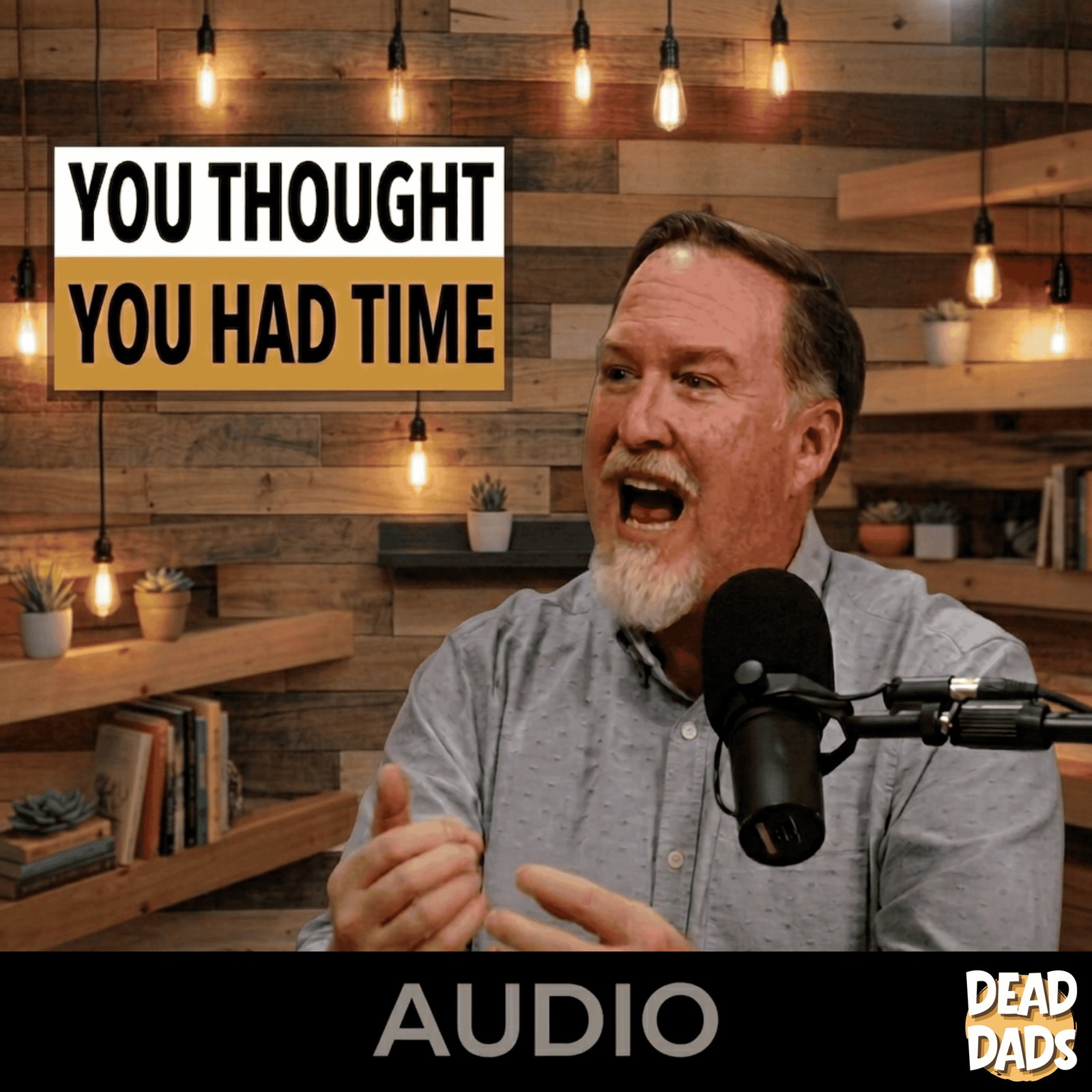
Tiff shares how his father George's cancer diagnosis shortened the time they thought they had, and what it meant to support his dad's choices while preparing for loss.
If your dad is still alive, you probably think you have time.
Time to visit. Time to call. Time to ask better questions. Time to say the thing you keep saving for later.
Most guys think that. Then the timeline shrinks without asking.
In this episode of Dead Dads, Tiff talks about losing his dad, George, after a fast-moving cancer diagnosis. What first felt like years quickly became months. Suddenly, he had to face the question a lot of men avoid until it is too late:
Do you chase more time, or actually use the time you have?
Tiff shares what it was like to watch his dad step away from treatment, choose how he wanted to live what was left, and prepare his family for the end. He talks about the hard doctor conversations, the final days, and the moment after your dad dies when everyone starts looking to you.
You become “the guy.”
The one who handles things. The one who keeps it together.
This conversation is for men whose dads are still alive, men watching their fathers go through cancer or another serious illness, and men already carrying the weight of father loss.
If your dad is still here, this may change how you spend time with him. If he is gone, you will recognize the weight Tiff is talking about.
🎧 In this episode, you’ll hear about:
- Why “I thought I had more time” is one of the hardest parts of losing your dad
- What to ask when your dad gets a serious diagnosis
- What it feels like when your dad decides to stop treatment
- How anticipatory grief can show up before your father dies
- Why many men go straight into logistics mode after loss
- What it means to become “the guy” in your family
- How to carry your dad forward through your actions
- Why spending time matters more than finding the perfect words
👨👦 About Tiff and his dad, George
Tiff lost his dad, George, after a fast-moving cancer diagnosis.
George was a driven, positive, old-school provider. A salesman. A community builder. A man who believed in hard work and showing up for people.
In this episode, Tiff talks about asking the hard questions, supporting his family, and losing his dad while trying to keep everyone else steady.
It is a conversation about father loss, cancer, responsibility, family, and the quiet pressure many men feel after their dad dies.
Also, yes, there are laughs. Because grief is weird like that. Rude, honestly.
⏱️ Episode chapters
0:00 – Why You Think You Have More Time
6:00 – Who Tiff's Dad Was
11:30 – The Cancer Diagnosis
17:30 – Getting Real Answers From the Doctor
23:00 – The Decision to Stop Treatment
28:30 – The Final Days
34:00 – The Moment His Dad Died
39:00 – Going Back Home
44:30 – Taking On Responsibility
50:00 – Becoming “The Guy”
56:00 – What He Wishes He Did Differently
1:02:00 – How He Carries His Dad Forward
1:08:00 – Advice for Men Grieving Their Dad
🖤 About Dead Dads
Dead Dads is a podcast for men figuring out life after losing their dad. Hosted by Roger Nairn and Scott Cunningham, the show features honest conversations about father loss, grief, identity, family, memory, masculinity, and all the strange stuff that happens after your dad dies. No grief brochure voice. No tidy healing arc. Just real conversations for guys who are grieving, remembering, avoiding, laughing, carrying on, or trying to understand what losing a father did to them.
You’re not alone.
☕ If Dead Dads has helped you feel a little less alone, consider buying us a coffee: https://buymeacoffee.com/deaddadspodcast
Follow Dead Dads:
Website: https://www.deaddadspodcast.com/
YouTube: https://www.youtube.com/@deaddadspodcast
Instagram: https://www.instagram.com/deaddadspodcast/
TikTok: https://www.tiktok.com/@dead.dads.podcast
Substack: https://substack.com/@deaddadspodcast
And listen to us here, or wherever you enjoy podcasts:
Spotify: https://open.spotify.com/show/4WWlXBPzgj151SFYRUZeSB?si=fe005fdf079249b8
Apple Podcasts: https://podcasts.apple.com/us/podcast/dead-dads-podcast-grief-support-for-men/id1867632438
New episodes every week.
Dead Dads Podcast is produced with the support of JAR Podcast Solutions, the branded podcast agency that helps organizations build shows people actually want to spend time with. Learn more at https://jarpodcasts.com/
Related reading: talking about your parents' final wishes.
Related grief resources
What to do when your father dies · Grief support resources
About the show: Roger Nairn and Scott Cunningham share lived experience of father loss. Dead Dads is not a substitute for professional care.
Episode Transcript
Source: YouTube captions. Automatically generated captions may contain errors.
[0:00] He had a shocked look on his face. And I realized that he hadn't really asked those detailed questions. Where I think it was by now it was like end of November. And they're pretty much if you do chemo, you've probably got 6 months. If you don't do chemo, you've probably got 3.
[0:17] And I was like, okay, well >> It's not funny pal, but we're here to help you laugh. It's the Dead Dads Podcast. >> Losing your dad sucks, but talking about it doesn't have to. >> We are not therapists professionally. We
[0:33] may like to think we are, but we are not. >> We give really good advice though. >> Mhm. >> Just not medically or therapeutically. Although if you do feel better after it, that's okay. You can still you can still listen to us. >> But we will bill you for that. We're also not doctors. >> That's true. We're definitely not
[0:48] doctors. I once was a doctor, but then was immediately removed from doctor status. >> You just had a lab coat on. Like that's not a doctor. >> That That was the problem. >> Enjoy the next episode of Dead Dads. I want to introduce you cuz this is a person that I
[1:05] I know. >> You're bringing to the table? >> I'm bringing to the table today. This is Tiff Daniels. >> Hey Tiff. >> How you guys doing? >> Fantastic. Welcome to Dead Dads. >> Welcome to Dead Dads. >> having me. >> Tiff, little bit of a spoiler alert cuz we did talk about this before. I know we're going to ask you a couple
[1:20] of questions, but the first question that I'm interested in is for those of you that don't know, we're relatively new to the podcast game. This is a concept that Roger and I came up with not that long ago. >> Right. >> As we're processing the grief of our own fathers and we were thinking that there just is not a lot of room in this space.
[1:37] Not a lot of people who are talking about this. So we did a post on LinkedIn thinking, I wonder who's out there that's interested and Tiff, you were the first. You were the first person You you almost it might have been, but it didn't seem you almost didn't hesitate. You
[1:52] came up and said and we looked for people that wanted to come and talk. Yeah. you said, yeah, I'll do that." You came up, you messaged me, I asked you if you were willing to chat, we chatted. So, I'm wondering, firstly, when you read that post, what inspired you
[2:08] to come and do that? Cuz we don't know each other that well. So, you're you're basically offering yourself up to be, you know, somebody new for a podcast. I'd like to know what was your inspiration? >> Um well, it's it's funny cuz prior to this all starting, you talked about tears and getting emotional. Now, I almost feel like I might get emotional
[2:24] now, but I think it's because my father meant so much to me. And I'm a father now too and I think about every day about what I learned from him that I can pass on to my children or be a better person to be
[2:39] a good dad, that kind of thing. So, I just saw it and I thought that just made sense to me to um to talk about my story, but I'm sure there's other people out there that have had some similar stories, shall we say? So. >> Well, we're really looking forward to learning more about your dad. But first,
[2:56] we want to learn more about you. >> Sure. >> So, let me ask you a question. When you get home at a at the end of the day, you've had a stressful day, what's something you like to watch or listen to that just calms you down? >> Um well, I work from home. Okay. So, I'm always home more I'm home a lot. I mean,
[3:13] I go out for meetings and stuff like that. And it's funny you say that because what calms me down if I'm at working home, I'm at home, my my wife's a teacher, she'll be off. I might be doing the laundry. When I'm folding the laundry, I'm listening to a podcast. >> Yeah. >> I've just kind of gotten into that a
[3:29] little bit. Yeah, exactly. So, that keeps me calm and relaxed and everything like that, but uh um yeah. >> Do you have favorites, ones that you listen to a lot? >> I'm sure you've heard it, Stuff You Should Know. >> Yeah, I am. >> Yeah. >> Every dad should listen to Stuff You
[3:45] Should Know. >> I just I I don't know how I got into it a couple years ago, and I'm just listening to it, I'm like, some of the topics are interesting, the two guys that run it are they do a good job. So let's talk about your dad. Yeah. >> What was his name? >> Uh George. >> George. >> Yeah. >> And how long ago did he pass?
[4:02] >> Three years ago. Sorry, almost three years ago. It was February 2022. >> So yeah, that's almost three years. >> So I'm wondering if you could start off by sharing a maybe a little story about something that really captures his personality and and and who he was.
[4:19] >> Um Well, I think George if I'm correct in Greek means farmer. So he though he wasn't a farmer, he loved to you know he loved gardening. Loved to have his vegetable patch in the summertime.
[4:36] So that was very much who he was and I I realized when before coming here Scott was saying bring some momentos if you want. I was looking for this photograph that actually was on That's not the photograph there but another one that was actually of him in
[4:52] like his OshKosh overalls. Exactly. So he had a pair of those that he literally probably had since before I was born. But he was still wearing them until just you know the last year of his life when he'd go work in the garden
[5:08] in the summer times. So but it's a great photo of him really smiling and happy and I think it was on the cover of the the pamphlet at his at his funeral and everything like that. >> like that as far as you can remember like when you were a kid was he always outside doing gardening stuff? Did that
[5:23] come to him a bit later? >> I think it a little bit later cuz he was probably really busy with work and family when he was younger. But as he got to retirement that was a big thing for him was the gardening. But I think he'd always have that that green thumb. >> Did you pick that up from him? >> No, not really.
[5:39] Well, maybe a little bit cuz I used to be a landscaper and I love mowing my lawn and that part of it. But I hate pulling weeds and I don't give me a garden cuz I'm like that's I'd rather go to the grocery store. >> can have a garden in Vancouver. It's so hard when your dad is good at something and oh that must have passed along to you.
[5:55] You think >> No. >> Not so much. >> I don't want to deal with gardens. >> So what was your dad's job in the family? Like what was his unofficial title? You know, what was his >> Uh he was old school money money money maker breadwinner whatever you want to
[6:11] say it like I had a pretty traditional My parents were pretty traditional where even though my mom worked she was a teacher. My father was a salesman and an entrepreneur but it was really about him going out there and and doing a good job to support the family and my father
[6:27] being in sales I'm I I'm in sales as well. I always remember years ago my mom saying to me one what most important things in my job is this is my mom saying this is making sure your father's happy cuz a good a happy salesman is a good salesman. And I'm like yeah you're
[6:42] right mom like it's about a frame of mind and a mindset and if you're in a good frame of mind you're a better sales person and you're able to help people find those solutions so >> Did he This is a presupposition but a lot of determined sales people have like a mantra. They have like a key thing that
[6:58] they use over and over again. I'm borrowing a page from Roger's dad here because I know he has an expression that he repeated over and over again which was what was it again? Supply and demand? >> Oh yeah supply and demand. He always just that was his thing like >> Right. >> Roger it's all about supply and demand. Supply and demand.
[7:14] >> Did your dad have anything that that it's a two-part question which is did he have anything he said and is it the thing that kind of haunts you? Can you still hear him say it? >> I I don't know if it's specifically about sales but power of positive thinking was was his his thing. >> That's great. >> And um
[7:30] Uh and I don't know if he said this is more of the I think it's an old um Uh maybe are you Rudyard Kipling poem if it's to be it's up to me or something. There's a saying in there. So, it's just about, you know, being self-accountable and being positive. That's my father was
[7:48] very much that type of person. So, it's definitely rubbed off on me, for sure. >> So, he's an entrepreneur. He's a salesperson at heart. >> Yeah. >> He's a gardener. >> Cultivates. >> He's a cultivator. >> He's a cultivator. >> Building this personality for him. Is there um a way that his friends would
[8:04] have described him? Like if you if we were to bring in anybody that knew him? Probably different than you knew him. >> Yeah. >> How would they describe him? >> Pushy. >> Yeah. Great. Sounds like a true friend. It's a true friend. And we'd like them to call in you >> My My father was very because of who he
[8:21] He was just He was always involved. He was He was He was He was um involved in charities and he was in Kiwanis Club and he was the president of of um cottages association that we we were lucky I'm very grateful, very lucky to
[8:37] have grown up to be able to go to a cottage or a cabin, shall we call it? There's an association for cottage Yeah, in in >> Yeah. >> where we were uh in Ontario where the cottage was. So, he then became the president of that and he's just always involved in the community and giving back. But, because of who he is as well,
[8:54] he's a bit of a bit of a go-getter. He'd be kind of in people's faces and like, "Let's move this along. Let's make this happen." and all this stuff. So, he could be considered a bit pushy, but I think people would say that, but they mean it in a positive positive light.
[9:09] >> Sounds like very like Napoleon Hill, Vince Norman Vincent Peale, like positive thinking, you know. >> Yeah. >> Did he have lots of friends? This is a hard thing for some men as they get older to keep these friend groups up. >> Yeah. >> But, he was a kind of a guy who had lots of social >> Yeah. Yeah. There was uh this funeral,
[9:26] there was a lot of people that were luckily we're still around cuz he lost, you know, the you know, you get older and you know, you lose a lot of you you Talk to my dad, he's like, "Oh, you know, so-and-so, they just passed away. I'm sorry, Dad." then, so and so just passed away. It happens a lot as they're Luckily, my father was 86. So, he had a
[9:43] good long life. >> Yeah. >> But, um there were still a lot of people at his funeral as well that knew him very closely, but also, um not as close, but just knew him through business or through his volunteer work and were like, "I'm going to go pay respects." >> Mhm. Did you
[9:59] um find out anything at the funeral that you were surprised? Cuz again, this is a guy you knew your whole life. >> Yeah. >> This is and I'm This happened to me a little bit, too, but people would come up and tell me the story about my father and I think like 80 years almost I've known this guy. I've never heard this story before.
[10:14] Was there any sort of like insight into his character that >> Yeah, that was a juggler. I had no idea. >> Any character insight that got that's been shined on the light maybe at the funeral or afterwards that you learned about him? >> Um that's a really good question. I don't Off the top of my head, I don't think
[10:30] so, but I met people that he talked about over the years that I'd never met before. So, I met them at the funeral. Oh, you're that person. Oh, you're that person. So, that Well, that was That was kind of cool to put a a face to a name of of people that were influences to him
[10:47] or he was an influence on them. >> It's a fascinating cuz their character continues after they pass. >> Yeah. >> I always think. And so, you're still I'm still learning about who my dad was. You know, he died in 2021 and I'm still learning a little bit like, oh, he was actually a slightly different person and
[11:02] I'll meet a new person sometimes that that knew him. >> When my dad died, it was interesting cuz a lot of my friends came out of the woodwork to tell me just how much he meant to them. Like he was like a mentor to them. >> Oh, right. Yeah. >> Although I would have had no idea. Like they they didn't necessarily have dads growing up and they didn't didn't really
[11:18] have like a you know, a formal mentor relationship, but they all came up to me were like, yeah, he Anyways, it was it was really touch touching to hear that. So. >> That's great. >> How did he go? >> So, it was 2022. So, >> Yes. >> post we're sort of out of the COVID era.
[11:34] >> Yeah. Yeah. So, >> Is he in this neighborhood? You said maybe like earlier. >> I grew up I'm I'm from Ontario originally. I've been out here 25 years though. >> Okay. >> Um and they he was uh in Ontario well for for his final days, but what for many, many years, of course. And um
[11:52] yeah, it was I think it was about the summer of 2021. My brother lives out and lives close by to where my parents lived. And and I would see my parents every summer cuz we'd fly back and go spend time with them at the cottage and and all this
[12:08] stuff. And uh he just seemed to getting older, but I'm like, "Okay, well, you are 85 and all this stuff." But he seemed just a bit thinner. He was always He was a runner. >> Mhm. >> Um he was always very um conscious about about eating well and everything like that. So, he was always more of a on a
[12:25] thin side. >> But you see the notice cuz you're going away and coming back. >> so I noticed and my brother said something. He said, "Dad, you know, he just seems a bit, you know, thinner." I'm like, "Okay. Okay." And then in the fall of '21, he started seeing some doctors and they're like, "Oh, uh you've
[12:42] got cancer." >> Mhm. >> And then in the fall, so I started going out back and forth a little bit more and it was interesting cuz I think I I don't know if if it happens with a lot of with people when when they get this news
[12:57] from a doctor if they they just gloss over it or not, but I talked to him and I'm like, "So, Dad, have you asked the question like what what are what are exactly are the routines you got to go through? What are what are the the um the the things you can do to either kill
[13:13] it or get over it or whatever, chemo, pills, this whatever it is." >> Mhm. >> Oh, well, blah blah blah. And I'm like, "But you haven't asked detailed questions. You're giving me just vague answers." >> Yeah. >> So, I ended up flying back a a of times and going with my dad to the doctor's
[13:28] appointments. >> You advocated. >> And and and literally was in one of them and and asked a question, so if he does this, how long what's the probability of success in life? If he does this, what's the probability? What's this? And we came out of there with definitive answers and he had this shocked look on
[13:45] his face and I realized that he hadn't really asked those detailed questions. >> Yeah. >> Where I think it was by now it was like end of November and they're pretty much if you do chemo, you probably got 6 months. If you don't do chemo, you probably got three.
[14:01] And I was like, okay, well, Dad, this is this is where we are and then of course like if you do chemo and you get 6 months, but I mean that's the the there's that 1 to 3% chance you might survive. >> Yeah, and it's not a fun 6 months. >> No, exactly. Yeah, yeah. So he ended up
[14:18] going, okay, well, I'm going to do chemo. I'd like to spend one more summer at the cottage, which is kind of our family home, shall we say? Cuz my parents got it back in the late uh sorry, mid 60s. So I grew up lucky enough to go there as a kid. My parents
[14:33] loved it there. They kind of retired to there uh stuff like that and they've got lots of friends in the community there as well, but um when uh when he was told this, he was like, okay, I'm going to do chemo. And we're like, okay, great. Let's do that and and then
[14:49] Dad, I got to fly back to to back home, see my family, but I'll be back out for Christmas. We'll spend Christmas together. Bring the whole family out. And then after about 2 weeks later or after two or three weeks into the chemo, he's just like, I can't do this. This is like just destroying me.
[15:04] >> Right. >> And he's like, I think I realize that this is this is it. So, you know, I don't know how long I'm going to survive on all this stuff, but I'm not going to do chemo and I'm just going to spend my final days doing the most I can and so I just flew back and forth back and forth to see him as much
[15:20] as possible. >> Yeah. You said something which actually I think is more common. Which is um the scenario where the person that's dying has been presented with this information and then has to inform their children. >> Yeah. >> And doesn't have enough information and
[15:37] the children are incredibly frustrated because it's pure, it's clean, you've been given a diagnosis. Like why can't you remember this information? And I think it's very common and then I think to myself being like again you mentioned this at their
[15:52] age everybody they know is getting sick. >> Right. >> And dying and so they're hearing the prognosis that they know >> Yeah. >> of their friends have had, right? And so >> And they're also, you know, runners and they have a healthy lifestyle and it's like it gets on me and I'll be fine and
[16:08] >> Right. >> And also you know you know not wanting to worry you and the family and grandkids. >> Yeah. >> I used to get them to record it. That's what I used to do cuz I wasn't able >> what? >> Their doctor's visits. I would get them to just turn on their phone and get them to just leave it in the middle and say, you know, >> Yes.
[16:23] >> make sure that the doctor knows. >> I can't imagine my dad knowing how to turn on a cell >> And there was some comedy because >> Isn't that just to call people? Isn't that what a phone is for? You call people? >> Yeah, exactly. >> Or if you get stuck in your car and you need to call you know >> We could do a whole segment on FaceTiming your parents. >> Yeah, exactly.
[16:38] >> But it was incredibly it was a gift because I think the pressure to deal with the realization of of the prognosis and also to try and capture the scientific information >> Right. >> seems like a bit difficult and I'm I'm sure your dad did his best he could but also great that you were able to come
[16:54] out there and and advocate for him. >> Yeah. >> So when he when he when he told you that >> Yeah. What was your reaction? >> Uh I think my first reaction was like, okay, that makes sense as to why he's even thinner than he normally is.
[17:09] >> Right. >> Um >> Were you alone? >> But when he told you are you wondering when he told you that he was going to stop chemo cuz he made the story up. he was stopping >> or when he first found out he had cancer? >> When he first found out he had cancer. >> Yeah. Yeah. >> I can't remember exactly where I was or
[17:25] how he probably told me on the phone cuz yeah, I was out here. Um I I think my first reaction was okay. What are we going to do? Like what what And that's kind of who he is, too. He like okay, you've got a problem, let's find a
[17:41] solution. >> Got a problem, how we going to work through this? Got a problem >> Who's going to help you? What do you have to do to help yourself? Who's going to provide support? Stuff like that. >> we know? What do we not know? >> Exactly. So I think that was what was going through my mind and it was just okay, I've got a a family with young
[17:56] kids. Uh I have responsibilities here. How do I make sure I can go see him um and work with my brother who's in the same community but just also make sure and then support mom as well. So it's just all those different things about well, what do I do and how do we
[18:13] you know get involved in >> You get into kind of logistics mode >> Yeah. >> it's a logistic almost robotic in a way. >> Yeah, but also shocked I'm assuming. >> Yeah. Yeah. >> Because it's your dad and you also have to be there for your family and there for your mom and it's it's a lot.
[18:29] >> Yeah. >> What did you tell your kids? Or did you tell your kids? >> Um >> Cuz they would have been three or four years ago so doing the math here. >> Yeah, three years ago. So >> You know, they're in their just teens, right? Early teens. >> Yeah. Yeah. Yeah. So so my my daughter would have been nine and my son probably
[18:46] about 11 at the time. Um I think we told them that that Pop Pop as they called him um had cancer and he's not well and uh but you know, at that age nine, 11 they're like okay, someone's sick so
[19:03] when are they going to get better? And I don't think they realized it until pretty much when it happened because even though we went Chris cuz it was February when he passed. So we were there for Christmas. So he was still we spent time with them and everything like that. And then
[19:18] um but I think they realized that they may or may not see him again, but then they came out to see him in his final days. So >> I only ask cuz I think it's you know you're going to be around your kids and all this stuff's going to happen. And then when do you start to inform them? How do you keep them engaged? How do you give them time,
[19:34] I guess, is the question that I'm wondering. >> And in those final days uh where where was he? Who was around? What was the What was that like? >> Oh, his final day he was in a hospice in Collingwood, Ontario. And uh so we were
[19:50] able to luckily able to get him into that one into one. >> Um so he said I'm I'm going to stop chemo. >> That was about um middle of December, first week of December he said I'm stopping chemo. >> Right. Okay. >> And uh and then we'd already planned to
[20:05] come out for Christmas to see him and my mom and my brother. And and then uh we were there for like uh 10 days or something like that and we spent every day together and and uh and then everyone went home and then
[20:22] I think it was probably uh early January when then he was able to get a bed at the hospice and he was still moving fine. Like right up to his last days his his brain was totally amazing and his wits about him and everything it was just his body shutting down.
[20:38] >> Yeah. >> Yeah. But we were we were all there in in the room the day like a few hours before he passed. And then uh Sorry. >> No, it's all right. And just what >> Mhm.
[20:57] >> And then that day >> Water if you want. >> Thank you. And then and then we were there and we saw him for a number of days in a row. And then he just like he could just see he he was like I'm ready to go. I'm ready to go. He'd say that over you know a number of times. We'd always talk
[21:13] about stories and everything like that. And then there was that day where he just said to the nurses, I think today's the day. Now and I think he was he was so weak and everything like that. He didn't have get made. But he they basically that the nurses
[21:30] like you know he doesn't need made. We can just give him some extra morphine tonight and he won't wake up. And so we we all knew that we're saying goodbye to him right then and there. And we went back to the house where my mom lives, where I used to live and uh
[21:46] and just had dinner and then we got a phone call about 9:30 that night from the hospice to say he'd passed. Yeah. >> It's such a weird time to go back to the home. >> Yeah. >> Afterwards, I found that like I don't know what your experience was like. Like you go into that house and it's
[22:02] different. >> Mhm. >> And then you just like well what what is the thing what are we supposed to do? >> Right. >> Yeah. >> What's the what activity did you guys >> protocol? >> Yeah. Did you guys sit? Did you did you share stories? What did you do when you got home? >> Yeah, we did. We shared stories but we got dinner ready and
[22:19] so on the the my son's birthday. >> Day. >> Yeah. Wow. So >> His his dad died on his sister's birthday. >> Right. >> So so we're basically going back to have birthday dinner for my son and but we knew it was all happening but we're kind of hoping even though they gave him
[22:35] extra morphine we're thinking could it maybe happen at 12:01. >> Could you just pause it for a little bit? >> And literally my wife looked at me and I said well, you know, maybe that might that's what might happen but it might not. And then when we got the call about 9:30 I think my kids had maybe gone to bed by then anyway. But we got the call
[22:50] and I'm like oh well, it is actually on his birthday. So whatever. >> Eastern I don't know I was doing the >> Yeah. >> So then you're tasked with you're in the house and you're up in seeing Ontario. Did you were you the one who had to start to do the paperwork? Was there
[23:06] other people cuz it's such a weird process which is like, "Okay, that's over." and then there's this work >> Right. that pops up. >> Yeah, no. I I did most of that cuz one my think my mom was a bit I mean she was she was helpful, but I took it on. I no disrespect to my brother, but it's more my forte to deal with paperwork and
[23:22] stuff like that than his. So, I was the one driving a lot of that to to happen, but yeah, you don't realize all the different things you got to do and >> Right. >> and you got to communicate with and the lawyers and the and the funeral home and and the government and all this stuff.
[23:38] Yeah. >> And in in the moment when it happened, you you know, you've got all this family around you and your mom >> Yeah. >> It sounds like you're the you your job in the family is you you got you you got your together. >> The glue? >> Yeah. >> I'm curious, did you feel this pressure
[23:55] to hold it all together? >> Um yeah, I I believe I did. Yeah, I I can't deny that. Um I can be very stoical, so I just thought, you know, it's just it is what it is and we but but you you know with with death you
[24:11] you're you're going to grieve and it's going to hit you weird times and >> Well, we don't know. >> Well, yeah, sorry. You don't know, but yeah, you just deal with it. >> Yeah. I think that's it. You just kind of deal with it. >> Right. Yeah, I'm interested in this cuz I think not to put your situation in mind, the
[24:26] processing and the grief kind of to put on a shelf a little bit while you get into the paperwork. >> Yeah. >> And there is a certain amount of workload that you can kind of distract yourself with where you're eliminating all these things and closing up all these loose ends. Was there a >> Checking things off. Yeah, I can't tell
[24:42] you once it's done. >> You got the clipboard out. >> Yes. >> Yeah, this is all good. This is done. >> What's the status on the on the cell phone bill? >> Yeah, have we cleared that? >> Yeah, exactly. >> Yeah. >> Was there a process or was there a time when you you started to realize that that checklist was starting to become
[24:57] shorter? You're starting to think, "Okay, I'm actually getting through this checklist and now this the the rest of time is starting to stretch out and were you aware of any difference in yourself as that started to happen? >> Um well, I think the check like
[25:13] I think initially think that checklist is something you're going to check off in a few weeks and you realize, "Oh my god, this is like a one to two to three-year process when someone passes between all the all the stuff that happened." >> Just proving that they're actually dead is just a lot of work. >> Exactly.
[25:28] >> How many copies of the death certificate do I have? >> Oh, I know. How many do I have and was I mailing out to people and photocopying and send it to other people and and and organizations? >> And each organization has a different rule for submitting it and what like there should be a a
[25:45] Anyways, there should be a law where it's just all the same. >> I know. Yeah. So, you he's in the jelly of the month club? Yeah, we're going to need to see a certificate of your death. Yeah, exactly. We're going to keep sending him the jellies unless yeah, it's >> There was some subscription thing that I was like, "Okay, I'm you're on the phone. Like, sorry, my father's passed
[26:00] away. He does not need this anymore. Can you please cancel?" "Oh, well, I'm not sure yet. Can you give me a Why would I make this up? Right. He's not watching Netflix anymore. >> Exactly. >> I can promise you that. >> Yeah. >> And going through his computer like my mom would like she never touched
[26:16] computers. Like literally the only time she was on a computer when my father said, "Ruth, come over here. I need you to type something up cuz I'm doing this and can you just at least type a little bit and and then I'll send it." And so, she didn't touch computers. So, all of a sudden I had to get in control of his computer because he was you know, he was
[26:33] on Facebook and he had all these different things. So, it's like, "Well, how do you shut this down and what do I do about this?" And and so, that was and and again like again no disrespect to my brother, but he my brother's not even super tech savvy. He'll probably listen to this. Don't be jerk. Anyway.
[26:51] But >> No, he'll admit it. >> He'll agree. >> He'll be a guest next week. >> Yeah, exactly. Actually, he's right there. HE'S HERE TODAY. ANYWAY, so so they're just doing that stuff, but we know the whole process takes takes a while, but I think to
[27:07] then the besides the checking things off and doing the things you've got to do and not realizing how much stuff there is to do, it then was yeah, how do I make sure that my children are okay? >> Yeah. >> Um my wife who's become very fond of my
[27:22] father is okay, but more importantly, my mom. >> Mhm. >> How's my mom doing? >> And how was she doing? >> And uh she's she's pretty strong, but she had a you know, strong on the outside and falling apart on the inside at some level, but uh I think she I think like
[27:39] they were you know, it's it's always I always look back and I think there was a number of times over my life where I'm like, "God, if I can have a marriage and a partnership like my parents had, I'd >> Right. >> I'd be doing pretty well." And cuz they were a good partnership and a loving
[27:56] couple and uh just a great a great couple. >> Mhm. >> Anyway, so I was like, "Okay, I got to make sure my mom's okay." And I'm and she was very stoic about too. She's like, "Okay, well, I got to keep moving on." But then she as the days went by, she's like, "I don't know if I can." She
[28:12] started getting very like um con- concerned with herself whether or not she can survive without her partner in crime. >> Mhm. >> Like the day-to-day tasks were starting to stack up and she was like, "I don't know how to >> she It's the emotional. I've now lost my part my my lover, my best friend, my
[28:29] husband like >> Right. >> I've lost that person who keeps me going and is part of everything I've done. They were very both very social and and and uh you know, with a lot of friends and stuff and now they're her partner's not there. So, luckily my mom was in a
[28:46] in Collingwood where she grew up originally and then they moved to Toronto and I grew up in Toronto and then they moved back to Collingwood, Ontario later in life and she retired there, but she still had all these old friends from way back when or who'd moved there them themselves later in life. So she had a a
[29:03] good network, but I'm like, "Mom, you've got all these friends here and you got all these" She's like, "Yeah, but they're not my best friend." Yeah, so. >> And it's hard to hear that from your mother. I I I don't know what your relationship was like with your mom, but
[29:18] that is like the ultimate level of vulnerability to hear that from your parents in that moment. It's just I I Yeah. I found it heartbreaking when I I felt I heard something similar coming from my mom as well. It's just you know what's coming. You You You see it. >> Yeah. >> You know, you see it coming, but when it
[29:34] actually happens, you're just like, "Whoa." >> Yeah. >> Do you Do you become your dad in a certain way? Like she she has needs. >> Yeah. >> The certain things, right? Like >> Yes. >> And who's she going to ask? And you're obviously no shade against your brother
[29:50] cuz that's >> Yeah. >> But it's sounds like it's going to be you and so there's this scenario where you're like suddenly not only is my dad not here that I have to deal with, but also I am him. >> Right. >> Is that a scenario or >> Funny enough you say I am him. Like one of the feelings is when my dad passed
[30:05] was like, "Okay, I'm the oldest male in my family." Right. I am now my dad. >> Wow. >> And my own uh um uh like belief of like, "Oh my god, I'm suddenly like, wait a second. How old am
[30:21] I? Oh my god. Okay, my dad died at 86. Oh, that's like 30 years from now for me." Right? Or at the time it was 33. I'm like, "Oh, wow. I'm closer to death than I am birth." Okay. >> Okay. >> This is uh this is interesting now.
[30:37] >> Put down the cheeseburger. Somebody said it to me and I don't know this is the visual that I always get is like until your until your dad dies at least there's a roof on your house. >> Yeah. >> And then suddenly there's no roof and the rain just lands directly on your head and you're like, oh so I'm the one
[30:53] now, I'm the roof. >> I yes. >> Suddenly I'm shielding everything. >> I love that. >> And the feeling of pressure is is considerable I think when you're starting to think Jeez, what do I need to do to be am I ready for that level of of responsibility? So I did that hit you
[31:08] or is that just hitting you now? >> Oh no, that hit me very soon after he was passed. Like right away pretty much. I was like, oh wow, that's now I'm I'm my dad. I'm the oldest guy. I'm now Yeah, got to be a rock and be whatever. >> And and where are you where are you at
[31:24] with that now? >> Um Yeah, I don't think I'm as emotional as I was when I first kind of had had that realization. Um I think what's happened over the last, you know, coming to terms with my father's passing it's to me, people when
[31:42] someone I found when when he passed people like, oh well what do you what do you think about all the memories and you think about all the stuff in the past and tell me some stories and I'm like I I'm I'm not the best storyteller per se or I don't think I am, but I'll be
[31:57] like, it's not about the stories I had with him, it's about who he helped me become in my head and my heart. And and and I think every day I try to be a good person cuz I think my father my father was not perfect by any means, but he had
[32:14] in general he was a good good person. And so I'm thinking, okay, what are all the things he's taught me and so that's where I'm at now. It's like let just keep living his memory is now in me in my mind and my heart and be the person I could be
[32:30] that he probably was trying to instill on me when I was 8, 10, 12, 18, 20, 32, you know, etc. >> Right. >> Is there a thing that you do or have done recently that you're surprised that you actually went, "Oh, this is this thing that I got from him." So, it
[32:46] sounds like there are some obvious things that you can you can draw a line to, but I'm sometimes there's these surprises you're like you've inherited a a trait or a characteristic or even a way of thinking >> Yeah. >> that has come to light just recently or after he passed? >> Oh, I I definitely could say there is. I
[33:03] I can't think of like top of my head now, but 100% there's like you'll do something like, "Oh my god, that's what my dad would do. That's what That's what my dad would say." Or >> Oh, that's the weirdest >> Oh, that's the weirdest. My dad would have said that. I'm like, "God, turning into my father." >> And then your wife And then your wife calls it out and is like, >> Yeah. >> "You sound like your dad."
[33:18] >> Yeah. >> Yeah, exactly. >> He I never like your laugh is a natural thing that is that is in you, right? It's supposed to come from you and and a creation of everything. And up until my father passed away, I laughed one way. >> Right. >> And then after he passed away, I I was somebody told me this thing and I
[33:36] which is a which is his weird chuckle which never was my laugh before and I'm like you know, I was turning around like where is he? >> Where's that sound coming from? >> This laugh came out of nowhere >> Yeah. >> and my sister she was like >> What was that? >> she was like, "What was that?" And Oh. And it was it was the weirdest
[33:52] feeling of just being inhabited. >> Right. >> And this laugh still exists. I can't get rid of it. I can't shake it. >> He's in you. >> He's in you. >> Yeah, exactly. >> spooky thing. >> Yeah. >> So, yeah, so I glad you don't have that paranormal scenario. No. You said something, too, which I thought
[34:09] was interesting, which is that there's a servicing of other people's expectations. They come up to you and they want stories about your dad and they want to know things. >> Right. >> How do you handle that when someone comes up to you and says like, "Oh, you know, I'm sorry your dad died." And then they're performatively kind of talking
[34:25] to you about your grief. >> Right. >> Is that a familiarity to you and how do you handle it? >> Um when you just mentioned your story about, you know, thinking your father was behind you with your laugh, um the one thing that's happened to me is more very vivid dreams where your my father, and
[34:44] now my mother cuz she passed as well, couple years ago, is that they'll come into my dreams or they'll be in a dream and I will literally wake up thinking that they're in the room. Like it's it's not like a dream like it's like they inserted themselves into a dream like
[34:59] from above or from wherever they are. Right. Right. Um so I have those every once in a while and I wake up really emotional like, "Oh my god, I miss my father so much." or my mother. And but it's like cuz the dream is just not that normal weird dream where people just happen to be in a room, right? This is
[35:14] where they talk to you. And you're like, "But Dad, you're dead." "Oh, it's okay. I came back today to talk to you about something. Oh, do you remember when this happened?" or whatever. And it's one of those sort of conversations. I have those. >> I wish I had those. >> Have you ever You've never had your dad in a dream before? In fact, when when he
[35:31] passed, one of the things I asked him or I said to him was, you know, "Hey, you don't know where you're going, I don't know where you're going, but I just hope that at some point you come and visit me in whatever form." And I always think about like, could it come in a dream or could it be something So it's interesting you say that. I was
[35:46] like, "Dude, that'd be That'd be awesome." >> Yeah. It hasn't happened yet. >> It is awesome, but it's very emotional cuz you wake up from the dream and you go, "God, that's a dream. Damn it, I wish that was not a dream. I want him to be here now to continue the conversation." Cuz usually it's a it's a real-life conversation or a dream conversation you're having.
[36:02] >> Yeah. It so it feels so real. >> There's no There's no Yeah. >> The And then and then suddenly it it ends and you're like, "But but I had more questions. I wanted to talk about something else or whatever." and it's >> Did you see the Blue Jays, you know? >> Well, exactly. He would have loved to have seen the Blue Jays. I mean
[36:17] He was a huge fan. He would have loved to have been there for that. >> Yeah. Mine mine, too. >> Yeah. >> Um so, you know, we're we're now at the stage of of of grief. Where do you think you're at with it all right now? And and how do you think you're doing with it? Because it's not there's
[36:33] no rule book. >> Yeah. >> Um What what you know, what what do you think is is is working for you? What is Is there anything missing? Like where do you Where do you think you're at right now? >> Cuz what I heard from you say, which I think is very admirable, it's about checking in on my mom, and she's passed
[36:48] away now. It's about checking in on my wife. It's about making sure my kids are okay. It's about There are a lot of people with whom we care and are concerned with keeping the roof over their heads. >> Right. >> Um the roof is not over your head. How do you How are you managing with that? Like
[37:04] is that Do you let that hit you, or do you kind of keep that in a in a scenario? What's the What's the real-life feeling for it? >> Well, I think the real-life thing is is making sure that my children still know about their Pop-Pop, right? Because there was only a
[37:19] short period of time that they had with them, and but I know and obviously him being out east and we're out west, so when they spent time together, it was only for a few weeks at every year, but it was pretty condensed, and they would go and do stuff and all that. So I just want to make sure that they've got photos, and we talk about him and and
[37:36] and that those types of things. So to me, that's really important, so that they can as they grow, they still remember when they were six and nine before he passed and and all that stuff. >> Do you have a special thing that you do to keep him alive? Like do you have a commemorative like you mentioned his
[37:52] birthday maybe or something? Is there a Is there a date of the calendar that kind of gets reserved for him? >> No. So there's not a special date. >> No, no. It's just >> But it's just to keep him alive, I think in the memory, right? >> But it it's keep him alive, and I do reference him, and and my children do
[38:09] have photos of them with my father and with my mother, um like in their rooms, and they're there, so they see them. And I'm actually really Sometimes I'm surprised because, you know, kids' rooms can be a disaster zones, and things can go missing and then but seems that those
[38:25] photos don't go missing. They're always there and they've always made sure. So and when I bring them bring up my my my father and mother and and they still have fond memories and they they talk about things like my daughter sometimes gets a little bit emotional like I miss
[38:40] nanny and papa. Um but uh I think that's to me is the big thing is making sure that they're thinking about them. You brought some photo photos with you. >> Yeah. I would I would love to uh learn more about them. >> Yeah. So this is actually a photo of me and my brothers as little kids and even
[38:57] though it's not my father, the reason it's important is because we're sitting in an old wooden boat on Lake of Bays in Ontario where the cottage is. >> So which one are you? >> So I'm the super blonde one in the red like pajamas. >> I like this outfit.
[39:13] I like this outfit. >> I mean this is like 1974 or five probably. >> Beautiful. >> And then my younger brother's in the middle and my older brother's at the top. He passed away a number of years ago. So so it's just three and I think so it's it's about seeing my brothers
[39:29] but it it reminds me of my mom and dad because of being lucky enough and grateful enough to be able to go to a a summer cottage and spend time together as a family and friends and everything like that. >> Six and a half, two and four.
[39:44] >> Right. >> And you're no stranger to grief. You're mentioning several things. Your mom's passed away. >> Yeah. >> Your older brother's passed away. >> Yeah. >> So >> My mom passed away two years ago. >> Yeah. >> Uh or almost two years ago and then my brother >> years after your dad.
[39:59] >> Like sorry, one year after my >> One years after your dad, yeah. >> And my older brother passed away in I think it was 2003. >> So oh so >> Yeah. So quite a few years back. >> Difficult situation. Yeah. Parents outlived Yeah. >> Yeah. Yeah. So that was that was hard.
[40:15] >> You have grief in your life. You have had some familiarity with This is not your first experience. >> Right. No. No. Um and then the other photo, this is my father. I can't remember He um like I told you he was always volunteering, getting involved. He actually went to Ottawa and got a caring caring Canadian
[40:34] award. >> Wow. >> Is that what the medals are for? Yeah. >> Yeah. Oh, wow. >> So So he got medals as being a caring Canadian and he got I think the the governor general at the time I think his last name was Johnson. I can't remember his first name. >> Wait, do you know all the governor generals? >> You got it right. It was Johnson.
[40:50] >> Johnson and he was the one that gave him the award and and and all the stuff. And I think it was one of those things. It's funny cuz I don't know if he kind of was like nominated himself but then needed somebody else to officially nominate him. But uh
[41:05] you know, he was for I was proud of him and and I didn't go. My brother went with my mom to the ceremony. Um I'm trying to think it was what year it was. It was about Is there Is there a date on that? >> No, doesn't look like it. >> Still the queen. >> Yeah, it was I think it was about over
[41:21] 10 years ago when that happened. >> Wow. >> And uh yeah. >> Looks like a happy guy. >> Does. >> Looks like a salesman. >> Yes. >> Yeah. >> Well, he sold himself into these awards. >> He did. I think he pretty much did. >> That's not your average salesman. >> No, I think he did. I think he yes.
[41:37] >> Caring Canadian. >> Yes. Yeah. Um >> So I'm curious, what's something you know, you've had all this experience with grief. What's something that you think men in particular should know about grief that you think not enough of them
[41:54] do? >> Yeah. Uh well the the piece of the grief part is you're right, you just don't know how you're going to feel. Um actually a piece of advice I got from a female family friend was and it wasn't
[42:10] after my when my brother passed uh almost over 20 years ago or almost was more for my father because I think her her mother had passed a number of years before is that um you know you never you never really get over it. You always grieve. It's just the the time frame of
[42:29] that grief gets shorter and shorter. Like when someone first passes you could be a mess for days or weeks or hours but over time you know you might just have that 30-second bit of like oh my god I really miss my dad and you get all emotional and then
[42:46] 29 seconds later you break you you get past it. So it's more of that that is the one thing that I kind of learned and it and it's true like over time you still remember them and you still grieve but you don't get in that emotional state for an extended period of time. >> Right.
[43:01] >> I think that's the one thing that I've I've learned. But then all the stuff you got to do to deal with someone's passing. Oh my god no one teaches you that. >> That's like what the heck? >> It was interestingly my dad died just before Christmas and so we you know we had this
[43:17] big gap of time to do and we started making a checklist and but anyways we eventually got to the funeral home and and the guy at the funeral home said oh here's a binder and he gave us a binder of it was a checklist essentially but and also everything we were supposed to do and I said why they should give it to
[43:33] you in the hospital. >> Right. >> Yeah. >> Like cuz you're going to get it you're going to get into it right away. >> Right. >> It's one of those things you just immediately start doing. >> Yeah. >> But it's you know I thought it was fascinating it was a funeral home that has that. Like they know and they're so organized and they're like well what
[43:50] yeah why didn't someone tell me this beforehand? You get to the funeral home and they're like oh now this is what you need to do. >> Yeah. Was it was was he buried or cremated? >> He was buried. >> Yeah. >> Yeah. >> And and in Ontario? >> Yes. >> Yeah. >> What was that process like? >> So he'd pre-organized because my brother
[44:05] passed in 2003 he'd already bought a plot, so my brother was there and then he bought a plot for for himself and for my mom and actually for me and my other brother. So, there's actually like five together. >> Woah. >> And my wife's like >> Wait, he bought all of those in advance?
[44:21] >> Yes. Oh, yeah. >> What? They give you a deal? >> Yeah. >> Was it a good Yeah, it was probably >> it probably was. >> Oh, I think so cuz I think I I think I saw how much it cost and well, that was back then and I think it'd probably five times as much today. >> It's real estate. >> it is real estate. >> That's a much more what I think of as
[44:36] like traditional scenario cuz a lot of your grieving I think someone's influenced by movies. >> Yeah. >> Up until the point it happens, you're all you've seen probably is he maybe again, you've been you've either heard from somebody or a lot of it I thought about I realized I was just borrowing
[44:52] from Hollywood films. >> Right. And Guns N' Roses music video. >> Yeah, exactly. Yeah. >> But no, we were all there and you're standing there over the casket and there's a hole in the ground and there and they did lay it down and we put roses on top of the casket and you're right. So, it wasn't it was in April.
[45:07] So, it was like two months later after his passing that he actually got married buried and then we all went out as a family and then, you know, my my older brother was right beside him and then and then because it's from the town my mom grew up, there's all these relatives
[45:23] that are in the same um >> So, they all came? >> They all came, you know, in spirit. Yes, they were all there. >> And they were all standing on your burial plot. >> Yes, yes, yes. Exactly. Exactly. >> That does sound a lot like a Hollywood film with the red roses. >> Oh, yeah, we put Yes, we did. Yeah, we
[45:38] put roses on his casket before it went down into the hole into the ground. >> Interesting. >> Yeah. >> We We didn't get We didn't get to experience that. >> Yeah. But there's not tons of people and I don't think everyone was fully wearing black. >> Like it was Yeah. Some small nuances.
[45:53] >> Yeah, some small nuances. >> No black veils, um but there was a lot of tears. >> of limousines. >> No, there's not a lot of limos. I I think there was a single limousine. No. And we we pulled up in cars and I think we drove on to other people's graves. Like, you know >> Oh, really? >> Well, I don't know. It's just kind of
[46:08] like there's there was one SECTION >> THIS OUT. >> YOU'RE LIKE, "WHERE DO WE PARK HERE? There's all these stones everywhere. Where do we go?" >> Where did I park again? >> So, Tim, you've you've been so generous with your time and and sharing so many
[46:24] amazing stories. We wanted to ask you a few kind of, you know, rapid-fire type questions. Which is doing rapid-fire when talking about we're talking about Yeah. >> Um curious, you know, what do you miss most about your dad? >> He was just such a strong, good person.
[46:40] I just I'm I actually probably think I miss the most is not being able to spend more like I I miss the fact that I didn't spend more time with him in his final days cuz I lived out here and he lived 3,000 miles away. >> Right. >> So, I think that's what I miss the most. Like, I was thinking before you coming
[46:55] here that you know, you you get into our age and you're probably financially in a better position than you were 20 years ago or hopefully you are, right? And there was a point in my last few years of my dad's life where he was like he said that he one of his lifetime goals would go to
[47:12] the Galapagos. And so, I remember him telling me this like 20 years ago. >> Yeah. >> And I was like and then about a number of years ago I'm like, "Geez, I'm in a position now I could financially take my dad to the Galapagos." But now he's like but when I got to that position it was
[47:27] like, "Oh, he's too old now and he's too frail." >> And >> he just doesn't want to do that. He doesn't even want to go to the states cuz of uh health care costs and what ifs, right? So, it's kind of like, "Oh, so that's not going to happen." That's I'm really bummed out. >> Yeah. >> I couldn't make that happen. I wanted to make that happen for my dad.
[47:43] >> So, spending time >> Just spending Just spending time. >> Yeah. >> Yeah. >> Is there one thing you wish you said to him before he died? >> No, I cuz I think I said a lot of it over the years. I'd always like birthday cards and Christmas and just I would write my dad, say, "Dad, I'm thank you
[47:59] very much. Thank you for being the person you are because you've helped me, I think, be a pretty good person." Sorry, that sounds I'm tooting my own horn here, but I think it it's just he's just helped me be who I am today, which I think is a positive thing. So, I would thank him
[48:15] for that. Yeah. >> Is there something that he did that bothered you? And I don't mean like huge, I just mean like my dad used to just constantly have this terrible expression. He'd say, "A job worth doing is worth doing well." And he would do it at the worst times.
[48:31] And it would just like I'd be sweeping and he would do that. And I'm kind of fascinated by there are sometimes these things that that are there that live with you forever. >> Yeah. Um I There'd be times where he was just too
[48:46] damn serious in life. Where he's like, "We got to get this stuff done." And I'd be like, "Dad, have a sense Excuse my language. Have a sense of humor. Come on. Let's just It's okay. Chill out. It doesn't have to be done. We can do that. Like just it's okay. Enjoy." I didn't see He was
[49:02] very serious. He had a good sense of humor, but he didn't laugh as much as I'd like to have seen him laugh. Because I And I think part of it was because I think he felt like it was his responsibility to be serious and be the man of the
[49:19] house and do things that help others. And maybe sometimes laughter and joy wasn't part of that. It was like getting things done. And I think that's that old school sort of mentality, right? >> Definitely. >> yeah. >> Yeah. Um what is something that you just
[49:36] immediately think about and start laughing about when when it comes to him? >> So, so a funny story was that my wife and I were visiting my parents and um at the time I'm uh in my 30s and my father's I guess at the
[49:53] time Oh jeez, somewhere in the 70s, whatever. Anyway, this is before we had my wife and I had kids and we'd been together I think six or eight months and we're visiting for about 10 days. I think it's about three days in and the cottage is about 30 minutes away
[50:08] from the closest town and one day I my dad's like I'm running going into town to run some errands. I go go to my dad on the side. Hey dad, um could you get some condoms for me? I mean, I had to get up the gumption just to ask my father. I'm no I'm a grown man. He's a grown man, but still asking
[50:24] your old dad to go buy you some condoms is like I was like I don't know. And he's like, oh yeah, sure, no problem. Like he didn't even blink. Like he was expecting it. He didn't even blink. He was probably inside going, yes. >> Yes. >> I taught him well. I taught him well. So
[50:40] he goes and he comes back and like couple hours later after done all his errands and he's like he's like he's like Jeff, so go to the room. He's like so Okay, young attractive woman that I had to ask to find out where they are. That was odd. I was like oh dad, I'm sure you
[50:55] were a gentleman about it. He's like, oh yeah, it was fine. He's like, but I got it. So we're all good and he hands me a box of 40 condoms. >> COSTCO. >> I'M LIKE, THANKS DAD. I'm like really impressed that you think that's going to happen that much. I'm only here for a few more
[51:12] days. >> Can I Here's a follow-up question. They're sized. Did he Did he flatter you or did he >> I think he was he was punishing me. It's a bit too realistic in my opinion. >> The fact he gave >> a box of 40. I was like, oh my my wife
[51:27] thinks it's hilarious too. She And then I And then I come back, honey, check out the size of the box he bought. >> Amazing. >> If someone just lost their dad yesterday, what would you say to them? >> Wow, they lost it yesterday.
[51:44] Stay positive. I think that's the number one thing. Stay positive. It'll be okay. You'll get through it. >> Well, Tiff, thank you so much for sharing George for introducing us to George. Thank you so much for sharing your experience. I think it's been incredibly valuable to
[52:01] learn about your experience and we really appreciate you being as, you know, vulnerable as as you have been. >> Absolutely. I want to say thank you as well because again, top of the podcast I mentioned this, you stepped forward right away. And things that I didn't know at that
[52:17] time that your mom had passed, that your brother had passed, like we're going through some time you've had to and you're doing that with somebody with whom you don't know that well. And so thank you for having the trust. The trust that we could find some humor and find some
[52:32] interest and joy, but also just to let us hear a little bit more and and I I really mean this, I appreciate it. Thank you. >> Well, if I'd walked into some small dingy basement with crappy little microphones, I'd be a little more concerned, but this is all like professional do, right? So,
[52:48] no, no, it's I I No, thank you thanks very much. Um no, actually I and I think this is this is something my father would probably have done for his father if the technology existed or maybe he did, but you know, he probably would have done
[53:04] the same thing if he was given the opportunity cuz I think it's about you know, respecting them and and learning from them and honoring them at some level. >> Yeah. >> Pleasure. Thank you very much. >> Absolutely. Thank you. Appreciate it. >> It's a weird sad funny podcast, but
[53:21] we're here to help you laugh. It's the Dad Bods Podcast.
0:00 Speaker 0: He had this shocked look on his face, and I realized that he hadn't Speaker 0: really asked those detailed questions Yeah. Speaker 0: Where I think it was by now. Speaker 0: It was, like, end of November. Speaker 0: And they're pretty much if you do chemo, you probably got six months. Speaker 0: If you don't do chemo, you probably got three. Speaker 0: And I was like, okay. Speaker 1: Losing your dad sucks, but talking about it doesn't have to. Speaker 2: We are not therapists professionally. Speaker 2: We may like to think we are, but we are not. Speaker 0: We give really good advice though. Speaker 1: Mhmm. Speaker 1: Just not medically or therapeutically.
0:40 Speaker 1: Although if you do feel better after it, Speaker 0: that's okay. Speaker 0: You can still you can still listen to us. Speaker 2: But we will bill you for that. Speaker 2: We're also not doctors. Speaker 0: That's true. Speaker 1: We're definitely not doctors. Speaker 1: I once was a doctor, but then was immediately removed from Speaker 1: doctor status. Speaker 2: You just had a lab coat on. Speaker 2: Like, that's not a doctor. Speaker 0: That that was the problem. Speaker 1: Enjoy the next episode of Dead Dads. Speaker 2: I wanna introduce you because this is a person that I, I know. Speaker 1: You're bringing to the table? Speaker 2: I'm bringing to the table today. Speaker 2: This is Tiff Daniels. Speaker 1: Hey, Tiff. Speaker 0: How are you guys doing? Speaker 0: Fantastic. Speaker 0: Welcome to Speaker 1: your Dead Dads. Speaker 1: Thank you. Speaker 2: Welcome to Dead Dads. Speaker 0: For having me. Speaker 2: Tiff, little bit of a spoiler alert because we did talk about this before. Speaker 2: I know we're gonna ask you a couple of questions, but the first question Speaker 2: that I'm interested in is, for for those of you that don't know, we're Speaker 2: relatively new to the podcast game.
1:28 Speaker 2: Mhmm. Speaker 2: This is a concept that Roger and I came up with not that long Speaker 2: ago Speaker 0: Right. Speaker 2: As we're processing the grief of our own fathers, and we were thinking that Speaker 2: there just is not a lot of room in this space. Speaker 2: Not a lot of people who are talking about this. Speaker 0: Mhmm. Speaker 0: So Speaker 2: we did a post on LinkedIn thinking, I wonder who's out there that's interested. Speaker 2: And, Tiff, you were the first. Speaker 2: You were the first person. Speaker 2: You you, almost, it might have been, but it didn't seem. Speaker 2: You almost didn't hesitate. Speaker 0: Right. Speaker 0: You came Speaker 2: up and said and we looked for people that wanted to come and talk. Speaker 0: Yeah. Speaker 2: And you said, yeah. Speaker 2: I'll do that. Speaker 2: You came up. Speaker 2: You messaged me. Speaker 2: I asked you if you were willing to chat. Speaker 2: We chatted. Speaker 2: Yeah. Speaker 2: So I'm wondering, firstly, when you read that post, Speaker 2: what inspired you to come and do that?
2:08 Speaker 2: Because we don't know each other that well. Speaker 2: Yeah. Speaker 2: So you're you're basically offering yourself up to be, you know, somebody new for Speaker 2: a podcast. Speaker 2: I'd like to know what was your inspiration? Speaker 0: Well, it's it's funny because prior to this all starting, you talked about tears Speaker 0: and getting emotional. Speaker 0: Now I almost feel like I might get emotional now, but I think it's Speaker 0: because my father meant so much to me. Speaker 2: Right. Speaker 0: And I'm a father now too. Speaker 0: And I think about every day about what I learned Speaker 0: from him that I can pass on to my children or be a better Speaker 0: person to be a good dad, that kind of thing. Speaker 0: So I just saw it, and I thought that just made sense to me Speaker 0: to Speaker 0: to talk about my story, but I'm sure there's other people out there that Speaker 0: have had some similar stories, shall we say.
2:51 Speaker 0: So Speaker 1: Well, we're really looking forward to learning more about your dad. Speaker 1: Mhmm. Speaker 1: But first, we wanna learn more about you. Speaker 1: Sure. Speaker 1: So let me ask you a question. Speaker 1: When you get home at a at the end of the day, have had Speaker 1: a stressful day Mhmm. Speaker 1: What's something you like to watch or listen to that just calms you down? Speaker 1: Well, Speaker 0: I work from home. Speaker 0: Okay. Speaker 0: So I'm always home. Speaker 0: More I'm home a lot. Speaker 0: I mean, I go out for meetings and stuff like that. Speaker 0: And it's funny you say that because what calms me down if I'm working Speaker 0: home, I'm at home, my my wife's a teacher, she'll be off. Speaker 0: I might be doing the laundry. Speaker 0: When I'm folding laundry, I'm listening to a podcast. Speaker 0: Love it. Speaker 0: So Yeah. Speaker 0: I've just kinda gotten into that little bit. Speaker 2: To that five dollar bill before Speaker 0: anything because it's really Speaker 2: working out.
3:33 Speaker 0: Yeah. Speaker 0: Exactly. Speaker 0: So that keeps me calm and relaxed and everything like that. Speaker 0: But, Speaker 0: yeah. Speaker 2: Do you have favorites? Speaker 2: Ones that you listen to a lot? Speaker 0: I'm sure you've heard stuff you should know. Speaker 0: Oh, I am. Speaker 2: Yeah. Speaker 2: Every dad should listen to stuff you should know. Speaker 0: I just I've I don't know how I got into it a couple years Speaker 0: ago, and I've just listened to it. Speaker 0: I'm like, some of the topics are interesting. Speaker 0: The two guys that run it are they do a good job. Speaker 0: So let's talk about your dad. Speaker 0: Yep. Speaker 1: What was his name? Speaker 1: George. Speaker 1: George. Speaker 1: Yep. Speaker 1: And how long ago did he pass? Speaker 1: Three years ago. Speaker 0: Oh, sorry. Speaker 0: Almost three years ago. Speaker 0: It was February twenty twenty two. Speaker 0: So, yeah, that's almost three years. Speaker 1: So I'm wondering if you could start off by sharing, you know, maybe a Speaker 1: little story about, something that really captures his personality Speaker 1: and and and who he was.
4:21 Speaker 0: Well, I think George, if I'm correct, in Greek Speaker 0: means farmer. Speaker 0: So he though he wasn't a farmer, he loved to, you know, Speaker 0: he loved gardening, loved to have his vegetable patch in the Speaker 0: so that was very much who he was. Speaker 0: And I I realized, when before coming here, Scott was saying, bring some mementos Speaker 0: if you want. Speaker 0: I was looking for this photograph that actually was on that's Speaker 0: not the photograph there, but another one that was actually of him and, Speaker 0: like, Oshkosh overalls. Speaker 1: Oh, like Speaker 2: the old fashioned Yeah. Speaker 2: The old Speaker 0: fashioned overall? Speaker 0: Exactly. Speaker 0: Oh, Oshkosh. Speaker 0: He had a pair of those that he literally probably had since before I Speaker 0: was born, but he was still wearing them until just, you know, the last Speaker 0: year of his life when he'd go work in the garden, in the Speaker 0: summer times.
5:10 Speaker 0: So but it's a great photo of him really smiling and happy, and I Speaker 0: think it was on the cover of the the pamphlet at his, his Speaker 0: funeral Funeral. Speaker 0: And everything like that. Speaker 2: He liked that as far as you can remember. Speaker 2: Like, when you're a kid, was he always outside doing gardening stuff? Speaker 2: Did that come to him a bit later? Speaker 0: I think it a little bit later because he was probably really busy with Speaker 0: work and family when he was younger. Speaker 0: But as he got to retirement, that was a big thing for him was Speaker 0: the gardening. Speaker 0: But I think he'd always had that that, green thumb. Speaker 2: Did you pick that up Speaker 0: from him? Speaker 0: No. Speaker 0: Not really. Speaker 0: Well, maybe a little bit because I used to be a landscaper, and I Speaker 0: love mowing my lawn in that part of it. Speaker 0: But I hate pulling weeds, and I don't don't give me a garden because Speaker 0: I'm like, that's I'd rather go to the Speaker 2: grocery store. Speaker 1: Can have a garden in Vancouver.
5:50 Speaker 1: It's Speaker 2: it's so hard when your dad is good at something and Yeah. Speaker 2: Like, oh, that must have passed along to Speaker 0: you. Speaker 2: Not kidding. Speaker 2: No. Speaker 2: No. Speaker 2: Not so much. Speaker 0: I don't I don't wanna deal with gardens. Speaker 0: So what was your dad's job in Speaker 1: the family? Speaker 1: Like, what was his unofficial title? Speaker 1: You know, what was his goal? Speaker 0: He he was old school money went money money maker, breadwinner, whatever you Speaker 0: wanna say it. Speaker 0: Like, I had a pretty traditional my parents were pretty traditional where Speaker 0: even when my mom worked, she was a teacher. Speaker 0: My father was a salesman and an entrepreneur, but it was really about Speaker 0: him going out there and and doing a good job to support the family. Speaker 0: And my father being in sales, I'm I I'm in sales as Speaker 0: well.
6:30 Speaker 0: I always remember years ago my mom saying to me, one of the most Speaker 0: important things of my job is, this is my mom saying this, is making Speaker 0: sure your father's happy because a good a happy salesman is a good Speaker 0: salesman. Speaker 0: Yeah. Speaker 0: And I'm like, yeah. Speaker 0: You're right, mom. Speaker 0: Like, it's about a frame of mind and a mindset. Speaker 0: And if you're in a good frame of mind, you're a better salesperson, and Speaker 0: you're able to help people find those solutions. Speaker 0: So yeah. Speaker 0: Did he Speaker 2: this is a presupposition, but a lot of, determined salespeople have, like, a Speaker 2: mantra. Speaker 2: They have, like, a key thing that they use over and over again. Speaker 0: Mhmm. Speaker 2: I'm borrowing a page from Roger's dad here because I know he has an Speaker 2: expression that he repeated over and over again, which was what was it again? Speaker 2: Supply and demand? Speaker 0: Oh, yes. Speaker 0: Supply and demand. Speaker 1: He always just say there was this thing.
7:11 Speaker 1: Like Right. Speaker 1: Roger, it's all about supply and demand. Speaker 1: Yeah. Speaker 1: Supply and demand. Speaker 2: Did your dad have anything that the it's a two part question, which is, Speaker 2: did he have anything he said? Speaker 2: And is it the thing that kind of haunts you? Speaker 2: Can you still hear him say it? Speaker 0: I I don't know if it's specifically about sales, but power of positive thinking Speaker 0: was was his his thing. Speaker 0: That's great. Speaker 0: And, Speaker 0: and I don't know if he said this. Speaker 0: It's more of the I think it's an old, Speaker 0: maybe are you Rudyard Kipling poem, if it's to be, it's up to me Speaker 0: or something. Speaker 0: There's a there's a saying in there. Speaker 0: So it's just about, you know, being self accountable and being positive. Speaker 0: That's my father was very much that type of person. Speaker 0: So it's definitely rubbed off on me for sure.
7:52 Speaker 2: So he's an entrepreneur. Speaker 2: He's a salesperson at heart. Speaker 2: Yep. Speaker 2: He's a gardener. Speaker 0: Cultivates. Speaker 2: He's a cultivator. Speaker 0: He's a cultivator. Speaker 2: Building this personality for him. Speaker 2: Is there, a way that his friends would have described him? Speaker 2: Like, if you if we were to bring in anybody that knew him, probably Speaker 2: different than you knew him Yeah. Speaker 2: How would they describe him? Speaker 0: Pushy? Speaker 0: Yeah. Speaker 2: Great. Speaker 2: Sounds like a true friend. Speaker 2: It's a true friend. Speaker 2: And we'd like them to call in. Speaker 0: My my father was very because of who he he was just he was Speaker 0: always involved. Speaker 0: He was he was all he was he was, involved in charities, Speaker 0: and he was in Kiwanis Club, and he was the president of a of Speaker 0: a, cottages association that we we we're luck Speaker 0: I'm very grateful, very lucky to have grown up to be able to go Speaker 0: to a cottage or a cabin, shall we call it.
8:40 Speaker 2: Is there an association for cottage? Speaker 0: Yeah. Speaker 0: In in where we were, in Ontario where the cottage was. Speaker 0: So he became the president of that, and he's just always involved Speaker 0: in the community and giving back. Speaker 0: But because of who he is as well, he's a bit of a bit Speaker 0: of a go getter. Speaker 0: He'd be kind of in people's faces and, like, let's move this along. Speaker 0: Let's make this happen and all this stuff. Speaker 0: So he could be considered a bit pushy, but I think people would say Speaker 0: that, but they mean it in a positive positive Speaker 1: light. Speaker 1: Sounds like very, like, Napoleon Hill, Vince Norman Vincent Peele, like, Speaker 1: positive thinking. Speaker 1: Yeah. Speaker 1: You know? Speaker 0: Yep. Speaker 0: Yeah. Speaker 0: Did he Speaker 2: have lots of friends? Speaker 2: Yeah. Speaker 2: This is a hard thing for some men as they get older to keep Speaker 2: these friend groups up.
9:21 Speaker 2: Yeah. Speaker 2: But he was a kind of a guy who had lots of social pursuits Speaker 2: kinda. Speaker 0: Yeah. Speaker 0: Yeah. Speaker 0: There was, this funeral, there was a lot of people Mhmm. Speaker 0: That were luckily were still around because he lost, you know, the you know, Speaker 0: you get older and, you know, you lose a lot of you you'd talk Speaker 0: to my dad. Speaker 0: He's like, oh, you know, so and so, they just passed away. Speaker 0: I'm sorry, dad. Speaker 0: And then so and so just passed away. Speaker 0: It happens a lot as they're luckily, he my father was eighty six. Speaker 0: Oh, wow. Speaker 0: Good long life. Speaker 0: Yeah. Speaker 0: But, there were still a lot of people at his funeral as well that Speaker 0: knew him very closely, but also, not as close, but just Speaker 0: knew him through business or through his volunteer work. Speaker 0: And we're like, I'm gonna go pay respects. Speaker 1: So Did you, Speaker 2: find out anything at the funeral that you were surprised?
10:02 Speaker 2: Because, again, this is a guy you knew your whole life. Speaker 2: Yeah. Speaker 2: This is and I'm this happened to me a little bit too, but people Speaker 2: would come up and tell me this story Right. Speaker 2: Of my father, and I think, like, eighty years almost, I've known this guy. Speaker 2: I've never heard this story before. Speaker 2: Was there any sort of, like, insight into his character that Speaker 1: He was a juggler? Speaker 0: I don't know. Speaker 0: Yeah. Speaker 2: Any character insight that got that's been shined on the light maybe, at the Speaker 2: funeral or afterwards that you learned about him? Speaker 2: That's Speaker 0: a really good question. Speaker 0: I don't top of my head, I don't think so, but I met people Speaker 0: that he talked about over the years that I'd never met before. Speaker 0: Yeah. Speaker 0: So I met them at the funeral. Speaker 0: He's not wild. Speaker 0: Oh, you're that person. Speaker 0: Oh, you're that person. Speaker 0: So that well, that was kinda cool to put a a face to a Speaker 0: name of of people that were influences to him or he was an influence Speaker 0: on them.
10:48 Speaker 2: It's so fascinating because their character continues after they pass, Speaker 2: I always think. Speaker 2: And so you're still I'm still learning about who my dad was. Speaker 2: You know, he died in twenty twenty one, and I'm still learning a little Speaker 2: bit like, oh, he was actually a slightly different person, and I'll meet a Speaker 2: new person sometimes that that knew him. Speaker 1: When my dad died, it was interesting because a lot of my friends came Speaker 1: out of the woodwork to tell me just how much he meant to them. Speaker 1: Like, he was like a mentor to them. Speaker 0: Oh, right. Speaker 0: Yeah. Speaker 0: Although I would have had Speaker 1: no idea. Speaker 1: Like, they they didn't necessarily have dads growing up, and they didn't they didn't Speaker 1: really have, like, a, you know, a a formal mentor relationship, but they all Speaker 1: came up to me more like, yeah. Speaker 1: He anyways, it was it was really touch touching to hear that. Speaker 1: So Speaker 0: That's great. Speaker 2: Yeah.
11:29 Speaker 2: How Love it. Speaker 2: Did he go? Speaker 2: So it was twenty twenty two. Speaker 2: So Yes. Speaker 2: Post we're sort of out of the COVID era. Speaker 0: Yeah. Speaker 0: Yeah. Speaker 0: So Speaker 2: Is he in this neighborhood? Speaker 2: You said No. Speaker 0: No. Speaker 0: I grew up. Speaker 0: I'm I'm from Ontario originally. Speaker 0: I've been out here twenty five years, though. Speaker 0: Okay. Speaker 0: And they he was, in Ontario, Speaker 0: well, for for his final days, but what for many, many years, of course. Speaker 0: And, Speaker 0: yeah, it was I think it was about the summer of twenty twenty one. Speaker 0: My brother lives out and lives close by to where my parents Speaker 0: lived. Speaker 0: And and I would see my parents every summer because we'd fly back and Speaker 0: go spend time with them at the cottage and and all this stuff.
12:09 Speaker 0: And, Speaker 0: he just seemed to getting older, but I'm like, okay. Speaker 0: Well, you are eighty five and all this stuff, but he seemed just a Speaker 0: bit thinner. Speaker 0: He was all he was a runner. Speaker 0: Mhmm. Speaker 0: Yeah. Speaker 0: He was always very, conscious about about eating well Speaker 0: and everything like that. Speaker 0: So he was always more of a on a thin side. Speaker 2: But you see the notice because you're going away and coming back. Speaker 0: Yeah. Speaker 0: So I noticed, and my brother said something. Speaker 0: He said, dad, you know, he just seems a bit, you know, thinner. Speaker 0: I'm like, okay. Speaker 0: Okay. Speaker 0: And then in the fall of twenty one, he started seeing some Speaker 0: doctors, and they're like, oh, you've got cancer. Speaker 0: And then in the fall so I started going out back and forth a Speaker 0: little bit more. Speaker 0: And it was interesting because I think Speaker 0: I I don't know if if it happens with a lot of Speaker 0: with people when when they get this news from a doctor, if they they Speaker 0: just gloss over it or not.
13:01 Speaker 0: But I talked to him, and I'm like, so, dad, if you ask the Speaker 0: question, like, what what what exactly are the routines Speaker 0: you gotta go through? Speaker 0: What are the what are the the, the the things you can do to Speaker 0: either kill it or get over it or whatever, chemo, pills, Speaker 0: this, whatever it is. Speaker 0: Mhmm. Speaker 0: Oh, well, blah, blah, blah. Speaker 0: And I'm like, but you haven't asked detailed questions. Speaker 0: You're giving me just vague answers. Speaker 0: Yeah. Speaker 0: So I ended up flying back a number of times and going with my Speaker 0: dad to the doctor's appointments. Speaker 0: You advocated. Speaker 0: And and and literally was in one of them and and asked a question. Speaker 0: So if he does this, how long what's the probability of success in life? Speaker 0: Right. Speaker 0: If he does this, what's the probability? Speaker 0: What's this? Speaker 0: And we came out of there with definitive answers, and he had a shocked Speaker 0: look on his face.
13:45 Speaker 0: And I realized that he hadn't really asked those detailed questions Yeah. Speaker 0: Where I think it was by now. Speaker 0: It was, like, end of November. Speaker 0: And they're pretty much if you do chemo, you probably got six months. Speaker 0: If you don't do chemo, you probably got three. Speaker 0: And I was like, okay. Speaker 0: Well, dad, this is this is where we are. Speaker 0: And then, of course, like, if you do chemo and you get Speaker 0: six months, I mean, that's the the there's that one to three percent chance Speaker 0: you might survive. Speaker 0: Yeah. Speaker 1: And it's not a fun six months. Speaker 0: You know, exactly. Speaker 0: Difficult. Speaker 0: Yeah. Speaker 0: Yeah. Speaker 0: So he ended up going, okay. Speaker 0: Well, I'm gonna do chemo. Speaker 0: I'd like to spend one more summer at the cottage, which is kind Speaker 0: of our family home, shall we say, because it my parents got it back Speaker 0: in the late oh, sorry.
14:29 Speaker 0: Mid sixties. Speaker 0: Wow. Speaker 0: So I grew up lucky enough to go there as a kid. Speaker 0: My parents loved it there. Speaker 0: They kinda retired to there, stuff like that. Speaker 0: And they've got lots of friends in the community there as well. Speaker 0: But, when, Speaker 0: when he was told this, he's like, okay. Speaker 0: I'm gonna do chemo. Speaker 0: And we're like, okay. Speaker 0: Great. Speaker 0: Let let's do that. Speaker 0: And and then, dad, I gotta fly back to to back home, Speaker 0: see my family, but I'll be back out for Christmas. Speaker 0: We'll spend Christmas together. Speaker 0: We'll bring the whole family out. Speaker 0: And then at about two weeks later or after two or three weeks into Speaker 0: the chemo, he's just like, I can't do this. Speaker 0: This is, like, just destroying me. Speaker 0: Right. Speaker 0: And he's like, I think I realized that this is this is it. Speaker 0: So, you know, I don't know how long I'm gonna survive and all this Speaker 0: stuff, but I'm not gonna do chemo, and I'm just gonna spend my final Speaker 0: days doing the most I can.
15:17 Speaker 0: And so I just flew back and forth back and forth to see him Speaker 0: as much as possible. Speaker 0: Yeah. Speaker 2: You said something which actually I think is more common, which is, Speaker 2: the scenario where the person that's dying has been presented with Speaker 2: this information Speaker 0: Yeah. Speaker 2: And then has to inform their children Speaker 0: Yeah. Speaker 2: And doesn't have enough information. Speaker 2: Yeah. Speaker 2: And the children are incredibly frustrated. Speaker 2: Yeah. Speaker 2: Because, it's pure. Speaker 2: It's clean. Speaker 2: You've been given a diagnosis. Speaker 0: Yeah. Speaker 2: Like, why can't you remember this information? Speaker 2: And I think it's very common. Speaker 2: And then I think to myself, imagine being like again, you mentioned this. Speaker 2: At their age, everybody they know is getting sick Speaker 0: Right. Speaker 0: And Speaker 2: dying. Speaker 2: And so they're hearing the prognosis that they know Speaker 0: Yeah.
15:59 Speaker 2: Of their friends have had. Speaker 2: Right? Speaker 2: And so Speaker 1: And they're also, you know, runners, and they have a healthy lifestyle. Speaker 1: Yeah. Speaker 1: And it's like the kid's on me, and I'll be fine. Speaker 1: And Right. Speaker 1: You know, also, you know, not wanting to worry you and the family and Speaker 1: grandkids. Speaker 2: Yep. Speaker 2: I used to get them to record it. Speaker 2: That's what I used to do because I would be able what? Speaker 2: Their doctor's visits. Speaker 0: Oh, Speaker 2: okay. Speaker 2: I would get them to just turn on their phone and Speaker 0: get Speaker 2: them to just leave it in the middle and say, you know Speaker 0: Yes. Speaker 2: Make sure that the doctor knows. Speaker 1: Can't imagine my dad knowing how to turn on Speaker 2: his phone. Speaker 0: That was Speaker 2: my And there was Speaker 0: no comedy because he was call people? Speaker 0: Is that Speaker 2: what a phone is for? Speaker 0: You call people? Speaker 2: Yeah. Speaker 2: Exactly. Speaker 0: Or if you get stuck in your car and you need to call, you Speaker 2: know We could do a whole segment on FaceTiming your parents. Speaker 0: Yes. Speaker 0: Exactly. Speaker 2: But it was incredibly it was a gift because I think the pressure to Speaker 2: deal with the realization of of the prognosis and also to try to capture Speaker 2: the scientific information Speaker 0: Right.
16:49 Speaker 2: Seems like a bit difficult. Speaker 2: And I'm I'm sure your dad did as best as he could, but also Speaker 2: great that you were able to come out there and Yeah. Speaker 2: And advocate for him. Speaker 1: Yeah. Speaker 1: So when Go ahead. Speaker 1: When he when he told you that Speaker 0: Yeah. Speaker 0: What was your reaction? Speaker 0: I think my first reaction was like, okay. Speaker 0: That makes sense as to why he's even thinner than he normally is. Speaker 0: Right. Speaker 0: Were you alone? Speaker 0: But but Speaker 2: when he told you are you wondering when he told you that he was Speaker 2: gonna stop chemo? Speaker 2: Because he was gonna Speaker 0: stop the stopping chemo or when he first found out he had cancer. Speaker 1: When he first found out he had Speaker 0: cancer. Speaker 0: Yeah. Speaker 0: Yeah. Speaker 0: I can't remember exactly where I was or how he he Speaker 0: probably told me on the phone because, yeah, I was out here.
17:31 Speaker 0: I I think my first reaction was, okay. Speaker 0: What are we gonna do? Speaker 0: Like, what Yeah. Speaker 0: What I and that's kind of who he is too. Speaker 0: He's like, okay. Speaker 0: You've got a problem. Speaker 0: Let's find a solution. Speaker 0: Totally. Speaker 0: You got a problem? Speaker 0: How are we gonna work through this? Speaker 0: You got a problem? Speaker 0: Who's gonna help you? Speaker 0: How what do you have to do to help yourself? Speaker 0: Who's gonna provide support? Speaker 0: Stuff like that. Speaker 0: What do we know? Speaker 0: What do we not know? Speaker 0: Exactly. Speaker 0: So I think that was what was going through my mind, and it was Speaker 0: just, okay. Speaker 0: I've got a a family with young kids. Speaker 0: I have responsibilities here. Speaker 0: How do I make sure I can go see him, and work with Speaker 0: my brother who's in the same community, but just also make sure and then Speaker 0: support mom as well. Speaker 0: Mhmm. Speaker 0: So it's just all those different things about, well, what do I do and Speaker 0: how do we, you know, get involved and Speaker 1: You get into kinda logistics mode while also Speaker 0: robotic in a way.
18:20 Speaker 1: Yeah. Speaker 1: But also shocked, I'm assuming. Speaker 1: Yeah. Speaker 1: Yeah. Speaker 1: Because it's your dad. Speaker 1: And you also have to be there for your family and there for your Speaker 1: mom, and it's it's a lot. Speaker 2: Yeah. Speaker 2: What did you tell your kids? Speaker 2: Or did you tell your kids? Speaker 2: Because they would've been Speaker 0: Yeah. Speaker 0: Three or Speaker 2: four years ago, so doing Speaker 0: them Yeah. Speaker 2: Three years ago. Speaker 2: So No. Speaker 2: They're in they're just teens. Speaker 0: Right? Speaker 0: They're just teens. Speaker 0: Yeah. Speaker 0: Yeah. Speaker 0: So so my my daughter would have been nine and my son probably about Speaker 0: eleven at the time. Speaker 0: I think we told him that that papa, as they've Speaker 0: called him, had cancer, and he's not well. Speaker 0: And, but, you know, at that age, nine eleven, they're like, okay.
19:02 Speaker 0: Someone's sick. Speaker 0: So when are they gonna get better? Speaker 0: Right. Speaker 0: And I don't think they realized it until pretty much when it Speaker 0: happened because even though we went Chris because it was February when he passed. Speaker 0: So we're there for Christmas. Speaker 0: So he was still we spent time with them and everything like that. Speaker 0: And then, Speaker 0: but but I think they realized that they may or may not see him Speaker 0: again, but then they came out to see him in his final days. Speaker 0: Mhmm. Speaker 0: So Speaker 2: I only ask because I think it's you know you're gonna be around your Speaker 2: kids and all this stuff's gonna happen. Speaker 2: And then when do you Yeah. Speaker 2: Start to inform them? Speaker 2: How do you keep them engaged? Speaker 2: How do you give them time, I guess, is Speaker 0: the Speaker 2: question that I'm wondering. Speaker 1: And in those final days, where where was he? Speaker 1: Who was around? Speaker 1: What was the what was that like?
19:44 Speaker 0: Oh, his final day he was in hospice in Collingwood, Ontario. Speaker 0: And, so we were able luckily, able to get him into that one Speaker 0: into one. Speaker 1: So he said I'm I'm gonna stop chemo. Speaker 0: That was about, middle of December. Speaker 0: First week of December, he said I'm stopping chemo. Speaker 0: Right. Speaker 0: Okay. Speaker 0: And, and then we'd already planned to come out for Christmas to see Speaker 0: him and my mom and my brother. Speaker 0: And and then we were there for, like, Speaker 0: ten days or something like that, and we spent every day together. Speaker 0: And and, and then everyone went Speaker 0: home. Speaker 0: And then I think it was probably, early Speaker 0: January when then he was able to get a bed at the hospice, and Speaker 0: he was still moving fine.
20:30 Speaker 0: Like, right up to his last days, his his brain was totally amazing Speaker 0: and Yeah. Speaker 0: His wits about him and everything was just his body shutting down. Speaker 0: Yeah. Speaker 0: Yeah. Speaker 0: But we were we were all there in in the room the Speaker 0: day like, a few hours before he passed. Speaker 0: And then Speaker 0: Sorry. Speaker 1: No. Speaker 1: It's alright. Speaker 0: And just what Mhmm. Speaker 0: And then that day Water them if you want. Speaker 0: Thank you. Speaker 0: And then and then we were there. Speaker 0: We saw him for a number of days in a row. Speaker 0: And then he just like, he could just see. Speaker 0: He he was like, I'm ready to go. Speaker 0: I'm ready to go.
21:11 Speaker 0: He'd say that over, you know, number of times. Speaker 0: We'd always talk about stories, everything like that. Speaker 0: And then there was that day where he just said to the nurses, Speaker 0: I think today's the day. Speaker 0: Now and, I think he was he was so weak and everything like Speaker 0: that. Speaker 0: He didn't have get MAID. Speaker 0: Mhmm. Speaker 0: But he they basically the the nurses, like, you know, he doesn't need Speaker 0: MAID. Speaker 0: We can just give him some extra morphine tonight, and he won't wake up. Speaker 0: Right. Speaker 0: And so we we all knew that we're saying goodbye to him right then Speaker 0: and there. Speaker 0: And we went back to the house where my mom lives, where I used Speaker 0: to live, and Speaker 0: just had dinner, and then we got a phone call about nine thirty that Speaker 0: night from the hospice to say he passed.
21:52 Speaker 0: Yeah. Speaker 0: Yeah. Speaker 0: It's Speaker 2: such a weird time to go back to the home Yeah. Speaker 2: Afterwards. Speaker 2: I found that, like I don't know what your experience was like. Speaker 2: Like, you go into that house and it's different. Speaker 2: Mhmm. Speaker 0: And then Speaker 2: you're just like, well, what what is the thing what are we supposed to Speaker 2: do? Speaker 2: What's the yeah. Speaker 0: What's the Speaker 2: what activity do you think? Speaker 0: Protocol? Speaker 0: Yeah. Speaker 2: Did you guys sit? Speaker 2: Did you We we share stories? Speaker 2: What did you do when you got home? Speaker 0: Yeah. Speaker 0: We did. Speaker 0: We shared stories, but we got dinner ready. Speaker 0: And, like, it's on the the my son's birthday day. Speaker 0: Oh. Speaker 1: Yeah. Speaker 1: Wow. Speaker 1: So his his dad died on his sister's birthday. Speaker 0: Yeah. Speaker 0: So so we're basically going back to have birthday dinner for my son. Speaker 0: Oh. Speaker 0: And but we knew it was all happening, but we're kind of hoping, even Speaker 0: though they gave him the extra morphine, we're thinking, could it maybe happen at Speaker 0: twelve o one?
22:38 Speaker 2: Could you just pause it Speaker 0: and take it to pause it. Speaker 0: Yeah. Speaker 0: And literally, my wife looked at me and I said, well, you know, maybe Speaker 0: that that's what might happen, but it might not. Speaker 0: And then when we got the call about nine thirty, I think my kids Speaker 0: have maybe gone to bed by then anyway. Speaker 0: But we got the call. Speaker 0: I'm like, oh, well, it is actually on his birthday. Speaker 0: So whatever. Speaker 0: Eastern? Speaker 0: I know I was doing the Yeah. Speaker 0: Yeah. Speaker 2: So then you're tasked with you're in the house, and you're obviously in Ontario. Speaker 2: Did you were you the one who had to start to do the paperwork? Speaker 2: Was there other people? Speaker 0: Because Yeah. Speaker 2: It's such a weird process, which is like, okay. Speaker 2: That's over, and then there's this work Right. Speaker 2: That pops up. Speaker 0: Yeah. Speaker 0: No. Speaker 0: I I did most of that because, one, I think my mom was a Speaker 0: bit I mean, she was she was helpful, but I took it on. Speaker 0: I no disrespect to my brother, but it's more my forte to deal with Speaker 0: paperwork and stuff like that than his.
23:24 Speaker 0: So I was the one driving a lot of that to to happen, but, Speaker 0: yeah, you don't realize all the different things you gotta do and Right. Speaker 0: And you gotta communicate with and the lawyers and the and the That's Speaker 2: a law. Speaker 0: Funeral home and and the government and all this stuff. Speaker 0: Yeah. Speaker 1: And in in the moment when it happened, you, you know, you've got all Speaker 1: this family around you and your mom. Speaker 0: Yeah. Speaker 1: It sounds like you're the your your job in the family is you you Speaker 1: got you you got your shit together. Speaker 2: Glued? Speaker 1: Yeah. Speaker 1: I'm curious. Speaker 1: Did you feel this Speaker 0: pressure to hold it all together? Speaker 0: Yeah. Speaker 0: I I believe I did. Speaker 0: Yeah. Speaker 0: I I can't deny that. Speaker 0: I can be very stoical, so I just thought, you know, it's just it Speaker 0: is what it is.
24:07 Speaker 0: And we but but you you know with with death, you you're Speaker 0: you're gonna grieve, and it's gonna hit you at weird times. Speaker 0: And But we don't know. Speaker 0: Well yeah. Speaker 0: Sorry. Speaker 0: You don't know. Speaker 0: But, yeah, you just deal with it. Speaker 0: Yeah. Speaker 0: I think that's it. Speaker 0: You just kinda deal with it. Speaker 0: Right? Speaker 2: Yeah. Speaker 2: I'm interested in this because I think not to put your situation in mind, Speaker 2: the processing and the grief kinds to put on a shelf a little bit Speaker 2: while you get into the paperwork. Speaker 2: Yeah. Speaker 2: And there is a certain amount of workload that you can kind of distract Speaker 2: yourself with where you're eliminating all these things and closing up all these loose Speaker 2: ends. Speaker 2: Was there a Speaker 0: Checking things off. Speaker 0: Yeah. Speaker 0: I can talk. Speaker 0: That one's done. Speaker 0: Yeah. Speaker 0: We got to put board out. Speaker 0: Yes. Speaker 0: Yeah. Speaker 2: Yeah. Speaker 2: This is all good. Speaker 2: This is done. Speaker 1: What's the status on the on the cell phone bill?
24:48 Speaker 2: Yeah. Speaker 2: Have we cleared that? Speaker 0: Yeah. Speaker 0: Exactly. Speaker 2: Yeah. Speaker 2: Was there a process or was there a time when you you Speaker 2: started to realize that that checklist was starting to become shorter? Speaker 2: You're starting to think, okay. Speaker 2: I'm I'm actually getting through this checklist, and now this the the rest Speaker 2: of time is starting to stretch out. Speaker 2: And were you aware of any difference in yourself as that started Speaker 2: to happen? Speaker 0: Well, I think the check like, I think, initially, you think that checklist is Speaker 0: something you're gonna check off in a few weeks, then you realize, oh my Speaker 0: god. Speaker 0: This is like a one to two to three year process Yeah. Speaker 0: When someone passes between all the all the stuff that happened. Speaker 1: Just proving that they're actually dead Speaker 0: Yeah. Speaker 1: Is just a lot of work. Speaker 0: Exactly.
25:28 Speaker 0: I have that Speaker 2: certificate of death. Speaker 2: How Speaker 0: many copies of Oh, Speaker 1: I know. Speaker 0: They've been dead. Speaker 0: Do I have? Speaker 0: And was I mailing out to people Speaker 0: and organizations. Speaker 0: And each Speaker 1: organization has a different rule for submitting it and what Speaker 1: like, there should be a Yeah. Speaker 1: A a anyway, there should be a law where it's Speaker 0: just all the same. Speaker 2: I know. Speaker 2: Yeah. Speaker 2: So he he's in the jelly of the month club? Speaker 2: Yeah. Speaker 2: We're gonna need to see a certificate of that. Speaker 0: Yeah. Speaker 0: Exactly. Speaker 0: We're Speaker 2: gonna keep sending him the jellies unless yeah. Speaker 0: It's insane. Speaker 0: Oh, even. Speaker 0: There was some subscription thing. Speaker 0: Then I was like, okay. Speaker 0: I'm you're on the phone. Speaker 0: Like, sorry. Speaker 0: My father's passed away. Speaker 0: He does not need this anymore. Speaker 0: Can you please cancel? Speaker 0: Oh, well, I'm not sure yet. Speaker 0: Can you give me a why would I make this up? Speaker 1: Right. Speaker 1: He's not watching Netflix anymore.
26:11 Speaker 1: Exactly. Speaker 1: I could promise you that. Speaker 0: Yeah. Speaker 0: And going through his computer, like, my mom would like, she never touched computers. Speaker 0: Like, literally, the only time she was on a computer when my father said, Speaker 0: Ruth, come over here. Speaker 0: I need you to type something up because I'm doing this. Speaker 0: And can you just at least type it a little bit and and then Speaker 0: I'll send it? Speaker 0: And so she didn't touch computer. Speaker 0: So all of a sudden, I had to get in control of his computer Speaker 0: because he was, you know, he was on Facebook, and he'd had all these Speaker 0: different things. Speaker 0: So it's like, well, how do you shut this down, and what do I Speaker 0: do about this? Speaker 0: And and so that was and and then again, like, again, no disrespect to Speaker 0: my brother, but he my brother's not even super tech savvy. Speaker 0: He'll probably listen to that stuff. Speaker 0: Don't be a jerk. Speaker 0: But, anyway Speaker 0: but but, no, he'll admit it.
26:52 Speaker 0: He'll he'll agree. Speaker 0: He'll agree. Speaker 0: He'll agree. Speaker 0: He'll he'll agree. Speaker 0: He'll he'll agree. Speaker 2: He'll he'll guess next week. Speaker 0: Yeah. Speaker 0: Exactly. Speaker 0: He's right there. Speaker 0: Yeah. Speaker 0: He's here today. Speaker 0: Anyway, so so they're just doing that stuff, but we know the whole process Speaker 0: takes takes a while. Speaker 0: But I think to Speaker 0: then the the besides the checking things off and doing the things Speaker 0: you've got to do and not realizing how much stuff there is to do, Speaker 0: it then was, hey. Speaker 0: How do I make sure that my children are okay? Speaker 0: Yeah. Speaker 0: My wife, who's become very fond of my father, is okay, but more importantly, Speaker 0: my mom. Speaker 0: How's my mom doing? Speaker 1: And how was she doing? Speaker 0: And, Speaker 0: she's she's pretty strong, but she had a, you know, strong on the outside Speaker 0: and falling apart on the inside at some level.
27:37 Speaker 0: But, I think she I think, like, they were Speaker 0: you know, it's it's always I always look back, and I think there was Speaker 0: a number of times over my life where I'm like, god. Speaker 0: If I can have a marriage and a partnership like my parents had Right. Speaker 0: I'd be doing pretty well and because they were a good partnership and a Speaker 0: loving couple and, just a great a great couple. Speaker 0: Anyway, so I was like, okay. Speaker 0: I gotta make sure my mom's okay, and I'm and she was very stoical Speaker 0: about two. Speaker 0: She's like, hey. Speaker 0: Well, I gotta keep moving on. Speaker 0: But then she as the days went by, she's like, I don't know if Speaker 0: I can. Speaker 0: She started getting very, like, Speaker 0: con concerned with herself whether or not she can survive without her partner Speaker 0: in crime.
28:20 Speaker 0: Mhmm. Speaker 2: Like, the day to day tasks you started to No. Speaker 0: It's not the day to day goal. Speaker 0: It's the emotional. Speaker 0: I've now lost my part my my lover, my best friend, my husband. Speaker 0: Like Right. Speaker 0: I've lost that person who keeps me going and is part of everything Speaker 0: I've done. Speaker 0: They're very both very social and and and, you know, with Speaker 0: a lot of friends and stuff, and now their her partner is not there. Speaker 0: So luckily, my mom was in a in Collingwood where she Speaker 0: grew up originally. Speaker 0: Mhmm. Speaker 0: And then they moved to Toronto, and I grew up in Toronto. Speaker 0: And then they moved back to Collingwood, Ontario, Speaker 0: later in life, and she retired there. Speaker 0: But she still had all these old friends from way back when or who Speaker 0: had moved there them themselves Right.
29:01 Speaker 0: Later in life. Speaker 0: So she had a a good network, but I'm like, mom, you got all Speaker 0: these friends here, and you got all these she's like, yep. Speaker 0: But they're not my best friend. Speaker 1: Yeah. Speaker 1: So And it's hard to hear that from your mother. Speaker 1: I I I don't know what your relationship was like with your mom, but Speaker 1: that is, like, the ultimate level of vulnerability. Speaker 1: Yeah. Speaker 1: To hear that from your parents in that moment is just I I Yeah. Speaker 1: I found it heartbreaking when I I felt I heard something similar coming from Speaker 1: my mom as well. Speaker 1: Just you know it's coming. Speaker 1: You you you see it. Speaker 1: Yeah. Speaker 1: You know, you see it coming, but when it actually happens, you're just like, Speaker 1: woah. Speaker 2: Yeah. Speaker 2: But do you Speaker 2: do you become your dad in a certain way? Speaker 2: Like, she she has needs Yeah.
29:44 Speaker 2: The of certain things. Speaker 2: Right? Speaker 0: Like Yes. Speaker 2: And who's she gonna ask? Speaker 2: And you're obviously no shade against your brother because that's Yeah. Speaker 2: But it's it sounds like it's gonna be you. Speaker 2: And so there's this scenario where you're like, suddenly, not only is my dad Speaker 2: not here that I have to deal with Yeah. Speaker 2: But also I am him. Speaker 2: Right. Speaker 2: Is that a signal? Speaker 2: Or Speaker 0: Funny enough you say I am him. Speaker 0: Like, one of the feelings is when my dad passed was like, okay. Speaker 0: I'm the oldest male in my family. Speaker 0: Right. Speaker 0: I am now my dad. Speaker 0: Wow. Speaker 0: And my own, Speaker 0: like, belief of, like, oh my god. Speaker 0: I'm suddenly like, wait a second. Speaker 0: How old am I? Speaker 0: Oh my god. Speaker 0: Okay. Speaker 0: My dad died at eighty six. Speaker 0: Oh, that's, like, thirty years from now for me.
30:26 Speaker 0: Right? Speaker 0: Or at the time was thirty three. Speaker 0: I'm like, oh, wow. Speaker 0: I'm closer to death than I am birth. Speaker 0: Okay. Speaker 0: Oh, yeah. Speaker 0: This is, this is interesting now. Speaker 0: Put down cheeseburger. Speaker 0: Somebody said it to me, and I Speaker 1: interesting now. Speaker 0: Put down cheeseburger. Speaker 0: Somebody Speaker 2: said it to me, and I don't know. Speaker 2: This is a visual that I always get is, like, until your until your Speaker 2: dad dies, and he's there's a roof on your house Speaker 0: Yeah. Speaker 2: And then suddenly, there's no roof. Speaker 2: And the rain just lands directly on your head. Speaker 0: Right. Speaker 2: Yeah. Speaker 2: And you're like, oh, so I'm the one now. Speaker 2: I'm the roof. Speaker 0: I yeah. Speaker 2: Suddenly, I'm shooting Speaker 0: the roof. Speaker 0: Analogy. Speaker 0: I love that. Speaker 2: And the feeling of pressure Mhmm. Speaker 2: Is is considerable, I think. Speaker 0: We're Speaker 2: starting to think, jeez, what do I need to do to be am I Speaker 2: ready for that level of Speaker 0: Yeah. Speaker 2: Of responsibility?
31:07 Speaker 2: So I did that hit you, or is that just hitting you now? Speaker 0: Oh, no. Speaker 0: That hit me very soon after it was passed. Speaker 0: Like, right away, pretty much. Speaker 0: I was like, oh, wow. Speaker 0: That's now I'm I'm my dad. Speaker 0: I'm the oldest guy. Speaker 0: I'm now, you know, gotta be a rock and be whatever. Speaker 1: And and where where are you at with that now? Speaker 0: Yeah. Speaker 0: I don't think I'm as emotional as I was when I first kind of Speaker 0: had that realization. Speaker 0: I think what's happened over the last you know, coming to terms with my Speaker 0: father's passing, it's to me people when someone Speaker 0: I found when when he passed, people like, oh, what do you what do Speaker 0: you think about all the memories, and you think about all the stuff in Speaker 0: the past.
31:50 Speaker 0: And tell me some stories. Speaker 0: And I'm like, I I'm I'm not the best storyteller per se, or Speaker 0: I don't think I am. Speaker 0: But I'd be like, it's not about the stories I had with him. Speaker 0: It's about who he helped me become in my head and in my heart. Speaker 0: And and and I think every day, I try to be Speaker 0: a good person. Speaker 0: So I think my father my father was not perfect by any means, but Speaker 0: he had, in general, he was a good good person. Speaker 0: And so I'm thinking, okay. Speaker 0: What are all the things he's taught me? Speaker 0: And so that's where I'm at now. Speaker 0: It's like, let just keep living. Speaker 0: His memory is now in me, in my mind, in my heart, and be Speaker 0: the person I could be that he probably was trying to instill in me Speaker 0: when I was eight, ten, twelve, eighteen, twenty seven, thirty Speaker 0: two, you know, etcetera.
32:38 Speaker 0: Right? Speaker 2: Is there a thing that you do or have done recently that you're Speaker 2: surprised that you actually went, oh, this is his thing that I got from Speaker 2: him. Speaker 2: So it sounds like there's some obvious things that you can you can draw Speaker 2: a line to, but I'm sometimes there's these surprises. Speaker 2: You're like, you've inherited a a trait or a characteristic or even a Speaker 2: way of thinking Speaker 0: Yeah. Speaker 2: That has come to light just recently or after he passed. Speaker 0: Oh, I I definitely could say there is. Speaker 0: I I can't think of, like, top of my head now, but a hundred Speaker 0: percent. Speaker 0: There's like you'll do something like, oh my god. Speaker 0: That's what my dad would do. Speaker 2: That's what Speaker 0: that's what my dad would say. Speaker 2: Or Oh, that's the weirdest. Speaker 2: Oh, that's the weirdest. Speaker 0: My dad would have said that. Speaker 0: I'm like, alright. Speaker 0: Try to get to my father. Speaker 1: And then your wife and then your wife calls it out and is like Speaker 1: Yeah. Speaker 1: You sound like your dad.
33:18 Speaker 0: Yeah. Speaker 0: Yeah. Speaker 0: Yeah. Speaker 0: Exactly. Speaker 2: He I never like, your laugh is a natural thing that is that is Speaker 2: in you. Speaker 2: Right? Speaker 2: It's supposed to come from you and and a creation of everything. Speaker 2: And up until my father passed away, I laughed one way. Speaker 2: Right. Speaker 2: And then after he passed away, I I somebody told me this thing, and Speaker 2: I went, Speaker 2: which is which is his weird chuckle, which never was my laugh before. Speaker 2: And I was, you know, I was turning around like, where Speaker 0: is he? Speaker 0: Where does he come from? Speaker 2: This laugh came out of nowhere. Speaker 2: Yeah. Speaker 2: And my sister, she was like, I What was that? Speaker 2: She was like, what was that? Speaker 2: And I was like, oh, it was it was the weirdest feeling of just Speaker 2: being inhabited. Speaker 2: Right. Speaker 2: And this laugh still exists. Speaker 2: I can't get rid of it. Speaker 2: I can't shake it. Speaker 1: He's in you.
33:58 Speaker 0: He's in you. Speaker 0: Yeah. Speaker 0: Exactly. Speaker 0: It's a Speaker 2: spooky thing. Speaker 2: Yeah. Speaker 2: So yeah. Speaker 2: So I glad you don't have that paranormal scenario. Speaker 0: Yeah. Speaker 0: No. Speaker 0: No. Speaker 2: You said something too, which I thought was interesting, which is that there's a Speaker 2: servicing of other people's expectations. Speaker 2: They come up to you, and they want stories about your dad or they Speaker 2: wanna know things. Speaker 0: Right. Speaker 2: How do you handle that when someone comes up to you and says, like, Speaker 2: oh, you know, I'm sorry your dad died. Speaker 2: And then they're performatively kinda talking to you about your grief. Speaker 2: Right. Speaker 2: Is that a familiarity to you, and how do you handle it? Speaker 0: When you just mentioned your story about, you know, thinking your father was Speaker 0: behind you with your laugh, the one thing that's happened to me is Speaker 0: more very vivid dreams where your my father and Speaker 0: now my mother because she passed as well a couple years ago, is that Speaker 0: they'll come into my dreams or they'll be in a dream, and I will Speaker 0: literally wake up thinking that they're in the room.
34:53 Speaker 0: Like, it's it's not like a like, it's like they inserted themselves Speaker 0: into a dream, like, from above or from wherever they are. Speaker 0: Right? Speaker 0: Right? Speaker 0: So I have those every once in a while, and I wake up really Speaker 0: emotional. Speaker 0: Like, oh my god. Speaker 0: I miss my father so much or my mother. Speaker 0: And but it's like because the dream is just not that normal, weird dream Speaker 0: where people just happen to be in a room. Speaker 0: Right? Speaker 0: This is where they talk to you. Speaker 0: And you're like, but, dad, you're dead. Speaker 0: Oh, it's okay. Speaker 0: I came back today to talk to you about something. Speaker 0: Oh, do you remember when this happened or whatever? Speaker 0: And it's one of those sort of conversations. Speaker 0: I have those. Speaker 0: I wish I had those. Speaker 2: Have you ever you've never had your dad Speaker 0: or your Speaker 2: dad before? Speaker 1: In fact, when when he passed, one of the things I asked him or Speaker 1: I said to him was, you know, hey.
35:35 Speaker 1: You don't know where you're going. Speaker 1: I don't know where you're going, Speaker 0: but Speaker 1: I just hope that at some point you come and visit me in whatever Speaker 1: form. Speaker 1: And I always think about, like, could it come in a dream or could Speaker 1: it be someone so it's interesting to me. Speaker 1: I was like, no. Speaker 1: That'd be that'd be awesome. Speaker 1: Yeah. Speaker 1: It hasn't happened yet. Speaker 0: It is awesome, but it's very emotional because you wake up from the dream Speaker 0: and you go, god. Speaker 0: That's a dream. Speaker 0: Damn it. Speaker 0: I wish that was not a dream. Speaker 0: I want him to be here now No. Speaker 0: Yeah. Speaker 0: To continue the conversation. Speaker 0: Usually, it's it's a real life conversation or a dream conversation you're having. Speaker 0: Yeah. Speaker 0: It feels Speaker 1: like it feels so real. Speaker 1: There's no there's no yeah. Speaker 0: The and then and then suddenly, it it ends, and you're like, but but Speaker 0: I had more questions. Speaker 0: I wanted to talk about something else or whatever. Speaker 0: And it's Awesome. Speaker 0: Did you Speaker 1: see the Blue Jays? Speaker 1: You know? Speaker 0: Well, exactly. Speaker 0: He would have loved Speaker 1: to see the Blue Speaker 0: Jays.
36:16 Speaker 0: I mean Totally. Speaker 1: He was a huge fan. Speaker 1: He would have loved to have been there for that. Speaker 1: Mine mine too. Speaker 1: Yeah. Speaker 1: So, you know, we're we're now at the stage of of of Speaker 1: grief. Speaker 1: Where do you think you're at with it all right now, and and how Speaker 1: do you think you're doing with it? Speaker 1: Because it's not Yeah. Speaker 1: There's no rule book. Speaker 1: Yeah. Speaker 1: What what, you know, what what do you think is is is working for Speaker 1: you? Speaker 1: What is is there anything missing? Speaker 1: Like, where where do you think you're at right now? Speaker 2: Because what I heard from you say, which I think is very admirable, it's Speaker 2: about checking in my mom, and she's passing away now. Speaker 2: It's about checking in my wife. Speaker 2: It's about making sure my kids are okay. Speaker 0: It's Speaker 2: about there are a lot of people with whom we care and are Yeah. Speaker 2: Concerned with keeping the roof over their heads.
37:00 Speaker 2: The roof is not over your head. Speaker 2: How do you how are you managing with that? Speaker 2: Like, is that do you let that hit you, or do you kind of Speaker 2: keep that in a in a scenario? Speaker 2: What's the what's the real life feeling for it? Speaker 0: Well, I think the real life thing is is making sure that my children Speaker 0: still know about their pop up. Speaker 0: Mhmm. Speaker 0: Right? Speaker 0: Because there was only a short period of time that they had with them, Speaker 0: and then but I know and, obviously, him being out east and we're out Speaker 0: west. Speaker 0: So when they spent time together, it was only for a few weeks of Speaker 0: every year, but it was pretty condensed. Speaker 0: Mhmm. Speaker 0: And they would go and do stuff and all that. Speaker 0: So I just wanna make sure that they've got photos, and we talk about Speaker 0: them and and and that those types of things. Speaker 0: So to me, that's really important so that they can as they grow, Speaker 0: they still remember when they were six and nine before he passed Speaker 0: and and all that stuff.
37:47 Speaker 2: Do you have a special thing that you do to keep him alive? Speaker 2: Like, do you have a commemorative, like you mentioned Speaker 0: Yeah. Speaker 2: His birthday maybe or something? Speaker 2: Is there is there a date of the calendar that kind of gets reserved Speaker 2: for him? Speaker 2: No. Speaker 0: But you said there's not a special date? Speaker 0: No. Speaker 0: No. Speaker 0: It's just But it's I have Speaker 2: to keep him alive, I think, Speaker 0: in the memory. Speaker 0: It's keep him alive, and I do reference them. Speaker 0: And and my children do have photos of them with my father Speaker 0: and with my mother, like, in their rooms. Speaker 0: Mhmm. Speaker 0: And they're there, so they see them. Speaker 0: And I'm actually really sometimes they're surprised because, you know, kids' rooms can be Speaker 0: the disaster zones, and things could go missing. Speaker 0: And then but seems that those photos don't go missing. Speaker 0: They're always there, and they've always made sure.
38:28 Speaker 0: So and when I bring them bring up my my my father and Speaker 0: mother and and they still have fond memories, and they they talk Speaker 0: about things. Speaker 0: Like, my daughter sometimes gets a little bit emotional. Speaker 0: Like, I I miss nanny and papa. Speaker 0: Mhmm. Speaker 0: But, I think that's to me is the big thing is making sure that Speaker 0: they're thinking about them. Speaker 1: You brought some fur photos with you. Speaker 1: I I I would love to, learn more about them. Speaker 0: Yeah. Speaker 0: So this is actually a photo of me and my brothers as little kids. Speaker 0: And even though it's not my father, the reason it's important is because we're Speaker 0: sitting in an old wooden boat on Lake Abays Mhmm. Speaker 0: In Ontario where the cottage is. Speaker 0: So which one are you? Speaker 0: So I'm the super blonde one in the red, like, pajamas.
39:12 Speaker 2: I like this outfit. Speaker 2: I like this outfit. Speaker 0: I mean, this Speaker 1: is, like This Speaker 2: is a good Speaker 0: looking nineteen seventy four or five, probably. Speaker 0: Beautiful. Speaker 0: And then my younger brother's in the middle, and my older brother's the top. Speaker 0: He passed away a number of years ago. Speaker 0: So so it's just three and I think so it's it's about seeing my Speaker 0: brothers, but it it reminds me of my mom and dad because Speaker 0: of being lucky enough and grateful enough to be able to go to a Speaker 0: a summer cottage and spend time together as a family and friends and everything. Speaker 1: Six and a half, two, and four. Speaker 0: Right. Speaker 0: And, Speaker 2: you're no stranger to grief. Speaker 2: You're mentioning several things. Speaker 2: Your mom's passed away. Speaker 2: Yeah. Speaker 2: Your older brother's passed away.
39:52 Speaker 0: Yeah. Speaker 0: So My mom passed away two years ago Yeah. Speaker 0: Or almost two years ago. Speaker 0: And then my brother Speaker 2: a few years after your dad. Speaker 0: Like, sorry. Speaker 0: One year after your dad. Speaker 2: After your dad. Speaker 0: Yeah. Speaker 0: Yeah. Speaker 0: And my older brother passed away in, I think, it was two thousand three. Speaker 2: So oh, so Speaker 0: Yeah. Speaker 0: So quite a few years back. Speaker 2: Difficult situation. Speaker 2: Yeah. Speaker 2: Yeah. Speaker 2: My parents out in my yeah. Speaker 0: Yeah. Speaker 0: Yeah. Speaker 0: So that was that was hard. Speaker 2: You have grief in your life. Speaker 2: You have had some familiarity with it. Speaker 2: Yeah. Speaker 2: This is not your first experience. Speaker 0: Right. Speaker 0: Yeah. Speaker 0: No. Speaker 0: And then the other photo, this is my father. Speaker 0: I can't remember. Speaker 0: He, like I told you, he was always volunteering, getting involved. Speaker 0: He actually went to Ottawa and got, caring caring Speaker 0: Canadian award.
40:35 Speaker 0: Wow. Speaker 2: Is that what the medals are for? Speaker 0: I'm like, oh, wow. Speaker 0: So so he got medals as being a caring Canadian, and he got, Speaker 0: I think, the the governor general at the time I think his last name Speaker 0: was Johnson. Speaker 0: I can't remember his first name. Speaker 2: He was the one all the governor generals. Speaker 1: Yes. Speaker 1: You got it right. Speaker 1: It was Johnson Johnson, Speaker 0: and he's the one that gave him the award and and, and all this Speaker 0: stuff. Speaker 0: And I think it was one of those things it's funny because I don't Speaker 0: know if he kind of was, like, nominated himself, but then needed somebody else Speaker 0: to officially nominate him. Speaker 0: But, you know, he was I was proud of him, and and I didn't Speaker 0: go. Speaker 0: My brother went with my mom to the ceremony. Speaker 0: I'm trying to think. Speaker 0: It was what year it was? Speaker 0: It was about was it is there a date on that?
41:17 Speaker 1: No? Speaker 1: No. Speaker 1: Still the queen? Speaker 0: Yeah. Speaker 0: It was I think it was about over ten years ago Okay. Speaker 0: When that happened. Speaker 0: Wow. Speaker 0: And, yeah. Speaker 2: Looks like a happy guy. Speaker 1: Does. Speaker 1: Looks like a salesman. Speaker 0: Yes. Speaker 0: Yeah. Speaker 2: Well, he sold himself into these awards. Speaker 0: He did. Speaker 0: I think he pretty much did. Speaker 0: That's not Speaker 2: your average salesperson. Speaker 0: No. Speaker 0: I think he did. Speaker 0: I think he yes. Speaker 1: Hearing Canadian. Speaker 1: Yes. Speaker 0: Yeah. Speaker 1: So I'm curious. Speaker 1: What's something you know, you've had all this experience with grief. Speaker 1: What's something that you think men in particular should know about grief Speaker 1: that you think not enough of Speaker 0: them do? Speaker 0: Yeah. Speaker 0: Well, the Speaker 0: the piece of the the grief part is you're right.
42:01 Speaker 0: You just don't know how you're gonna feel. Speaker 0: Actually, a piece of advice I got from a female family friend Speaker 0: was and it wasn't after my when my brother passed, almost Speaker 0: over twenty years ago or almost, was more for my father Speaker 0: because I think her her mother had passed a number of years before is Speaker 0: that, you know, you never you never really get over it. Speaker 0: You always grieve. Speaker 0: Mhmm. Speaker 0: It's just the the time frame of that grief gets shorter and shorter. Speaker 0: Like, when someone first passes, you could be a mess for days Speaker 0: or weeks or hours. Speaker 0: But over time, you know, you might just have that thirty second Speaker 0: bit of like, oh my god.
42:43 Speaker 0: I really miss my dad. Speaker 0: And you get all emotional. Speaker 0: And then twenty nine seconds later, you break you you Speaker 0: get past it. Speaker 0: So it's more of the that is the one thing that I kinda learned, Speaker 0: and and it's true. Speaker 0: Like, over time, you still remember them. Speaker 0: You still grieve, but you don't get in that emotional state for an Speaker 0: extended period of time. Speaker 0: Right. Speaker 0: I think that was the one thing that I've I've learned. Speaker 0: But then all the stuff you gotta do to do with someone's passing. Speaker 0: Oh my god. Speaker 0: No one teaches you that. Speaker 0: That's like, what the heck? Speaker 1: It was interestingly, my dad died just before Christmas, and Speaker 1: so we, you know, we had this big gap of time to do we Speaker 1: started making a checklist and but, anyways, we eventually got to the funeral home, Speaker 1: and and the guy at the funeral home said, oh, here's a binder.
43:27 Speaker 1: And he gives a binder of it was a checklist, essentially, but and also Speaker 1: everything we were supposed to do. Speaker 1: And I said, why they should give Speaker 0: it to you in the hospital. Speaker 1: Right. Speaker 1: Like Yeah. Speaker 1: Like, because you're gonna get it you're gonna get into it right away. Speaker 1: Right. Speaker 1: It's one of the things you just immediately start doing. Speaker 1: Yeah. Speaker 0: But it's you know, I thought it was fascinating. Speaker 0: It was the funeral home that has that. Speaker 0: Like, they know, and they're so organized. Speaker 0: Yeah. Speaker 0: And they're like, well, what yeah. Speaker 0: Why didn't someone tell me this beforehand? Speaker 0: Right. Speaker 0: You get to the funeral home, and they're like, oh, no. Speaker 0: This is what you need to do. Speaker 0: Yeah. Speaker 1: Was it was he buried or cremated? Speaker 1: He was buried. Speaker 1: Yeah. Speaker 1: Yeah. Speaker 1: And and in Ontario? Speaker 1: Yes. Speaker 1: Yeah. Speaker 1: What was that process like? Speaker 0: So he'd preorganize because my brother passed in two thousand and three, he'd already Speaker 0: bought a plot.
44:08 Speaker 0: So my brother was there, and then he bought a plot for for for Speaker 0: himself and for mom and, actually, for me and my other brother. Speaker 0: So there's actually, like, five together. Speaker 0: Woah. Speaker 0: And my wife said Wait. Speaker 2: He bought all of those in advance? Speaker 0: Yes. Speaker 0: Oh, yeah. Speaker 0: Yes. Speaker 0: They give you a Speaker 1: deal. Speaker 1: Yeah. Speaker 2: Was it a good yeah. Speaker 2: It was probably Speaker 0: a good sale. Speaker 0: Was. Speaker 0: Oh, I think so. Speaker 0: Because I think I I think I saw how much it cost, and, well, Speaker 0: that was back then. Speaker 0: And we think it would probably be five times as much today. Speaker 0: It's real estate. Speaker 0: You know? Speaker 0: It is real estate. Speaker 2: That's a much more what I think of as, like, traditional Speaker 0: Yeah. Speaker 2: Scenario because a lot of your grieving, I think, sometimes is influenced by movies. Speaker 2: Yeah. Speaker 2: Up until the point it happens, you're all you've seen probably is you maybe Speaker 0: again, Speaker 2: you've been you've either heard from somebody or Speaker 0: Yeah.
44:49 Speaker 0: I Speaker 2: don't even I thought about I realized I was just borrowing from Hollywood films. Speaker 1: And Guns N' Roses music video. Speaker 2: Yeah. Speaker 2: Exactly. Speaker 2: Yeah. Speaker 2: Yeah. Speaker 0: But, no, we're all there, and you're standing there over the casket. Speaker 0: And there's a hole in the ground, and they're and they did lay it Speaker 0: down, and we put roses on top of the casket. Speaker 0: And you're right. Speaker 0: So it wasn't it was in April. Speaker 0: So it was, like, two months later after his passing that he actually got Speaker 0: buried buried, and then we all went out as a family. Speaker 0: And then, you know, my my older brother was right beside him. Speaker 0: And then and then because it's from the town my mom grew up, there's Speaker 0: all these relatives that are in the same, Speaker 2: So they all came? Speaker 0: They they all came, you know, in spirit. Speaker 0: Yes. Speaker 0: They were all there. Speaker 1: Standing on your burial.
45:30 Speaker 1: Yes. Speaker 1: Yes. Speaker 1: Yeah. Speaker 1: Exactly. Speaker 1: Exactly. Speaker 2: That does sound a lot like a Hollywood film with the Speaker 0: red rose. Speaker 0: Oh, yeah. Speaker 0: We found okay. Speaker 0: Yes. Speaker 0: We did. Speaker 0: Yeah. Speaker 0: We put roses on his casket before it went down into the whole into Speaker 0: the ground. Speaker 0: Yeah. Speaker 0: Interesting. Speaker 0: Hey. Speaker 0: Yeah. Speaker 0: We we didn't get Speaker 1: we didn't get to experience that. Speaker 0: But there's not tons of people, and I don't think everyone was fully wearing Speaker 0: black. Speaker 0: Like, it was Speaker 2: Yeah. Speaker 2: Some small nuances. Speaker 0: Yes. Speaker 0: There's some new ones. Speaker 0: No black veils, but there was limousine here. Speaker 1: Line of limousines? Speaker 0: No. Speaker 0: There's not a lot of limit. Speaker 0: I don't think there's a single limousine. Speaker 0: No. Speaker 0: And we we pulled up in cars, and I think we drove on other Speaker 0: people's grays. Speaker 0: Like, you know Oh, really? Speaker 0: Well, I don't know. Speaker 0: It's just kinda like this Speaker 2: I see why you're blocking this out.
46:13 Speaker 0: They're like, where are we park here? Speaker 0: There's all these stones everywhere. Speaker 0: Where do we go? Speaker 0: Yeah. Speaker 0: Where am I parked on? Speaker 1: So, Tiff, you've, you've been so generous with your time and and sharing so Speaker 1: many amazing stories. Speaker 1: We wanted to ask you a few kind of, you know, rapid fire type Speaker 1: sharing questions, which is odd doing rapid fire when talking Speaker 2: about thoughts, Speaker 1: I think. Speaker 1: Talking about yeah. Speaker 0: Yeah. Speaker 0: Yeah. Speaker 1: Curious, you know, what do you miss most about your dad? Speaker 0: He was just such a strong, good person. Speaker 0: I just I'm I actually, probably the thing I miss the most is not Speaker 0: being able to spend more like, I I miss the fact that I didn't Speaker 0: spend more time with him in his final days because I lived out here, Speaker 0: and he lived three thousand miles away. Speaker 0: Right. Speaker 0: So I think that's what I miss the most.
46:54 Speaker 0: Like, I was thinking before coming here that, Speaker 0: you know, you you get into our age, and you're probably financially in a Speaker 0: better position than you were twenty years ago, or hopefully you are. Speaker 0: Right? Speaker 0: And there was a point in my last few years of my dad's life Speaker 0: where he was like he said that he one of his lifetime goals would Speaker 0: go to the Galapagos. Speaker 0: Mhmm. Speaker 0: And so I remember him telling me this, like, twenty years ago. Speaker 0: Yeah. Speaker 0: And I was like and then about a number of years ago, I'm like, Speaker 0: jeez. Speaker 0: I'm in a position now. Speaker 0: I could financially take my dad to the Galapagos. Speaker 0: But now he's like but when I got to that position, it was like, Speaker 0: oh, he's too old now. Speaker 0: Yeah. Speaker 0: He's in his age. Speaker 0: Frail. Speaker 0: And he doesn't want to do that. Speaker 0: He doesn't wanna go to the states because of health care costs and what Speaker 0: ifs.
47:35 Speaker 0: Right. Speaker 0: Right? Speaker 0: So I was kinda like, so that's not gonna happen. Speaker 0: That's I'm really bummed out. Speaker 0: Yeah. Speaker 0: I couldn't make that happen. Speaker 0: I wanted to make that happen for my dad. Speaker 2: So spending time. Speaker 0: Just spending time. Speaker 0: Just spending time. Speaker 0: Yeah. Speaker 0: Yeah. Speaker 1: Is there one thing you wish you said to him before he died? Speaker 0: No. Speaker 0: I because I think I said a lot of it over the years. Speaker 0: I'd always like birthday cards and Christmas and just I would write Speaker 0: my dad and say, dad, I'm thank you very much. Speaker 0: Thank you for being the person you are. Speaker 0: That's great. Speaker 0: You've helped me, I think, be a pretty good person. Speaker 0: Sorry. Speaker 0: That's something I'm tooting my own horn here. Speaker 0: But I think it's just he's just helped me be Speaker 0: who I am today, which I think is a positive thing. Speaker 0: So That's great. Speaker 0: I would thank him for that.
48:16 Speaker 0: Yeah. Speaker 2: Is there something that he did that bothered you? Speaker 2: And I don't mean, like, huge. Speaker 2: I just mean, like, my dad used to just constantly have this terrible expression. Speaker 2: Oh. Speaker 2: He'd say, a job worth doing is worth doing well, and Speaker 0: he would do it at the worst Speaker 2: times. Speaker 2: Right. Speaker 2: And he would just, like, I'd be sweeping, and he would do that. Speaker 2: And I'm kinda fascinated by there are sometimes these things Speaker 0: Right. Speaker 2: That that are there that live with you forever. Speaker 0: Yeah. Speaker 0: There'd be times where he was just too damn serious in life, where he's Speaker 0: like, we gotta get this stuff done. Speaker 0: I'd be like, dad, fuck it. Speaker 0: Have a sense excuse my language. Speaker 0: No. Speaker 0: Have a sense of humor. Speaker 0: Come on. Speaker 0: Let's just it's okay. Speaker 0: Chill out. Speaker 0: It doesn't have to be done.
48:57 Speaker 0: We can do that. Speaker 0: Like, just it's okay. Speaker 0: Enjoy. Speaker 0: I didn't see he was very serious. Speaker 0: He had a good sense of humor, but he didn't laugh as much as Speaker 0: I'd like to have seen him laugh. Speaker 0: Mhmm. Speaker 0: Because Speaker 0: and I think part of it is because I think he felt like it Speaker 0: was his responsibility to be serious and be Speaker 0: the man of the house and do things that help others. Speaker 0: And maybe sometimes laughter and joy wasn't part of that. Speaker 0: It was like getting things done. Speaker 0: And I think that's that old school sort of mentality. Speaker 0: Right? Speaker 0: Definitely. Speaker 0: Yeah. Speaker 1: Yep. Speaker 1: What is something that you just immediately think about and start laughing Speaker 1: about when when it comes to him?
49:41 Speaker 0: So so a funny story was that my wife Speaker 0: and I were visiting my parents. Speaker 0: And, at the time, I'm, in my thirties, Speaker 0: and my father's, I guess, at the time oh, jeez. Speaker 0: Somewhere in the seventies. Speaker 0: Whatever. Speaker 0: Anyway, this is before we had my wife and I had kids, and we've Speaker 0: been together, I think, six or eight months. Speaker 0: And we're visiting for about ten days. Speaker 0: I think it's about three days in. Speaker 0: And the cottage is about thirty minutes away from the closest Speaker 0: town. Speaker 0: And one day, I. Speaker 0: My dad's like, I'm running going into town to run some errands. Speaker 0: I go go to my dad on the side. Speaker 0: Hey, dad. Speaker 0: Could you get some condoms for me? Speaker 0: I mean, I had to get up the gumption just to ask my father.
50:22 Speaker 0: I'm no I'm a grown man. Speaker 0: He's a grown man, but still, asking, you know, dad to go buy his Speaker 0: condoms is like I was like, I don't know. Speaker 0: He's like, oh, yeah, sure. Speaker 0: No problem. Speaker 0: Like, he didn't even blank. Speaker 0: Didn't even explain. Speaker 2: He didn't even blank. Speaker 0: He was only in Saigon. Speaker 0: Yes. Speaker 0: Yes. Speaker 0: Yes. Speaker 0: I'm very well. Speaker 0: I taught him well. Speaker 0: So he goes, and he comes back. Speaker 0: And, like, couple hours later after done all those errands, and he's like he's Speaker 0: like it's like, Tiff. Speaker 0: So go to the he's like, so okay. Speaker 0: Young, attractive woman that I had to ask to find out where they are. Speaker 0: That was odd. Speaker 0: I was like, oh, dad. Speaker 0: I'm sure you were a gentleman. Speaker 0: But I said, oh, yeah. Speaker 0: That's fine. Speaker 0: He's like, but I got it. Speaker 0: So we're all good. Speaker 0: And he hands me a box Speaker 1: of forty condoms.
51:04 Speaker 0: At Costco. Speaker 0: And I was just like I'm like, thank dad. Speaker 0: I'm like really impressed that you think that's gonna happen happen that much. Speaker 0: I'm only here for Speaker 2: a few more days. Speaker 2: Can I here's a follow-up question? Speaker 2: They're sized. Speaker 2: Did he did he flatter you? Speaker 2: Or is he Punished Speaker 0: you. Speaker 0: Too he'd punish me. Speaker 0: It's a bit too realistic in my opinion. Speaker 0: The fact he gave me a box of forty, I was like, oh my Speaker 0: my wife thinks it's hilarious too. Speaker 0: She and I then I come back, honey, check out the size of the Speaker 0: box you bought. Speaker 1: Amazing. Speaker 1: If someone just lost their dad yesterday Yeah. Speaker 0: What would you say to them? Speaker 0: Wow. Speaker 0: They lost it yesterday.
51:44 Speaker 0: Stay positive. Speaker 0: I think that's the number one thing. Speaker 0: Stay positive. Speaker 0: It'll be okay. Speaker 0: You'll get through it. Speaker 0: Well, Tiff, Speaker 1: thank you so much for sharing Yep. Speaker 1: George for introducing us to George. Speaker 1: Thank you so much for sharing your experience. Speaker 1: I think it's been incredibly valuable to learn about your experience, and Speaker 1: we really appreciate being as, you know, vulnerable as as you have been. Speaker 2: Absolutely. Speaker 2: I wanna say thank you as well because, again, top of the podcast, I Speaker 2: mentioned this. Speaker 2: You stepped forward right away. Speaker 0: Mhmm. Speaker 0: Right. Speaker 2: And things that I didn't know at that time that your mom had passed, Speaker 2: that your brother had passed, like, we're going through some time Right. Speaker 2: That you've had to. Speaker 2: And you're doing that with somebody with whom you don't know that well.
52:26 Speaker 2: And so thank you for having the trust. Speaker 0: Yeah. Speaker 0: The Speaker 2: trust that we could find some humor and find some interest and joy, Speaker 2: but also just to let us hear a little bit more. Speaker 2: And and I I really mean this. Speaker 2: I appreciate it. Speaker 0: Thank you. Speaker 0: Well, if I'd walked into some small dingy basement with crappy little Speaker 0: microphones, I'd be a bit more concerned. Speaker 0: But this is all, like, a professional Speaker 0: cover. Speaker 0: No. Speaker 0: Thank you. Speaker 0: Thanks very much. Speaker 0: Bathroom. Speaker 0: Yeah. Speaker 0: No. Speaker 0: Actually, I and I think this is this is something my father would probably Speaker 0: have done for his father if the technology existed or probably did. Speaker 0: But, you know, he probably would have done the same thing if he's given Speaker 0: the opportunity because I think it's about, you know, respecting them and and Speaker 0: learning from them and Yeah.
53:11 Speaker 0: Honoring them at some level. Speaker 0: Yeah. Speaker 2: Thanks so much. Speaker 2: Pleasure. Speaker 2: Thank Speaker 0: you very much. Speaker 0: Absolutely. Speaker 0: Appreciate it.