
 YouTube

 Spotify

 Apple Podcasts

 Amazon Music

 PocketCasts

 Castbox

 PlayerFM

 Podchaser

 iHeartRadio
We Hadn't Spoken in 6 Weeks. Then My Dad Died by Suicide.
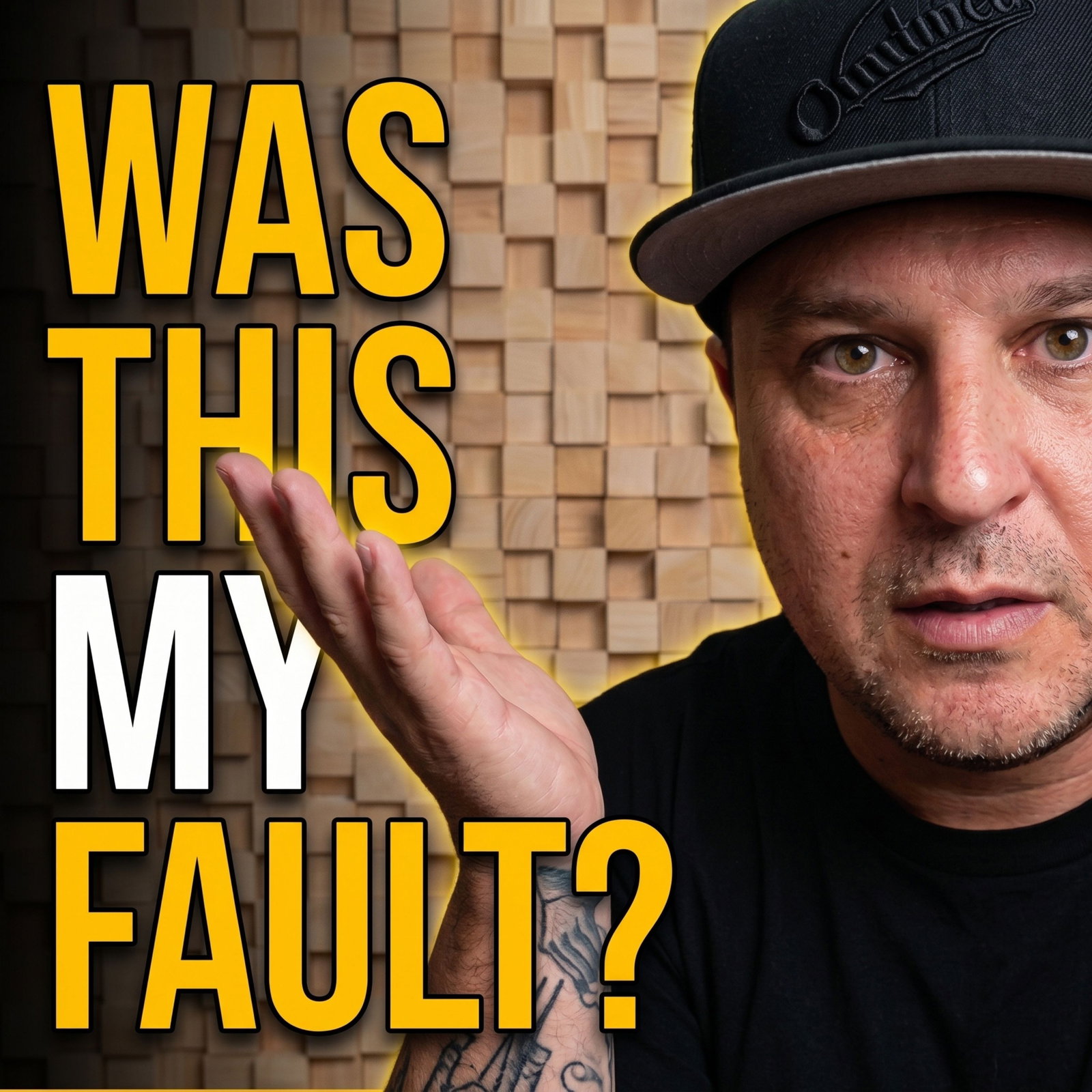
Scott Panov talks about his father's death by suicide after six weeks without speaking. He discusses guilt, unanswered questions, therapy and ways of remembering his dad while navigating suicide bereavement.
Key Takeaways
- Scott Panov opens up about navigating suicide loss after his father Nikolai died in 2023 following a six-week period of not speaking.
- The episode provides language for processing the heavy guilt and unanswered questions that frequently accompany losing a loved one to suicide.
- Listeners learn why asking for help immediately is crucial, and how trauma therapy can shift a man's perspective on vulnerability and strength.
- Scott discusses the three distinct paths grief can present: falling apart, white-knuckling it, or using the experience for healing and advocacy.
- The conversation highlights practical ways to keep a father's memory alive, from purchasing records on his birthday to talking openly about emotion.
🎧 In this episode, you'll get:
- Language for the guilt that can follow suicide loss
- Permission to stop chasing an answer you may never get
- A reason to ask for help before you think you “need” it
- A better way to think about therapy when the first person isn't the right fit
- A frame for the three paths grief can put in front of you: fall apart, white-knuckle it, or use it
- Permission to cry, talk about your dad, and stop treating emotion like weakness
- Ideas for keeping your dad present through music, traditions, and rituals
Scott Panov never imagined his dad would die by suicide.
They hadn't spoken for six weeks after a family disagreement. After his dad died, Scott was left with guilt, anger, and questions he knew might never be answered.
That night, he asked for help.
This one's about suicide loss, therapy, letting go of blame, and realizing the dad you thought was superhuman was human too.
👨 Meet Scott Panov
Scott is a son, father, hockey coach, artist, and advocate for men's mental health.
After his dad Nikolai died by suicide in 2023, Scott sought trauma therapy and grief counselling. It changed how he thought about strength.
Instead of carrying everything alone, he started talking, asking for help, sharing how he felt, and supporting other men who were struggling.
⏱️ Episode chapters
00:00 — “I never would've seen it coming”
01:00 — Welcome Scott Panov
02:50 — Meet Nikolai
04:30 — Measuring yourself against your father
07:00 — Dad and Splash Mountain
10:15 — Men who weren't taught to talk
10:55 — August 24, 2023
11:40 — The phone call from Mom
12:50 — The signs nobody understood
14:35 — We hadn't spoken for six weeks
16:00 — Telling his kids
17:45 — His superhuman dad was human
18:30 — The backpack full of rocks
18:55 — Searching for a reason
19:20 — Asking for help that night
22:00 — Trauma therapy
23:15 — The three paths after trauma
24:45 — Making emotion a superpower
25:30 — Finding the right therapist
29:00 — Becoming kinder to himself
30:00 — Men's mental health
31:50 — Buying Dad records every birthday
34:30 — Where his grief is now
36:00 — “I miss my dad”
37:00 — Scott's advice to other men
Meet another guy in the club:
https://www.youtube.com/watch?v=yutMlctDGYE
🖤 About Dead Dads
Dead Dads is a podcast for men figuring out life after losing their dad.
Hosted by Roger Nairn and Scott Cunningham, the show features honest conversations about father loss, grief, identity, family, memory, masculinity, and everything that happens after your dad dies.
No grief brochure voice. No tidy healing arc.
You're not alone.
If you or someone you know is struggling with suicidal thoughts, reach out for help. In Canada and the U.S., call or text 988.
☕ Support the show:
https://buymeacoffee.com/deaddadspodcast
Website:
https://www.deaddadspodcast.com/
Instagram:
https://www.instagram.com/deaddadspodcast/
TikTok:
https://www.tiktok.com/@dead.dads.podcast
Substack:
https://substack.com/@deaddadspodcast
New episodes every week.
Produced with the support of JAR Podcast Solutions:
Related episode: delayed grief and finding support.
Related grief resources
Grieving a complicated relationship with your dad · Grief support resources
About the show: Roger Nairn and Scott Cunningham share lived experience of father loss. Dead Dads is not a substitute for professional care.
Episode Transcript
Source: YouTube captions. Automatically generated captions may contain errors.
[0:00] I never would have seen it coming. And it's hindsight's always kind of, you know, a valuable thing. And connecting with some of his friends after and talking about some things and we start putting two and two together and there were some signs.
[0:16] Hey guys, welcome back to another episode of Dead Dads. Uh, today we are going to be chatting with Scott Panoff. U really excited because I think there's a ton that you're going to learn out of this episode. for example, you need to ask for help. Um, asking for help is something that is absolutely key in your
[0:33] grief journey. What do you think, Scott? >> Yeah, being an advocate for help, trying to process it, but also Scott talks a lot about his father who passed away of suicide, which was really uh spoke a lot to me. My father also had an experience with suicide and the challenges of not being able to get answers and having no
[0:49] way of sort of processing that blame. He pushes he pushes hard at that. And I think it was really it spoke to me, but it also, I think, speaks to those who have had to deal with suicide in in their lives. >> And the third thing you're going to take away from this episode is the realization that like as men, we are,
[1:04] you know, somewhat primed because of our parents and their generation to have that sort of stoicism within us. And I think Scott does an amazing job of of of explaining sort of his process of breaking out of that and really tapping into what he truly needed as a as a man
[1:20] going through his grief. So, um, ladies and gentlemen, we'd love to introduce you to Scott >> Panov. [singing and music] It's the dad.
[1:35] >> Hey, Scott, welcome to the Dead Dad's podcast. [music] >> Well, thanks for having me today. >> Scott, why on earth would you want to [music] come on this podcast? And I will say that you I think out of almost anybody who has contacted us to date um
[1:50] came to us with like the most impassion sort of story as to why you think it's important for you to be on the show and uh I really appreciated hearing from one of our one of our audience members and we're so glad that you you get to be here. But why would you do this? my algorithm has definitely found me in a
[2:06] lot of mental health kind of uh self-help type and stuff and you guys popped up the one day and soon as I saw the the title it was just like okay like what's this and uh started watching a few of the clips and it was just like whoa this is the next step in my journey that I need to take and so I I felt like
[2:23] I needed to maybe sell you on it a little bit. >> It was it was such a beautiful message and you definitely um have a you know I think you have you have a really unique and important story to tell. Um, but I wonder if you could first start telling us about your dad. >> Yeah, of course. Um, my dad's name was
[2:40] uh Nikolai Steve Panov. The interesting thing with him is that his uh his grandfather was uh Stefan, but when they immigrated to to Canada, he went by Steve and so that's what they used as his middle name. Uh he was born in on March 14th, 1956 in protecting British
[2:58] Columbia. uh born and raised there, first generation Canadian, uh Hungarian, and on his dad's side was Estonian is where the last name came from. >> And what sort of relationship did you have with uh with your dad growing up? >> Was he a quintessential because you think of Eastern European sometimes
[3:13] there's a stoicness to him? Does he does he occupy that kind of story? >> 100%. And we'll we'll get to to that a little bit as far as his you know, but yeah, he was definitely never too high, never too low, did not show a lot of emotion throughout his life. It was something that I I didn't always
[3:29] understand, I guess. And and I'll maybe explain a little bit more when we get to the mental health journey and kind of accepting what what happened. But um yeah, no, he was a very involved dad. You know, coached my minor hockey up until where he realized that he'd kind of reached the limit of his abilities
[3:44] and knowledge. >> Oh. And then he backed away. >> Yeah. Let me go off to peewee. And then, you know, then I had uh non-parent coaches from that point on. very bluecollar background like he was a a dual ticketed collision technician uh by trade. >> What was he like when he was involved in
[4:00] your sports? Was he a little bit more animated? Was he still kind of that personality that you're sort of talking about? >> I only remember seeing him get hot one time and it was like we were in Wanachi for a tournament and there was like a really bad call in a game and that was like really like one of the few times
[4:16] that I remember him like really being upset and kind of animated but >> like ever or just in sports? He was always pretty good in his own sports. Like if he was watching PC Lions game though, like then it was a whole another level. Like if he was excited or mad or whatever, like he would like he would show more emotion in that space than he
[4:32] ever would in like the real life type situation. >> My dad was the same with the Conucks. >> Drove him crazy. And I'm curious, was there a moment where, you know, I feel like a lot of sons go through this period where they're like, "Oh my god, my dad is super human." Like >> Yeah. I think we just inherently kind of like compare ourselves against our
[4:48] fathers. They're template that figure that that's you know >> who I'm trying to emulate. Like he didn't ever need to stop like he could just outwork anybody. And you know I maybe appreciate smelling the flowers a little bit more. And so when we would work on projects together and like we worked together for a number of years
[5:04] cuz when he was in the collision trade I followed him into that in in 1995 and worked with him until 2009 in that space. So eventually he had his own shop and and I apprenticed under him and >> spending a lot of time with him then. Really? >> Oh yeah. Like that's that entire time
[5:20] was just like every day. And then we would go snowmoiling on the weekends. By the time I bought a house, he'd be over helping me work on stuff. We built a cabin together as a family in 2004. At the time it was like something I didn't necessarily appreciate because it was like I' I'd work all day for my parents.
[5:35] On top of that, they're cutting my paycheck. But I look back on it now and those experiences and the things that we learned and some of the wins that we got to experience and stuff like that like I I wish id have cherished it a little bit more in the moment. >> So it felt like a lot of time with them working for them spending time doing
[5:51] stuff with them. But the retrospective is it was a gift. >> Oh 100% get that time. >> I I got more time with my dad than most men would in an entire lifetime for sure >> cuz you got to work with him. >> But he was a small town figure. He was an active participant in your growing up. He took you places like really
[6:08] seeing this sort of template that he set for you. >> Yeah. And you know what? It's been a huge influence. Like I myself coached minor hockey for 12 years between my two kids. >> When you decided to sort of break out on your own from working with him, how did he handle that?
[6:23] >> Before I left, I I talked to him about it and he was like, "If I had this opportunity at 30 years old, I would absolutely be taking this, too. This job is hard on your body. It's hard on your, you know, it's it's dirty. the PPE back in those days wasn't necessarily super great. Um, and then all the it's going
[6:40] to afford you more time with your family and there's more career opportunities there for you. So, he was very supportive and um, being so connected within that industry like the the guy who hired me at ICBC. >> ICBC is is our provincial insurance company. >> Um, he loved to tell me all the time
[6:57] anytime he'd run into my dad around town that my dad would thank him for hiring me and getting me in there. >> You kind of got his blessing to a certain degree, right? 100%. >> Is there a quintessential sort of dad story that you constantly refer to? >> I I think my favorite story is after I
[7:12] got divorced, I had some friends that were planning a trip to Disney World to take their kids. I think there was a little bit of bitterness over the divorce and stuff and my mom came to the table and she was just like, I'm going to send you to Disney World with the kids, too. And she sent with my dad. >> So, it was me and dad and the kids for 10 days in Florida doing all the Disney
[7:29] stuff. >> We also had other friends that were down there as well. So, we we didn't spend the whole time with them. It was mo mostly just me and dad and the kids doing our thing. Um, but when we did connect with the uh with our our friends that were down there, we had a little bit of a conversation. It was like, you
[7:45] know what, this has probably been an awful lot for him. You know, he's, you know, not a young man. He was in his late 50s or whatever it was at the time. And uh let's give him a night off. So, we went and stayed at the Airbnb with those guys. And uh I don't know if you guys have ever done Disney before, but they have the photo pass thing. Well, I had the app on my phone. So, we're
[8:01] sitting at this you know, house around the pool having a beer or whatever. And uh my phone starts dinging off. I'm like, "What's going on here?" My my dad's in the park riding Splash Mountain over and over and over again. >> And it was like one of the pictures he's
[8:18] just like he's all by himself on the log and he's just like like just [laughter] giving her. And it made me so happy to see. He was like, it was just so bizarre that like he had that time to himself where he could have just chilled out, chilled at the hotel, had some peace and quiet or whatever. And there he was, you know, doing what he loved though. He
[8:34] loved that ride so much. He was he was a very serious individual, but he had this playful side to him as well that like he was known for his sharp wits and dry humor and his pranks. Later years, it wasn't so much, but like he was notorious for like his early days in the body shops and stuff like that of the
[8:50] pranks that he would pull on people. >> What sort of a prank would he pull? your typical like milk jug with some acetylene in it and then pull someone's spark plug and put it in there. So, they go to start their car and it's like basically a small bomb under the hood and doesn't do any damage, but it'll it'll it'll get your attention. [laughter]
[9:05] >> I have a question about him though, and this is just because of the stories that you've shared. I have this sort of picture of him. Tell me if this is correct though because you mentioned that he, you know, was fairly reserved on a regular basis, right? And then he'd watch like BC Lions and you'd see like
[9:20] emotion come from him then or sometimes you'd see it and then now you share this story about Splash Mountain. Is that these sort of has these let it out moments where he just sort of finds all of a sudden like he has to let it out? >> Yeah. You know what and I think like I did I I saw a lot of woohoos in [laughter] in my life from him and and
[9:38] things like that. But but he never like got mad at me. Like we we would have conversations but he like I don't remember him raising his voice more than like a few times. And as I'm sure you can appreciate working in the shop together, um we bought at heads at times, especially when I'm, you know,
[9:53] fresh out of, you know, got my journeyman ticket and I know everything now. And that's a great question. I I um I think he definitely he liked to get it out maybe through adrenaline, like that's why he maybe liked snowmmoiling so much and he loved being out on his boats and
[10:09] >> he found different ways to maybe >> need help getting it out maybe too, right? They needed something to kind of like juice them up almost realistic that generation like they weren't really taught or encouraged to be in touch with their feelings or share their feelings. >> Can we talk about uh
[10:25] how he died in the that day? Like what was that day like? >> When was this just roughly? >> August 24th, 2023. >> Almost three years ago. >> To provide a a little bit of context there. I was kind of on the rocks with my parents at the time. >> We'd been dealing with some stuff. My
[10:41] son had kind of graduated high school, but and he was signing up for university and schooling wasn't necessarily his forte. And it was like I was looking at the whole thing going, geez, I I don't know this is the best idea. Nobody else seemed to be willing to talk to him about it. And I'd reached out to my parents kind of going like, hey, like
[10:57] will you support me in this situation? Maybe talk to Nick and like put it off for a year. Go travel, save some money. I I was really worried that he was going to overwhelm himself, go into it, and then scare himself away from maybe something he would have been ready for more in in a couple years or something. But anyways, um
[11:13] >> which is your remitt as a parent? You're trying to navigate what you feel like is the best direction for your child. >> We we buted head heads over it. They felt I was being too harsh on them and um and yeah, we had a bit of a falling out. So, it was really weird. So, it was
[11:28] a Thursday morning. get a phone call at my desk at work at 8:30 and I see it's my mom and like I haven't talked to her in a while and I'm like, "Well, this is really weird." And she's like frantic on the phone. I'm out at the cabin. I got out here. The the gates open, the
[11:43] truck's locked, the cabin's open. I can't find him anywhere. I've called uh my my brother-in-law is also Scott. She called him. He was already on the way out there and out of cell range. She's like, "I I looked through the window of the generator shed and I can see him in
[12:00] there. I think he's dead. Call 911." I called 911. Got that moving. RIP out there. I think as fast as I've ever driven out there, but >> what's what's the distance between you and the cabin? >> It should take about 25 minutes. I think I made it in closer to 17 that day. I I
[12:17] knew something was wrong and just the based on the way that she had described the situation, I was just like, "Oh my god, he committed suicide." That was your immediate impact? >> That was my just based on what she described to me. >> Had you ever had that thought? >> Had that ever crossed your mind? Yeah. >> Yeah. Had that ever crossed your mind
[12:32] before? Did he ever give you any sort of like >> There was absolutely zero. I never would have seen it coming. And it's hindsight's always kind of, >> you know, a valuable thing. And connecting with some of his friends after and talking about some things and
[12:47] we start pointing two and two together. And there were some signs >> that that his friends saw. >> There were some people who saw some things that were a little odd or a little strange that they didn't understand and and we'll never really know. >> How were you notified that that was in
[13:03] fact the case? >> Well, I I got out there and my brother-in-law was around the one side of the cops and I think it was just the cops there at the time. And I got out there, my brother-in-law came out and he's like, "Don't come any closer." And I was like, "Oh my god, like this is real." And I went inside and my mom was
[13:20] beside herself and it was we were all there was a lot of emotions going on and um eventually the paramedic showed up and and stuff and I didn't get to get into the room but once they had shared the details of what they had found in there like he was he was locked in a
[13:35] shed with a generator and another device that would produce gas and >> Okay. >> Um >> like an esphyxiation. >> Yeah. And he he had brought some sleeping pills with him as well. So, >> oh, I'm so sorry. >> Yeah, it's it's one thing I'm thankful though I will say about that situation
[13:52] is that at least he was graceful enough to like not make a mess. Um, he went peacefully. Like he just went to sleep. And that gives me a little bit of peace, too, is that it's not like he suffered. He he liked to have a beverage once in a while. So, he had a cooler in there with
[14:07] him. He had a few drinks before he went to sleep. And so, from there, it was just kind of like like damage control. How did you handle telling that to your to your kids that their grandpa was gone? >> And I will tell you this just to give you a second as well too. This is very personal for me too cuz my dad he
[14:23] actually tried to commit suicide and he was unsuccessful. But he went through a lot of the apparatus and he just wasn't he just wasn't able to do it like >> so he slit his wrists and and he was so it's very >> found him down by the >> and he was he so I'm very curious a
[14:40] little bit about this because I think I remember some of this very vividly. >> Um and so there's a couple questions that I have like I'm wondering do you when was the last time you talked to him before that? Did did he reach out to you? Did you did you remember that? It was about six weeks before, but I we we
[14:58] routinely talked every Wednesday night. That was kind of our thing. And it would be like our weekly check-in. So, we'd call fill him in on what was going on my beer league hockey, what was going on with the kids, what's happening at work, if there's anything interesting or weird I've seen or whatever else. Sometimes we're, you know, not a ton of politics
[15:15] and things like that, but just more to day-to-day life. Um, so that was really hard to deal with because I I definitely felt some some guilt and responsibility because I wasn't there for that time and it was like did I influence the
[15:31] situation but I didn't know all of what he was up against. So had I known, I probably would have acted differently, but I wasn't afforded to see kind of like the real version of what was going on and until this tragic event. And then it was like,
[15:46] >> so when you're trying to decide what to tell your children, what was what did you what did you go through in your mind? like where you're trying to give them not a detail but not too much detail or how do they that process of making those decisions I think is really relevant because everybody thinks like I
[16:02] don't I don't want to burden them >> but then also they have their own journey and you have older kids as well too right >> yeah I always will just default to the truth because I can't really go wrong with that but but they didn't need to know every little detail of everything either so it's a little bit of a blur I
[16:18] remember driving back and just running the conversation through my head and going, "How am I going to do this?" And I went and picked them up, took them up to to my house cuz they were with their mother at the time. And uh basically sat them down in the living room and just laid out what had happened and that grandpa was gone. They called him
[16:35] grandpy. My son took it really hard. He was the firstborn. He was the only boy and he was the only one for four years. So he was doted on by my dad. My My dad called him the dude. He my dad loved the big Labowski and so he he and so Nick
[16:52] was always my son is also Nick. So um >> the dude abides. >> Yeah. They he called him the dude all the time and and he loved the dude and spending time with the dude and uh everything was about him when it when it was just him. My daughter, she's you could just see her processing it and um
[17:09] and she was quite a bit younger at the time like 3 years ago. She was 14 years old. So that's a lot for a 14-year-old to process. And like I just remember the look on her face like she was just like wo like I don't know you see the wheels turn immediately. So >> while all this was happening what was going on in your in your body.
[17:25] >> Oh my god it was just absolute shock to be honest. Um I'd never felt so like like lost in my life like everything that I felt like I knew and that was kind of creating security for me. And and you
[17:40] know to go back to your earlier question about the superhuman, you know, this guy could do anything and could never stop working, but always, you know, I always I always felt inadequate when I measured myself against him. And here we are where like I'm having to realize that
[17:57] he's just a real person after all that was clearly struggling inside >> and just holding it all in. And and I kind of, you know, the analogy that I it's like he was wearing this backpack and whenever something happened, he would just put that rock in there until he couldn't carry the weight of the load
[18:12] anymore. And uh >> you felt bad. You felt really bad that he was clearly going through something. >> Yeah, there was, you know, it was a mix of emotions. I think there was, you know, a bit of anger as well until till I kind of was able to start wrapping my head around what had happened and and um
[18:30] and what he was up against and what the potential or reasons for this were and and and I looked at the people around me and I was like, I don't know how much support I have. Like I need help. >> Yeah. I don't know what to do. >> I need professional help. So >> it's right afterwards. And you just said
[18:45] something though which I'm wondering you was trying to figure out the reason. How quickly were was that like right away you were sort of processing your emotions and then you start thinking why >> I I think inherently you just do that you know you're constantly and and I'll never have an exact reason. I've got my
[19:01] theories of you know but it's not like there was a note or or anything clear that was ever given to us. So, um, so yeah, that night I I called the employee family assistance program and and and >> Oh, right. right right away.
[19:17] >> I was like that. >> Good for [clears throat] you. >> And uh cried >> cried pretty hard to somebody on the phone, a stranger >> and they were uh Yeah, they were fantastic. >> What was that? What was that like
[19:32] talking to somebody that >> that you didn't know? And cuz I think there's a lot there's a there's a lot of guys that are probably watching this right now that first of all didn't even know that there is a a phone number you can call and I I think everywhere we live in the world there are unique numbers you can call for different
[19:48] resources but also >> like what would that experience be like? So I'm I'm wondering if >> you're reaching you're doing something you're reaching out to someone you don't know. >> No total total stranger. Well, in this situation, like basically you're like getting a call center and you're getting like I'm talking to some poor person
[20:03] that's not like doesn't have the schooling to help with what my their step is to like basically connect me with the resource that I need. And so that's where that went. But I think for myself, >> you start you start by downloading on them, I'm assuming. >> Well, well, I had to tell them what
[20:20] happened so they could just align me with the right resource. And so that was really difficult. And um but I I was linked up with a uh trauma therapist, but I had to wait because my my partner and I had had uh we had a
[20:35] trip planned to Mexico and everybody was like go go and it was like, man, this does not feel right right now at all. But it was too late to really cancel or do any and and it was like okay well you know what maybe a break from this is is actually a good thing. So, a couple
[20:51] weeks after like we were down in Mexico for I think we were 10 days or something like that. >> Hey guys, sorry to interrupt this episode. We have one huge favor to ask you. >> If you're enjoying this episode or if you're enjoying the Dead Dads podcast, just send this to one person.
[21:06] >> Think about how you got introduced to Dead Dads. You must know somebody else out there who's either in the middle of their grief or perhaps is about to lose their father. Uh if you could just share this episode or any of the episodes that you like with them. We're trying to grow this podcast as best that we can to get
[21:21] it into the eyes and the ears of all the guys out there and we would love your help with that. >> Thank you so much. We'll get right back to the episode >> like that. >> So you so you took this time off. I think there's been other scenarios where I've heard guys, you know, take some time off and they feel guilty about
[21:37] doing that, but like there's only so much you can do in the moment. >> I think the spoiler alert is you're going to feel guilty. You're going to feel guilty if you take time off. You're going to feel I think guilt is natural. I think what you no did was you took time to take care of yourself and it's kind of the classic, you know, put your oxygen mask on first. So, I'm glad that
[21:55] you went >> and I'm trying to sell your mindset. So, you've had you've gotten to take this time, which we agree, you know, has some ups and downs. You've come back and that's when you're >> you saw trauma therapist joining a trauma therapist. So, you're starting are you back at work at this point? >> Uh, no. I was off for I think it was 10
[22:11] weeks in total by the time like I I went through the process of talking to my doctor and getting doctor's notes. >> So tell us about the the trauma therapist. >> Honestly, a lot of that is is a bit of a blur. It was I know it was four sessions over like I want to say maybe a six week period. >> Helpful?
[22:26] >> Oh 100%. It helped me really like kind of squash that portion of it. >> What do you mean by squash that portion of it? well, just come to terms with my feelings about, you know, what had happened with him and kind of, you know, release that anger. So, you know, now
[22:41] I'm feeling empathy for him in the situation. And so, like, like I I love my dad to this day and I don't I don't blame him for anything. If anything, I view this as a gift that he's given me to help me become a better person. through this trauma therapist or through this therapy that you went through, you
[22:57] recognized one that um you don't blame him or you you were able to process the blame that you might have been feeling for him, but then you said two, you see it as there's a positive to it as well, like you you're able to this situation
[23:13] perpetuated a different but better situation in some aspect because I think there is some people that there's there are upsides if you like to dealing with this this trauma. Basically, when I when I hit that point in in the road, it was like, okay, I only saw three paths. It's
[23:29] like, I can go off the rails and blame everything that happens in my life on this incident and this and and I would be justified in doing so. Nobody should ever have to deal with this. I could I like the term that you used when we we chatted. I could white knuckle this and just bear down and try and stuff it down
[23:44] and just keep going along and, you know, I'm Scott's fine and that's good. And the other option I saw is to to try and harness the energy of this situation and and honor my dad in becoming a better version of myself for this experience. And when I kind of really
[24:01] looked at those crossroads from from that aspect, it was like there was no question here. I've I've got children. I've got people that count on me. I need to become out of this stronger and be a better version of myself. So So I don't go down that same path, too. And did you see these three paths yourself or did
[24:17] you did somebody did somebody help illuminate that for you? >> I would say they illuminated it but it was something that I had shared through that trauma therapy. >> So you you felt understood in the moment as well. You all sort of you're given some some uh options.
[24:33] >> Yeah. And I think between that and and also like realizing that that superhuman was just human too, you know, it all helped it become more like >> manageable. Yeah. you know that the fact that I can share my emotions and feelings like now I'm not feeling inadequate anymore. This is what I this
[24:49] is my superpower now and this is what's going to get me through this. And so feeling that inadequacy against how I was comparing myself to him and that like that was a farce. this is actually how I need to go to survive because I I
[25:05] won't lie that there were times where it was like the easiest path seemed to just go join it >> and and walk away too because it's like I I didn't know how life could ever be normal again. There was multiple stages of therapy like there was the trauma therapist, the grief therapist.
[25:22] >> Were you this the guy that was okay with therapy and like kind of cool with all this from a masculine standpoint? >> 100%. I I um >> Where do you think that came from? Well, I I started in my early 20s. I was in the bar scene and and liked to drink and and had gotten into some hard drugs and
[25:38] stuff. So, I I did some therapy then when I was young. When I was going through relationship issues and and my divorce, I sought some help to try and get myself through it. For me, it was just it was a no-brainer. It's like here I am again. Don't know what to do. I need I need to reach out for some professional help. >> But I think that's an important
[25:54] distinction though, which is you're choosing to go for help, which is not everybody. But one of the things we've heard and I think is worth celebrating is that not every therapist delivers the goods. Not every not every and that's not necessarily the therapist's fault. Sometimes it's just the wrong fit. >> But I think when I recommend people to
[26:10] get therapy and and Roger and I both talked about it like not every time I went to a therapist and thought this is delivering what I want, but that doesn't necessarily mean therapy or the or counseling or whatever is wrong. It just sometimes means you don't fit with that person. Good for you for like recognizing that and then finding
[26:26] another version of it. >> Well, and there went that went around a few times before I I landed on the right thing because I >> I didn't I don't think I understood the gravity of the situation. So, I don't always get what I want when I go into therapy. Usually, I go in going, I want you to tell me that that person was
[26:41] wrong or this person was wrong. And instead, I learn a life lesson that helps me understand. And so, more often than not, it's actually the opposite. But I always get something out of it. I guess >> that's really interesting. Now I've I've got the same guy. I don't see him regularly. It's probably a couple times
[26:57] a year nowish, something like that. Whenever I need some maintenance a little bit or but knowing he's there, >> it's like a mechanic. >> He knows my whole story. I don't have to start from scratch. Taught me some tremendous things. Like I don't know if you guys have ever heard of the four agreements. >> Oh, absolutely. >> You know, like that's something that
[27:13] I've really taken forward. I don't always adhere to it, but like be be always be impeccable with your word. Uh don't take things too personally. uh don't make assumptions and always try your hardest. >> And so it seems like you've gone through a whole range of different options and
[27:29] experiences with with counseling and therapy. How would you kind of summarize the that for for a guy out there who's looking for uh an experience like yours? Like what would be your best piece of advice? >> Don't be afraid to look for the right fit. Don't settle for somebody that doesn't feel right for you. It's this is
[27:46] such a personal experience and although you know these are professionals having somebody that like yeah when you feel that they're genuinely invested in you and that they have your best interest they're not just going through the motions and outside of that like not limiting it to that like talk to your friends talk to your family.
[28:03] >> Yeah. There's a real difference between like asking for help and finding help. And it seems like you've found help. >> Yeah. that the network that I created of like my dad's friends >> after he passed cuz they were all going through then some of these people had known him far longer than I had.
[28:18] >> I had thoughts like you a little bit. I was worried cuz my again my dad did not die of suicide but he died not far after the suicide of a different response. But I started thinking am I is that going to happen to me? Like am I going to start having thoughts? Am I going to am I
[28:33] going to move towards it? And so I think it's been a real task to try to deal with that that challenge, that fear. And I therapy for me has been hugely helpful in in in trying to control that or think about that. It's made things more positive. And I I appreciate you doing
[28:50] that. I think that's great. Like people I think deal with that feeling if they see they don't want to go a path or they don't want to have something happen to them that they see happens to their dad and they can take control of that and find like a better version of their lives. I've found that the therapy has helped me get like it seemed to be for a
[29:06] while there every time something got really difficult I would just be like that would be a place where my brain would go why you know why am I still trying you know you know but now there's a brighter future out there somewhere I'm going to be okay I'm you know we'll
[29:21] figure it out >> the day your dad died what changed in you >> I don't know if it was so much that day but I am far kinder to myself today than I ever was before >> but that takes work, right? >> I'm able to look at myself a little bit more objectively, I think, in some
[29:37] instances and and be, like I said, a little more forgiving, and I think I'm maybe a little bit more comfortable with who I am as a person and sharing my feelings. Like, it's actually really neat because today is a year ago that I did the mental health talk at work. >> How important was it talking to a group
[29:53] of people about your experience? >> There's a really good answer to your question. I have decided from that point forward that I'm going to advocate for men's mental health and start to normalize, you know, talking about our feelings a little bit more. I've tried to be, you know, a champion for for my
[30:09] friends that are struggling. Um, I've definitely become a bit of a lighthouse for some of them when when they're struggling because, you know, when you when you know some someone's going to listen to you and talk to you and they show you empathy and and and have that bit of an understanding, um, it goes a long way
[30:26] because you're not so fearful of the judgment. >> I think about this a little bit with my own family about my kids were younger when my father passed away and how do I find ways to be able to talk about him so that they don't forget about him? How do I find a routine so that it doesn't kind of drift into the past? Do you how
[30:43] do you deal with that? Do you find ways to work them into conversation? Do you have events that you bring up or do you just sort of let it organically happen? About a year and a half after we had a celebration life for him. Um, we had it on Halloween because dad loved Halloween. He was known for his
[30:58] humongous display that he would do in the neighborhood and it was like animatronics and like he would dress up and go all out like he he loved this stuff. He had his own soundtracks and like so when >> that's this is why he loved Disney. >> 100 he was a Jack Skellington fan. That
[31:14] was his favorite character. So over a year had passed since he passed away and some of his friends had been reaching out to me and like hey are we going to do something like we need to I need this. >> And I'm like I need this too. And so I just moved forward and and held a celebration life for him. And we we had
[31:29] a pretty good turnout and it was great. And there was one table though um that I didn't get to sit with and it was his uh school buddies mostly. And so I had reached out to one of the guys and was like, "Hey kids," cuz it was I was trying to work the whole room. Everybody wanted to spend time, but it it just
[31:45] didn't get to that. So last year on Halloween, I got together with those guys for lunch. And as it stands, we've got a like annual like every Halloween we're going to get together. One of the things that I've been doing for myself, I I used to bug him and nag him for his
[32:00] record collection. And that was one of the first things that my mom gave me after he passed away. So I have all his records in his CDs on his birthday. I go out and I buy him a few new records. I buy >> Oh, you add to it. >> I buy him I buy him stuff that uh my mom
[32:18] probably wouldn't have let him have. I look forward to it every year cuz usually I don't celebrate when he died but his on his birthday it's kind of nice and um and I don't know I went and got this tattoo beautiful. >> Me and my son went and got matching.
[32:33] >> My dad loved turtles. He loved going to Maui and swimming with the sea turtles and uh it felt like a nice way to honor him where it's it's looking up at me every day. >> How did Art enter your grief? >> I stopped for about a year. Um, I think you kind of feel guilty feeling pleasure
[32:50] or happiness maybe when you're kind of going through the grieving process. And yeah, I just I just didn't have it in me. I didn't have that spark anymore. And it was it was June before the first anniversary
[33:06] of his passing that I I took a week off and I was like, you're going to spend the week in the shop and get get back on this horse. >> He wouldn't want you to stop. Because you did say something which we've heard too which is that you don't feel like you deserve joy. You don't feel like it's right or fairy that you should feel
[33:22] happiness. >> But then you work through that and think he would want me to feel those things. He would want me to feel joy and happiness. >> I'm a guilt guy too. >> I think we were all kind of you know Gen Xers. We were kind of raised to you know well our parents had their own environment and they kind of downloaded it on us and then we've downloaded it
[33:38] onto our kids and you know it's uh >> but you're setting a great template I think too. you're going and looking for help. You're willing to ask for help. You're leading other people as you talked about being a lighthouse. You're working your way through these things. These are the Gen X template. I think that's the the 2.0 version is the one
[33:54] who's recognizing those challenges of themselves and and evolving and trying new things so that they don't necessarily have to be stuck in that template of not asking for help. >> Well, it's and I get a lot of support from it. like when I when I when I when I step out of my comfort zone and I say things or you know when I post and I
[34:10] talk about you know when I how I feel about losing my dad you know on it was I think it was his first birthday after losing him and like the outpouring of love and support from people when you actually are brave enough to speak out and and and share the amount of love I
[34:28] was afforded was like it made it so worth it. Where would you say that you are now in your grief? >> I think when it comes to my dad, um, I've mostly made peace with it. >> You know, I don't think, you know, I
[34:44] think one of the things that analogy that I that I had come up with somewhere is it's it's a wound that's never going to heal. It's always going to need some maintenance. >> There's going to be days, you know, sometimes I hear like like he loved music. He was known for his playlist and stuff like that. And sometimes I just
[34:59] hear a song and it's just like oh my god like it hits me in the fields like and it's weird stuff too like I can't hear Mambo Sun by T-Rex without wanting to cry. >> But here we are you know >> but but I love it and sometimes I'll
[35:16] purposely listen to it and like that's where like we're doing the records and stuff. I go home that day I listen to this stuff. If I think about the the trips in the truck when we were snowmmoiling, listening to those same cassettes over and over and over and how it makes me just feel close to him >> um and a little bit connected. So I
[35:32] think I just kind of try and keep myself so I I have that feeling. I always kind of feel like he's with me. So I think something that you're doing I'm the you're poking yourself in the fields, right? You're listening to something that you know is going to give you that jolt, that that connection to him.
[35:48] >> Um it's your splash mountain. >> Yeah. >> Yeah. Well, >> it's given you it's given you a connection. >> There's a good Yeah, good good analogy there in itself. Um, I've had to find ways a few times, you know, and there was one time where I was just like, man, I hadn't said I missed my dad for a while. And I was just like, soon as I
[36:03] said it, I started crying and I just said it over and over and till I could get it out. And then it was like, man, I feel so much better. I had a good cry for a while. And and I think there's nothing wrong with that. It's it's totally human to have emotions and
[36:21] and I think like if anything seeing what happened maybe not getting them out maybe being that stoic person that you know maybe that's not the healthiest way to go about living our lives. And so, um,
[36:38] >> I think if there's a if there's a piece of advice you could give to a guy out there who's dealing, and I would ask like in particular who's maybe whose dad has had the same scenario where he's lost his dad and he doesn't necessarily have the ability to find the answers.
[36:54] >> Um, what advice would you give him given that what you've done, how you've kind of moved through it? if you could give him a piece of advice about going through a situation similar to what you went through. >> Yeah, I think um it would don't be afraid to get help. Um it it it will
[37:11] make you stronger and um and show you your own strength already and uh and I think the other key takeaway is just not settling for something that's not working. There is the right thing out there if you find it and invest in yourself and and and
[37:27] just don't be afraid to share. Scott, um I think you're incredibly brave for telling your story and uh just being so open with it. Uh I think there's going to be a lot of guys out there that resonate with every word you said today. Um so we want to really
[37:43] thank you for for coming on Deads. We truly appreciate it. And uh if there's other guys out there who are perhaps um you know dealing with some of the challenges that Scott talked about, just remember that there are options for uh making a phone call, talking to
[37:58] somebody, reaching out um you in your area. You just need to Google uh some of the help lines that are available. So we encourage you to do that. And thank you again for joining us on Dead Dads. If you have the opportunity to uh leave us a like or a comment, uh please do so. it
[38:14] helps us get the show in front of as many uh eyes and ears as possible. And really, that's our mission with Dead Dads is to just show other guys that you're not alone in this. So, please um you know, help us support the show. Um and also uh don't hesitate to reach out to us. Uh we'd love to hear from you.
[38:29] This is actually how we met Scott. He he reached us reached out to us on Instagram and we got a we got a chance to hear his story. We would love to hear your story as well. So, >> you don't have to have the same name as one of us. You can be you can have a different name, too. We're we're open to that. >> You also don't need to wear similar
[38:45] tops. That's true. Uh >> we like to color coordinate, but we do it sort of like without even putting any plants together consistently. >> Um thanks again for joining us on Dead Dads. We'll see you in the next episode. Thanks. [singing] [music]
[39:03] [music] >> [music]
Frequently Asked Questions
Who is Scott Panov and what is his story?
Scott Panov is a father, hockey coach, artist, and men's mental health advocate whose father, Nikolai, died by suicide in 2023 after a six-week family disagreement.
How can you deal with guilt after suicide loss?
This episode explores ways to release the blame and white-knuckling grip on unanswered questions, encouraging men to treat emotion as a superpower rather than a weakness.
What are the three paths of grief discussed in the episode?
When faced with trauma and loss, grief generally offers three paths: falling apart, trying to white-knuckle through it, or using the experience to seek help and grow.
Dead Dads guest
Scott Panov shares his experience of suicide bereavement and seeking support.