
 YouTube

 Spotify

 Apple Podcasts

 Amazon Music

 PocketCasts

 Castbox

 PlayerFM

 Podchaser

 iHeartRadio
My Dad Taught Me to Be Tough. Grief Broke Me | Jimmy Venia
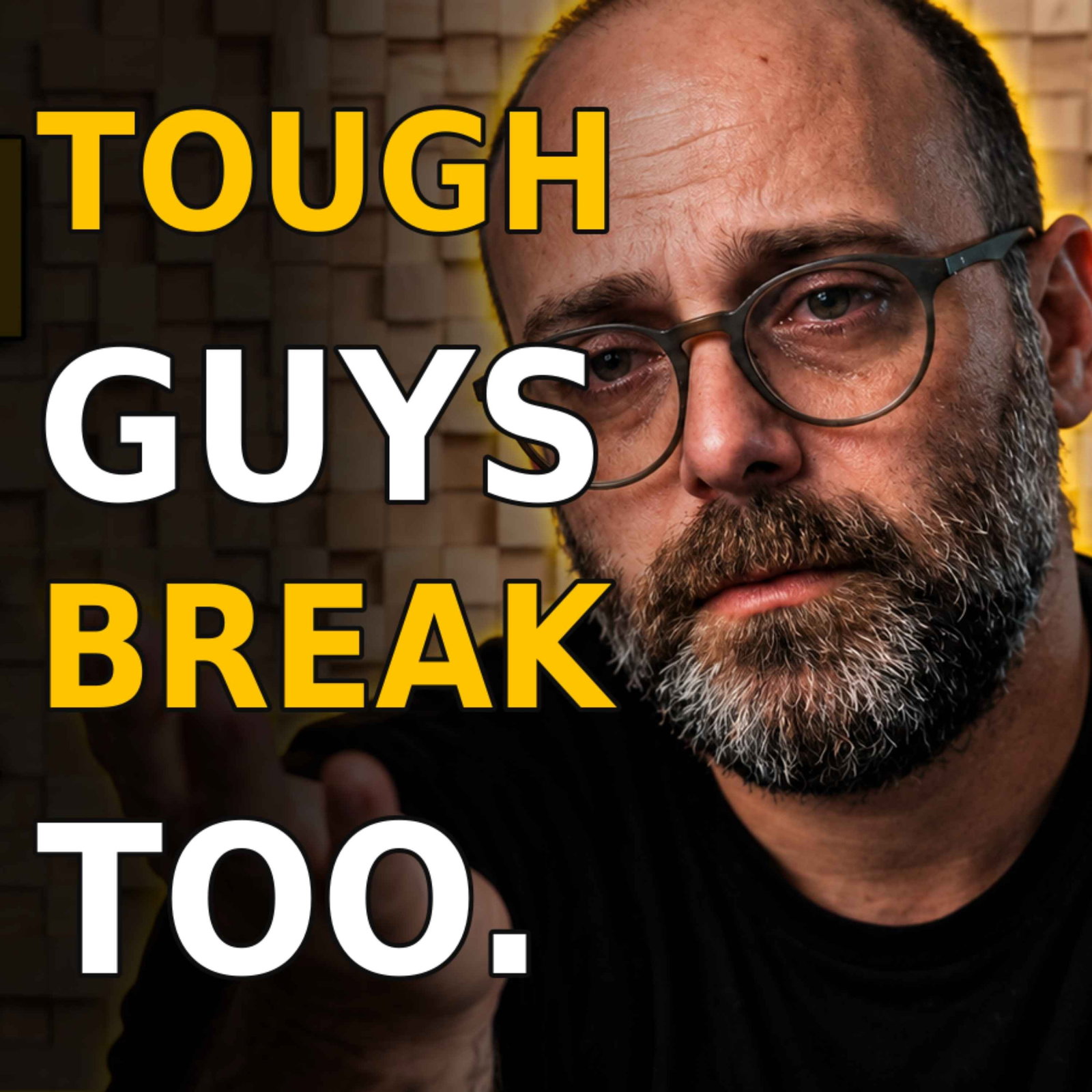
Jimmy Venia remembers his tough Bronx father Anthony, the care he needed after strokes, and the grief that followed his death. He discusses addiction, family conflict and finding support through counselling.
Key Takeaways
- Jimmy Venia grew up believing his old-school Sicilian father from the Bronx didn't love him, only to later understand the complex reality behind his father's tough love.
- Watching an invincible father become vulnerable after strokes and heart problems shattered Jimmy's perception of strength and forced him to confront a different kind of toughness.
- Following his father's death on May 4, 2024, Jimmy turned to alcohol and drugs for a year to numb the overwhelming pain and family conflict.
- Through grief counselling, journaling, and talking to other men, Jimmy learned that traditional masculine ideas about toughness do not work against grief.
- Jimmy's journey highlights the importance of keeping a father's memory alive through music, stories, and everyday rituals rather than trying to outrun the pain.
Jimmy grew up believing his father didn't want him.
Years later, he discovered a very different man.
Anthony was an old-school Sicilian dad from the Bronx. Tough. Proud. Sometimes impossible. The kind of father who drove his son across New York every day for school but refused to bail him out when he landed in prison.
Jimmy eventually understood his father's version of tough love. Then he watched the toughest man he'd ever known become vulnerable.
After a series of strokes and heart problems, Jimmy found himself helping his father use the bathroom in a hospital. The man who taught him everything about strength suddenly looked defeated.
Jimmy asked his dad to show him a different kind of toughness.
On May 4, 2024, Anthony died.
What followed wasn't a neat story about healing.
There was family conflict, a funeral where Jimmy barely had room to grieve, and a year of drinking and drugs to numb the pain. For the first time in his life, Jimmy faced something he couldn't tough his way through.
Eventually, he started grief counselling. He began journaling, talking to other men who'd lost their fathers, and learning to carry his grief instead of running from it.
In this episode, we talk about:
- Growing up believing your father doesn't love you
- Tough love, prison, abandonment, and forgiveness
- Watching a once-invincible father become vulnerable
- The guilt and regret that follow losing your dad
- How alcohol and drugs can become a way to avoid grief
- What grief counselling and journaling can actually do
- Why men struggle to ask for help
- Keeping your father's memory alive through music, stories, and everyday rituals
Jimmy's story is about father-son relationships, complicated family dynamics, addiction, masculinity, and learning that grief doesn't care how tough you think you are.
It's also about Billy Joel, The Sopranos, a terrible Mercedes, and the strange little moments that make you feel close to your dad again.
As Jimmy puts it: "That tough guy shit don't work."
About Dead Dads
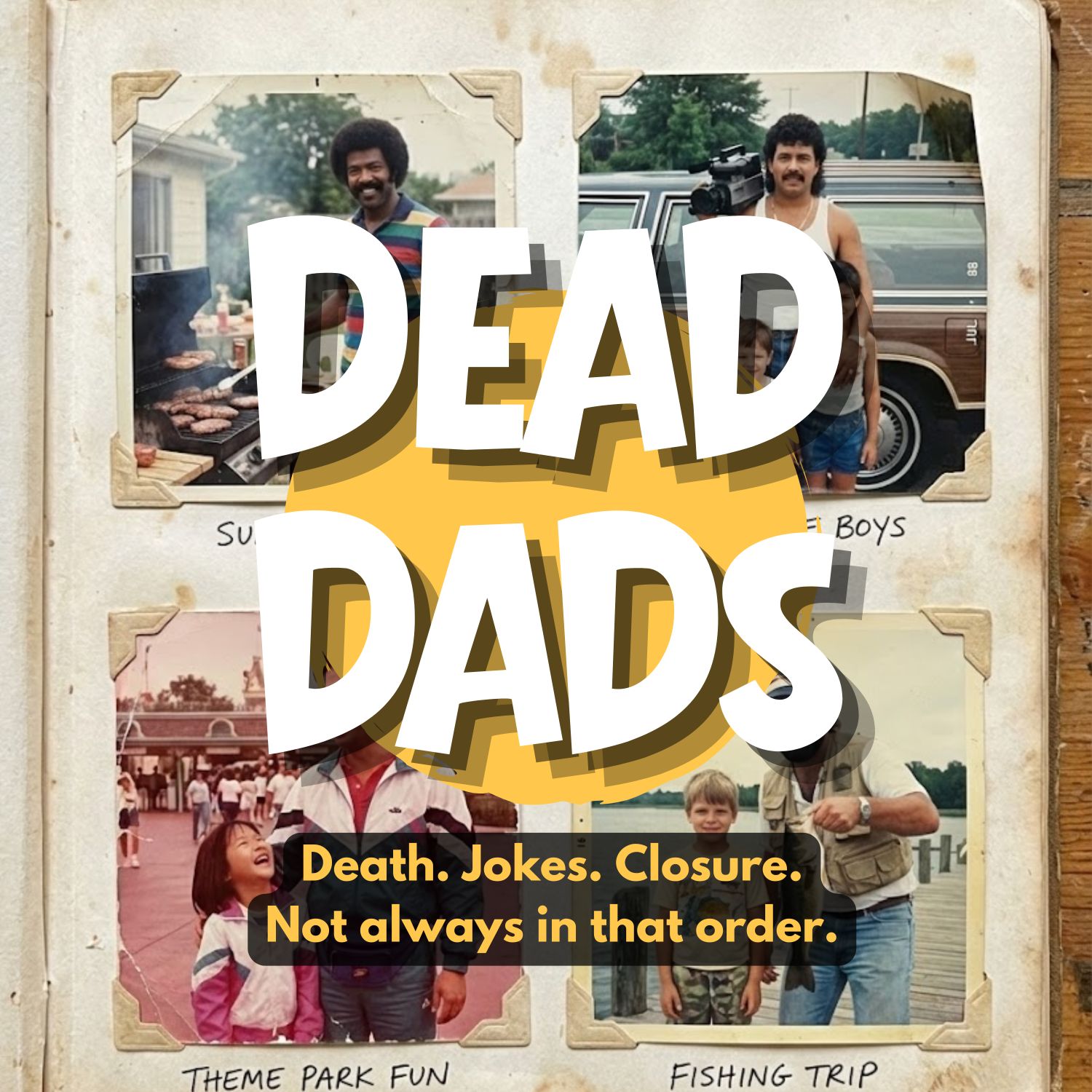
Dead Dads is a podcast for men figuring out life after losing their dad.
Hosted by Roger Nairn and Scott Cunningham, we have honest conversations about grief, father loss, masculinity, family, memory, and all the strange stuff that happens after your dad dies.
No grief brochure voice. No tidy healing arc.
Just real conversations about losing your father and figuring out what comes next.
You're not alone.
Content note: This episode includes discussion of addiction, substance use, and difficult family relationships.
Support Dead Dads: https://buymeacoffee.com/deaddadspodcast
Website: https://www.deaddadspodcast.com/
Instagram: https://www.instagram.com/deaddadspodcast/
Produced with support from JAR Podcast Solutions: https://jarpodcasts.com/
Related episode: grieving a father whose love was difficult to understand.
Related grief resources
Understanding grief in men · Grief support resources
About the show: Roger Nairn and Scott Cunningham share lived experience of father loss. Dead Dads is not a substitute for professional care.
Episode Transcript
Source: YouTube captions. Automatically generated captions may contain errors.
[0:00] I saw my father just sitting there like this in in the in the seat in the in the in the uh in the hospital just in the room just looking so defeated that I had to I had to hold forgive the the crudness. I had to hold the little bucket thing so he could pee into it. And I tried so hard not to cry. Um and
[0:16] uh my father just looking down at the floor and I remember looking up at him and being like, "Dad, you always told me what it was to be tough so I need to show you need to show me a different kind of toughness." >> Hey guys, welcome back to another episode of the Dead Dads Podcast. I'm Roger. What we're going to do is we're going to introduce you to uh the most
[0:33] larger than life guest I think we've had on the podcast to date. So Jimmy is uh an absolute delight to listen to and he's got an incredible story. So you're going to want to watch this episode because you're going to learn what it's
[0:48] like to deal with a lot of family drama and that might be something that you're going through right now. >> Thanks Roger. As you can probably see, Roger and I are not in the same space. This is the challenge of trying to record a podcast. And so, while you get
[1:04] a chance to see Roger's fantastic legs, I am in a slightly more chill period of time here as the seasons descend into autumn. But regardless, I still enjoyed every second of talking with Jimmy, and I think you're going to enjoy it as
[1:19] well. He is a truly one-of-a-kind individual. He calls himself too much, but I think he's just enough. And I think what you're going to hear from him today about dealing with the challenges of a dad that really pushed him out of the nest and challenged him, but also
[1:34] was a gruff, tough, maybe not emotionally engaged dad. And how he gets through all of that and how his dark times lead him on to a better sense of where he is now are all things that I think you're going to discover.
[1:50] So everybody, I can't wait to show you the next episode of the Dead Dad's Podcast. It's the Dead Podcast. [music] >> Jim, thanks so [music] much for being
[2:06] part of the Dead Dads Podcast. Of >> course, man. Thank you for having me. >> Now, I got to ask, why on earth would you decide to come on this podcast? You know, [snorts] to tell you the God's honest truth, I had actually I don't know, maybe it was my Instagram algorithm that everything was grief
[2:22] written on every single thing that I saw and I came across your guys' podcast and I thought it was so unique and different that um no one's given me a a timeline or like any type of manual for grief cuz there isn't one, but this seemed like a a real good platform for those to be
[2:38] able to talk about the experience and hopefully be able to get some insight themselves and help others. So, I was I was just I was frankly really really enamored by by your guys' whole thing. And um you know, it's I'm interested. That's the best way I could say it. >> When we first chatted, I remember you
[2:54] saying that you uh you know, you think you need this uh you know, just as much as uh as we do when it comes to having this sort of conversation and exploring your grief. Wonder if you could expand on that. >> Yeah. So, it's funny that you say that. So, grief, I've learned over time, is a
[3:10] very lonely process, right? So, I could be in a room full of people and still feel like I'm entirely by myself. Um, so being able to share on a platform like this has been something that's really, really, really I've been looking for, for a lack of a better way of saying it. >> Love the word enamored. That was the I
[3:26] was excited about it. So, um, I appreciate the fact that you did this. Do you want to just tell us a little bit more about who your dad was? What's his name? Um, you know, and we'd love to learn a little bit more about what your relationship was like with him. So, my father's name was Anthony Vin. Rest in
[3:42] peace, Tom. Miss you. Um, my parents got divorced when I was six months old. So, I never really had the experience of them being together. But unfortunately, my parents get divorced. Uh, one seems to be a little more bitter than the other at times. So, my mom, um, as sad as it is to say, leverage the New York
[3:59] State court system to be able to prevent my father from being around for most of my childhood while simultaneously taking cash payments for child support from him. So she basically took that cash for child support and then sued him in court with it. My father was told to me that
[4:15] he didn't love me because I was handicapped because of my right eye, my glaucoma, you know, and that no one would ever care for me except for him and that, you know, I wasn't good enough and that he didn't want me. Whereas that was really just my mother being a bitter divorce a um so fast forward to turning 12 into 13. Um went through a long
[4:32] lengthy court battle to be able to go live with my dad. Um, and then from there I didn't speak to my mother again until I was 21. So my father my father was the type of guy that um I went to high school in Long Island, but my dad lived in the Bronx. So my dad drove me from the Bronx to Long Island every day
[4:48] until I got the ability to get a license because he didn't want me to switch schools where I first moved in with him. >> Sounds to me like you grew up thinking your dad didn't want to see you. >> Yeah. The first 12 years of your life, you had a different picture of your dad than the sort of second half of your childhood.
[5:03] >> Yeah, very very much so. So the the problem is is that again uh my mother was as good as she can be. She's a a fault defaulted human being just like anybody else that has flaws and things wrong with them, right? So they did the best they could with what they know plus a little bit of vengeance, right? So for me growing up it was really really
[5:20] difficult because when I was a little kid, my mom would let my sister go with my dad but then would behold at me and tell him to see she can go but he doesn't want you to go cuz he doesn't want you right. So that was really really really hurtful. Um, and then what happened is is that in seventh grade or
[5:37] eighth grade rather, we had a trip to Boston as a school. My mom was like, "Well, why don't you ask your [ __ ] father if he wants to, right?" So I was like, "Okay." And I did. And then we went on the we went on this bus trip. Now, mind you, this is a school in Long Island with nothing but Catholic school parents, right? My father being who he
[5:53] is from the Bronx came over and took over the whole trip in a good way. So the first night, uh, we got lost to the highway and none of the teachers wanted to ask the bus driver to stop. Right. So my dad goes up to the driver's like, "Listen, keep driving. Don't even look at me. I want you to understand I have a
[6:09] CDL, too, commercial driver's license, and I'm not one of these jerkoffs from Long Island. So you're either going to stop and ask for directions or I'm going to throw you off the bus." Right? So got him to stop, threw him off the bus. The first night we get to the hotel, everybody's food was terrible. So my
[6:24] father and this guy, Mike Cypriano, the other dad on the trip, went and got pizzas for the entire class. Second night we were supposed to go to a planetarium and what eighth grader wants to go to a [ __ ] planetarium, right? So my dad in conjunction with Mr. Cypriano got the hotel we were staying
[6:40] in to give us the ballroom for the night and somehow found the friendlies in the middle of Massachusetts to be able to give these like bricks of ice cream so that we can make Sundays. So now coming back coming back from this trip right I was told my father was a piece of [ __ ] for most of my life and then this is the
[6:56] first real interaction that I have coupled with being given this court paperwork. Um so it was quite a change and it was hurtful at best. I didn't speak to my mother for seven years mainly because of this. This is sort of the first experience you have with him is almost this hero situation where he
[7:12] comes in and sort of saves the day for you and your friends. >> Yeah. that holidays, you know, in infrequent visits because of what my mother was doing. But as soon as again, her sarcasm and her attitude was like, "Yeah, go [ __ ] ask him. See what he wants to do." And my father was like,
[7:29] "Great awesome." >> Now, now I understand that in your 20s, uh, you got into some trouble with the law. Um, you were you were selling cocaine and and got arrested and ended up in >> in prison. Wonder if you could tell us about that. >> Yeah, so this is a this is a fun
[7:45] additive to the story. And you're living with your living with your dad at this point, right? So, this is this period where you've started to live with your dad. >> Correct. So, my father was when I tell you if you looked up good father in the [ __ ] dictionary, there'd be a full-size portrait of him. But at the
[8:00] end of the day, my father is a old school Sicilian dude from the Bronx, right? So, he grew up around that life, that organized crime, that type of lifestyle. Was never involved in it, but was very close to it. So, I'll give you a perfect example. When I first went to go live with him, I had to go unload
[8:16] trucks with my cousin Johnny Boy, who a guy named Johnny Boy, John Milano, is everything that you think he is and then so. So now I'm being exposed to what's around me, right? And my father was like, "Look, you got two choices. You could either move out and get a job or you got to go to college when you graduate high school. There's no no in
[8:32] between. Otherwise, you can't stay here." So I was like, "All right, fine. I'll go I'll go to community college." So I did that to be able to help my dad take care of my grandparents at the time because Italians we don't we don't believe in nursing homes, right? So we we're taking care of the two of them. I had floor in the house myself. During
[8:48] this time, uh I started to develop a relationship with a a close family friend who was a very large scale cocaine dealer. So when my dad uh when I finally got into Bingmpington, which was about 2006 at this time, um my dad was like, "Well, how you going to pay for
[9:04] it?" I'm not paying for it. Like good luck. Figure it out. So, I couldn't get a student loan just due to prior issues with credit and just life. So, I made a phone call to a friend um and I picked up uh about 100 grams of cocaine that first weekend. Um sold it all and I
[9:21] developed a pretty large scale business at this time. My father being who he was was like, "I don't know exactly what you're doing, but I know you're doing something you shouldn't be doing. And when you get caught, not if when you get caught, cuz you're going to, I'm not helping you. I'm not coming to your court dates. I'm not sending you money.
[9:37] I'm not bailing you out of jail. I'm not doing any of that. And me being the young arrogant prick that I was was like, "Yeah, okay, Dad. Fine. Don't worry. I'll be just fine." And the way that he called it was that it wasn't going to be me. It was going to be somebody else. And that's exactly what happened.
[9:52] >> So, when you ended up in prison, your dad stayed to his word. He's he's not he he didn't come to bail you out. >> He didn't do anything. And we had actually had a pretty big falling out over this because I had a close friend that I went to high school with who happened to also go to Bingmpington. Didn't have anything to do with me but
[10:07] got himself in trouble. His parents were Irish immigrants off the boat. So they didn't know jack [ __ ] from Shyola about anything about the US court system. My dad helped them and their son get a good lawyer and basically saved him from going to jail for quite some time. So it was a really like you hurt you help my
[10:23] friend but you wouldn't help me. And like he we had a big fall down. Did not talk for a while. And when I came home, my dad was like, "Listen, here's a 1989 300 Mercedes-Benz seal. Was worth like $500. Was a called it the [ __ ] machine. It was a piece of [ __ ] car." He was
[10:39] like, "Good luck. You're on your own." So, I slept in my car for the first six weeks that I was home. My mother wouldn't help me neither. And um it hurt for a long time. But after I was able to establish myself in my life in the career that I have now, my dad had told me, you know, you don't think I wanted to help you? Of course I wanted to help
[10:56] you. But if I helped you and I coddled you, you wouldn't have gotten to where you are. So, and it made a lot more sense as I got older because had he done that and had he scooped in and, you know, been like to save your parent, I don't think I would have gotten to where I'm at today, to be honest with you.
[11:12] But at the time, did you have the sort of same feelings you had when you were you, you know, 12 where you felt like your dad had abandoned you a second time? >> Yeah, 100%. I felt like I was completely on my own. Nobody, not just him, my mother, my sister.
[11:27] >> There's some emotional connections in there. speak really positively about your dad, but also for a lot of the early part of your life, he's a shadow figure and then he's a dominant figure and then he's a judging figure. And so
[11:42] I'm gathering that there's a sort of this moment that you're talking about where he's kind of given you this car, given you kind of this rough shove into the world. So there's some sort of transition now where he's becoming, I guess, more of this figure that you can
[11:58] look up to, but because you say you get to it, but what's the process of getting to it? How do you go from he's he really wasn't a friend to me to, okay, I I'm starting to see him as kind of like this person that I can admire and look up to? >> Two pieces to that. So number one is
[12:14] that he was always when I say a man's man and a father's father, the guy drove me from the [ __ ] Bronx to Long Island every single day and did it with a smile. And for all the things that happened that my mother bashed him my whole life, my father never once, not one time ever bashed her, said anything
[12:29] that he could have said any of that. In fact, when I went to go move in with him, I had to go back to Long Island to get all of my clothes. And um when we pulled up to my mother's house, all of my clothes were garbage bags on the front steps. And my dad's like, "Listen, you better go talk to your mother. When
[12:45] you get up there, when you close, ring the doorbell, talk to your mother." I was like, "No way. I'm not doing it. Forget that." He's like, "No, no, no. You better go do it." And um I remember I went up to the door, I rang the doorbell, my mother opens the door, she's like, "What are you doing here?" And then closed the door in my face. That was the last time we spoke. So I
[13:00] came back into the car crying and my dad was like, "I'll never make you do that again." But still never talked [ __ ] about my mother. Now, was he tough and hard? Yeah. But when it comes down to um the way I look at it is he used the best tools that he had and what he knew.
[13:16] Where it really started to change is as he got older, he started having a series of strokes. He had I don't know if you know what a TIA is. It's a mini stroke. So he had a couple of those and each time looking back on it, it took a little bit out of him, but he never he
[13:31] would never let you see it because that's just who he was, right? And as he got older, he would apologize for things like, "Listen, I'm sorry that you know I was I wasn't able to do certain things for you when you were younger, like your mother was dead. You told me all my [ __ ] valuable life skills. You think I give a [ __ ] about you like like
[13:48] getting me a couch for my apartment or like like some dumb [ __ ] like that?" So, the love and admiration and respect was always there. It was more of anger towards my mother for you like why did you lie to me for so long? And today and today you you lead a a large uh team in
[14:03] in in the in the banking world. Curious where does your father show up in in your leadership style? >> I'll give you a perfect example. So um my dad and my cousin Johnny Boy used to have an airline cleaning and maintenance company that cleaned terminal 4,5 and six of JFK airport when it was all uh
[14:20] TWWA. So I'm dating how how old I am. And it's running 24 hours a day with 180 people. So when my dad would get me for the weekend, the first stop, no matter what hour of the night it was, he would go to the airport and he would just walk around and just like let him know like, you know, let him know like I'm I'm here and I'm in charge now, right? So how
[14:37] this ties to leadership style was the very first time that we went there, my father dressed in a full suit, brings me in, we're walking around and he sees this guy who was like one of the maintenance guys that worked for the old vendor with like, you know, the bucket that somebody like cleans the bathroom with, like the big wide one with like
[14:52] the [ __ ] all the cleaning tools and [ __ ] My dad wakes him up. He's like, "Hey, how you doing? What's up, man? I'm Anthony Via. By the way, you're [ __ ] fired." And fired him on the spot. The second part of this, he took the whole bucket, went into the bathroom, was still dressed in a full suit, and
[15:07] cleaned it from top to bottom. And he came back out and was like, "I want you to understand when you run a business or you're in charge of leading a team, you have to be ready, able, and most importantly, willing to do everybody's job, including your own, and lead by lead by example." So that's one of the
[15:23] the how that ties to my leadership style and my rise through banking. Never asking anybody to do something that I wouldn't do and leading by example. >> So I'm getting a real sense of him as a figure. Obviously you talk about tough love. That's that's what comes through. Like he's tough but he tries to find the
[15:40] ways to also be, you know, connecting. He tries to show you that really classic sense of dad value which is you got to be hard but you got to find the ways to be soft. You got to be, you know, you got to set an example. You always got to do hard work. So, I really see him as a template. But obviously, there's a
[15:57] period in the not too distant future where does he become sick? Like where where does he start to become not this tough guy, but he starts to become a fallible individual that is potentially, you know, going to die. >> It's so crazy cuz it's just like it appeared out of [ __ ] nowhere, man. He
[16:14] had a couple of strokes, paced out to pay, you know, spaced out and every time he seemed fine, but at the same time, my dad was the type and the difference between me and my sister is shoot me up his ass like, "Oh, I want to come to the doctor with you. Where your medicines? Let me put everything in the jar." My father was like, "Don't treat me like grandma. I'm an adult. I'll take care of
[16:30] it." So, the difference for me is his son was I I still respect you. I'm not going to like I was like, "Dad, can I come? I'll sit outside. I won't say anything." He's like, "No, I'm an adult." Okay. So all of these strokes over time seemed to take a little more out of them and a little more out of
[16:46] them and a little more out of them. And there was this one really bad one where they were then going to put in a pacemaker cuz his heart rate was going up and down like this on the machine, right? And uh I saw my father just sitting there like this in in the in the seat in the in the in the uh in the
[17:01] hospital just in the room just looking so defeated that I had to I had to hold forgive the the crudess. I had to hold the little bucket thing so he could pee into it. And I tried so hard not to cry. Um, and [clears throat] uh, my father just looking down at the floor and I remember looking up at him and being like, "Dad, you always told me what it
[17:17] was to be tough. So, I need to show you need to show me a different kind of toughness. Come on." I used to call him hop along case of each because of the Sopranos inside joke. And uh, and it was the first time I ever really saw my father like like like kind of broken a little bit. Comes to find out he had he had a pacemaker put in and then they had
[17:35] to have what's called an ablasion, which uh, was the last thing that happened before he died. It's like a uh they electrocute like veins around the heart or or something that that don't I don't know exactly what but it's it's a not a dangerous procedure. And I remember when we were there he he you could tell he
[17:50] was scared. He would never say it but you could tell he was right. Two-hour moment of walking up and down the halls just shooting [ __ ] cracking jokes and you know of the hospital, right? And he was like, "Look, listen. If anything happens in this, I just want to I just
[18:05] want you to know how proud I am of you." And uh, you know, I I tried to do the best I could. And I remember being like, "Dad, shut the [ __ ] up with that morbid bullshit." Two weeks later, he I get a phone call. You got to get to New Jersey. Why? Uh, my sister's like, "Just come downstairs. We got to go." I get
[18:22] downstairs. I I get in her car and she turns around and just the look on her face, she's like, "Dad passed away." I was like, "What?" I fell out of literally fell out of a car cuz the door was still open in front of my building. >> Sounds like it's obviously it's a heart condition that he has and he's having
[18:39] repeated strokes. He's having conditions. I guess what I interested in is he was a tough guy and then he wasn't and you're trying to sort of reconcile this with him and and challenge this. I just also want to ask when was this? How
[18:54] long ago was this? I apologize. Was this like a few years ago recently? I don't know in your history how long ago this this all happened for you. >> Sure. My my dad passed away on May 4th, 2024. Now, the the last time I saw him where I was telling you about the walk up the hospital, that was uh April 3rd.
[19:11] So, he was having the ablation a couple of days later and uh then he was home and I should have known that his health was health was rap was deteriorating more than he was telling us because my dad used to come into the city everywhere. He lived in Lynhurst, New Jersey, which is right outside 15 minutes outside of the city. So, he
[19:26] would always just bust right in. He would bring uh Paty's Pizza, which is on 116th Street in 1st in East Harlem, that he used to go to with my grandmother when he was a kid. He would bring a pie in every time, no matter what. We'd smoke a joint, like watch TV, whatever, hang out. [snorts] And all of a sudden, he just stopped doing all of these
[19:43] things that he would do all the time. Like he was doing jiu-jitsu, he was doing uh Krakaw, which is like an Israeli [ __ ] defense fighting thing. And he just stopped doing all of them at at, you know, late 60s, early 70s. I was like, "Dad, like, are you all right?" and he would always be like, "Yeah,
[19:58] yeah, no, I'm just tired." So, in retrospect, because hindsight is always 2020, there was red flags everywhere. But my father still tried to keep up that that that tough guy mask would never would never let you know. >> You you you mentioned something earlier about having to help your dad pee into a
[20:15] bottle, and I just wanted to go back to that. I had to do the same thing with with my dad. There's something that just like shattered in me. that role reversal just happens and it kind of it kind of explodes your brain in a in a lot of ways. I don't know if you felt the same way.
[20:30] >> First of all, I'm really sorry that that you had to experience that. I know it doesn't you I've learned with grief saying oh I'm sorry if you like that doesn't there's nothing I could do to accept that or change that except other than like I'm here and you're not alone are the two things that I could say. Uh which is one of the things that grief and this journey has taught me like all
[20:46] that you know let me know if you need anything [ __ ] that people say at the funeral is like that don't help. It's I'm here for you. You're not by yourself, right? And that was part of what drew me to this and the community that it seems that you guys are trying to build. Um, but to answer your question, it was earthshattering on
[21:03] every single level. It was the toughest, strongest guy I ever seen in my whole life. Like guys twice the size [ __ ] their pants when he walks in the room. And you're you you're sitting there just seeing how defeated you were. And there's nothing I could do to stop it. And you know, and I'm also trying to
[21:19] respect you as my dad. And it was it gave me it really humanized my father in a lot of ways in the sense of like you know when you're young you put your parents on this pedestal they're like like Superman and Superwoman and he's he's just a man that's at that chapter of his life. >> You mentioned this about how there were
[21:36] signs that he was eliciting giving and you didn't pick up the signs or you were trying to respect him as your father. Do you feel a sense of guilt that you didn't pick up those signs? Do you feel a sense of responsibility? Is that
[21:51] something that you're dealing with? Because again, it's a very common thing where retrospectively you say hindsight's 2020, you look back and you go, I should have seen these signs, but there's nothing you can do about that. And ultimately, I wonder how that that process wing was for you. >> Great question. So, my my dad, even
[22:08] throughout my whole life, from watching from taking care of my grandparents, me and him were the only two that really did it. I stayed and did community college and took care of my grandparents. He watching them fade away into basically like [ __ ] in diapers and like talking to inanimate objects I think did something to both me and my
[22:24] dad in the sense of like he didn't want to he did not want to uh grow old if that makes sense. He was like, "This getting old [ __ ] is not for me." Right? So, on the one hand, yes, it was all the red flags. I felt bad that I didn't see it. But on the other hand, my father
[22:40] went out the way he wanted to. And when I say that, he didn't, you know, wither away to nothing. And for me, remembering him any other way than I did. Yeah, he was a little weaker. Yeah, he has a little gray hair, but he was still like to a degree that guy. You know what I mean?
[22:56] >> What was it like hearing from your dad that he's proud of you? He always was very, you know, positive reinforcement, loving while still hard. But it felt really good because that day, the other part of the story, which I'm glad you brought this up, the way you did is I had to do a work presentation from the
[23:11] hospital, right? I was on a panel for commercial lending and my father, I'm in the hospital and I was like, "Dad, I got to do this panel." And like he wouldn't shut the [ __ ] up while I was in the middle of the panel. Mind you, I'm on a stream like this. It's like he's he's on the phone. He's like, "Oh, my [ __ ] son's doing this panel." I was like, "Dad, shut up." I threw a pen at him,
[23:27] but I was also cracking jokes and like saying things on the panel that only he would understand that a relative that can be translatable to financing. Nothing was cooler than to be able to sit and do that in front of my dad so I can be like, "Dad, every single thing that I know that I'm good at that makes
[23:43] me good at this job, I learned from you." And uh it was it was it was awesome in the sense of you getting to see me perform. And now that I look back on it, he knew his time was limited and that was his goodbye to me. >> If if you had known that that was
[23:59] goodbye, what would you have said? >> I would have stayed longer. I was there for like from 8:00 in the morning till about 3:00 3:00 in the afternoon and I [ __ ] ran back to the city because I had a work thing and I was so worried about like, you know, some rich [ __ ] who needs money to buy a building for
[24:15] his business and like, oh, I got to be back. Got to make sure I'm on the call. And one of the things that changed really in since he's passed away is not only the the importance of being present and the importance of time, but none of this [ __ ] matters. Like just because
[24:31] I didn't answer your phone call, your email in 5 minutes, like ain't nobody going to die. Nothing's going to change. And we put these this emphasis on these stupid material things that don't really matter at the end of the day. >> Well, I was going to say, so he dies in
[24:46] 2024. Obviously, it's quite quick and sudden. He's your sister's informing you of this. So, what happens? What happens then? You know, are you an executive of his will? Is there like an ownership that you have to take in the family? How
[25:02] does that how do those steps happen for you from when he's, you know, you found him to, you know, you've laid him to rest, so to speak? >> Well, the the funny thing is is that's actually the probably the hardest part of this whole thing, and I'm going to tell you why. So, first of all, my dad
[25:17] did not have a will like every other stupid old guinea. Of course not. Never had a will. So, things are going on probably. He was not a rich man, but my father had had and we still have a very extensive antique car collection. And what happened is is my my sister chose the path of she chose the path of
[25:32] chasing that, but didn't realize that that and still being part of the family and being close are not mutually exclusive. So my dad died, my sister and my and frankly my mother, which is even weirder, that they basically just took over the whole thing. They made most of
[25:48] my father's funeral about themselves. And I and I and it really was very hard for me cuz I'm the only son in the Sicilian family. So I got to I got to sit there and, you know, eat it for a lack of a better way of saying it. And to give you an example, uh in the funeral home, um I was the only one that
[26:04] didn't have a picture next to my father's casket. Then my father, miss you, Tone, uh, is the only guy I ever met that had four different women from four different chase stages of his life. My mom, uh, his first ex Margaret, who was really like the closest thing to a mother I ever had, and two other women
[26:19] that he dated throughout his life, they're all throwing themselves in the casket. Like literally, when I tell you throwing themselves in the casket, like, play a player, I love you, Dad. So, I I say I say all of that to say that during the process, I didn't really have a chance to grieve. I had to prop up everybody else and and be the one that
[26:35] was, you know, shaking hands and kissing babies at the funeral and and you know, all of that. So, what I did to be very honest with you, um, not only sweeping it under the rug like stupid old guineies do, uh, instead of doing what I should have done immediately afterwards, which was like seeking counseling or try
[26:51] to understand, uh, I did the other type of counseling, which is a bottle of Jameson for quite for probably about the first year that after he died. So, you took it upon yourself to punish yourself and to take yourself into like a dark place to try to figure it out.
[27:06] >> In reality, now that I'm past that and I'm in grief counseling and like I'm I'm getting better with dealing with it, I was running away from the problem. I was running away from the reality that he's gone. And um you know, for a little while, I was like, well, maybe if I just cry hard enough or I drink enough, I'll uh I'll turn around and he'll be
[27:22] outside, right? Or like he'll be like, "Just kidding, you know?" Um, and then I started to really slip into a place, not nothing bad professionally, didn't get in trouble, but I I knew I was getting to a place where it was like for the first year that he was dead, anything that happened, Christmas, his birthday,
[27:37] [ __ ] flag day, anything that would be like a a family related I would be around him thing, my my my numbingness of like drinking and frankly doing drugs would would would help not help me get through it, but numb me through it. I think your story
[27:54] is typical in a way which is like I don't want to deal with it so I'm going to do something else and what they do is typically punishing to themselves. So how how did that I'm interested I don't know Roger maybe you can add to this too or I'm interested in how you you went
[28:10] into it but how you got out of it like you you made the decision to get into it and how you made the decision that you needed to get out of it. >> When I say decision to go in I just I started when I was doing the pictures the night before my father's [ __ ] funeral. I picked up a bottle of Jameson, the the mil the the seven mill the whole 1.75 the liter. I drank almost
[28:27] all I drank almost all of it that night. Um because I was just f and I was like doing blow by myself. It was wild. And I and I started to get into this space of just I felt like I was a I felt like I was a a like in a tube and watching the world go on around me and I'm like
[28:45] screaming like like I like I need help and I just feel like no one's hearing me. And because in my own in my own right followed my father's footsteps. I was always the tough guy out of the group out of my group of friends. I was always the don't worry like you'll be fine and just eat it and keep going and
[29:00] eat it and keep going. And this was the first situation that I couldn't tough guy my way out of to be very frank with you. Um so it became a little bit more and then when we started putting his stuff away every time I would see something is I got to like I got to go outside and like just like get a nip
[29:15] from a liquor store like that type of [ __ ] And it got to a point where, you know, I'm I took the I had taken the day off from work just because I wanted to just relax. I had a long weekend. And I'm sitting in my house and my father I have a picture of my father right above my computer desk that you can't see. And
[29:32] it was basically him looking at me. And I remember when I was younger, my dad used to be like, "Jim, one day you're going to wake up and you're gonna be [ __ ] 40. Do you really want to be the way that you are?" This is when I was being bad as a kid before arresting and all that type of stuff because I was a bad kid. Um, and I looked at it and I just I heard him say it in my my head
[29:49] like, "Do you really want to [ __ ] because I'm I just turned 40." He's like, "Do you really want to be like this when you're [ __ ] 40?" But the way I got out of it was like I just didn't want to be like this perpetually [ __ ] up and like sad and like not good to be around and just like carrying all
[30:05] this weight on my own back. So, couple that with I got a book called Love and Grief that that I start I started reading and um I finally let go of the fact that I can't carry every single thing myself. Um so that's where I started grief counseling and frankly uh
[30:23] talking to people that I know who lost a parent cuz it's no disrespect to somebody that that hasn't lost one but you guys both know sometimes it's a little they just don't get it you know. So surrounding myself in a group like that, >> I'm wondering if you could share with guys out there what the grief counseling
[30:39] experience has been like. >> Tell you the truth, it's actually been a lot different than I thought it was going to be. And when I say different, >> I say different in the sense of it it was very much a combination of real therapy, which I really very much needed
[30:54] at the time. She suggested I start journaling. So not just journaling about my dad, but journaling about the feeling. So, writing as if I am the feeling of anger or the feeling of sadness or the feeling of, you know, those type of things. Um, it's been really helpful. And I hate to quote the
[31:09] Sopranos, sometimes it's like taking a [ __ ] when you go there. You got this it, you know, it's it's like literally you got this big thing that just follows you around and it just it doesn't follow you everywhere all the time, but you know, like Billy Joel's Piano Man came out at the end of
[31:25] The Boys. I don't know if you ever one of you watched that show when it was on. My father loved Billy Joel. When I tell you my I I burst when I say burst into tears, I like I couldn't even control it. And [snorts] the last thing I'll say is that grief therapy, grief taught me uh grief counseling taught me you don't
[31:41] have to hold it all in. You don't. It's okay. Let it go. That tough guy [ __ ] don't work. There's something interesting about therapy and my dad's passing which is I think that it gave me an opportunity to examine my life and it gave me the opportunity to make changes to things that I had been holding on to.
[31:59] And so and in my own experience I always think therapy even though it came as a result of something terrible was a huge opportunity for me to correct some things. So I feel a sense of gratitude and I can really relate to the idea that you know there are positives that come
[32:15] out of these tremendous negatives. things that you know you see that you didn't see before. >> And don't get me wrong, man. I am nowhere near like I don't One thing I realized you'll never get over it. It's never going to go away. It's just how you carry it. And I'm a lie, man. Each day is a struggle. Part of what the
[32:31] change has been for me to be better, right? Is to accept that like it ain't going nowhere. I'll always feel like this. And when the moments come, stop trying to stuff it down. Stop. >> So there sounds like there's lots of things in your life that remind you of him. You know, you've got the picture
[32:46] that you can see above you and the Sopranos and the lifestyle. Do you have like a a ritual kind of like when you see yourself feeling like you need a connection with him? Is there a thing that you do to connect yourself with him? Is it listen to Billy Joel? Is it What's your What's your sort of process
[33:02] to get in connection with him if you feel that's a need? >> It's funny. It's funny you say that cuz like certain things you just like, you know, when you feel them around you, not those little signs where you see a feather or any of that [ __ ] It's like literally like I know you're I know you're around me. I know you are. And um for me it's I'll do a combination of
[33:19] things. I'll usually sit outside of my house because I used to speak to my father every morning, good, bad or indifferent. Every mo every single morning up to the day that he died or the day before he died. Um so I'll sit out there and sometimes just like look up at the sky like Tony I miss you. I'll talk I'll just straight up talk to this
[33:34] guy. Um, and what I'll also do is I have a long playlist of all different songs that that he liked, both Billy Joel, non Billy Joel, because in the beginning there's a lot of anger for me. So sometimes I still get those moments where I'm like angry at up there, you know? Um, so I
[33:51] try to I try to do that and I try to think to myself like would my father be all right with this if he was here? >> What would he say? What would he say to me if I was he knew how I was acting or what I was doing? >> Well, we're we're proud of you, Jimmy. you've uh you've got an incredible story and uh we you know we really appreciate
[34:08] you sharing that with the guys out there. What's one last piece of advice you would give to uh a guy who's in the you know right in the thick of his grief right now? >> So number one, do not rush immediately back to work cuz trying to distract yourself with [ __ ] like that does not work at all.
[34:23] >> Thank you so much for taking us through this journey. We get it. We understand it and you're not a lot. You're you're doing the best that you can and I think that's what we're all trying to do. Your grief journey is your own. And we've said that I think a thousand times and it's still true. You just do what you got to do to get through. [music]
[34:39] >> I appreciate you guys. Thank you. >> Yeah. Peace and love, Jimmy. >> It's a weird, sad, [singing] funny, but we're here to help you [music] laugh. It's the Dead Podcast.
[34:56] >> [music]
Frequently Asked Questions
Who is Jimmy Venia on Dead Dads?
Jimmy Venia is a guest on the Dead Dads podcast who opens up about his complicated relationship with his old-school Bronx father, his struggles with addiction after his dad's death, and learning how to process grief.
How did Jimmy Venia's father influence him?
Jimmy's father, Anthony, taught him to be tough through strict parenting, driving him across New York for school, and even refusing to bail him out of prison, which eventually taught Jimmy about accountability and a deeper form of love.
What topics are discussed in the Jimmy Venia episode of Dead Dads?
The episode covers complex father-son relationships, tough love, prison and abandonment, watching a strong parent become vulnerable, grief-induced addiction, and why men struggle to ask for help.
What is the Dead Dads podcast about?
Dead Dads is a podcast hosted by Roger Nairn and Scott Cunningham where men have honest, unfiltered conversations about life after losing their fathers, navigating masculinity, grief, and family dynamics.
Dead Dads guest
Jimmy Venia discusses his father Anthony, learned toughness, addiction and finding support after father loss.