
 YouTube
 Spotify
 Apple Podcasts
 Amazon Music
 PocketCasts
 Castbox
 PlayerFM
 Podchaser
 iHeartRadio
 I Lost My Dad 13 Years Ago — Here’s How I Finally Dealt With Father Grief | Dave Genn of 54-40 | Dead Dads Podcast | Grief Support for Men
When does grief get easier after losing your dad?
In this episode of Dead Dads Podcast, Dave Genn of 54-40 talks about grief, mental health, father loss, music, creativity, and what actually happens years after your dad dies.
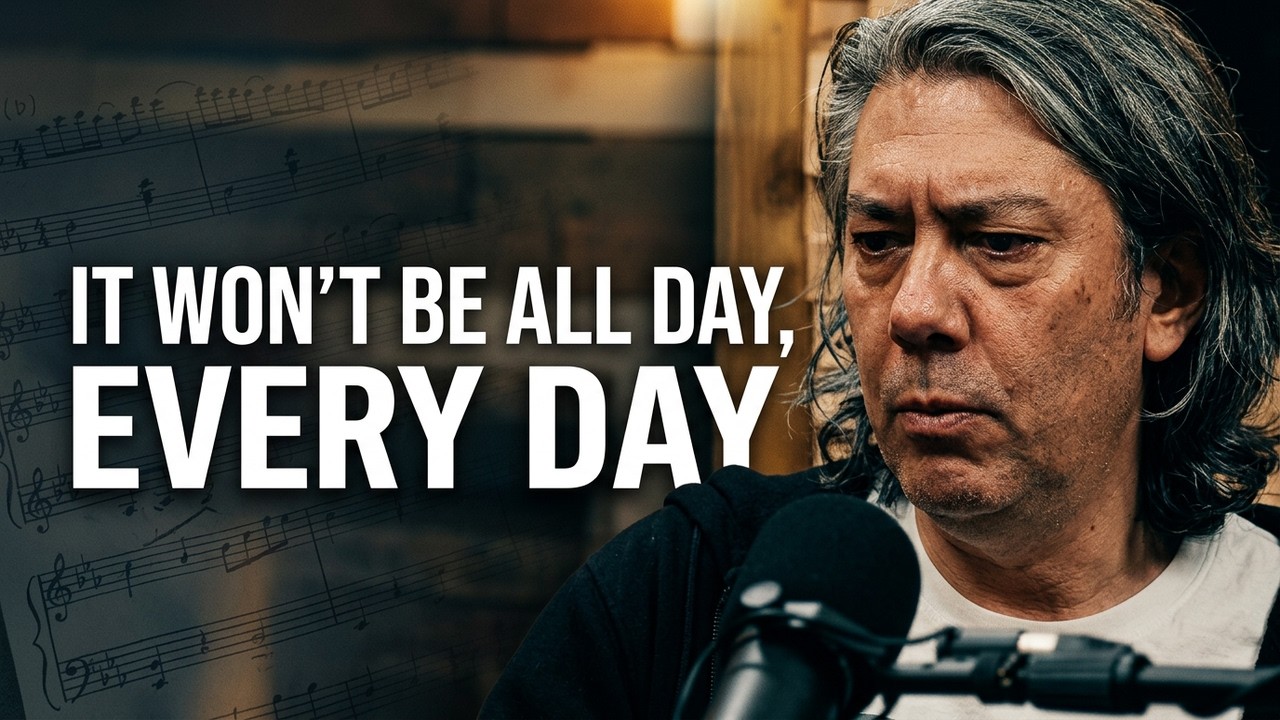
Dave got the honest answer from guys who had already been through grief and loss: the hurt does not really dull. It does not become less painful. But it stops being all day, every day.
Dave talks about losing his father, Robert Genn, one of Canada’s most beloved painters and creator of The Painter’s Keys. He shares what it was like to watch his dad face pancreatic cancer, mourn the end of his creative life, and leave behind work that still feels alive.
This is a raw, honest, and funny conversation about men and grief, dealing with loss, grief support, the healing journey, music and grief, creativity, legacy, and finding out how much your dad is still with you.
🎧 In this episode, you’ll hear about:
Why Dave says “when you see your father pass, you’re next”
What grief feels like after losing your dad
How losing a parent changes your view of mortality
How Robert Genn faced pancreatic cancer and the end of his creative life
How Dave turned grief into music and creativity
Why he rewrote “Crossing a Canyon” after his dad died
How La Difference came out of grief and loss
The dream where his dad said “everything’s gonna be okay”
Why grief does not get less painful, but stops being all day, every day
What happened when Dave lost his mom four years later
How mental health, atheism, and grief support show up after loss
Why mortality is the great leveler
👨👦 About Dave and his dad, Robert
Dave Genn is the lead guitarist of 54-40, a Canadian rock band that has been together for more than 40 years.
His father, Robert Genn, was a painter, writer, teacher, and creative force. Through The Painter’s Keys, Robert reached artists around the world with reflections on art, work, discipline, and the creative life.
In this episode, Dave talks about losing his dad, carrying his influence, and turning grief into art without pretending it fixes anything.
It is a conversation about father loss, pancreatic cancer, creativity, music, legacy, grief support for men, and what remains after your dad is gone.
Also, yes, there are laughs. Because grief is weird like that. Rude, honestly.
⏱️ Episode chapters
0:00 – When Dad Passes, You’re Next
1:37 – Meet Dave Genn
2:02 – Who Robert Genn Was
3:44 – Advice, Dreams, and Songs
5:25 – Pancreatic Cancer Diagnosis
6:37 – Final Months at Home
9:23 – Turning Grief Into Art
11:27 – Aftermath, Work, and Logistics
13:09 – Legacy, Paintings, and Mortality
15:47 – Counting the Years
16:37 – Bandmates and Loss
18:08 – Work as Coping
19:25 – Crossing a Canyon and La Difference
22:33 – Collaboration and Support
24:13 – Grief Over Time
27:56 – Advice for the Moment
28:34 – Nihilism and Apathy
30:14 – The Great Leveler
32:03 – Atheism and the Afterlife
33:19 – Closing and Resources
🖤 About Dead Dads
Dead Dads is a podcast for men figuring out life after losing their dad. Hosted by Roger Nairn and Scott Cunningham, the show features honest conversations about father loss, grief, identity, family, memory, masculinity, and all the strange stuff that happens after your dad dies. No grief brochure voice. No tidy healing arc. Just real conversations for guys who are grieving, remembering, avoiding, laughing, carrying on, or trying to understand what losing a father did to them.
You’re not alone.
☕ If Dead Dads has helped you feel a little less alone, consider buying us a coffee: https://buymeacoffee.com/deaddadspodcast
Follow Dead Dads:
Website: https://www.deaddadspodcast.com/
YouTube: https://www.youtube.com/@deaddadspodcast
Instagram: https://www.instagram.com/deaddadspodcast/
TikTok: https://www.tiktok.com/@dead.dads.podcast
Substack: https://substack.com/@deaddadspodcast
And listen to us here, or wherever you enjoy podcasts:
Spotify: https://open.spotify.com/show/4WWlXBPzgj151SFYRUZeSB?si=fe005fdf079249b8
Apple Podcasts: https://podcasts.apple.com/us/podcast/dead-dads-podcast-grief-support-for-men/id1867632438
New episodes every week.
Dead Dads Podcast is produced with the support of JAR Podcast Solutions, the branded podcast agency that helps organizations build shows people actually want to spend time with. Learn more at https://jarpodcasts.com/
Roger (0:00): There's just no getting around the fact that when you see your father pass, you're next.
Unknown Speaker (0:09): Hey, everybody. Another episode of Dead Dads. Roger, were you excited about this episode?
Unknown Speaker (0:15): Yeah. I was so excited for this episode because Dave is the lead guitarist for the band fifty four forty. He was also one of the original members of the Matthew Goode band. When Dave learned that one of his bandmates had written a song about his his dad's death, Dave took it as an opportunity to recompose it and and put a little bit of a different sort of emotional spin on it, which he shares in the episode. You're gonna wanna check that out.
Unknown Speaker (0:54): Ir lives.
Unknown Speaker (0:57): Able
Unknown Speaker (1:00): do not
Scott (1:12): Yeah. I think this is really interesting episode for me. Dave's relationship with his band and how they were there for him and gave him comfort. Being a little bit older than him and having gone through this experience, I think is relatable because the idea that we're going through this alone can be really daunting. But there are others that are out there that have gone through this.
Scott
Roger (1:43): You know, a lot of guys kind of, you know, mull things over in their heads, but some of us need to actually push it out into a creative product, which is actually one of the things that got me to do this podcast is I needed a creative output. And so actually talking to Dave really helped me reflect on how this show is is helping me process my grief. Hot take. This is our band. We're calling it what?
Scott(2:07): It's rhetorical. We got a great guest today. I'd like to introduce you to Dave Genn. So Dave, why would you decide to do a podcast about your your dad's passing?
Dave Genn (2:28): Our father was the central figure in our family, and, it's been twelve years since his passing, but, it's still, in a lot of ways, feels like yesterday. And, I think in those twelve years since his passing, I've gained a lot of insights in the mourning process, and hopefully, I can help out people who are going through that right now.
Roger(2:46): So what was your dad's name?
Dave Genn (2:48): Robert Genn. He was a a Canadian landscape painting fairy. He was, supported his family by painting thousands and thousands of paintings in his life and supported his family, with his art.
Scott (3:00): Was that here in Vancouver?
Dave Genn(3:02): Yes. Well, I grew up I was born and grew up in White Rock.
Scott (3:04): And so he did as well, or where was he born?
Dave Genn (3:06): He was born and grew up in Victoria, and then they moved to White Rock Crescent Beach, and he had a studio attached to his house. You know, he worked from home every day.
Scott (3:14): So he was home a lot when you were growing up?
Dave Genn (3:16): Yes. Both my mom and dad were home when we went for went to school and and when we got home.
Scott (3:21): That's not always the case for especially in that age group.
Dave Genn (3:23): Our generation is you know, we're the latchkey kid generation, the Gen Xers, and I didn't realize at the time what an outlier we were, but I recognize it now.
Roger (3:33): And you said your dad held held everyone together. You know, what does that what does that mean?
Dave Genn (3:38): He was very much the figurehead of the family. He was very involved in in all three of our lives growing up. Very you know, we were very nurtured in the arts, our father being an artist. My sister is a is a visual artist. Her name is Sarah again.
Dave Genn(3:53): She's a painter, and my brother is a television and film director producer.
Scott(3:57): And he got a chance to see you as well. All get into the sort of family business.
Dave Genn (4:01): I picked a business, you know, playing in rock and roll bands. You kinda peak in your late twenties. Yeah. And and then you hang on for dear life after that. My brother and sister picked fields where you come into your own in your fifties, really, or later.
DAve Genn (4:17): And so, you know, my dad kinda missed my brother and sister's careers really sparking. They were on their way, but they've attained some great success since his passing.
Roger(4:27): Well, what do think you would say about it now?
Dave Genn(4:29): Oh, he'd be so proud.
Roger(4:30): Do you talk about that a lot with your your siblings?
Dave Genn (4:32): Oh, all the time.
Roger(4:33): And how much does the emotional side of it factor into your your your music?
Dave Genn(4:37): He shows up in songs more than he shows up in dreams. I wish he showed up in dreams more.
Scott (4:41): Have you had him in dreams?
Dave Genn(4:43): He has shown up, but I don't remember a lot of my dreams. Unfortunately, I wish I I remembered more, but he has shown up several times.
Scott (4:50): And, like, throughout the period? Or was it more concentrated towards to be No. I seem really enamored with this. We've had this conversation before. So guess.
Dave Genn (4:58): Our our mom has passed as well, and you wanna see them in your dreams, obviously. Because, when you see them in your dreams, you see them in the prime. You know? You don't see them in those in those last few days or those last few weeks or those last few months. You see them, you know, in you know, when when you're a kid or when they were they're strongest.
Dave Genn (5:17): So I do remember one dream that he he showed up, and I told my sister that, dad had visited me last night. She said, what did he say? And I said he he said everything's gonna be okay.
Scott (5:26): So he gives advice.
Dave Genn (5:28): He was an incredible advice giver. And that's one thing actually I've said to my sister recently as well is that I, you know, I really you know, we talk about how much we miss him. And I say, you know, I really miss going to him for advice, and, I really miss not just the solicited advice, but the unsolicited advice. And in hindsight, I wish I'd I wish I'd heeded his advice more and gone to him for more because he was he was rarely wrong.
Scott (5:55): So as you were growing up, this is the sort of dad figure that he's you said the glue that holds you together, but he's the in the role and the family, he's the one that people go to for advice.
Dave Genn(6:05): Oh, yeah.
Scott (6:06): So your mom occupies a position, but his opposition is everybody kinda goes, hey. I've got something to check with you.
Dave genn (6:11): Yeah. I mean, that generation. Right? That generally you know, my mom was a my mom was a homemaker.
Roger (6:16): How how did he pass?
Dave Genn (6:18): My dad was diagnosed with pancreatic cancer. He was given, six to nine months. And, you know, my father was very much a workaholic. And when I say workaholic, I don't give that a negative connotation. You know, when you're an artist and you love what you do, your, you know, your work is play.
DAve Genn (6:37): When we got the diagnosis, he was very cons he became very concerned with his catalog of paintings, the ones that were in storage, the ones that were out in galleries. He wanted to solidify all the works into and catalog them so we knew what the family had in our possession. And it was an interesting thing because, I mean, the our family had never talked about money. We never really discussed money. Then when he got the diagnosis and he started worrying about the family situation after his passing, it became a heated subject.
DAve Genn (7:13): I wouldn't say heated. It became a topic of discussion.
Scott (7:17): And maybe I missed that. So you said in 2013 he was diagnosed with pancreatic cancer, but the diagnosis was what? They gave him a timeline of how long? Was it
Dave Genn (7:26): They said six to nine months. He lasted seven. Yeah. They were right on the money.
Roger (7:29): And when he did pass, you mentioned before earlier, you were all there.
Dave Genn 7:33): He was at home and the whole family was around him. Yeah. He was being he was being held by his family.
Roger (7:40): What was that process like just from a, like, I can't believe this is happening?
Dave Genn (7:44): The nice thing was that he had all his cognitive ability right up until the last couple days. You know, his body gave up on him and the cancer spread into his lungs. And, you know, we had some scary moments where he had to go you know, he's having problems breathing. We had to get him into hospital, etcetera. But, it was just in those last few days where he sort of drifted off and and wasn't present anymore.
Dave genn (8:07): You know, we had some incredible conversations in those last six months.
Scott (8:12): You got the diagnosis. I just was gonna ask you if that stops you and you start thinking, need to spend more time with him. Like, do you start changing your life so that you can prioritize spending as much time with him as possible? Or
DAve Genn (8:26): It's very difficult, right, to see your father, you know, his bother body withering away. I remember being out with him and, you know, showing up at the house and going up to his room and sitting with him on the bed and saying, you know, how are doing today? And he said, you know, I'm just so sad today. And I said, dad, you, you know, you've had an exceptional life. You, you know, it although it was average in duration, it was exceptional in in content, in that you saw the world, you had, you know, a loving family that's totally close knit, you had great friendships, you made thousands and thousands of people happy with your art, you've nurtured and educated and mentored other artists, you've had an incredibly full life.
Dave Genn (9:12): And he said, I know. I just feel that, I have so more so many more paintings in me. I have so much more writing in me. He was he was mourning his creative life or the or the end of his creative output.
Scott (9:25): That's a real gift. That's I think, actually, I wouldn't say what you did for him, in my personal opinion, was a real gift, was reassuring him, trying to help him feel something. Because I feel I know my father, like, couldn't quite consolidate his feelings on an average basis as he was getting towards the end. But that that sitting down and saying, hey, look, from my perspective, you've done a phenomenal job. I think that's a really kind thing to do.
Scott (9:51): But I I think it's a unique scenario to be in his situation and think, I have so much more work left in me, so much more of my personal gift to share with the world. That's a hard thing to to try to process that and a unique thing, not something I've heard very often.
Roger (10:06): We've got these tropes that we kinda follow and, like, I should I should tell him more about this or I should question him about that. But, like, did you have friends or family or somebody who was kind of saying, hey. You know, you should really make sure you spend more time doing this or make sure you spend more time doing that or you just kinda let it all flow?
Dave Genn (10:22): I found it difficult to spend extended periods of time at the house with them. And in typical fashion of our family, I went into a bit of a workaholic mode. And that took the form of my father was a writer for for a long period of time, ten or fifteen years. He had a website and an email list, and he would write a couple of letters a week sent out to an email list about art. And he had always had this dream that maybe he would do like an audiobook or what what we would call now a podcast where he would read these.
Dave Genn (11:08): He didn't like his own voice reading them. And when we got the diagnosis, I dove in. I made an audiobook of his letters, which we which we released to his email list. As I would read them and edit them and and present them, I would send them to him. And he would sort of listen to them at bed in bed at night, I think that gave him great comfort.
Dave Genn (11:31): I think it was a really full circle moment for him to for his oldest son to be reading his words back to him in his in his voice.
Scott (11:41): And you're using your art. Right?
Dave Genn (11:43): Well, I don't know if I don't know if
Scott (11:45): That's how I see it.
Dave Genn (11:46): I don't know if reading is is art. But
Scott (11:49): I But you're emboldening him to use his voice and use his like, you're taking his art and consolidating it. I think again, I'm putting words in his mouth and yours, but from an outside perspective, it it seems like you gave a voice to something that he was unable to do so.
Dave Genn (12:04): When I saw how much it meant to him, it was really my gift to him. And I I can't even remember how many I read. 40 or 50. Like, I I put a lot of time into it. And I think it was very fulfilling for both himself and and myself
Dave Genn (12:27): We did I mean, we did for many years, and it's still available out there. What's it called? It's called the painter's keys.
Roger (12:33): Okay. So your your your dad passed. How old were you
Dave Genn (12:35): at the time? 45.
Roger (12:37): Yeah. Did you immediately get back into the work?
Dave Genn (12:39): All three of us dove headlong into workaholism, but, you know, my mom and dad had been together for close to fifty years, so there was a lot of sort of the the yeah. Helping my mom with the adjustment.
Scott (12:52): So he passes. You're obviously the oldest. Right? And so your mom is still alive at this this point Yeah. And still?
Dave Genn (12:59): Yeah. We lost her four years ago.
Scott (13:01): Four years ago. So did you did you have to occupy a position again as the oldest, like maybe there's an administrative burden that falls to you. Maybe there's a sort of I'm the oldest. I have to take on a certain amount of responsibility for my younger siblings or for my mom. Did you feel that burden at the time, or maybe it's not a burden?
Scottr(13:19): Did you feel that responsibility?
Dave Genn(13:21): I think that responsibility is very much shared between the three of us. My sister is very nurturing and has a lot of control over her schedule, you know, being an she doesn't have kids. So she and she's an artist, so she makes her own hours. So she, was very, very useful in helping my dad helping my mom adjust. So you shared the
Dave Genn(13:45): burden in terms of the things that needed to get done.
DAve Genn(13:47): Yeah. I mean, one of the things that was so surprising to me was the the I'll use one of my dad's words here. The rigmarole, you know, worrying about all those things that happen when someone passes, you know, from whether it be the memorial service to sorting out accounts or getting everything transferred into my mother's name. All those types of things are are you know, there's it's it's heavy work, and it takes years.
Roger (14:11): They don't make it easy, do
Dave Genn(14:12): don't make it easy. They don't make it cheap either.
Scott (14:15): No. So who took that on, and is it still ongoing?
Dave Genn (14:18): My sister manages his work, and we still we still release work into the marketplace. For the most part right now, we're holding on to what paintings, remain in the family. Every once in a while, we pull the trigger and buy and buy some of his art back. There was there was a painting that came up a year or two ago, at auction, which was a painting of me as a as a as a child Aw. As a toddler.
Dave Genn (14:45): And I'm like, okay. I gotta have that one.
Scott(14:48): Where is that painting now?
Dave Genn (14:49): It's on my wall.
Roger (14:50): What do you feel when you look at it?
Dave Genn(14:53): Well, that one's a I I mean, there's a lot of I mean, I'm the firstborn, so there's a lot of paintings of me as a as a as a little kid. Our house has got a lot of paintings of me as a little kid, but this one was an exceptionally good one that went out into the market, was sold, and enjoyed, and then came back. You know, I just think it's just a it's a it's a wonderful gift that, you know, these these paintings of, myself, and there's paintings of my siblings as well, you know, they're not commissioned by the family. You know, they were done out of love and interest.
Roger (15:26): So so you mentioned you you know, when he passed, you you dove right in into your art. Did your art change at all in that moment? Like, do you have a period when you look back at the music that your dad really influenced it or at least his passing did?
Dave Genn (15:41): You know, the thing about losing your father is that there's a saying somebody said to me at the time, which is, you know, you don't a man a boy doesn't become a man until his father passes. And I could have really been happy to remain a boy, particularly since I play a boy's game, in middle age. And there's just no getting around the fact that when you see your father pass, you're next. Right? If things follow the natural order, and let's hope they do because the alternative is unthinkable, there's no getting around the fact that you're you're next up.
Dave Genn (16:16): So I think that maybe that lit a fire under my ass a little bit to work harder, prioritize, you know, my my kids' growth development education.
Scott(16:27): It's a very common theme that we've heard so far, which is this idea that you're next.
Dave Genn (16:31): You're next.
Scott (16:32): Processing of the responsibility that, hey, there's no there's no accounting for it. And like you say, it's the best case scenario is that you're next.
Roger(16:41): Especially when it's cancer too, and there's that genetic aspect to it. My yeah. My dad died of cancer as well, and I immediately just can't stop thinking about cancer.
Scott (16:51): I have this weird clock now. So I start thinking about I only have the amount of time left in my life that he
Dave Genn (16:57): had in his life? That all the time. My dad died at 78, which is the Canadian national average for, Canadian males. My mom at 81, which is the Canadian national average. Let's face it, we're very average
Dave Genn (17:11): And I'm at more average than most, so, I mean, logic would dictate that I've got twenty one years if I live as long as my father did. I've lived harder, so I might be lucky to get that to that stage.
Scott(17:26): This is the stats game, though, that I think I've played too, which is, jeez, I did these things that my dad didn't do, and maybe I have to take off a couple of years. But anyway, I didn't drink quite as much. I find this it's a mathematical equation, which is realistically not based in anything logical. It's it's all up here.
Roger (17:43): What was the band like at this moment?
Dave Genn(17:45): Like, I'm the new guy in the band. I've only been in the band twenty three years. The band's been together for forty '5.
Roger (17:50): Is it '89 they started?
Dave Genn(17:51): No. They started 1980.
Scott (17:53): Great band. 5440. We have to call it out. That's a fantastic band.
Roger (17:56): Canadian greatness.
Dave Genn So the guys in the band are older than me. And so one of the interesting things that happened was that when my dad got the diagnosis, I had a gig that night in Victoria, and it was it was very tough. I went and played the gig. And and then the neck the next weekend, we were out in Ontario, and we flew out to Ontario, and Matt, the drummer, and Neil, the singer, are both guys who had lost both their parents already.
Dave Genn (18:28): And they said, okay, we're going out. And and they they sat down and they sort of discussed the circumstances around their father's passing. You know, Matt's dad dropped dead from a massive heart attack in his fifties. And Neil's dad had a horrible two year battle with cancer. And what I recognized was that in a lot of and maybe I didn't recognize this until after the fact, but in hindsight, we were very fortunate that my father had a short battle.
Dave Genn (19:03): He was given an accurate timeline. And, again, he had all his cognitive faculties right up into the last couple of days, which was nice.
Scott (19:13): As a workaholic, as your father passed, did you double down and work harder? But I think you're mentioning the band had capacity for grief because they'd gone gone through it. How did the immediate passing of him influence your ability to hide in your work or get involved in your work?
Dave Genn(19:27): I think I just sort of I just sort of jumped into a a mode of, like, trying to find an angle to to be, you know, the best provider for my for my family as possible.
Roger(19:40): Because I think as a as a more of an abstract question as a template, like, there are a lot of guys that reach this point. Their their father's been given a diagnosis, and maybe it's a long time, maybe it's a short time, or their father passes. And you suddenly go, what am I supposed to do? Like, obviously, there are tasks that are set out in front of you maybe once he passes. But I think it's fascinating to learn what people decide to do.
Scott (20:03): Some people become despondent. Some people dive into their work.
Dave Genn (20:05): Reckless behavior is one as well.
Scott (20:07): And listening to people explain the rationalization of their process as they're been given this sentence, I I think that's the most fascinating thing. So I think the question is when you're when you're presented with the the prognosis the diagnosis, sorry, and then as you go through it, how you're consciously deciding each day, like, today, I'm gonna deal with it by working, or tomorrow, I'm gonna deal with it.
Dave Genn (20:30): I'll give you a good example. So there's a 5440 song called Crossing a Canyon. It's, it's from, I think, '94. It was a hit single. Not one of their not one of our biggest hits, but, but a popular song.
Dave Genn(20:46): And I had always find it found it an interesting song because the the lyrics are very dark, but the chord progression is very bright. It's in d major. It's got a major it's in a major key. It's got a major melody. It's a beautiful song, but I always thought there was an interesting dichotomy between the lyric and the melody and chords.
Dave Genn(21:08): And when my father was sick, I remember saying to Neil, who's the writer of the song, I said, what is that song about? Like, the chords and the melody are so bright, but the lyrics are very dark. And he said, oh, yeah. So that's about my dad dying, and it's crossing a canyon. And he said, you know, I was I remember very clearly taking him to his oncology appointment.
Dave Genn (21:38): And at this point, he's a shell. He's sitting in the passenger seat. It's pouring rain. The windshield wipers are going back and forth. And I said to my dad, you know, his his dad was a World War two veteran.
Dave Genn(21:49): He was one of those guys who kept his emotions, you know, of that generation, like, you know, you don't talk about your your feelings ever. And Neil said you know, Neil's an artist, so he's very in touch with his feelings. He said to his dad, you know, dad, I just wanna say and his dad just said, you don't have to say anything. I love you too. And that was the extent of the conversation.
Dave Genn (22:10): And Neil went home after that conversation. He wrote that song. And when he told me that, I went, oh my god. That's I never realized that that song is about the passing of your father, but now it really resonates with me. So I immediately sat down and I changed all the chords into its relative minor key.
Dave Genn (22:31): And I gave and I sat down at the piano and I basically essentially made it a sad piano. I took the lyrics and supported it with piano part that supported the lyrical content in a way that I felt was emotionally resonant. And then the guys came in for rehearsal and I said to Neil, listen, I've got this idea and you're either gonna hate it or love it, but I don't think there's gonna be a middle ground. So we sat down and we played it. He just sang it and I sat and I played the piano.
Dave Genn (23:02): We got all the way through the song and he said, oh my god, that's how that song always should have been. And from that spark of that idea, we actually made an entire record called La difference Mer. We took the band's 10 best known songs and did rearrangements of. But that song was the was the motivator for that record, and it all came from this idea that Neil had written a song twenty years earlier, about the passing of his father. And then when my father was passing, I really wanted to reimagine it in a way that resonated, where the lyric I could really make the lyrics resonated with me personally.
Scott (23:39): Both of the stories that you've shared, you've you've helped your father achieve his, you know, goal of creating this podcast like. And now you've taken this challenge that your bandmate Neil had and made it into something else. It really speaks to a sort of care. Well, the fan I feel the care.
Dave Genn (23:55): I mean Band culture is is one of collaboration. You know, that's that's what I've done my whole life. So that's the, you know, that's the qualities that I bring to any sort of creative, situation is, how can I help your idea be better? How can you I rely on you to help my idea be better.
Roger (24:13): How much of a role did the band play?
Scott (24:16): Especially since they've lost their dads as well. Right?
Dave Genn (24:19): Yeah. Everybody ex everybody had lost lost both their parents except for Brad, the bass player's parents, both outlived my dad. You know, because I've got old you know, I've got bandmates who are are nine years older than me, and so they've had they've gone through so many of the life experiences that I'm following in their footsteps. You know, they had their kids you know, their kids are in their thirties now. My kids are teens.
Dave Genn (24:43): Their, you know, their parents are past before mine. They'd gone through all these experiences. Right? So it was it was very comforting. And they're again, artists very in touch with their emotions, don't have problems talking about them, and to put them into their into their art.
Roger (24:59): It was very comforting having those guys.
Roger(25:01): Was it hard being away from your your, you know, your actual family?
Dave Genn (25:05): We're not in the point in our career where we're going out for five weeks at a time anymore. You know? We're out on weekends usually. So I don't I don't think that that was too much of a factor because we're you know, we we were very much there to support support my mother.
Roger (25:19): What does your grief look like now? I mean, I can imagine it changes over the years. When friends of mine
Dave Genn(25:25): lose their father, I tell them what a friend of mine told me when I lose lost mine, which is, I mean, you know, you're part of the club now. And this club is not one that, you wanna join. It's got an exclusive membership. But it is a club where you recognize other members, and you recognize that loss and that space that is now unfilled. You know, when friends of mine lose their when they're when they lose their father now, I tell them, you know, this is a life experience that if we were if we are lucky, we all get to experience.
Dave Genn (26:08): But I I think about my dad every day. Every day he comes up in some form, and often it's like, oh, I just wish, you know, I wish I could call them right now and say, you know what I should do about this? Or, you know, should I lock into my mortgage? Or do you think I should, you know, just go for the variable? Because nobody will give you a straight answer on that.
Dave Genn (26:30): No. I'll tell you another thing that I thought was interesting is that I found that in the first few days after his passing, I thought about the last few hours. And in the first few weeks, I thought about the last few days. And in the first few months, I thought about the last few weeks. But once I got into the first few years, I wasn't thinking about his decline anymore.
Dave Genn (26:56): I was thinking about him in his prime, like when I was talking about his you know, him coming to me in dreams. When he comes to me in dreams, he's in his prime. And now I very rarely think about those last seven months. I think about the incredible adventures we had when, you know, I was a kid or when I was in my twenties, the travel. We we we had you know, my father was loved to paint on location, so he would travel a lot.
Dave Genn (27:23): He would keep these funky old vintage cars in Europe and he would fly over to them, get in them, and drive around England for for for weeks and set up his easel on the side of a on the side of a a rocky, hill and and and paint a castle. And he would he would often take one of his kids with him to tag along. And so, you know, I think about those wonderful traveling experiences that we that we would have as opposed to, you know, his decline. When when it first happens, you're still immersed in those last few hours or those last few days or those last few weeks, and the absolute horror show that that is. But that in in time, that fades into the background and you just, you know, you recall him in the in his in his best years.
Scott (28:13): I think that is such a comfort because I know I mean, when we mentioned it's been a few years, but I know you think you're gonna forever see them in their in their last days. You think that's just burned into your brain and
Dave Genn(28:25): Well, it is still it is still burned in.
Scott (28:27): But I and I I have a picture too, which I keep of my father in in terrible condition as he was about to pass. Yeah. And, occasionally, I don't know, like, I look at it just to try to shock me. And this idea that you can choose to go back and look at those terrible photos or those memories, but it doesn't just it doesn't sit behind your eyes every minute of the day, which I know is that feeling right right as soon as you pass it, there's that.
Dave Genn (28:50): My go to. And I mean, I can't you it's not something necessarily that I feel you can control, but I'm thankful that it's not it's not my it's not where my mind's eye goes.
Roger (29:02): Dave, this has been this has been unbelievable to to talk to you and learn more about your dad. I'm wondering, can you do us a favor and and talk to the man out there who's going through this right now in the moment?
Dave Genn(29:13): I don't wanna say it gets better. It gets less. And when I mean less, I mean less often. Know? The the the morning experience is is extremely painful.
Dave Genn(29:30): And as, you know, we were talking about before, like, how people react to passing of their father can be very, very different. I mean, I can I know from my from when my mom passed with this it's a little clear in my mind because it's only four years ago, I found myself incredibly apathetic? At the time, I was teaching at a post secondary institution. I was I had developed a a curriculum for artists, and I was teaching it. And when my mom passed, I went to the head of school, I said, you know, I I need to I'm gonna take a sabbatical.
Dave Genn (30:01): I don't know if it'll be two months or maybe I'll come after Christmas. Maybe I'll never come back. I don't know. But you don't want me teaching right now because I don't care. I don't care about the students.
Dave Genn (30:10): I don't care about how they feel. I don't care about the curriculum. I don't care about their art. I don't care about their music. I don't care about their dreams.
Dave Genn(30:18): I just don't care. I was, like, really apathetic.
Scott (30:21): Or nihilistic almost?
Dave Genn (30:22): Our generation is nihilistic in its very nature. Nature. Is the Gen X way is nihilism. Just look at our art of the nineties, look at the movies, at Fight Club or Trainspotting, look at Nirvana or the rave scene, it's all incredibly nihilistic. So that's built into the Gen X mindset, having grown up in the cloud of Cold War and this idea that the missiles could fly at any moment.
Dave Genn(30:53): I don't think I became any more nihilistic, but I definitely became apathetic for a while. Now that's that's gone away. So I guess back to your original question, I just I feel that, you know, what what I would maybe have liked to have heard from guys who had gone through the experience before me was that the hurt is doesn't dull, doesn't get less painful, but it won't be all day every day. Nine years ago, I went to my thirtieth high school reunion. Now I went to, a boys boarding school.
Dave Genn(31:26): A lot of guys went into finance. And I'd never gone to a reunion before. I didn't I've just felt there was gonna be a lot of guys with Rolexes talking about car they're driving and how successful they are. And, you know, I'm a lowly rock and roll musician. Didn't feel like I had I didn't wanna get into that into that pissing contest.
Dave Genn(31:46): But what I real and then I decided, like, I would go to my thirtieth. I didn't actually go to the reunion. I just went to the house party at the end of it. I wanted to make sure everybody was lubed up properly before I before I stuck it in. You know?
Dave Genn(31:57): So you're seeing these guys you hadn't seen in the thirty years. And within two minutes of the conversation, you say, you know, so you married, you got kids. I always liked your your mom, like, how are your parents? And all these guys had maybe lost a parent, maybe lost two, maybe maybe they're dealing with sick parents. And I recognize, like, this is the great equalizer.
Dave Genn (32:22): Right? Like, it doesn't matter what watch you got on your wrist. It doesn't matter what car you drive. It doesn't matter how big your your house is. Like, we're all gonna end up in that same spot, and you're next.
Dave Gennr (32:38): So, I mean, I found comfort in that. I found comfort
Scott (32:42): in that. It's a leveler.
Dave Genn (32:43): Yeah. Like yeah. Exactly. It's the great leveler is what it is. In actual fact, we have the biggest thing in common because it is really the event.
Dave Genn(32:51): It's I mean, I feel losing my parents is the event of my lifetime along with the birth of of my children. That's what I would say to to the guys who are going through this right now is that, it doesn't get easier, but it does get less often.
Scott (33:07): Well, it felt like he was here with us today for a little bit.
Dave Genn (33:09): I'm a third generation atheist. One thing I recognized at the time was that I think that and I remember saying this to a friend of mine. God, this 'd be a lot easier if I was a magical thinker. I talked to an oncologist friend of mine, and he said, yeah. You know, there's you know, I deal with the I deal with believers all the time who are losing a loved one, and they are they seem you know, obviously, they're sad, and obviously, they're in mourning.
Dave Genn(33:36): But it seems easier for them to believe that their their parent has gone to a better place, and they're watching over them. So when you are an atheist and the son of an atheist, and that your father is the son of an atheist, and you believe that, what it looks like at the end is what it looked like before you were born, exactly the same, That's not very comforting. I take solace in the fact that, you know, when I was explaining to my youngest daughter, Poppy, when Papa died, and she said, so how how old was she in then? She was four. And she said, where did papa go?
Dave Genn(34:18): And I said, papa lives in our hearts forever. You know? I didn't try and explain heaven or the afterlife. It's like, he's
Roger (34:24): right there. Well, Dave, thank you so much for this, and thanks for our audience out there. Guys, we really hope you've enjoyed today's episode. Please check out the other episodes as well. Go to deaddadspodcast.com.
Roger (34:35): We've got them all there, video, audio. And also, if you wanna leave a message for us or wanna tell a story about your dad, Maybe, you got an anecdote you wanna share. We would love to feature it on a future episode. And, of course, subscribe, review, all the all the podcast y things. Thanks again for joining us.
Roger (34:54): We'll see you next time.
Scott (34:55): We have to go because we have to talk about mortgage rates.
Dave Genn (34:57): Need my dad for that.