
 YouTube

 Spotify

 Apple Podcasts

 Amazon Music

 PocketCasts

 Castbox

 PlayerFM

 Podchaser

 iHeartRadio
I Told My Dad to Leave. We Never Spoke Again. | Dallas Leslie
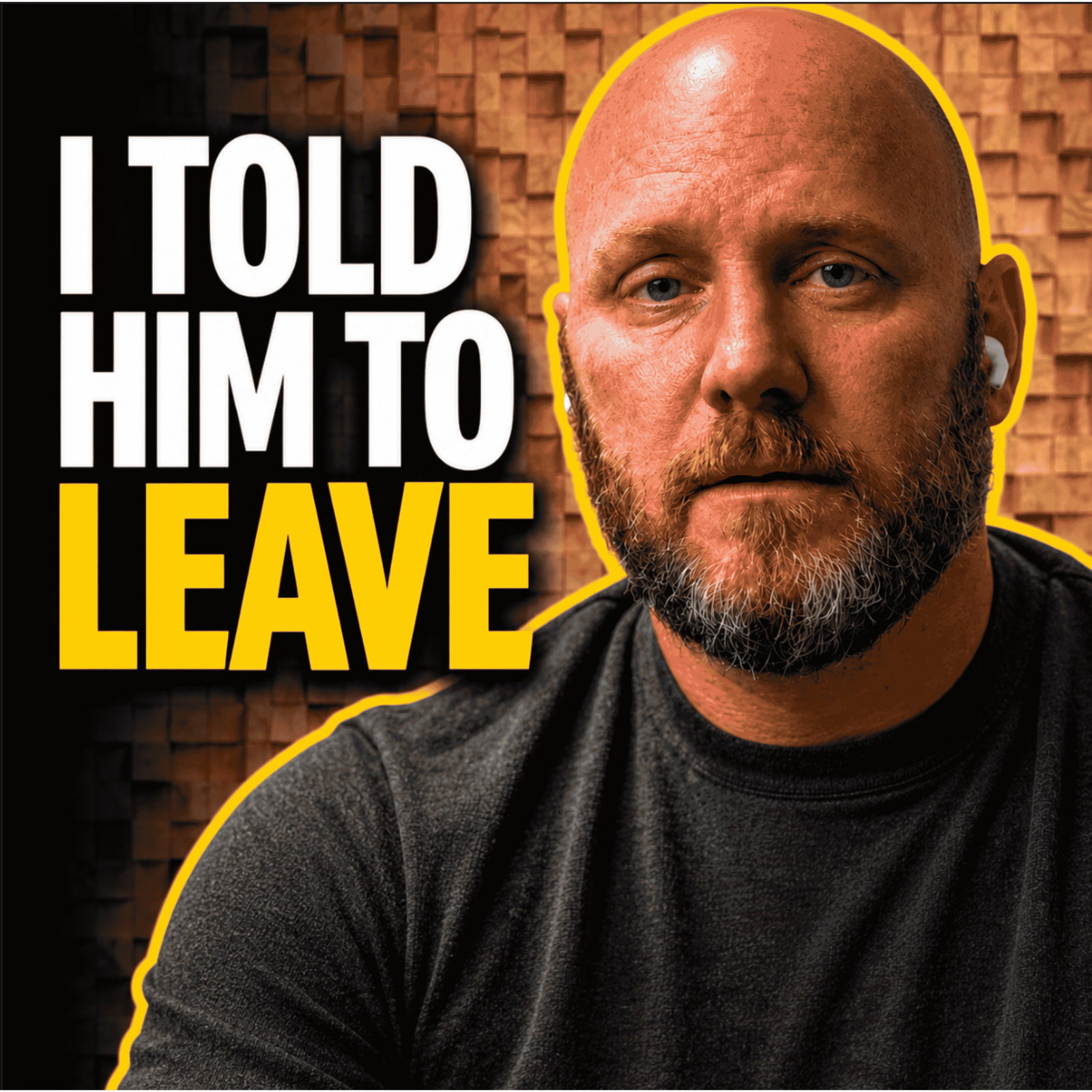
Dallas Leslie discusses setting boundaries with his father Mel, whose PTSD and alcohol addiction followed a prison riot. After asking him to leave, they never spoke again. Dallas reflects on grief, regret and family protection.
Key Takeaways
- Dallas Leslie shares his powerful story of setting a strict boundary with his alcoholic father, telling him not to return until he was sober, which led to permanent estrangement before his father's passing.
- Mel Leslie's life changed dramatically following a terrifying prison riot while working as a correctional officer, leading to severe PTSD, nightmares, and alcohol addiction.
- Thirteen years after his father's death, Dallas now works as a psychologist helping first responders navigate the exact types of trauma and PTSD his father faced.
- Host Roger and guest Dallas explore the heavy burden of regret that comes with an unresolved relationship and the lingering grief of losing a parent.
- The conversation dives deep into why men are so exceptionally good at pretending they are fine instead of asking for help when they need it most.
Dallas Leslie told his dad not to come back until he was sober.
They never spoke again.
Dallas's father, Mel, was a loving dad and a proud grandfather. He was also a correctional officer whose life changed after a terrifying prison riot. PTSD, nightmares, and alcohol addiction followed. Over time, Dallas watched the father he knew become someone he barely recognized.
When Mel showed up drunk at Dallas's house, Dallas made a decision to protect his family.
He told his father to leave. Not long afterwards, Mel died.
Thirteen years later, Dallas is a psychologist working with first responders experiencing PTSD and trauma. And he's still making sense of what happened to his dad.
In this episode, Roger and Dallas talk about growing up with an alcoholic father, setting boundaries with someone you love, the regret that follows an unresolved relationship, and why men are so good at pretending they're fine.
They also get into how grief changes over time, why it can push us into making big decisions, and what Dallas has learned about asking for help.
It's a conversation about the dad you remember, the dad you lost, and learning to live with the difference.
Dead Dads is a podcast about losing your father, being a man, and figuring out what comes next. Sad, funny, and sometimes both at once.
Content note: This episode discusses alcohol addiction, PTSD, family estrangement, and death.
Related episode: another conversation about a complicated father-son relationship.
Related grief resources
Grieving a complicated relationship with your dad · Grief support resources
About the show: Roger Nairn and Scott Cunningham share lived experience of father loss. Dead Dads is not a substitute for professional care.
Episode Transcript
Source: YouTube captions. Automatically generated captions may contain errors.
[0:00] Without going into too much detail, he was caught in the control bubble, like safe in there, locked in, but guys smashing on the windows, screaming at him, threatening to kill him, and stuff for probably about six hours before anybody actually got in there. >> Hey guys, welcome back to another episode of the Dead Dads Podcast. Today
[0:16] I'm riding solo because Scott had uh eyebrow waxing appointment that he just couldn't cancel and it unfortunately conflicted with today's interview. So today you're going to hear from Dallas Leslie and there's a ton of reasons why you're going to want to watch this episode, um especially if you're
[0:33] somebody who is dealing with an alcoholic father, somebody who has a dad in their life that really you haven't talked to in a very long time. Um perhaps you're somebody who's gone through some PTSD in your life or know somebody who's going through PTSD. And
[0:49] also what is it like over time? Does your grief change? Does your grief evolve? Finally, you're going to learn from Dallas about uh what your grief could look like over the span of uh in his case 12 years. So let's bring on Dallas Leslie. [music]
[1:05] >> Life's a funny [singing] path, but we're here to help you laugh. It's the Dead Dads [singing] [music] Podcast. >> Hey Dallas, welcome to the Dead Dads Podcast. >> [music] >> Thanks for having me, Roger. >> Now why on earth would you ever do a
[1:22] podcast about men and grief? >> [snorts] >> A lot of it boils down to the it's grief is such a personal issue and everybody kind of deals with it in such a different way. And sometimes sometimes you have to re-examine your own relationship with it. For me, I
[1:39] just thinking about the topic of the podcast and everything I so I thought there I thought about the idea that I haven't really thought about my dad a lot over the last couple of years. >> Yeah, you said that he died was it 12 years ago? >> 13 now.
[1:55] >> And you haven't really done a lot of thinking around it. I'm wondering why that why that? >> At the beginning I kind of did, but I think I think like most people, at first you just try to avoid thinking about it. You go through the motions at the beginning, you go through the sadness, the the depression, the grief, and then
[2:12] suddenly you just try to move on, and sometimes moving on just feels to a lot of people just feels like just putting your head down and forgetting. >> And I think there's a lot of guys out there that are thinking that exact same thing. Get yourself into more work or go to the gym more and just put your head down and
[2:27] plow through it. But I I think we're learning through the podcast and through ourselves that it's not really going to work. >> No, it's it's it's more avoiding it than anything. >> So Dallas, tell me about your dad. >> He was, I think like everybody, I was
[2:43] actually thinking about this morning and about remembering the person that you want to remember as compared to who they might have been near the end. >> Yeah. >> Yeah, so he was good. He was a great guy and he was the man I remember. He spent a lot of time he would like to look after people. He liked to
[2:59] be there to help people and anything from cooking for a bunch of people to helping you move or whatever, right? If you asked him for something, he'd be there. >> What was his name? >> Mel. >> And you mentioned Mel would go to your hockey games, so he was there for you when you were when you were young.
[3:15] >> Yeah. >> What what's your what's what's a quintessential good good Mel story? >> He was Honestly, actually I heard this from other people, but it was after my son was born. Like shortly afterwards a couple of people were talk talked to me
[3:30] and one guy said, oh yeah, I didn't even have to ask when your kid was born cuz I could see I saw your dad just driving around and the smile couldn't be wiped off his face at that point. >> Dallas, when we chatted, you told me a story about your dad that that really
[3:46] was the sort of catalyst for a lot of the change in Mel. You talked about a riot. Can you take us back to that moment? What exactly happened? >> He he was a correctional officer for 10 years, something like that. And it was one of one of two riots that year in Drumheller in the institution.
[4:02] Essentially, without going into too much detail, he was caught in the control bubble, like safe in there, locked in, but guys smashing on the windows, screaming at him, threatening to kill him and stuff for probably about 6 hours before anybody actually got in there. >> What did that do to him?
[4:17] >> Like most guys in in his age group didn't want to deal with anything, so he just pretended he was okay for the longest time. Then he just started to do all the things that are typical of people with PTSD. He didn't sleep much, he had a lot of nightmares, he started drinking more,
[4:33] and developed a pretty bad problem with alcohol till he passed. >> And how old were you when this started? >> I would have been 26. >> Did you start to slowly see him change or was it a pretty immediate thing?
[4:49] >> I think it was more gradual because that's just that's how he kind of always had dealt with stuff when things went badly. So he had lost his job a few years prior due to conflict with a manager in the oil and gas field and and yeah, he like he did the same thing. He tried to be resilient, kind of get
[5:05] out get up and move on, but then he just he'd drink heavily for a while to try to numb himself to what was going on. So it wasn't quite as noticeable when he was doing it after the the riot. >> So the drinking wasn't new to him? >> No. >> And did you grow up with him drinking?
[5:21] >> Yep. >> And so you told me that you essentially watched him drink himself to death. How bad did it get? What were some examples of how it started to impact you and the family? >> We got a phone call one night when we
[5:36] were driving home cuz my wife and I both worked at the penitentiary at one point too, and we're driving home after shift and my mom calls me and says, oh, your dad's in the hit the ditch. So it was I want to say January, February, so there's lots of snow. Went and found him and he was sitting in his vehicle and in
[5:53] his truck and he'd probably gone like 30 ft like down into the ditch and then 30 ft forward and just up to the hood in snow. But yeah, so we saw things like that and then just your I hate to put it this way, but your stereotypical addiction
[6:08] problems where guys just don't want to admit how bad it is. You know, I pick him up from his his meeting with the addictions counselor and he's like, can we stop and grab a beer on the way home? No. It's probably not a good idea. >> [laughter] >> Not a good idea at all.
[6:23] Did you try to help him or did he try to help himself? >> He after a while he did start seeing a psychologist, but I don't think he did the work seriously enough. I didn't try to Like I probably God, a month or two before he passed I No, actually it would have been more. We
[6:39] had a bit of an intervention for him. Like he came into the my house and sat down and just thought it was just me and my wife and my mom talking to him. And then I started talking to him when he was drinking. And he just got mad and left. And then about a month or two before he he showed up drunk in the morning to my house and
[6:56] I I got him to leave. Yeah, cuz my son was six at the time. So I didn't want to didn't want him to see Grandpa like that. >> Yeah, of course. And my understanding is you didn't really talk to him much after that.
[7:11] >> No, that was actually the last time I talked to him was when I told him to leave before and not don't come back until you're sober. >> And what did he do What did he do after that? >> He ended up I think around that time he started living Yeah, he was living in living in Hazard, small little village
[7:28] outside of outside of Calgary, renting a place off my uncle, so his brother-in-law. And really he just stayed there and started drinking hanging out with the the people that were drinking heavily in town like him and eventually just fell over dead one day.
[7:44] >> So it was sudden? >> Yeah, it was. I just got home from work and I got a call from my uncle and he said he was pretty distraught and said he found my dad. Yeah, I asked if I should Like I said, I'll come and he said, no, I'll deal with this. The cops are coming. Just let your mom and everybody know. >> And what was your immediate thought?
[8:00] >> It was probably like the shock of You always think you have more time. You always think you have a chance to to fix issues or that things will sort out. But yeah, doesn't always work that way. >> But Dallas, were you in a weird sort of way, had you already started to in your mind see him
[8:17] gone? Uh you know >> The person that you knew is not there, right? So I mean anybody who's anybody who who's struggled with had family members that struggled with with addiction can relate to this, I'm sure. But like I said, you try to remember the person that they were, but even near the end, he used to be the type of guy that
[8:34] if he saw somebody on the side of the road, he'd stop and help them, but then he turned into the no, I just got to keep going. I'm not stopping. It just became a little bit more self-involved. >> So you get this phone call from your uncle that he found your dad dead. What is your role now in the family when it comes to the next steps with with the
[8:52] death? Is it Are you now in charge and leading? Are you caught up in sort of the craziness of it all? >> I think I was caught up in the craziness of it all. I started things. I made a couple of phone calls, but my mom actually, even though they were divorced, my mom kind of she came down
[9:07] from Edmonton about 3 hours away to get everything rolling and we were involved in all the the planning afterwards, but yeah, at some point you just it feels like you only have to make a couple of phone calls and then you just show up to places and things are getting started. >> Yeah.
[9:23] And was your dad somebody that had a will and had a plan or was it >> Will but no plan. He had a will. He had all that stuff in place, but yeah, no idea. Nobody really said what to do with anything or anything like that. He made
[9:38] my >> you make those decisions? >> I I think a good chunk of those those decisions were made with me, my mom, and my wife just kind of sitting around either with the funeral director or who member else had come out to try to deal with funeral arrangements and stuff.
[9:53] >> Did you do a lot of oh, he would like this and he would like that or was it more this seems like the right thing to do and this is what the funeral director says? >> There was a little bit of a this seems like the right thing to do and a little bit of Mel would have hated this. It was more knowing about what he wouldn't have liked.
[10:10] >> And tell me what life is like a few months after he he had died. Where was your mind at and how were you handling everything? >> At the time you think you're dealing with things okay,
[10:25] but I did what I learned to do. I was drinking. I kind of >> Oh wow. >> I not problematic level. I wasn't drinking and driving. I was still dealing with work and everything, but it was just trying to shut down and not deal. Alcohol's a a very effective depressant.
[10:42] >> W- when you were doing that, when you were drinking and you say it was an effective depressant, did you actively feel like okay, this is depressing. So this is making me feel numb or or was it just something you naturally would do? >> Something I'd naturally do. Unfortunately, unless you become very
[10:58] intentional about how you're dealing with things, you're going to end up going with what you think is normal. You react instead of being acting intentionally. And your reactions are almost always what you grew up doing or seeing. >> And your wife and uncle and mom and other family members aside,
[11:15] was there anybody that was there for you in those moments afterwards? Or anybody that you naturally reached out to say like, hey, I need to talk about this or I would love to just have a shoulder to lean on? >> I wish I could say yes, but uh like most
[11:32] guys tried to deal with it on your own. And wish I'd been smarter about that. I think that's the funny thing is we as guys we try to often say that we can deal with it or we'll try to soldier through, be stoic, not pay attention to
[11:47] it. But there's people that want to be there for you. And by not reaching out, you're almost hurting them in a way, right? >> Tell me more about that. >> I I think so working in in corrections as well, it's a very masculine industry, right?
[12:04] And so a lot of people there's a lot of people that didn't try to reach out, but there were some that did. Or friends that would just kind of do that, reach out if you need But at minimum at the point at that time I should have started using the benefits that I had and started to talk to a professional.
[12:20] >> Yeah, I was going to ask are there support systems there for you that are in place and or do you have to go digging for them? What's it like in corrections? >> So there is stuff there, EAP programs and benefits and things like that. You feel a lot of times like you're left to your own devices. Even if you're not seeing the people that are trying to
[12:36] help out you might just miss them because you're in your own stuff too much. But because people don't really I want to say they they don't push but they also try to respect what you're saying rather than actually try to figure out what you might need. >> So I understand that you turned a lot of
[12:53] your dad's story into a massive change for yourself. Tell everybody what you do now. >> I I became a psychologist. So part of it was part of the the whole thing was me again trying to avoid things. I talked to you for years about being a
[13:09] psychologist. It was this thing I think since grade 10. And but then things are going on and suddenly it's I don't want to deal with this so I'm just going to start going to school. I also wanted to make sure that I didn't watch a bunch of people that I know or care about go down the same kind of
[13:24] path. Like right now I did full time my masters while I was working full time and had a young kid and a wife and really it seemed like a good idea at the time. I'm glad I did it but man it was hard. And again again couldn't have done it
[13:40] without my wife kind of picking up the responsibilities for me a lot of times. >> What do you think was it back then that got you interested? Was it the dynamic in family life you had around you or was it something else? >> I'm not even all that sure thinking that far back. I always liked the idea of
[13:57] just helping people, right? >> And what did your dad think about you being interested in psychology? >> Oh, he wanted me to do it. He was happy when I talked about it. He was happy to supportive at the time, right? >> So what sort of
[14:13] psychologist are you? >> I work primarily >> like I work at two practices. I work primarily with first responders and PTSD and trauma. So, heavy stuff, but again, like I said, I want to make sure that people that are similar to my dad don't go down the same avenue. If I can do
[14:29] anything to help, I will. >> When you were drinking more, were you thinking about I don't know, like as a psychologist, you obviously have a breadth of knowledge and education about how the psyche works in your mind and
[14:44] trauma and so were you thinking to yourself like I know what's wrong, yet I'm still doing this or was that all kind of a blur and not really conscious at the time? >> No, I think there was a lot of times where I thought there there's better ways to deal with this and or when you're taking moments and trying to
[15:00] figure out your plan, this is dumb, but this is what I'm doing right now. It really, like I said, it kind of goes back to intention. I wasn't intentional with dealing with my grief and I just tried to do whatever I could to avoid it at the time. >> I don't know enough about the psychology world. Can you be a specialist in grief
[15:17] or is that just something that all psychologists pretty much have to understand and deal with? >> I think most psychologists have a good understanding of grief, but there are definitely specialties and stuff. I deal with a lot of the grief that's not just like death or like a family member dying or something, but the grief of
[15:33] loss of identity. When you can no longer go back to work, then you're grieving the idea of what your life was going to be. [snorts] Grief it comes in all kinds of different forms. >> What form does it come in for you? >> For me, I've learned to be more open with the stuff that I'm going through
[15:49] when stuff's going on. Right? You always have to have somebody, a person you can talk to, whether it be family or professional. Obviously, I'm a little biased, but I'll always say try to have a professional. You don't want to as great as it can be to have a family
[16:04] member or a close friend or something, it's important, but they can often turn more into cheerleaders or just kind of being like supportive, but not know what to do. And you're also unloading a lot them. >> Tell me more about that.
[16:21] >> When you're unloading onto a family member or a friend or something, they might know have a good idea what you're going through, but you're also there's also this fear of judgment at times. If you're having thoughts that that you they might not like or you're
[16:36] worried they might not like, then you're probably going to hold back saying them. [snorts] You're also worried about the impact that they you could have on things that they say they hear and to go even farther if it turns into somebody who has is going through a really hard time and has like suicidal ideation or
[16:53] something, then they won't know how to deal with that. >> What's an example of something that you might be feeling or say that they might not like? >> It could be as simple as as simple as trying to think of like saying something like you need to make a change. Some
[17:08] people make very big decisions when they're grieving because they suddenly they feel like they need to change something, but they're not sure what. So they'll change careers or something like that, but that's also when you also see a lot of people with poor coping mechanisms doing things like like cheating on spouses and things like that. So if a person's having thoughts
[17:26] like that or they engage in something like that and you tell your a family member, obviously not your spouse if you're cheating on them, but >> You could confess up eventually and you know. >> but yeah >> Yeah. >> but yeah. >> tell them and then just keep and then just keep doing it. >> Yeah, exactly. Exactly, but you're also
[17:43] in that situation like just say you tell your a family member or a friend, then you're putting them in the awkward situation of having this secret like sharing this secret that is hurtful to somebody else. >> And is is that something that you would advise people not to not the cheating
[17:59] part you would you would probably definitely advise them not to cheat, but is it like you talked about those big life changes during grief, is that something that you should be conscious of and maybe ask yourself is this really the right time or like when is it the right time because we often talk about how you
[18:14] never really stop grieving, it just gets maybe a little bit quieter. >> It's a companion. >> Can you explain that a little more? >> I look >> at grief as a companion. It's never going to go away. It's always there, and sometimes you just don't pay attention to it as much. >> But when somebody says I'm thinking about going through this big life change
[18:31] and career change, is that something you would advise guys to just maybe take a beat and maybe wait for some of the storm clouds to clear a little bit or is it case by case? What would you do in that situation? Cuz that's actually the first time that I've ever heard somebody
[18:47] say that, and it I think it makes a ton of sense that people go through these big life changes during their grief. But what would you say in that moment? >> If you can take the time to think about it, great. I I find like this almost almost sounds ridiculous, but grief can be motivating that way, right? Where you
[19:02] need to you feel like you need to do something. >> I started this podcast in grief. Scott and I said to each other this would be the best thing that we could do right now to get explore our grief, but also you know >> Yeah. >> dig into something creative together. But is that maybe was this maybe not the
[19:19] right time? >> No, it depends on the change too, right? Like some changes like starting something like this is great, and I'm sure if you even if you decided like when you're grieving to do it, if you sat on it for a little bit, you were like, yeah, no, this is a good idea. But if it becomes a
[19:35] oh I'm I just got back from my dad's funeral. I hate my job, so I'm going to quit now. Like the sudden changes I would tell people to sit on if they can. Everything else write it down, mull it over, figure out like it might be a great time to be inspired for how to do
[19:51] things or what to do, but you're also not thinking clearly at the same time. Your executive functioning isn't working quite as well, so you're not your long-term thinking isn't quite there. >> Yeah, it's interesting. I was thinking the other day about how in the thick of
[20:07] my grief after my dad died, naturally you become so self-centered, right? You just completely roll yourself up into like a a big psychological ball, and you're just so
[20:24] focused on how you're feeling and what you're feeling all these sort of things. And then I completely forgot that my spouse is also grieving. My my wife and my dad had a great relationship and she saw him like a father in a lot of ways. And what do you
[20:40] say to guys in that moment? >> In the times like that where they're with each other. It's you're not being there for somebody. You're just trying to be with them and it can almost become like a support group, right? With the with the family members. Grief is a shared experience in that way.
[20:57] >> So let's talk about PTSD because I think a lot of people don't really understand what that is and what exactly is going on. And obviously you had a first you know firsthand accounts watching your dad go through it. But you mentioned now
[21:13] that you're a psychologist and you do a lot of work with first responders. I can imagine the vast majority of them have PTSD as well. What exactly does PTSD do to your grief? >> There can be grief involved in it when people have PTSD because like I said you're in a loss of who you thought you
[21:29] were and who what you thought where you thought your life was going. But it's very different as well. Like first off like we have a the colloquial understanding of PTSD is slightly wrong. Everybody thinks a
[21:44] traumatic event can be lead to PTSD, but it's got to be in North America at least we look at it as how you need that it's called a schedule A criterion. So you need to go through an event that can cause death or or serious bodily harm or be exposed to that that type of death or
[22:00] human suffering. There's a couple of different ways of getting it, but unless you have that schedule A criterion, you don't have PTSD. You might have other types of traumatic stress or anxiety or depression or things like that, but it's PTSD or any of those those
[22:16] disorders can cause a lot of issue with trying to figure out how to move on with your life and try to trying to figure out how to move forward. I think the hardest thing from my perspective with watching my dad with PTSD, it's like these are like invisible injuries
[22:32] because it's a chronic disorder. He wasn't dealing with it effectively and it wasn't going away. You get that whole he's at peace now, right? >> [snorts] >> So your dad dies. What were you thinking in those moments? Were there
[22:48] things left unsaid? Was there a lot of anger that you never really got to wrap thing not wrap things up with him, but bring him back into your life or vice versa? What was going on? >> Lot of anger and regret, right? Maybe I should have just accepted where he was at and just to have him
[23:04] around. My uncle again, he was great for me with there cuz I said that to him I think at one point and he'd said to me, no, don't regret the decision you made. You made the best decision you had with the information at the time. And you were doing what was best for you and your family. And I had to sit on that for a long time
[23:21] before it really sunk in. >> Why do you think it took so long to sink in? >> It's hard to accept that's the end of the relationship. That's the last interactions you had were not good. Cuz the fact is you can't change it. So
[23:37] why do talk about the the man that I want to remember versus the man who he was at the end. >> And where are you at today with your grief? Where's Dallas with it all right now? >> Like I said, it's a companion. Grief is a companion and I don't spend a lot of time thinking about him. I was actually
[23:54] laughing to myself this morning cuz I'm like Facebook is a great and awful thing because you don't think about it and then suddenly, oh hey, here's a memory. You and several people were together on this day. Oh yeah, that's why. For me like it sometimes there are like those days when
[24:09] you're like I'm in a bad mood and I'm like why? I'm like oh, it's his birthday. Why did I not remember that? And then you start to get upset with yourself for forgetting those things for the first little while, but now I'm at a point like obviously I can still get emotional when talking
[24:24] about some things and when thinking about some things like they're about missed opportunities from him like he's going to miss a lot because of the decisions that he made. >> But what are some of the missed opportunities? >> Watching his grandson grow up. He was so excited to have a grandson and so happy about it and yeah, he just he's going to
[24:41] miss so many things. But they were decisions that he made. He might have been dealing with his own demons but he didn't take the actions that he needed to get himself to the point where he could still be around. >> And when it comes to men and talking
[24:58] about their grief, what do you think we're at right now with all that? I know that's a big question but what do you think is the state of guys when it comes to death and grief and mourning their dads? >> I think it's getting better. I think it's more accepted to admit that there's more than three
[25:13] feelings, happy, sad, and mad. But [snorts] it also can depend heavily on the industry and the person and everything. >> And what would you say to a guy who was is in a similar situation that you are in where you had a dad who unfortunately was not in a good place
[25:30] compared to what he was like when when he was a lot happier. What sort of advice would you give to a guy who has this sort of big distance between the two of you? >> So that's a hard one because it's very individual. It depends on the reasons
[25:45] why. If I could have found a different way to reach out just looking back to talk to myself like if I could look at myself and say okay, find a way to reach out, don't let it don't leave it in his court because he's not thinking clearly anymore and if you're not right in front of him, he's not going to
[26:00] be thinking of you. That's just that's part of the disease. So try to be present. You don't have to you don't have to tolerate bad behavior. You don't have to be there all the time but at least check in, make contact, see how check in and see how they're doing every now and then
[26:16] and try to find a way to encourage them to reach out. >> What do you think he thinks of you today? >> Oh, he'd be proud. He'd be happy for sure. >> And what about your son? >> Oh, he'd be very proud of my kid. I think he loved my kid more than he loved
[26:32] me at one point. >> It's funny how that happens. My, my dad was the same way. >> Yeah. >> He also loved my wife more than me. He always used to joke that we get to keep Allison in the divorce. >> Yeah, I think a lot of it turns into there's less work and baggage with the the new ones.
[26:48] >> So Dallas, pretend there's a guy in front of you right now who's right in the thick of their grief. What would be your best piece of advice for for that guy? >> To not be afraid to be just a a little bit of a little bit vulnerable and to let people know that you might need to talk or you might need just somebody
[27:05] there. You [snorts] can have people around you at all times and still be lonely if you're not willing to open up. >> Awesome, Dallas. Well, thank you so much for being on the Dead Dads Podcast. I think everything you talked about and shared is going to be a massive help for
[27:21] guys out there. So thank you again and we wish you all the best. >> Thanks, Roger. Thanks for having me on. >> But we're here to help you laugh. It's the Dead Dads [music and singing] Podcast.
[27:39] >> [music]
Frequently Asked Questions
Who is Dallas Leslie and what is his story?
Dallas Leslie is a psychologist who lost his father, Mel, to alcohol addiction and PTSD following a prison riot. After setting a boundary for his father to leave and get sober, they never spoke again before his father passed away.
What themes are discussed in the Dead Dads podcast episode with Dallas Leslie?
The episode explores growing up with an alcoholic father, setting difficult family boundaries, managing unresolved grief and regret, and how trauma impacts first responders and men's mental health.
What does Dallas Leslie do for a living now?
Dallas Leslie works as a psychologist helping first responders who are experiencing PTSD and trauma, drawing from both his professional training and his personal family history.
Psychologist
Dallas Leslie works with first responders experiencing PTSD and trauma, as described in his Dead Dads interview. He discusses family boundaries and unresolved grief.