
 YouTube

 Spotify

 Apple Podcasts

 Amazon Music

 PocketCasts

 Castbox

 PlayerFM

 Podchaser

 iHeartRadio
My Dad Never Said He Was Proud of Me. I Spent My Life Chasing It.
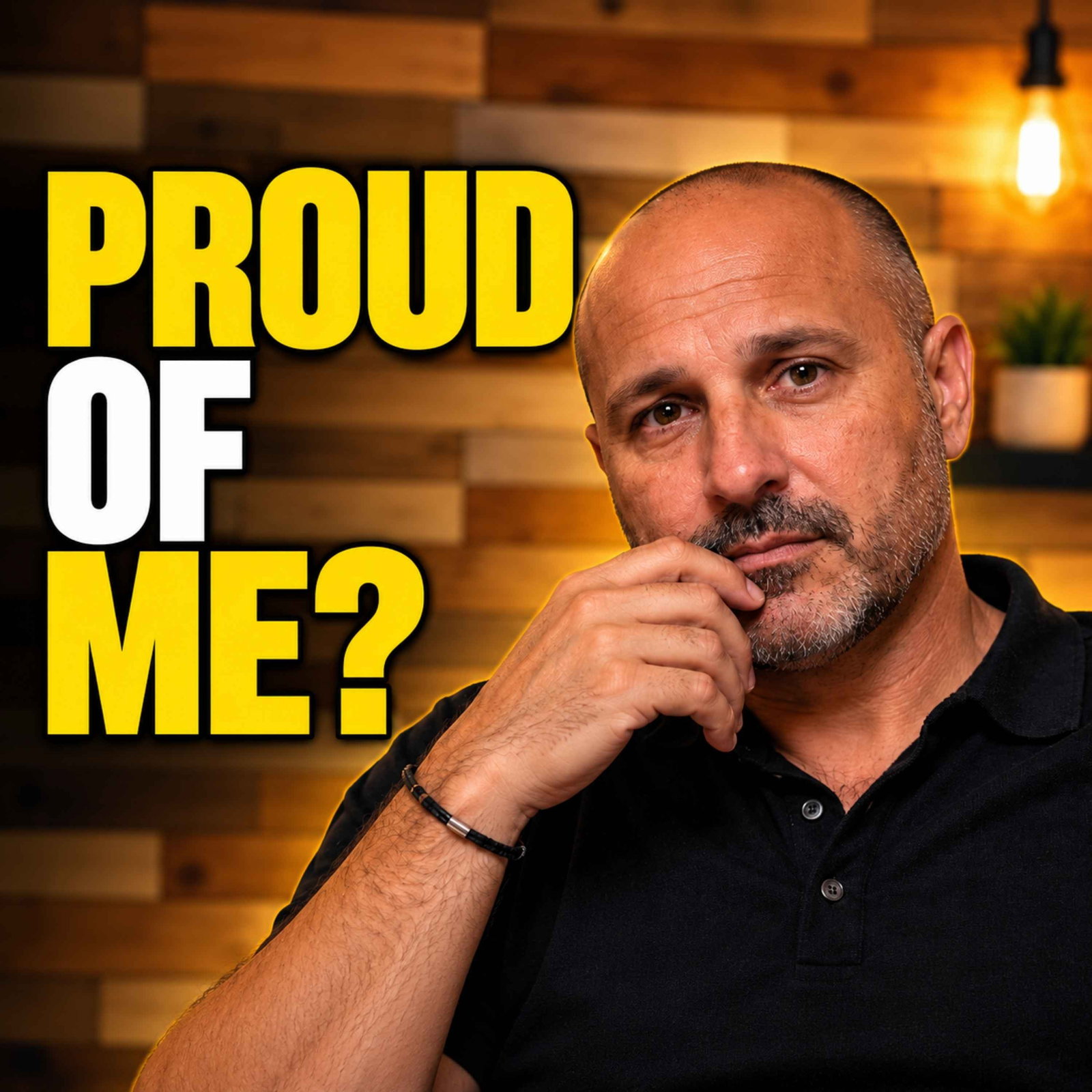
Ali shares what it was like to grow up seeking his father's approval and to grieve a complicated relationship after his death. He discusses anger, addiction, ambition and letting go of resentment.
Key Takeaways
- Ali spent 15 years avoiding his father's grave and processing his grief through numbness, anger, and professional ambition in dentistry and surgery.
- A breakthrough during a silent meditation retreat allowed Ali to finally cry and realize he was grieving the relationship he never had, not just his father's death.
- Growing up with an absent father who struggled with addiction left Ali chasing parental approval and longing to hear four words that were never said: "I'm proud of you."
- When Ali finally searched for his father's grave years later, he discovered his dad didn't even have a gravestone, prompting a deeper release of long-held anger.
- Becoming a father and working through his buried grief ultimately changed Ali's perspective, helping him find compassion for a difficult father and altering how he shows up as a husband and dad.
How do you grieve a father you loved, resented, and barely knew?
For Ali, grief after losing his dad didn't look like sadness at first. It looked like anger, numbness, ambition, and a 15-year refusal to visit his father's grave.
Ali spent much of his life wanting his dad to say four words:
"I'm proud of you."
He never did.
In this episode of Dead Dads, Ali talks about losing his father after a complicated father-son relationship shaped by absence, addiction, resentment, and the search for parental approval.
🎧 In this episode, you'll hear about:
- Grieving a complicated relationship with your father
- Why grief can show up as anger or numbness instead of sadness
- The impact of addiction on a father-son relationship
- Chasing achievement because you want a parent's approval
- Grieving the father you wanted, not just the father you had
- Why becoming a dad can change how you understand your own father
- Letting go of resentment without pretending the past didn't happen
- What can happen when buried grief finally gets some room
When his father was dying, Ali held his hand, said goodbye, and left the hospital.
A few hours later, his dad died.
Ali felt mostly numb.
Then he avoided his father's grave for 15 years.
Years later, during a silent meditation retreat, a poem about someone else's dad cracked something open. Ali left the room, walked into the forest, held onto a tree and cried for ten minutes.
He realized he wasn't only grieving his father's death.
He was grieving the relationship they never had.
And he was still trying to earn the approval he'd wanted since he was a kid.
This is a conversation about father loss, men's grief, absent fathers, addiction, resentment, parental approval, forgiveness, and what happens when you finally deal with grief you've spent years avoiding.
👨 Meet Ali B
Ali grew up in Iran before coming to Canada.
His own father had been abandoned by his dad at 11 and was forced to help support his family while still a child.
As a teenager, Ali reconnected with his father while working with him and his brother in Nevada. Addiction made an already difficult relationship harder.
Ali eventually returned to Canada, threw himself into school, and built a successful career in dentistry and surgery.
But his relationship with his dad stayed with him.
Years after his father's death, Ali finally started looking at the anger, grief, and need for approval underneath it.
⏱️ Episode chapters
00:00:00 My dad never said he was proud of me
00:01:27 Why Ali wanted to tell this story
00:02:14 Growing up with an absent father
00:04:45 Escaping Iran and coming to Canada
00:06:45 Reconnecting with his dad
00:07:45 Addiction changes everything
00:09:45 Years of resentment
00:11:55 Watching his father die
00:13:35 Why Ali felt numb
00:14:20 Avoiding his dad's grave for 15 years
00:15:15 The meditation retreat that broke something open
00:16:40 Finally grieving his father
00:17:05 Chasing his father's approval
00:18:10 Why men avoid grief
00:19:30 He couldn't find his father's grave
00:20:20 Discovering his dad had no gravestone
00:21:05 Letting go of the anger
00:22:00 Why talking about his dad was terrifying
00:23:20 Becoming a dad changed his perspective
00:24:15 The person anger was actually hurting
00:26:10 Can success fill the hole left by grief?
00:28:10 Grieving the father you never had
00:29:00 "I never asked if he was proud of me"
00:30:00 Finding compassion for a difficult father
00:31:20 How grief changed Ali as a husband and dad
00:33:35 Final thoughts
🖤 About Dead Dads
Dead Dads is a podcast for men figuring out life after losing their dad.
Hosted by Roger Nairn and Scott Cunningham, the show features honest conversations about father loss, grief, identity, family, memory, masculinity, and all the strange stuff that happens after your dad dies.
No grief brochure voice. No tidy healing arc.
Just real conversations for guys who are grieving, remembering, avoiding, laughing, carrying on, or trying to understand what losing a father did to them.
You're not alone.
☕ Support Dead Dads:
https://buymeacoffee.com/deaddadspodcast
Website:
https://www.deaddadspodcast.com/
YouTube:
/@deaddadspodcast
Instagram:
/deaddadspodcast
TikTok:
/dead.dads.podcast
Substack:
https://substack.com/@deaddadspodcast
New episodes every week.
Dead Dads Podcast is produced with the support of JAR Podcast Solutions.
Related episode: setting boundaries with a parent and living with regret.
Related grief resources
Grieving a complicated relationship with your dad · Grief support resources
About the show: Roger Nairn and Scott Cunningham share lived experience of father loss. Dead Dads is not a substitute for professional care.
Episode Transcript
Source: YouTube captions. Automatically generated captions may contain errors.
[0:00] me missing a dad. I me saying how much I loved him and how much I looked for validation from him and how much I wanted him to be proud of me, which that word never came out of his mouth.
[0:15] >> Hey guys, welcome back to another episode of Dead Dads. This is a really really exciting episode and I think there's a ton for you to take away from it. So in this episode you're going to learn about Ali's relationship with his father growing
[0:33] and and how this difficult relationship impacted his relationship with his dad and the way he now lives today. The second thing you're going to learn is how do you get rid of and deal with all the anger that you might be holding. Perhaps it's
[0:49] with your father or with something else in your life and how that changes after the death of your father. Scott, what about the third thing? >> Yeah, I think what you're also going to learn in last is that coming into a process of starting to explore your grief and starting to look at why those
[1:04] emotions are so complex, there's a huge upside to that. There's a huge new opportunity that comes from that and Ali really brings that. So I can't wait to introduce you to Ali. >> [music and singing]
[1:25] >> Everybody, welcome again to the Dead Dads podcast. [music] Today I would like to introduce you to Dr. Ali Bimard, but Ali for us today. >> Ali Ali's [music] fine. Thank you very much. >> Welcome to Dead Dads. Thanks so much for joining us. >> Thank you. >> Why did you decide to come and do a podcast specifically about Dead Dads?
[1:41] What was your inspiration? >> I feel like there may be a lot of guys that are going through similar things and the transformation that I feel like that I've gone through could be beneficial to lots of guys out there. As
[1:57] men we don't talk about our emotions. We don't talk about things that are going on. We just try to stay manly and kind of shove it down. And you know, when you do the work and some of this stuff comes up, it's life-changing. Ali, can you tell us about your dad? Whew, where do I begin? My [clears throat] dad
[2:13] was born in Iran. He had two siblings, younger siblings, uh from what I have heard. These are all things I have heard. Um I wasn't very close to my dad, unfortunately. Now that I look back and I kind of have compassion for what he's gone through. His father uh walked away
[2:30] and never came back when he was about 11 years old. So, he had to at that time in Iran, uh you know, when you have a single mother with couple of sons that are 10, nine, and like seven, you're kind of hooped uh without a
[2:46] husband around. Uh we're talking, you know, 80 years ago, 100 years ago 85 years ago. >> your grandfather would be >> That's right. Exactly. So, when he walked away, uh my father instantly had to fill in that shoes at the age of 11, go to work full-time, provide
[3:03] uh for his brothers, and work at tire shops, and then he became a truck driver. He became successful in in in this. He bought his own semi-truck and went uh from Iran to different countries, and went back and forth. And
[3:19] when he was doing that, he had a few run-in with the law. Fast forward to right before the revolution. >> Which was when? >> 1979. >> Okay. >> And we'll we'll double-check that. >> [laughter] >> But it's the 1979. It's not a historical
[3:34] fact. 1979, and right before around that area, I was born in '73. He had five kids with my mom, all a year apart. And then, that was their plan to have five kids. And then, 14 years later, an accident came
[3:50] along, which was myself. >> [laughter] >> So, fast forwarding from his humble beginnings to having nothing, he was doing really, really well before the revolution. >> And he'd be quite a lot older. >> Oh, yeah. >> Yeah. >> He was like a grandfather almost, right? So, he was older for me. Same with my
[4:06] mom mother. She She had me at 43, so she was she was older as well. At the time he was visiting my brother who was studying engineering in California and the revolution happened. He could not come back because again he had a run-in with the government. At that
[4:23] time, one of my sisters was studying arts in Paris. One of them was already in Toronto. One of them migrated to Vancouver. So, they were all fleeing as we all did at that time in Iran. And as they were fleeing, we were
[4:39] supposed to come out. So, myself and my mom were trying to find a way out, but by that time in the Iran-Iraq War came out and they said that boys at the age of 10 to 14, they cannot leave because they have to do military. So, around 10
[4:55] or 14, you you didn't have this ability to actually leave the country. So, I actually had to leave illegally through the mountains of Iran to come to Turkey and then migrate to Canada. Around that time, my dad had a relationship with another woman
[5:11] uh kind of settled with that woman and let my mom know that she's he's already with another woman. So, my mom was devastated. So, I was kind of with a single mom and looking at her and the pain and suffering that she went through um and the lack my lack of relationship
[5:28] with him at that time because this he was just this bigger than life character that was not around uh and he couldn't even legally come back to Iran. >> Were [clears throat] there phone calls? Was there any interaction? >> calls uh and the phone calls were very Now
[5:44] that I look back, were very kind and I um I actually remember in Turkey saying, "Dad, I hope you're okay. Hopefully I can see you." And later he told me that voice made him want to come. And he actually flew all the way from US to
[5:59] Turkey to come and see us. I remember moments of holding his hands. I remember distinct moments that I had with him. But unfortunately, again, he had to go very, very suddenly. So, I felt that abandonment watching him saying goodbye
[6:15] after seeing him for a month or two, saying goodbye and saw him leave again. So, I had this resentment and dislike towards him a bit. Not a bit, a lot. >> Well, you knew of him, but you didn't know him. >> I didn't feel like I got that much of a
[6:30] relationship, but the relationship I got that short period was very, very nice and kind and it was something I kind of cherished. And then I came to Canada. I went to school. I got into trouble myself and dropped out of high school. And my mom
[6:45] said, "You know what? You need to go work with your brother in Reno, Nevada. If you're not going to study, you should learn a trade." So, I went to become an auto mechanic in Reno, Nevada. So, when I was there, my dad was there with my brother. So, that's when I had some
[7:01] relationship with him. Yeah, he was there. Yeah, he was there with my brother. He was very close to my brother. >> So, you're what age when you're now sort of becoming connected to him again? And how old is he? >> Dropped out of school at 16, around that time, and went to Reno, Nevada.
[7:18] And he must have been 60-something, maybe late 60s. This guy was like 6'2, super big, and not like your typical 60 87-year-old.
[7:33] >> Did you start the relationship up essentially from that point? >> I did. I I did. >> some distance? >> No, there were I did really start the relationship. There unfortunately there was some addiction issues and and for me as a young boy who just went there to
[7:49] learn it it became quite devastating and traumatic because it was him and my brother. >> And your brother had the addiction as well? >> Exactly. So together there was many many times that I was like a 17-year-old running the entire shop and they would
[8:05] be in the bathroom for days. Um and I had a lot of resentment because he would ask me to go get him things and I would be just beside myself thinking, how could you do involve me when I'm like not even part of this and and you put me in that
[8:22] much danger. What kind of a father would put their son in that kind of that. So my hatred towards him escalated quite a bit. >> And and you're still young enough that you can't just leave. >> No, you can't leave. I'm a true believer that things don't happen to you, they happen for you and that was a huge
[8:39] motivation for me to turn my life around and come back. I said I I want to come back. I called my mom who was in Vancouver and I said I want to come back. And their response was, oh, you're just so weak. What's guy? You want to go to school? School's for sissies. That I
[8:56] mean that kind of a attitude. So I came back. My plan was to just become an auto mechanic here in Vancouver, but it and it took a different turn and I became super interested in school and sciences and when I focused I did really well. I went through, you know, nine years of
[9:11] school to to dentistry and surgery and blah blah blah. It's that change and in that trauma that you feel that you don't want to be part of that gives you that humongous motivation. >> but also think about how many people go the opposite way. >> Yeah, 100%. >> You definitely I was very close to going
[9:28] completely the other >> of which again, I know that's what you're feeling as well, which is >> Like I get goosebumps. >> It's really incredible because again, if we're like we're hearing this for the first time, you are talking about the presence in the past. You're saying, "In I've now come to see. I've now thought
[9:44] differently." But, it sounds like that's a relatively recent >> Very recent. Yeah, that's in the last year or two. >> During this period during this period that you just described, I would guess, but I'm asking, the feelings were probably not so benevolent. There was
[9:59] definitely more resentment. >> Huge. Huge. And so, I I got to experience that as I, you know, as you evolve and go through your journey of life and as you get older, you realize these things. But, when I came back, I was studying and I was living life and he was going through things were getting
[10:16] worse and worse for him. Um so, the addictions health-wise, addiction to a point that he came back to Canada, but he was this old man that just now we're fast-forwarding. He's, you know, in his mid-70s or or so and he's in he's this
[10:31] old man living in an in an apartment. >> He broke his addiction. >> His addiction in majorly was gone, but he was very very addicted to Tylenol 3s and kind of over-the-counter medications, which again, I was in dental school where I would try to go
[10:47] and visit him. Even though I, you know, I had all that resentment, I would try to go and he would drag me to go to the walk-in clinics and get him Tylenol 3s and translate for him to tell them that he's having back pain and this and that. And he would say, "Don't worry, you know, one day I'm going to help you.
[11:04] You're going to be uh you're going to be successful in life. This school stuff is is all stuff and you're going to you're going to be successful one day." So, my resentment just increased and increased and increased. My mother passed away in 2010.
[11:21] That was a huge devastation for me because that was kind of my anchor in my family. >> It was sudden? >> Sudden. Very sudden. And at that time, in 2010, my dad was in an old age home. Uh so, I would go and see and when he found out about my mom, he was kind of
[11:38] devastated, but they didn't like each other very much. One of the things that I I think as a kid I missed to be a seeing a loving relationship where apparently they did have all that before I was born, you know, before many many years ago. When she died about a year and a half later, he passed.
[11:55] >> I just have a question for you, Ali. How did your dad die? If you don't mind me asking. >> He was in and out of the hospital. He would he would be he's a very stubborn man where he would go in the hospital as soon as he would feel better, he would tear off all his connections and he
[12:10] would just literally walk out with his drip into the street and they would have to go get him and things like that. It was just it was just getting very messy and towards the end when his lungs were failing, he was in the hospital. I was there. Two of my sisters were there. And he was passing and I had so much
[12:27] hatred and anger that I s- didn't want to stay longer. I knew that it was going to be very close. I held his hand, kind of said my goodbyes, I left and then they called me in the morning. They said four three four hours later he passed. So, I wasn't there at the time where everybody else was.
[12:42] >> What was it like in that moment as you were standing there watching him die and holding his hands? You >> I was very numb, you know. If anyone would ask me, I'd be like, "I'm not very close to my dad. I'm very close to my mom. Uh he's never been from there for me." This would be my description. He was never there for me. He's not a kind man.
[12:59] He's not a good man. Um that would be how I would describe him. >> Did you ever get to say anything to him that you always wanted to get off your chest? >> I did. I didn't. But what happened was his ceremony was happening. So, just just to show you the difference from my mom um I did I paid
[13:17] for this huge ceremony of life in very close to our place in West Vancouver. Had over 200 and something people there. It was I gave a speech. It was a It was a very big event. For him, I said, "I'm not doing anything. You guys figure it out." And
[13:33] they tried to find the cheapest place to bury him, which was somewhere in Squamish. Um and it was like three people. And I went with one of my sisters. We went to the ceremony and stood there. I was very numb.
[13:49] I watched him do the burial. >> Did you want to be there at all? >> I did. I I didn't mind being there. I wanted to be there. Uh I had some feelings. But uh but I was numb. And I left feeling like, "Okay, let's continue. And that's life." And I did
[14:06] not go back to his grave. 15 years I did not go there. I drive by there almost all the time. But I could not bring myself to go there because of the resentment and and upsetness that I had. So, it's this huge mongous thing that's happening. When I would sit there with
[14:23] my kids or anybody watching TV, whenever there would be even an ad or any scene there would be a father and a son. I mean, as I'm saying that, I'm getting my hair is just raising and I'm getting emotional. I would just get into I would not know why.
[14:40] I would not get emotional, but tears would just flush down on my eyes. Um and my I remember my daughter saying, "What's going on with you? Why Dad, what is wrong?" I said, "I don't know. I don't know. It's funny." I would just laugh and I just I don't know what's happening. Not until I did the work and
[14:56] did uh got into, you know, um thankfully with my wife got really involved in meditation and presence and digging deep. That one day during a meditation retreat in the last 2 years and when I
[15:13] was in a silent meditation retreat, something broke. Something broke open. Um and it was incredible. Um I was sitting there um I was myself and another guy but 23 other women. It's It's a It's a
[15:29] meditation retreat. A lot of guys don't do this stuff because it's not a manly thing to do. So, the first day goes, second day goes, there's Kleenex in the middle and there's 23 people. Meditation happens and as you do this meditation, emotions
[15:45] come up. All the women are crying and they're talking about their emotion and what happened in childhood. And I'm sitting there and there's a voice in the back of my head saying, "What the F are you doing here? You don't belong. You're a man Like these guys are like just crying and you're sitting here." You And
[16:00] when I talked to the mediator, who's a friend of mine now, uh he said, "That's your dad's voice talking to you. You know, that's that that manly voice. You just need to just just just be here." And on the third day, one of the women there said,
[16:16] "I want to write a poem that I wrote for my dad when he passed away. Um and this is the poem I wrote." And when she read the poem, I was worse than any of those women on there. You know, there were tears. For me, it was like a loud cry to a point
[16:32] that it got so uncomfortable that I actually got up, left the whole place, and went into the forest. And for a good 10 minutes, I bawled and held the tree and just cried. >> Just all came out. >> Just all came out and I realized it was more me missing a dad. I me uh saying
[16:52] how much I loved him and how much I looked for validation from him and how much I wanted him to be proud of me, which that word never came out of his mouth. And I tried so hard by like changing my life, going from there to like doing everything. And I realized
[17:09] all my life I had been chasing this achievement to to and then you realize you're doing that for someone imaginary to say I'm proud of you. Where you don't need to do that anymore. And you start having compassion for him because he doesn't
[17:25] know any better. He had the age of 11, he had to take care of others. And he wasn't there because he couldn't be there and an addiction now I realize is a is a sickness. It's not that he wanted bad for me to ask me to go get you know, things for him. It was that he
[17:42] was in a severe addiction at the time. So I started having compassion for him and finally went and visited his grave. >> You talked a little bit about a numbness and this feeling of why why do I not have these emotions? Um
[17:59] You were judging yourself? >> Right. To a certain degree, right? >> 100%. >> And so I want to ask how that how that interaction went for you. Like you judged yourself and then you were like, why don't I have these feelings? And then you just kept pushing the feelings away? >> 100%. 100%.
[18:15] >> Because you talk about going by his grave all the time and is that the war that you're fighting all the time as you go by it? I don't have any feelings. Why don't I have any feelings? Shut up. Don't think about it. >> Yes. >> Can you just What is it like every time up until just recently but What is it
[18:31] like every time you go by his grave? >> Pure numbness. Pure thinking should I go there? What's the point? I I What is the point? Like I don't really care. He's someone in the past. It's not worth it. It You know, there's this thing we
[18:48] do as men that there's this avoidance. When there's something that's bad, we just avoid. Now when it comes to life, uh you just kind of grab a glass of scotch or whatever. You just kind of avoid. >> Was there also a voice saying sort of like society expects me to visit my
[19:05] dad's grave? >> 100%. 100%. It's not just society. It's my wife. >> Yeah, or family. >> this >> is insane. the fact that you have not gone to see Go and see your dad. He's still your father. He's still a grandfather of your kids. >> Did she know the full story?
[19:21] >> Yes, she did. So, she was pushing me time and time and time I mean, we're talking every couple months. Like, what are you doing? And I would just avoid. I'm Oh, I couldn't do it. I couldn't stop. We were racing. I couldn't Oh, on the way back, I forgot. I had to pick up the kid. They
[19:36] It's It was always excuses. And the sad part that really breaks my heart is when I did go there, I couldn't find his grave. This is This is the scary part. I went back once, I couldn't find him cuz there was snow. So, I said, "Okay, maybe I missed it." Went back twice,
[19:52] three times, I could not find his grave. And I In my head, I was like, "Damn, even in I said that to my wife." And she said, "Oh, that's deep. You really need to deal with this." And I said, "Even in his death, he's abandoning me. I'm here to see him. He's
[20:07] not even here." So, I was so upset at the time. I was just so upset because I was there and he was not there. And then, lo and behold, we figure out something miscommunication happened 15 years ago and he actually never got a stone.
[20:22] He never got a stone. My sister says that she paid for it, but he never actually got a stone, which was so sad for a man to be there and not even have a stone. So, I went and look, you know, you know, did the purchase and got a stone for him
[20:40] and put it there and have it all placed 15 years later. So, he was there with no stone and was there in a in a in a grave in Squamish without a without a stone. And I just like broke my heart.
[20:56] >> You said You said something earlier that you have, you know, some compassion for the way he was raised and he grew up without, you know, he had to he had to become the man of the house in a lot of ways at the age of 11. You you obviously think about that. How do you balance that with your
[21:11] anger? >> That anger is 99.9% gone. I feel I feel less anger anger. Um I feel relieved. I wish I would have felt that relief earlier on and it shows
[21:28] in my decision-making in terms of not wanting to to push myself anymore cuz I got nothing to prove to anybody. >> And it sounds as if the retreat was sort of like the physical catalyst for all this to begin. What sort of work have you done since then? Cuz it seems like you've done a lot of other personal work
[21:45] on yourself. >> To be honest, canceling has been hard because they try to dig deep and there's a lot of stuff that doesn't naturally come up. Not because I'm trying to avoid it, just because the memory's not even there. Driving here, to be honest with you, I was so not well and my wife was saying,
[22:03] "What's wrong?" And I said, "I don't know. I I I feel very nervous, not because of the podcast. I don't have a problem talking in front of the camera. What I have problem is I don't know if I want to talk about him publicly. Like it's just so this
[22:18] this whole thing has been a year or two that's been >> Because it brings up the memories or because you don't think he deserves the the space or >> No, I think he deserves the space. I think it's more I haven't shared this with many people in my life that are around me that for me to really
[22:36] publicly come out. That's part of my personal growth to actually stand up and speak and be completely authentic not just with couple of people, family and friends, but be open to the world. And that's part of the healing process. I just want to ask you though because
[22:52] and I I know we've talked a lot about this, but so there is a gap. There's this 15-year period. He passes and you have nothing to do with him. You have these sort of like internalized emotions that you're pushing away. And then you there's a period and I'm How did
[23:09] that decision So, you decided it's the meditation Was it your wife? Was it Was it anything critical? Because I think why you decided to make this pivotal change in your life? Because I've also heard that you're a dad. And as a dad, you
[23:26] do something that I think I've heard myself do which is you start looking differently at your dad when you're a dad? I'm wondering as you became a dad, is that overlapping in this relationship at all? >> you're right. I think I think becoming a dad
[23:42] the hardest part is when your kids are going through that growth stage of teenagerhood. My run-ins with them made me have compassion for for him. To see that he's done the best he can with the tools that he had. Any of us Any of us
[23:59] fathers, we do the best we can with the tools we have. Do I think that he did not love me? No, I don't think that anymore. That's the thing. Instead of having that anger towards him and releasing that anger. And we talk about that in you know, your books you read or
[24:15] you realize when you're upset at somebody and you have so much anger at them and resentment at them, they don't feel anything. The only person who's suffering is me. And and when you release that, there's this like wow, I feel like 50 lb lighter. And the
[24:30] more I talk about it, the better I feel. My wife asked me today, she said if this is like almost giving you a panic attack going to this podcast, why did you make this decision? And I said, it's just part of my growing. It's going to be a painful thing and I'm going to do it
[24:46] because that's how I've lived all my life going through hardship to go to the other side. And this is part of it. I feel like it's it's important. >> Going through this experience and now realizing that you know, there's really no point in being so angry. Has that helped you in other facets of your life
[25:02] as well? >> It has. It has. >> Are you like the chillest driver ever? >> No, no, I >> [laughter] >> No, no, but I has helped me. I think one of the things you realize as you get older is there are some underlying things cuz you got everything going for
[25:17] you, but then you're not sleeping well. You're like, why is this happening, you know, I'm going on these vacations and I'm living good life and I I I've got everything I need and I'm still not well. I'm still not You know, I'm nowhere I just just just
[25:32] to clarify, I'm nowhere I I'm not a Buddha. >> No, no, none of us are enlightened. >> No, no, I'm not even No, no, I'm still struggling with a lot of things. I'm still doing a lot of those things, but I could see the I could see the road to healing and and I'm just starting that
[25:49] journey and I'm excited to be able to go to the through that journey and and grow and have a more calm, meaningful, and purposeful life. >> That's the relatable aspect as well, too, is that I think again, we talked to guys whose dads are
[26:05] just about to die or just dying and this idea of what what's it going to be like. What's it going to be like after he dies? Should I be spending as much time with him as I can? What if I didn't even like him? Like what if I'm mad at him now? >> Exactly. >> And so there's a very instructional sort
[26:20] of feeling there, which is there's a there's a path, there's a road, but it's you're not finished, right? You're not necessarily at a point, but you can be you can be congratulatory. Just as a side note, I think there's a something that you brought forward, which was filling that grief with something else.
[26:36] This idea of you were talking about success. I have this, I have this, I have this. Why do I still have this huge gap? >> Yeah, I've done this. >> This hole in your heart. >> I think that's super relatable where people are like, I'm piling everything into here. Like I've shopped my way through grief. I have, you know, taken
[26:52] every course and every test. Like, I don't know why I'm still so upset. I think that is such a relatable piece of advice is that's not the problem. Maybe the problem is you have to explore other things. You have to look into those areas and challenge yourself. >> And I think the grief is not just that
[27:08] I'm sad that my father passed away. It's what was my relationship with him and what are the things that that I'm holding in my heart. What you said is that um should I spend a lot of time with him? I don't even like him. Like, and then when
[27:24] he passes away, you're kind of like, "Oh, I wish I talked to him more. I wish I was with him more." Or vice versa, you have to think, "I'm happy that I was never with him." So, all those things you need to kind of work out. And to be able to do that, you have to calm your mind. You have to have moments to do that. When you're on a
[27:40] treadmill, uh you know, going at 1,000 km an hour and working and then filling your time with things that we do as guys to either whether it's sports or drink or whatever it is, you fill it so that you don't
[27:55] have to think about it. You know, I know so many guys that listen to podcast by to go to sleep. And during sleep, so that their mind is not quiet enough to think about the stuff. So, because as soon as you quiet it down, that's what happened in that meditation retreat. As soon as you get quiet,
[28:12] you give it a day or so and that quiet all the crap that's down there just starts coming up. >> You could have grief about a relationship that you wish that you had that you never did. >> 100%. >> to like, I'm sad about the death of him, I'm sad about the death of the ideal
[28:27] that I never realized. >> Hey, did you ever have those moments where you're like, "I wish I wish she was here right now. We could have a conversation." >> There was many moments that I I wish that I would have spoken to him and told him how I feel and how much I loved him and I was looking forward to him being
[28:44] proud of me. And I am 100% sure he would have said, "Oh my god, I am proud of you." Like, it's just I never gave that chance. I never did those conversations. Um and it's because of the pain. >> That's a really We have heard this a few times. He never
[29:00] said he was proud of me. He never said he was proud of me, but it's very rare that you just said something, I never asked him whether he was proud of me. I never gave him the invitation >> Right. >> to fill the space because maybe that devalues it or maybe that's not my ideal
[29:16] scenario. But, I think that's an important that's important realization is I >> So, I'm asking him the opportunity. >> Leading the witness. >> Yeah, I never gave him the opportunity to even let me hear the words that I wanted him to say. >> Right. >> But, I think in terms of questioning, you know, looking at all this information that we've heard today and
[29:32] all of the sharing that you've done, if there is a guy that is out there that is, you know, has a has a challenged relationship with his dad or is maybe not exploring that grief or unwilling to explore that grief, can you give some
[29:47] advice about what it would what it takes or why you feel like that is potentially a good thing to explore? >> I feel like if you have compassion for the other person, whether it's your dad or anybody, but particularly your dad, and and understand that what he's doing,
[30:04] where it was coming from, and what he's gone through, and actually look at it with a different lens. Don't look at it as a victim of I am the victim of the trauma that you have caused to me, and look at it as the eye of this little child that has gone
[30:21] through this life. So, that really helps. I feel like if you do that, then you see things in different perspective, and it's not even about them, it's about you releasing and feeling and clear more clear, rather than holding this hole in this big big giant
[30:39] ball in in inside your heart. >> Uh your wife was a little kind of nervous about you coming and you know you're going to have a panic attack. How do you how do you feel now that you've had the conversations? >> Again, I feel so much lighter. I feel better. Uh it's just it's amazing when you when
[30:54] you talk about stuff and that's something we don't do. >> I'm so glad that you're on this journey though. I really am. I think it's a it's an incredible place to be. Again, it's very relatable. I can tell you that you know having sat in this chair but also having sat in the space where trying to come to grips with
[31:11] why I'm angry or where my grief is or what the what the process is. I think as much as it's traumatic I almost don't know what my life would be like if I hadn't done that because it it gives you perspective. It gives you great gratitude. It helps you
[31:26] feel a sense of place and purpose and I think I might ask you this as a question is like what do you think are some of the positives other than of course it's great to be feeling better about the death but is there another positive that you think about that's come as a result
[31:41] of you exploring this you know this grief and looking at the challenge and and looking at now how your life is shaped for the better? >> You feel like you can communicate with people better. You've taken a different lens into looking at things in life.
[31:57] Uh your relationship with your kids can improve. I feel like it's your relationship with your parents is directly, in my opinion, proportional to what happens to with your relationship with your kids. If you're holding things and griefs and trauma and pain with your
[32:14] parents, it's going to translate into your kids. >> It's interesting here you say it because you did mention this was that you wished you saw your parents in a relationship that never existed. You wish you saw them acting loving towards each other. And yet I hear you talk about your wife
[32:31] and how loving you're talking about your wife and how much credit you're giving her towards this journey. I think just as that outside perspective, like she seems like a huge proponent and the fact that she believes in you so much, I feel there's a positive in that. You're seeing this like you are this template
[32:48] that you maybe never saw. >> Even though I have such a loving relationship with my wife, as soon as we get into a discussion or an argument and then the level of noise goes up, I get super uncomfortable because I don't want my kids to hear it.
[33:03] To a point that that I make mistakes of by agreeing things that I don't want to agree to. So, you do things and then it's because you've just got this huge fear that I don't want my kids to see us fighting. I don't want my kids but whereas, you know,
[33:20] you know, you talk to others and like, "No, that's part of a healthy relationship. You're supposed to have arguments. You're supposed but I've never seen it. I've never seen either way." So, because you don't have that background, it translates into your relationship and that happens all the time. >> Well, Ali, uh it was absolute pleasure
[33:36] um hearing your story, learning from you. Uh again, congratulations on all the work that you've done. I know you said it's not it's never complete for any of us but it's always a work in in progress. But, thank you for sharing and your openness and honesty. And I want to take this opportunity to thank all the guys out there. Uh we truly appreciate
[33:53] you being a part of the Dead Dads community. Um Scott and I also love getting all of your comments. Uh we'd love to hear from you, so don't hesitate to reach out. Uh please also uh give us a subscribe and a like if you uh if you really really love us, it goes a long way to get the podcast into as many eyes
[34:09] and ears as possible. Scott, do you want to tell them about buy me a coffee? >> Yeah, buymeacoffee.com/thedeaddadspodcast. It's an opportunity if you want to make a donation. We may use it to get a little bit more diverse wardrobe. You can think about that. >> want to wear the same color all the time. So, we might we might pay for a
[34:25] stylist. >> Yeah, but uh I really appreciate everybody that has donated so far. Again, we use it other than our style issues, We use it for studio payments, we use it for subscriptions for the many services that we use to edit and promote this podcast. So, every donation really helps and we really appreciate it.
[34:41] >> plants are fake. We're looking to get some real plants one day. >> some real ones. Thanks everybody for being on the Dead Cats podcast. We really appreciate it. >> [music and singing] >> Dead
Frequently Asked Questions
Who is Ali on the Dead Dads podcast?
Ali is a guest on the Dead Dads podcast who grew up in Iran, moved to Canada, and built a career in dentistry and surgery while navigating a complicated, distant relationship with his father.
How long did Ali avoid his father's grave?
Ali spent 15 years avoiding his father's grave after holding his hand at the hospital shortly before he passed away.
What triggered Ali's emotional breakthrough regarding his father's death?
A poem about someone else's dad during a silent meditation retreat cracked something open for Ali, leading him to a forest tree where he finally cried and released years of buried grief.
Dead Dads guest
Ali discusses seeking his father's approval and grieving a complicated relationship.